


Dressing Table Box Mirror
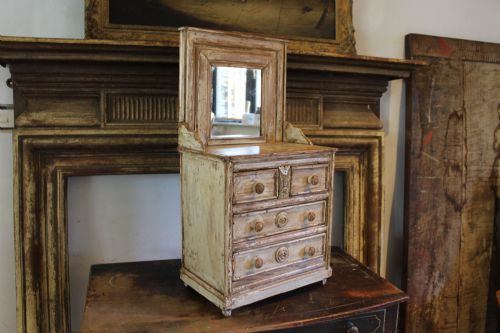
A dressing table box mirror is a compact glass mounted on a lidded compartment or drawer base, offering both reflection and storage for valuables.
Dressing Table Box Mirror
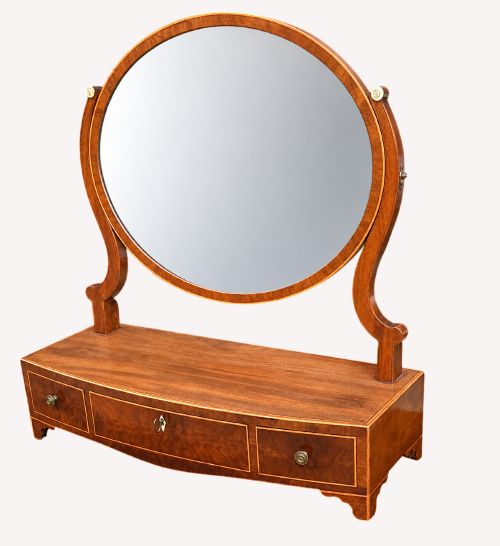
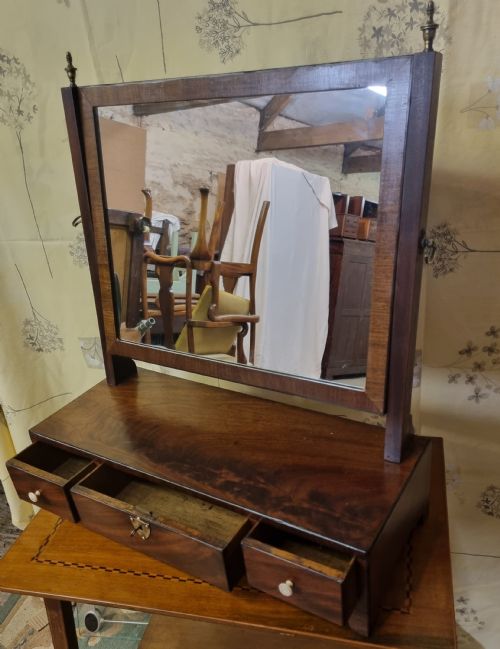
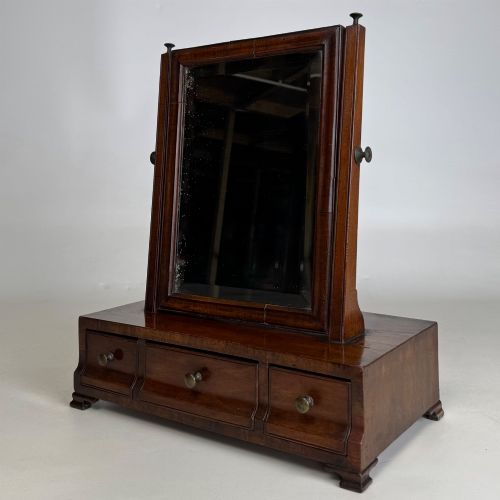
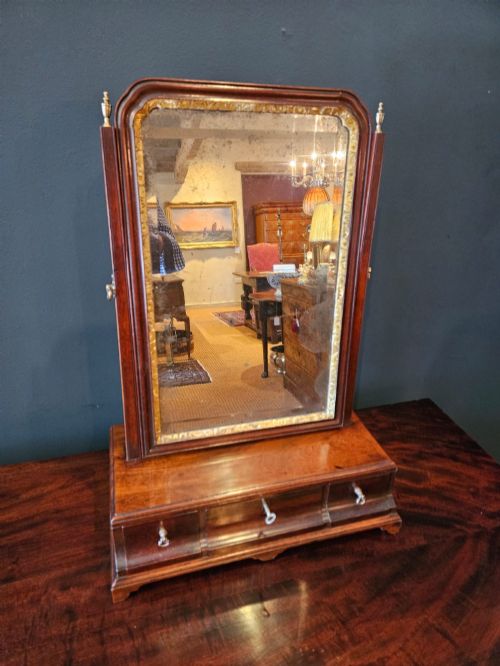
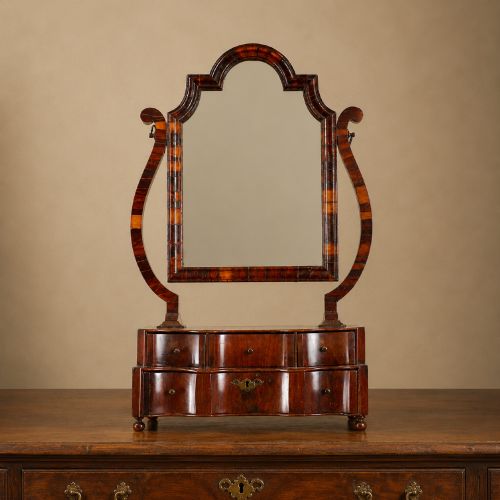
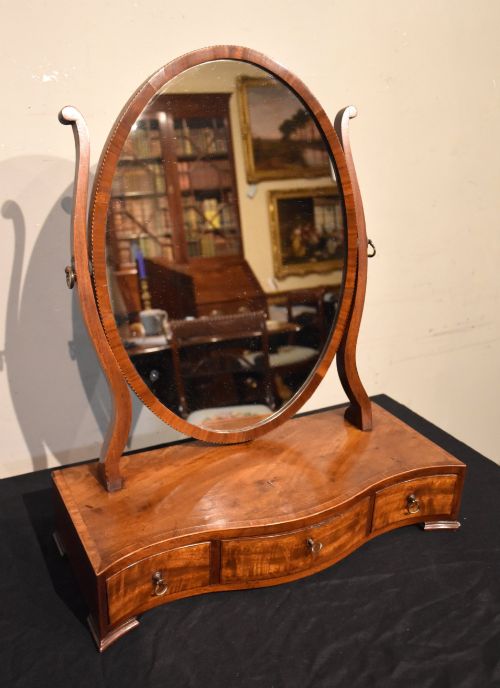
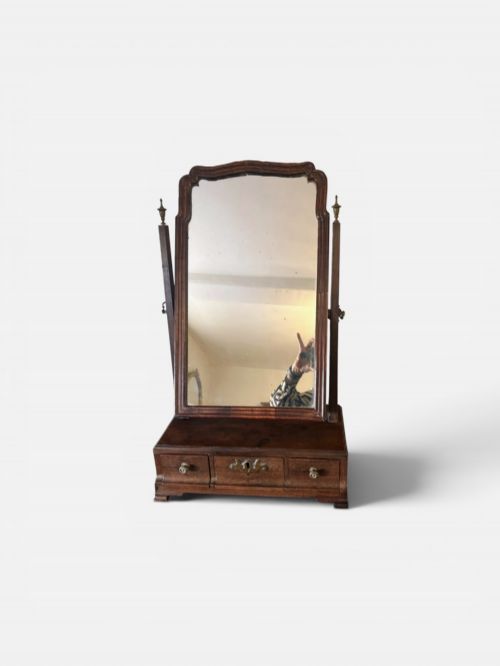
When searching for a dressing table box mirror, a buyer is looking at portable tabletop mirrors set upon miniature drawer bases or fitted box frames. These pieces originated primarily to sit atop larger furniture for grooming and personal use.
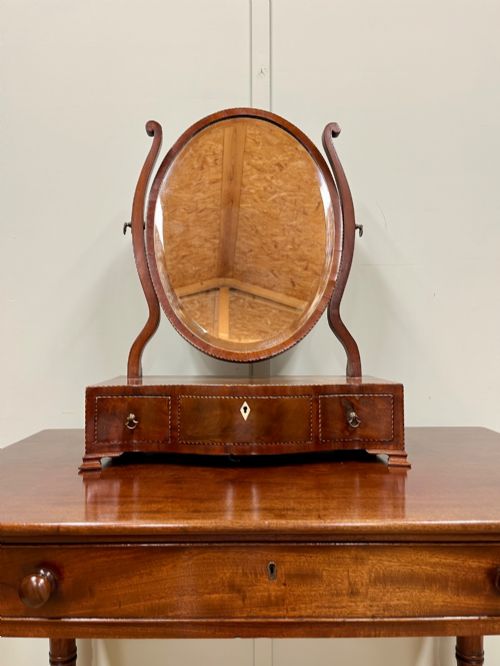
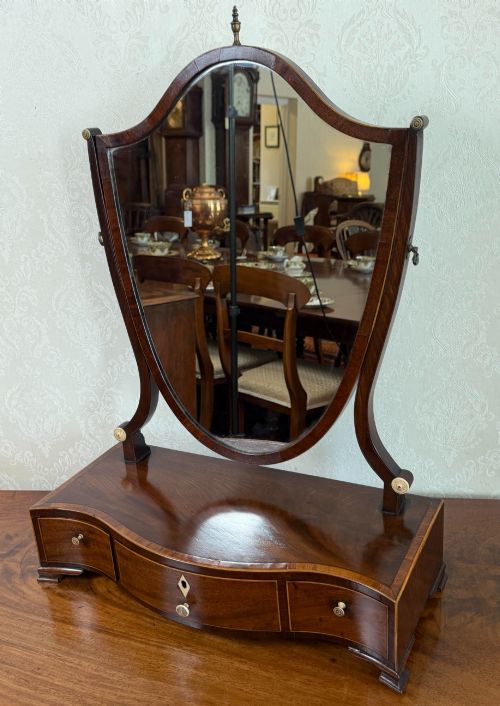
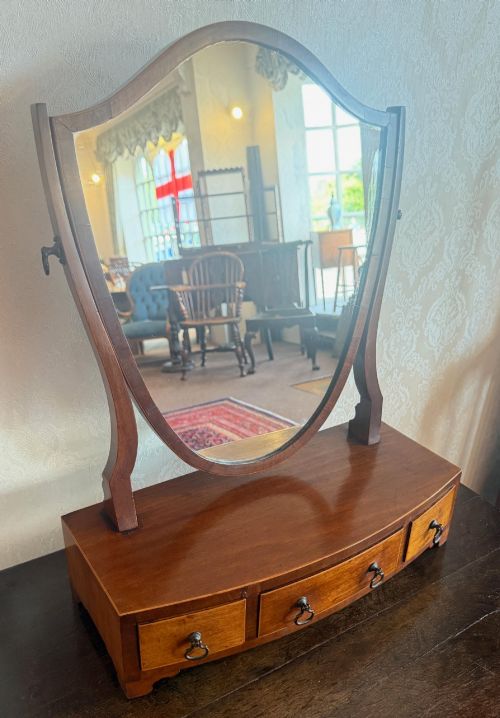
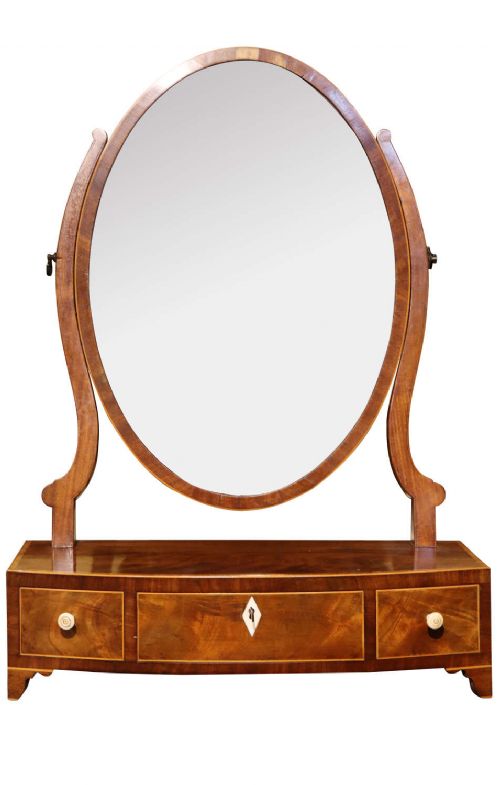
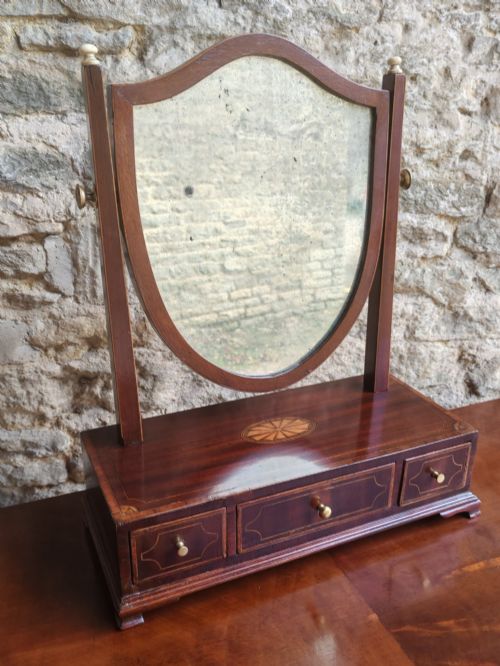
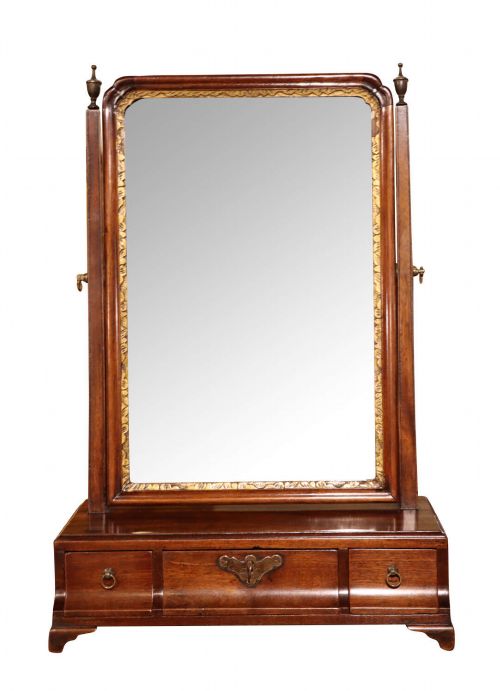
The version most commonly met on this page is the Georgian mahogany toilet mirror, often featuring a shield or oval plate swinging between upright arms above a serpentine or straight base containing small drawers.
Materials and construction methods
Cabinet makers utilised dense hardwoods such as mahogany and walnut, frequently applying crossbanding, boxwood stringing, or giltwood highlights to enhance the polished timber surfaces. Mirror glass was housed within adjustable frames supported by turned brass or wooden pivots.
Bases were constructed as miniature chests with multiple small drawers for storage, sometimes incorporating bone escutcheons or specialised fitted interiors for jewellery and shaving implements.
Materials recorded across the selection include mahogany, walnut, brass, bone, and giltwood mirror frames.
Evaluating the standard of execution
Quality rests upon the selection of timber figure, such as flame mahogany or burr walnut, and the finesse of the joinery in the drawer boxes. Finer examples display meticulous crossbanding and precise inlay work rather than plain timber construction.
The proportion between the mirror frame and the lower box structure dictates visual balance, while original mirror glass and functional brass hardware preserve historical integrity.
The Dressing Table Box Mirror Glossary
- Toilet mirror
- A smaller tabletop mirror designed for dressing tables, usually incorporating small drawers in the base.
- Serpentine
- A curved line of furniture fronts, featuring a convex centre flanked by concave curves.
- Crossbanding
- A narrow strip of veneer laid around the border of a panel with the grain running at right angles.
- Parcel-gilt
- Partially gilded with gold leaf, typically highlighting specific carved wooden mouldings or decorative details.
Dressing Table Box Mirror: Frequently Asked Questions
How do I date a dressing table box mirror?
Dating relies upon timber choice, hardware style, and the profile of the mirror frame and base supports. Earlier 18th century pieces often utilise walnut or figured mahogany with simpler box configurations.
Later Georgian and Regency examples introduce serpentine fronts, shield-shaped glass plates, and delicate stringing inlay. Inspecting the secondary woods inside the drawers provides further confirmation of period origin.
Were these mirrors fixed to tables?
These mirrors were designed as freestanding portable objects to sit atop a dressing chest or table without permanent fixtures. This allowed them to be moved around rooms depending on available light.
The base compartments also served as secure storage for personal items, separate from the main table storage.
How do I maintain the mirror plate?
Maintenance requires gentle cleaning with a soft cloth and non-abrasive glass cleaner applied sparingly. Avoid letting moisture seep behind the mirror plate where historical silvering can be damaged.
Keep the wooden frame polished with traditional wax to nourish the grain without buildup.
What is the difference between a toilet mirror and a dressing glass?
In historical terminology, toilet mirrors and dressing glasses largely refer to the same tabletop form used for personal grooming. Both describe a mirror mounted on a supportive stand or box base containing small drawers.
Regional preferences and maker catalogues sometimes used the terms interchangeably throughout the Georgian and Victorian periods.