






Shield Shaped Table Mirror
These shield shaped table mirror examples offer practical dressing table utility combined with the warm grain of mahogany and brass fittings.
Shield Shaped Table Mirror
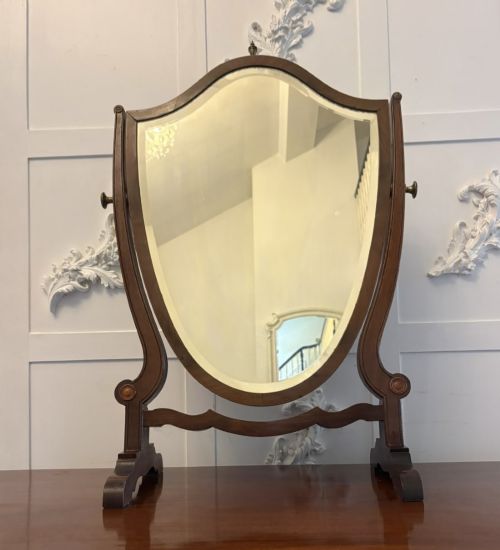
A shield shaped table mirror sits upon a dressing table or chest, providing an adjustable glass supported by upright arms and a stable box base. When you search for a shield shaped table mirror, you encounter pieces designed for personal grooming during the eighteenth and nineteenth centuries.
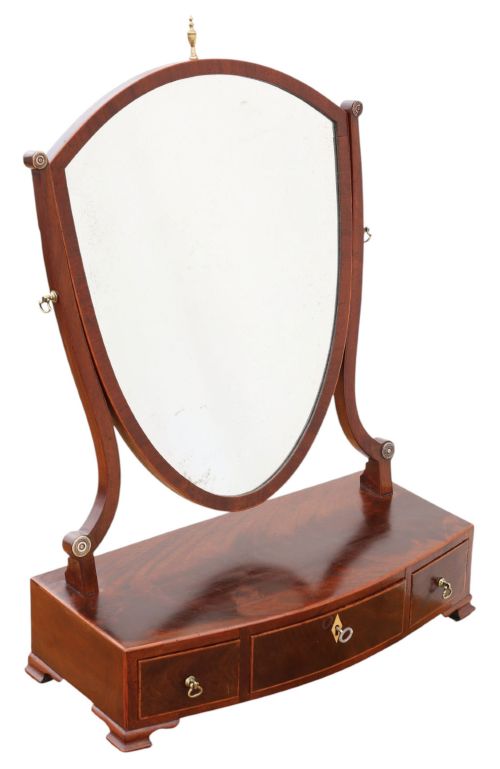
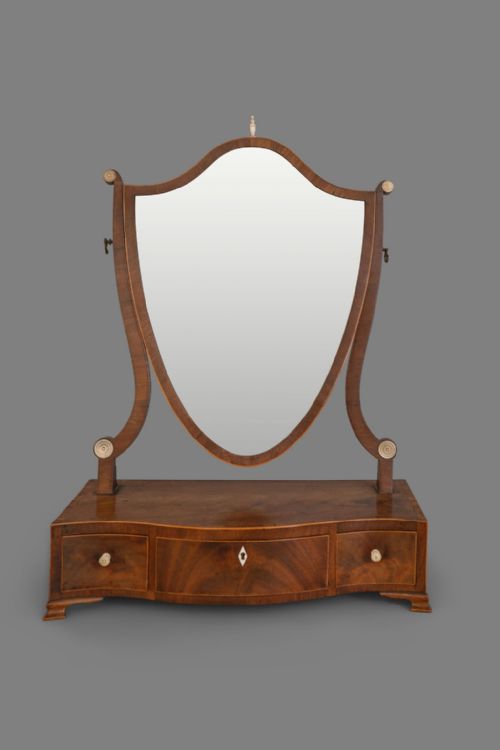
The version you are most likely to meet on this page is the mahogany toilet mirror from the Georgian period, often featuring a serpentine base with small drawers. These forms derive from earlier styles and carry the characteristic upright frame supporting the swinging glass plate.
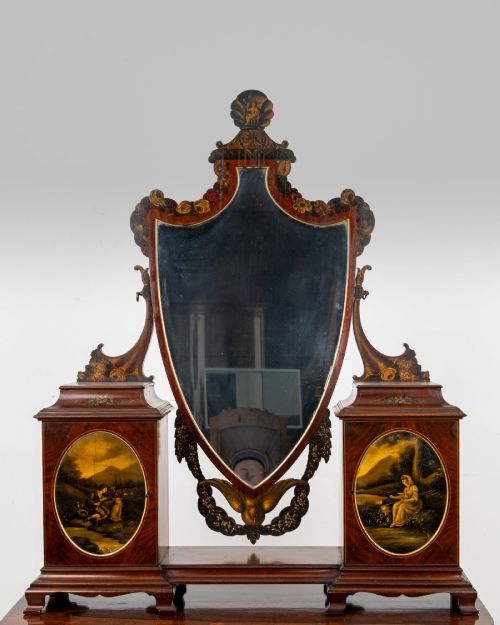
Examples span several distinct eras, appearing in Georgian, Victorian, and Edwardian guises alongside later revival pieces. While some take the form of simple dressing mirrors, others incorporate jewellery cabinets or stand as part of a shaving stand.
Materials and construction
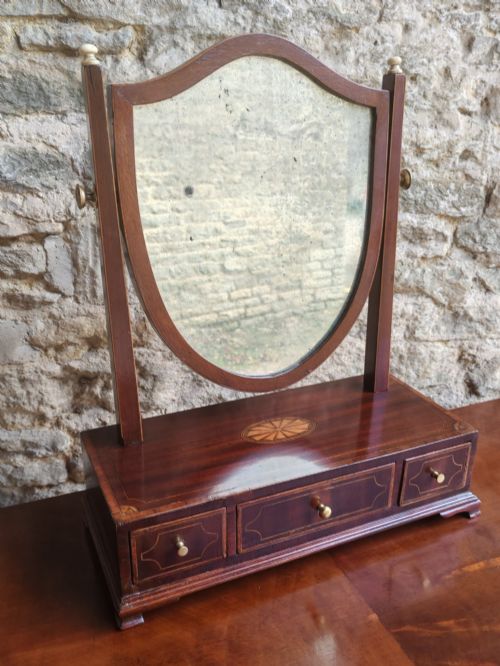
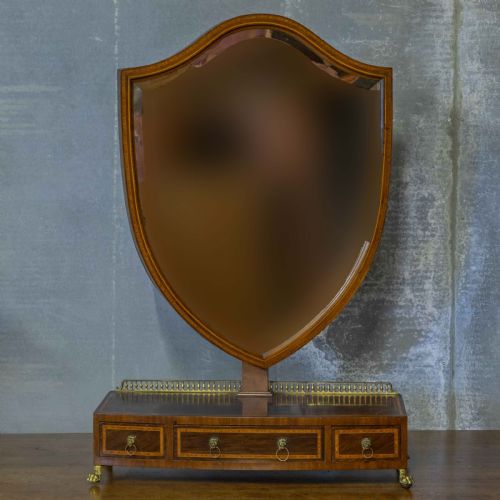
Cabinetmakers constructed these pieces primarily using solid and veneered mahogany, frequently selecting boxwood and satinwood for decorative stringing and inlay. Brass components appear in the form of adjustable mirror screw knobs, hinge pivots, and small drawer pulls.
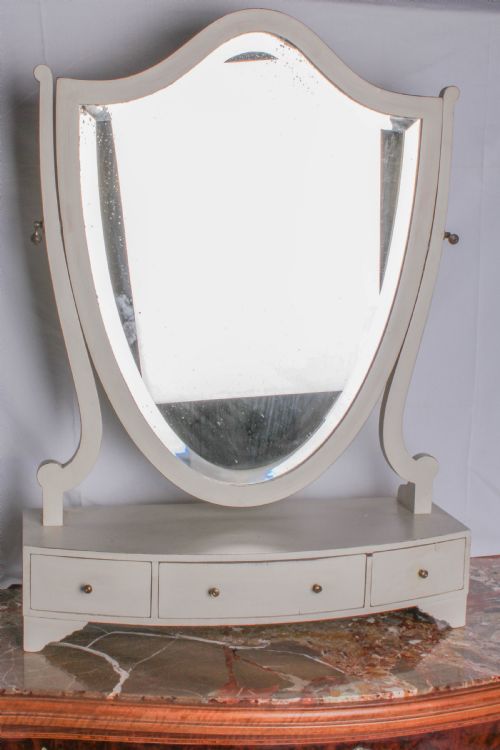
The glass sits within a shaped wooden frame supported by upright pillars rising from a box base or plinth. Painted wood and bone details also emerge across specific Edwardian interpretations and inlaid variants.
Some Edwardian examples secretly doubled as miniature jewellery cabinets, ensuring your rings stayed safe while you admired your reflection.
Judging quality and finish
Quality rests upon the crispness of the serpentine curves and the selection of figured mahogany timber for the base and frame. Superior examples demonstrate refined proportions where the curve of the shield glass harmonises with the proportions of the drawer section below.
The integration of delicate boxwood or satinwood inlay distinguishes finer pieces from plain utility versions. Original brass hardware and well-fitted drawer construction further separate standard examples from those of exceptional workshop origin.
The Shield Shaped Table Mirror Glossary
- Toilet mirror
- A small mirror designed to stand on a dressing table or chest of drawers. These pieces became common during the eighteenth century for personal grooming.
- Serpentine
- A curved shape that undulates with a convex centre flanked by concave sides. This outline frequently defines the base of better eighteenth-century examples.
- Cheval mirror
- A full-length freestanding mirror, though some table-top variants incorporate this title alongside small cabinet compartments. They allow the viewer to adjust the tilt of the glass.
- Inlay
- A technique where pieces of contrasting wood like boxwood or satinwood are inserted into recesses within the primary timber. This ornament decorates the drawer fronts and frames.
- Swing mirror
- A glass plate hung on pivoting pins between two upright arms so it can tilt. This mechanism forms the central function of the dressing table mirror.
Shield Shaped Table Mirror: Frequently Asked Questions
What is a shield shaped table mirror used for?
These mirrors sat upon dressing tables and chests to assist with personal grooming and shaving in bedrooms.
Many examples included small drawers in the base for storing jewellery or cosmetic items.
How do I date a shield shaped table mirror?
Dating relies on timber selection, construction methods, and the specific outline of the base and mirror frame.
Georgian pieces often feature serpentine mahogany bases, while Edwardian versions frequently showcase delicate inlay.
Are these mirrors fixed or adjustable?
The glass plates are mounted on pivoting side screws that allow the mirror to tilt back and forth.
This adjustable mechanism let the user alter the angle of reflection easily.
Where should I place a table mirror at home?
They suit placement upon traditional dressing tables, sideboards, or chests of drawers in a bedroom.
Their compact size allows them to sit securely on top of existing furniture without requiring floor space.