




Serpentine Front Swing Mirror
A serpentine front swing mirror is a pivoting glass set on a shaped timber base, prized for its fluid curves and practical dressing room utility.
Serpentine Front Swing Mirror
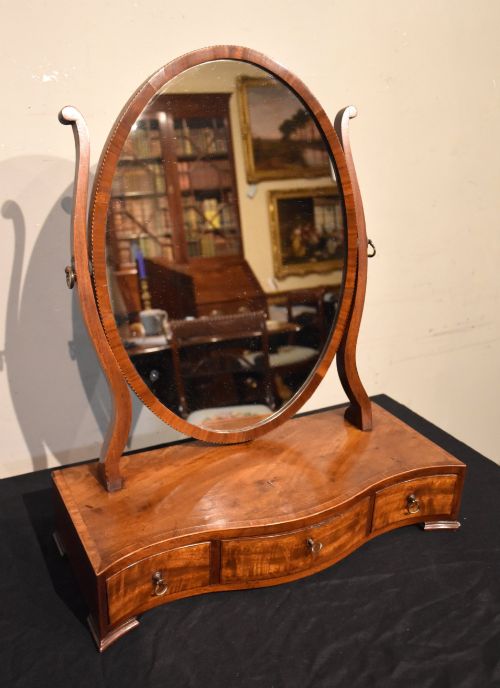
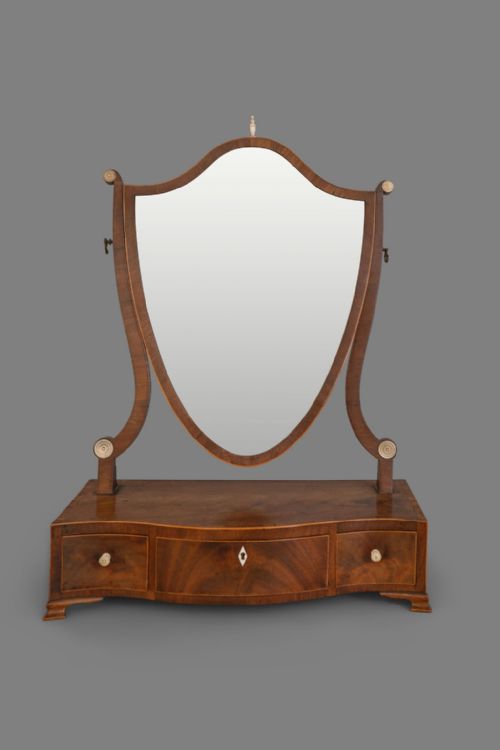
A serpentine front swing mirror sits on a tabletop or dressing chest, offering an adjustable reflection via pivoting side arms mounted to small upright supports. The defining feature is the undulating front edge of the base, which curves outward at the centre and inward at the ends or vice versa, creating a distinctive wave-like silhouette.
Most examples found here date from the Georgian, George III, and Victorian periods, constructed primarily as dressing table or toilet mirrors. Makers often incorporated small drawers into the stepped or sloping base boxes to hold personal trinkets and accessories, combining surface utility with sculptural timber forms.
The surviving pieces divide broadly between walnut and mahogany construction, spanning the eighteenth and nineteenth centuries. Buyers encounter both rectangular and oval glass plates framed within adjustable brass-pinned brackets, anchored to dovetailed wooden box bases.
How they were made
Cabinetmakers constructed these frames and bases using solid mahogany and walnut, frequently selecting figured veneers such as flame mahogany to cover primary surfaces. The undulating serpentine curve of the base required precise hand-sawing and shaping from thick timber blocks or multi-layered construction.
Joinery relied on tight dovetail construction for the miniature drawer boxes, ensuring stability beneath the heavy upright arms that support the mirror frame. Brass components, including side screw knobs, pivot pins, and small escutcheons, were cast and fitted by hand to allow smooth tilting of the glass.
Many of these tiny drawer boxes still retain faint traces of scented powder or bygone hairpins hidden deep in the corners.
What varies in quality
The refinement of the serpentine curve sets the better examples apart, demanding greater skill from the cabinetmaker to achieve balanced, symmetrical undulations across the front box. Superior pieces display carefully chosen timber grain, such as matched flame mahogany veneers that wrap evenly around the curved contours.
Proportion dictates the overall elegance, where the height of the upright supports and the scale of the mirror frame harmonize with the serpentine base. Original brass hardware, intact drawer linings, and untouched secondary woods contribute significantly to the integrity of an antique piece.
The Serpentine Front Swing Mirror Glossary
- Serpentine front
- A furniture shape featuring a double-curved edge that bulges outward in the middle and recesses near the corners. This flowing contour adds visual movement to tabletop dressing pieces.
- Toilet mirror
- A smaller portable glass designed to sit upon a chest of drawers or a dedicated dressing table. It typically includes a small box base fitted with one or more miniature drawers.
- Flame mahogany
- A decorative tropical hardwood veneer displaying a distinctive flickering figure resembling flames. Cabinetmakers used this prized cut on prominent surfaces to catch the light.
- Dovetail
- A traditional interlocking joint used at the corners of the small base boxes. Its tight triangular fingers provide lasting structural strength without modern fasteners.
Serpentine Front Swing Mirror: Frequently Asked Questions
Where did people put these mirrors?
These mirrors sat atop large chests of drawers, sideboards, or dedicated dressing tables in bedrooms and dressing rooms. Their portable nature allowed owners to move them around depending on where the morning light fell.
The base boxes provided a convenient spot to store small everyday items like rings, pins, and cosmetics while keeping the main furniture surface tidy.
How do I date a serpentine mirror?
Dating relies on examining the secondary woods inside the drawers, the style of the brass pivot hardware, and the construction methods of the base box. Earlier pieces from the Georgian era often feature simpler box proportions and hand-cut dovetails.
Victorian iterations sometimes incorporate bolder flame mahogany veneers and slightly heavier framing around the glass plate. Comparing the edge profiles and timber types helps narrow down the period of manufacture.
Are the glass plates usually original?
Many antique mirrors have undergone glass replacement over the centuries due to accidental breakage or silvering degradation. Original glass often shows minor foxing, tiny bubbles, or slight surface imperfections.
A replacement mirror plate does not diminish the utility of the piece, though collectors generally prefer retaining original glass where possible.
How do I care for the wood?
Maintain the timber by keeping the mirror away from direct sunlight and sudden temperature shifts that can dry out old mahogany or walnut. Dust gently with a dry, soft cloth and avoid modern aerosol polishes.
Applying a light coat of traditional beeswax occasionally helps nourish the antique polish and preserves the warmth of the wood grain.