

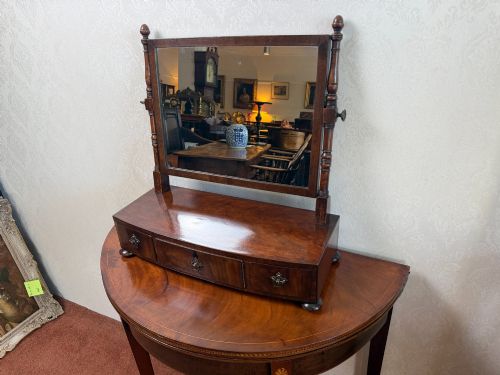
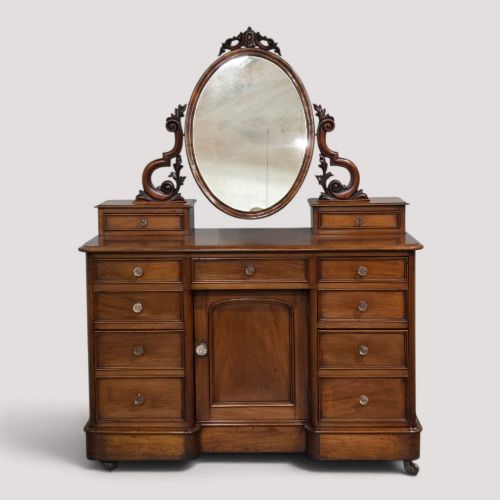
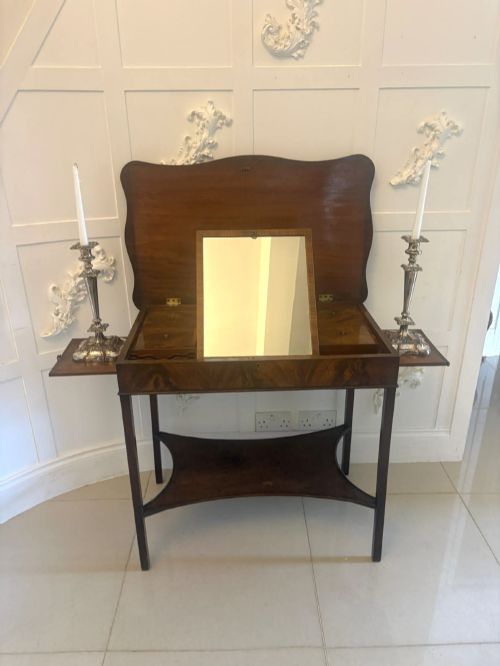
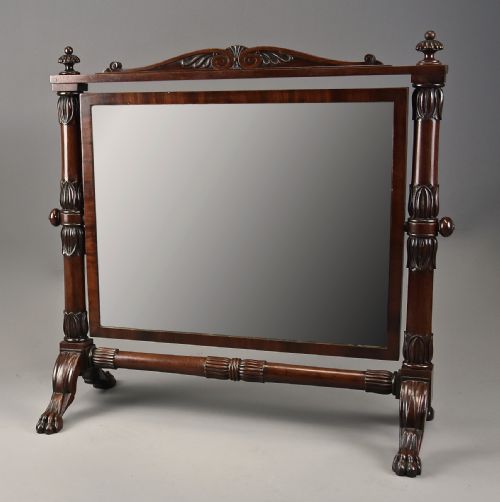
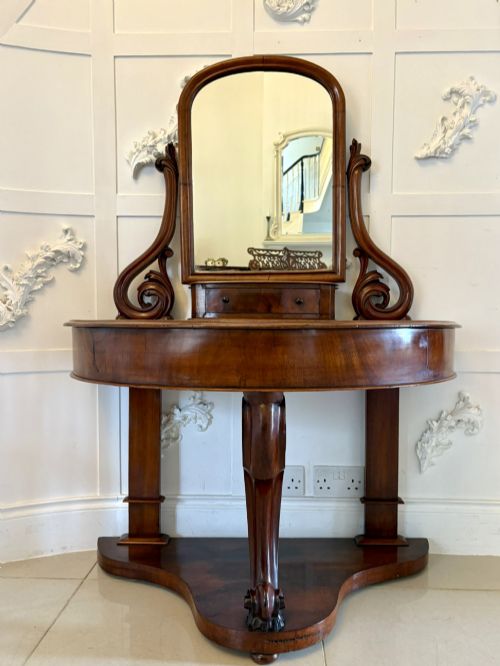
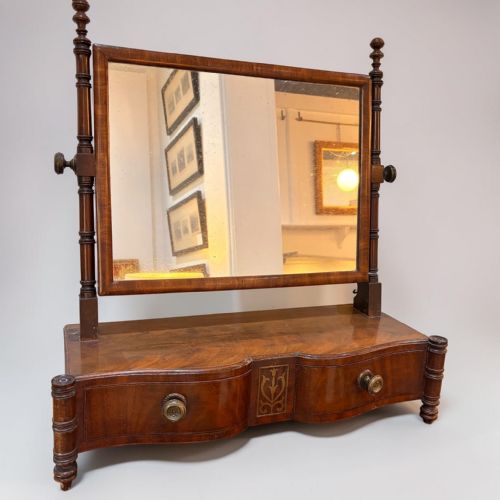
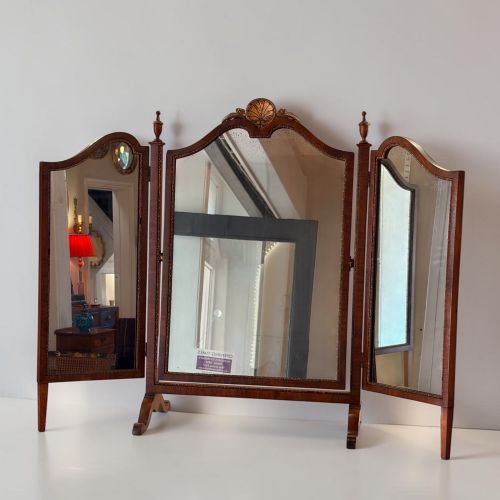
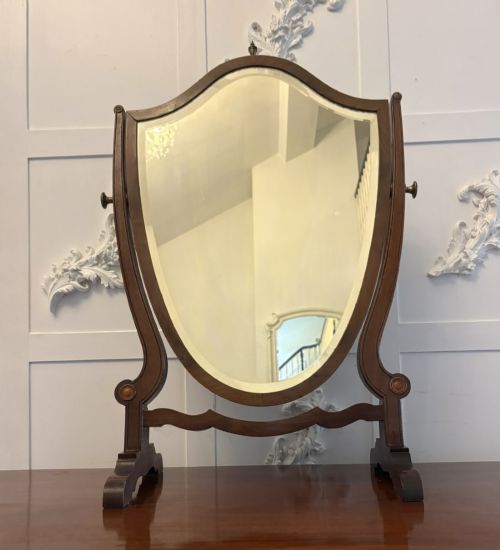
Brown Mahogany Toilet Mirror
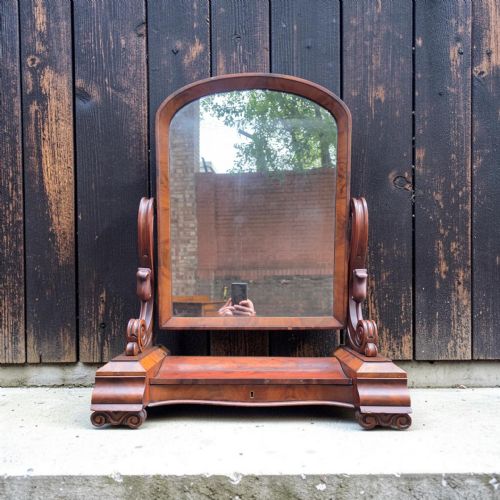
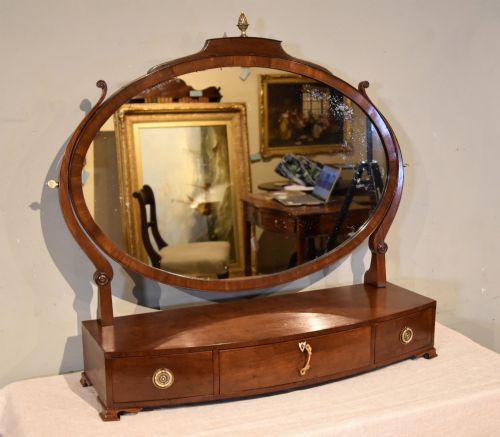
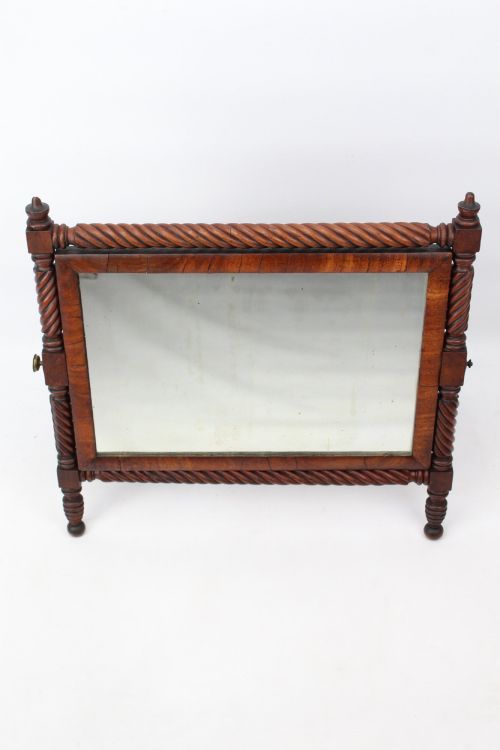
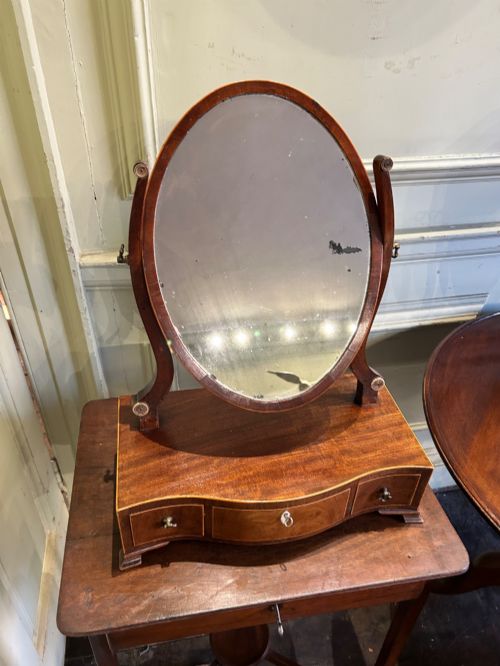
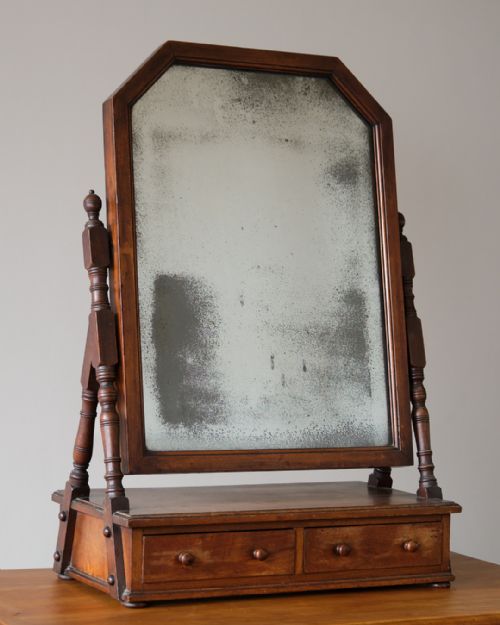
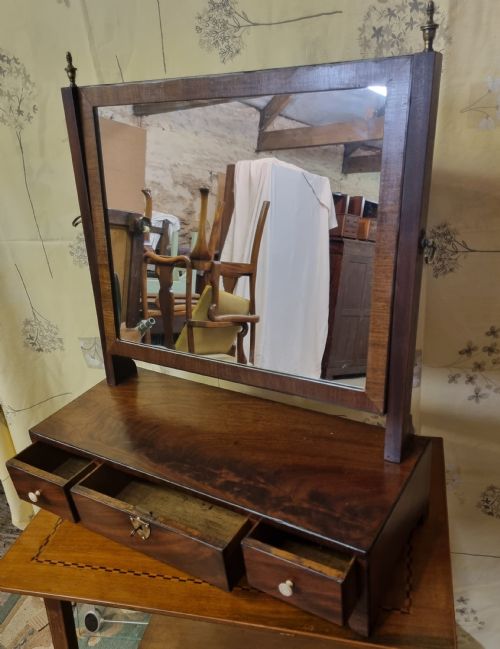
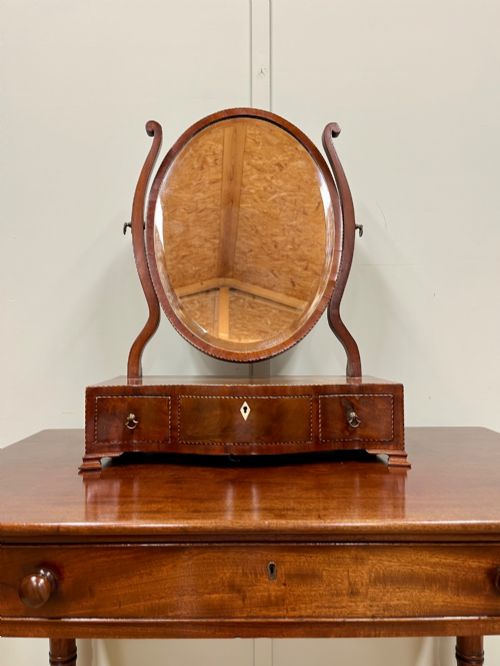
A brown mahogany toilet mirror sits neatly on a surface, offering the practical glass and small drawers that defined daily grooming across centuries.
Brown Mahogany Toilet Mirror
When searching for a brown mahogany toilet mirror, a buyer looks at tabletop pieces designed for personal grooming and dressing. These objects appear frequently in Georgian, Victorian, and Edwardian incarnations, taking the form of swing mirrors mounted on small drawer bases.
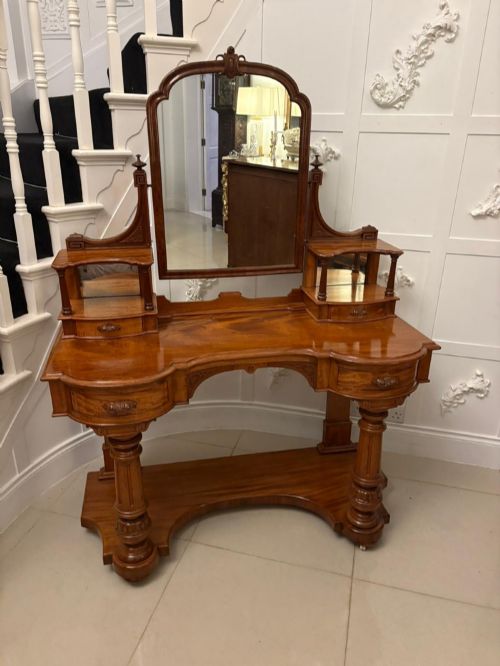
The materials and styles span simple utilitarian designs to serpentine fronted and crossbanded examples. Most pieces on this page are standard dressing table mirrors, while others include cheval mirrors, shaving stands, and tabletop designs featuring bone or brass fittings.
Origins stretch from the 18th century through the 19th century and into the 20th century. Buyers will encounter various regional interpretations, including Scottish mid-19th century pieces alongside classic English cabinetwork.
What varies in quality
The standard of timber selection and cabinetmaking distinguishes pieces across the range. Superior examples feature dense Cuban mahogany with well-figured grain, precise crossbanding, and finely dovetailed drawer construction rather than plain secondary woods.
Proportion and execution of carved details also set examples apart. Fine pieces show crisp mouldings, elegant horn or brass adjusting screws, and well-balanced support arms that hold the glass steady without sagging.
Brown Mahogany Toilet Mirror Retail Price Guide 2026
Typical asking prices for brown mahogany toilet mirror among the pieces listed under this phrase on Sellingantiques today, from the lower quarter to the upper quarter. They describe what is for sale here now, not the wider market.
Listings feature mahogany, glass, brass, and bone across periods from the 18th century to the Edwardian era.
Heal & Sons·P & MA Nicholson
The Brown Mahogany Toilet Mirror Glossary
- Toilet mirror
- A small mirror designed to sit on a dressing table or chest of drawers. These portable glasses were essential items for personal grooming before fitted wall mirrors became standard.
- Swing mirror
- A glass plate mounted in a frame that pivots between two upright posts. This mechanism allows the user to adjust the angle of reflection.
- Crossbanding
- A border of veneer laid around the edges of a panel so the grain runs perpendicular to the central piece. This technique frames the wood surface with a contrasting pattern.
- Serpentine
- A curved line that undulates inwards and outwards, typically seen on the drawer fronts of better-made mirrors. It requires skilled carpentry to execute smoothly.
- Cheval mirror
- A full-length dressing mirror supported on a freestanding frame with four feet. Some variations in the evidence appear as larger tabletop versions.
Brown Mahogany Toilet Mirror: Frequently Asked Questions
Where did people place these mirrors?
These mirrors were positioned on top of chests of drawers, side tables, or dedicated dressing tables in bedrooms and dressing rooms. Their portable nature allowed owners to move them near windows for better natural light.
They provided a stable surface for morning routines, shaving, and arranging hair and accessories before the widespread adoption of built-in furniture.
What is the difference between a toilet mirror and a cheval mirror?
A toilet mirror is a compact tabletop object designed to sit on a piece of furniture and reflect the upper body. They usually feature a small drawer base.
A cheval mirror is a much larger freestanding glass that stands directly on the floor, allowing the user to view their entire outfit from head to toe.
How do swing mirrors stay in position?
Swing mirrors utilise threaded brass or wooden pivot screws fitted through the upright support arms into the sides of the mirror frame. Tightening these screws creates friction that holds the glass at the desired tilt.
When adjusted correctly, the glass remains stable without needing extra support props behind the frame.