


Wooden Swing Dressing Mirror
A wooden swing dressing mirror brings functional elegance to a bedroom, offering a pivoting glass set within a sturdy frame.
Wooden Swing Dressing Mirror
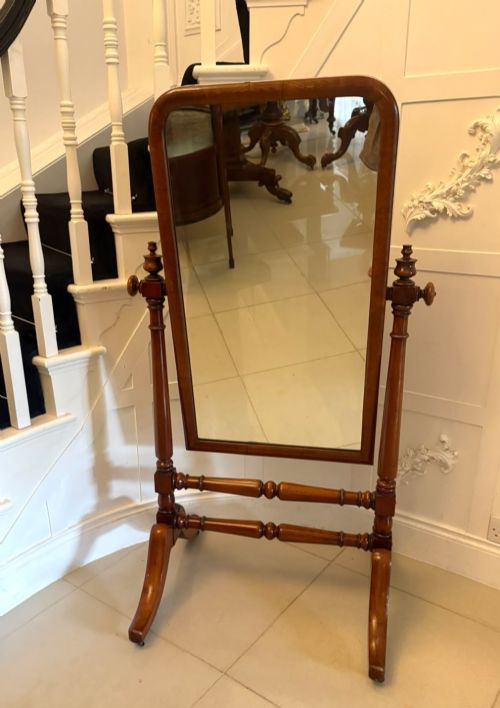
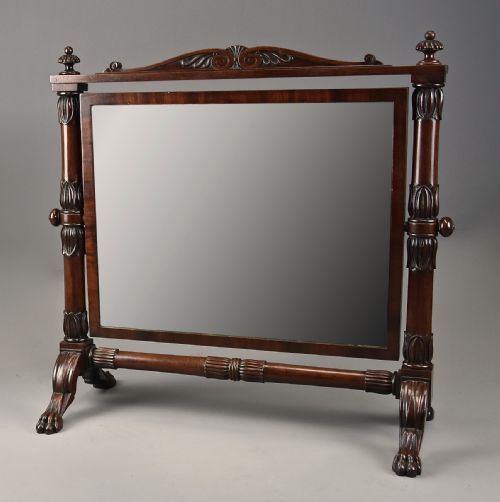
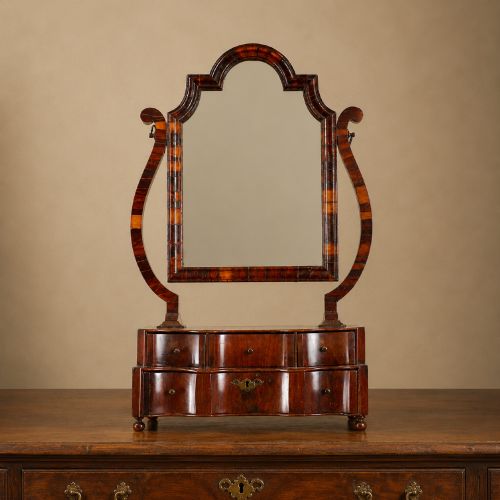
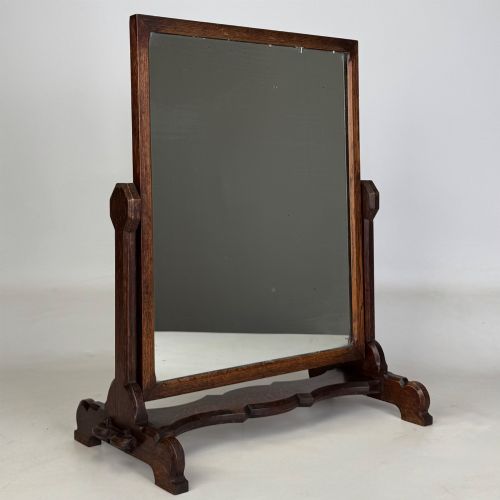
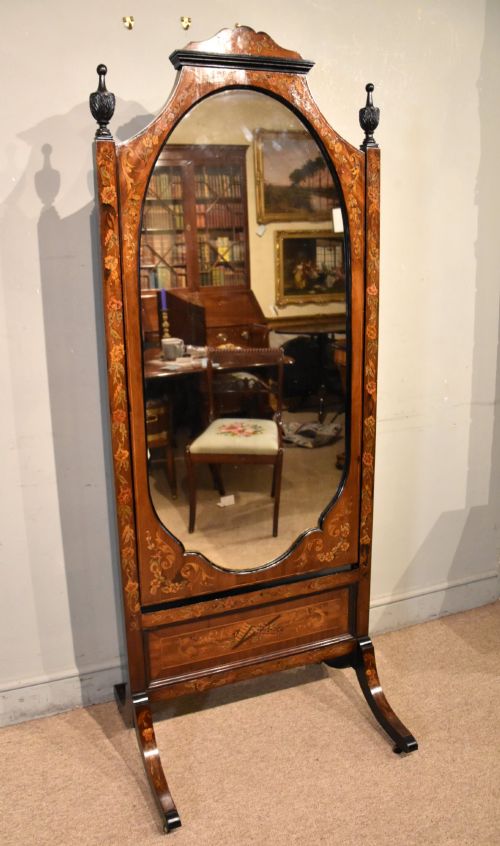
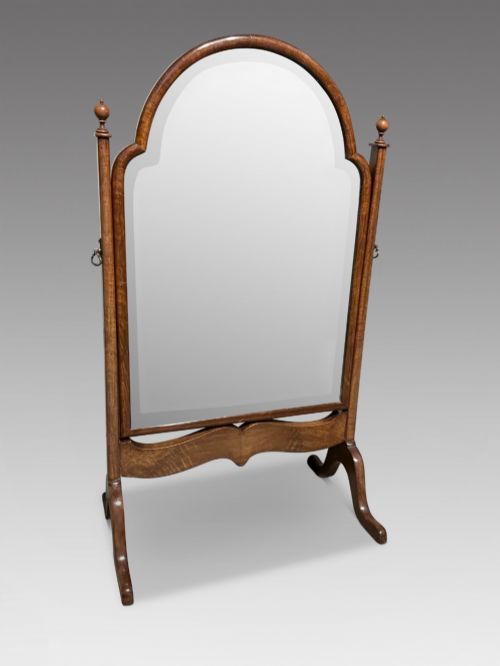
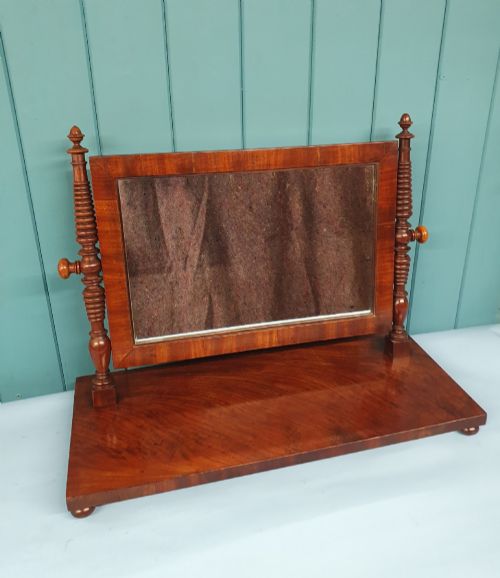
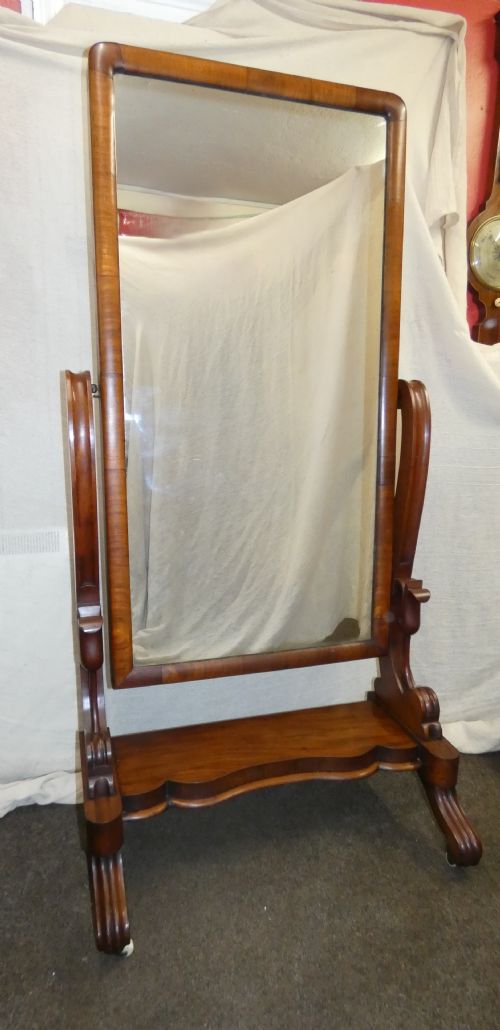
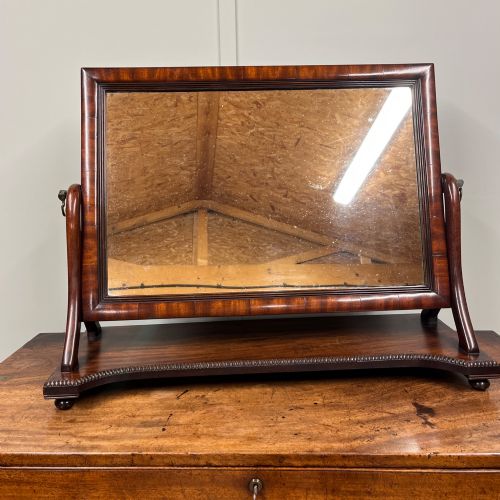
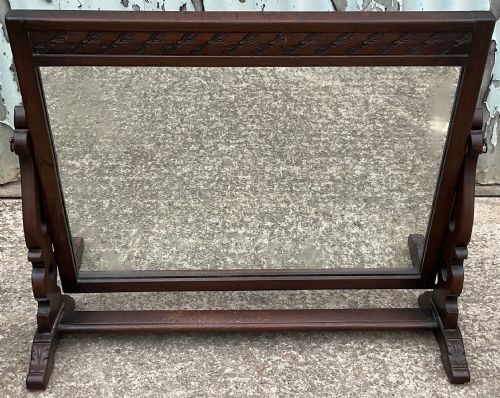
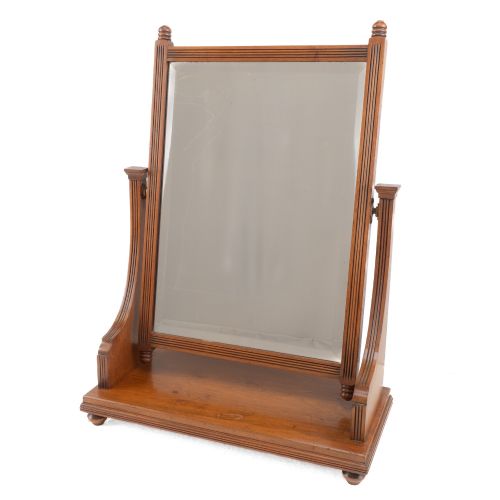
A wooden swing dressing mirror sits upon a table or stands tall as a floor-standing cheval piece, designed to pivot on side pivots for personal adjustment. When you search for a wooden swing dressing mirror, you encounter pieces spanning from the eighteenth century through to the Edwardian era.
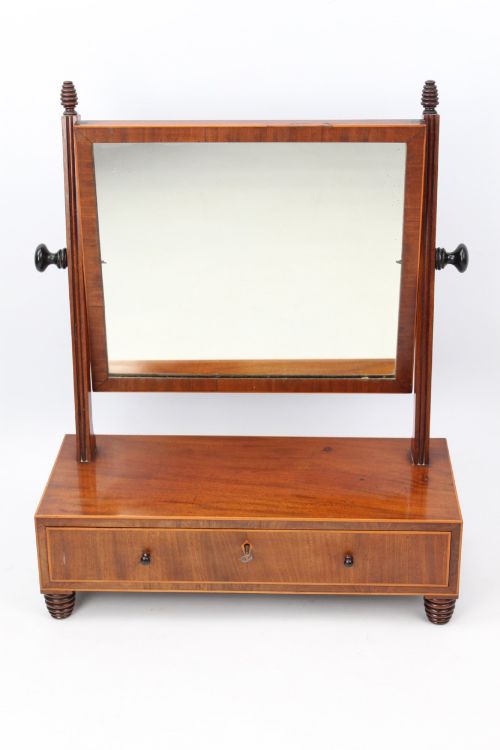
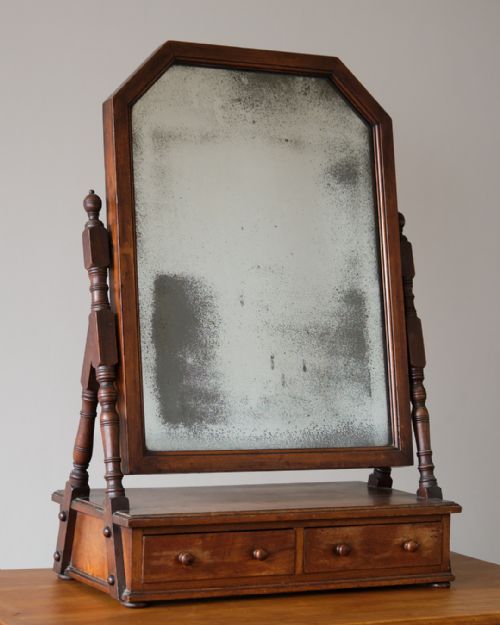
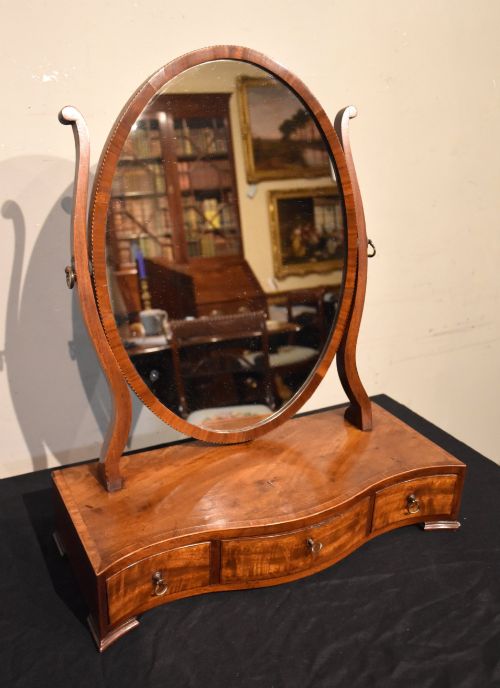
The selection ranges from compact toilet mirrors with small drawer bases intended for tabletops to large cheval mirrors designed for full-length reflection. Mahogany, walnut, and oak form the primary structures across Georgian, Victorian, and Regency periods.
Smaller variants often feature box bases fitted with tiny drawers for trinkets, whilst larger floor-standing formats rely on substantial side supports and trestle feet. These objects reflect the changing domestic habits of past centuries, moving from intimate tabletop grooming to full-length bedroom dressing.
Materials and construction methods
Cabinet makers constructed these frames primarily using dense timbers such as mahogany, walnut, and oak, occasionally incorporating exotic veneers like Cuban mahogany or decorative elements of bone and laburnum. Brass fixtures, including side screw knobs, candle sconces, and delicate hinges, provide both structural support and subtle metallic contrast.
Joinery techniques relied upon dovetail construction for the small drawers housed within the table bases, ensuring durability through decades of daily use. The mirror plates themselves, traditionally silvered glass, are secured within adjustable side arms held by threaded brass pivots that allow the glass to tilt at various angles.
Distinctions in craftsmanship and design
The refinement of the timber selection dictates the upper tier of quality, seen in figured Cuban mahogany or intricate walnut and laburnum banding. Superior examples display meticulous attention to proportion, particularly in serpentine-fronted drawer bases and delicately turned support columns.
Hardware integrity separates standard pieces from exceptional ones, with original heavy brasses, functioning box locks, and finely cast pivot screws commanding greater appreciation. The crispness of hand-carved details and the retention of the original mirror glass further define the hierarchy among surviving pieces.
P & MA Nicholson·Heal & Sons
The Wooden Swing Dressing Mirror Glossary
- Cheval mirror
- A large floor-standing dressing mirror supported by a frame with four legs and vertical posts that allow the glass to swing fully.
- Toilet mirror
- A smaller dressing mirror designed to stand upon a chest of drawers or a dedicated dressing table.
- Serpentine
- A curved shape characterised by a convex centre flanked by concave sides, frequently seen on the drawer bases of Georgian mirrors.
- Pivot
- The metal screw or pin set into the vertical frame posts upon which the mirror plate swings back and forth.
Wooden Swing Dressing Mirror: Frequently Asked Questions
How do I date a wooden swing dressing mirror?
Dating relies on observing timber choices, secondary woods used in drawer linings, and construction methods such as hand-cut dovetails. Earlier Georgian pieces often utilise native or Cuban mahogany with pegged joints, whereas later Victorian examples show machine-sawn elements and different brass pivot designs.
Secondary characteristics like the thickness of the mirror glass and the style of the base feet also provide clear chronological markers. Comparing the proportions and decorative motifs against documented examples helps narrow down the decade of manufacture.
What is the difference between a toilet mirror and a cheval mirror?
A toilet mirror is built on a smaller scale, specifically designed to rest on top of a dressing table or chest of drawers. It frequently incorporates a small box base with one or more drawers for storing small personal items.
A cheval mirror is a tall, floor-standing version that allows the user to view their entire outfit from head to toe. These larger mirrors stand on substantial floor frames rather than resting on furniture surfaces.
How were these mirrors used historically?
In eighteenth and nineteenth-century households, these mirrors served as essential items for morning grooming, styling hair, and adjusting cravats or waistcoats. Placed near bedroom windows to catch natural daylight, they provided adjustable angles through their pivoting side screws.
The small drawers in the base held jewellery, cosmetics, and letters, serving as a private storage space before the widespread use of fitted bedroom cabinetry.
Are the mirror plates usually original?
Many surviving mirrors retain their original glass, which often exhibits characteristic foxing, minor silvering loss, or subtle distortions caused by early manufacturing methods. Because fragile glass frequently broke over centuries of use, replacement plates are common.
Examining the backboards, holding pins, and the fit within the rebate helps determine whether the glass has been replaced or remains from the period of manufacture.