




Serpentine Mahogany Dressing Mirror
A serpentine mahogany dressing mirror brings fluid Georgian lines and deep timber tones to a tabletop.
Serpentine Mahogany Dressing Mirror
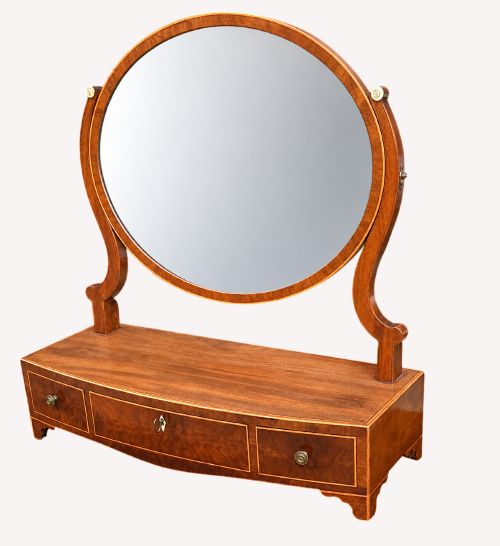
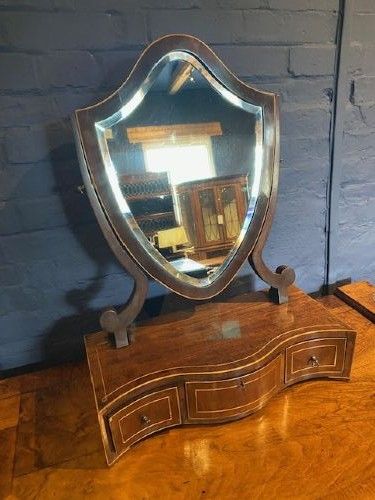
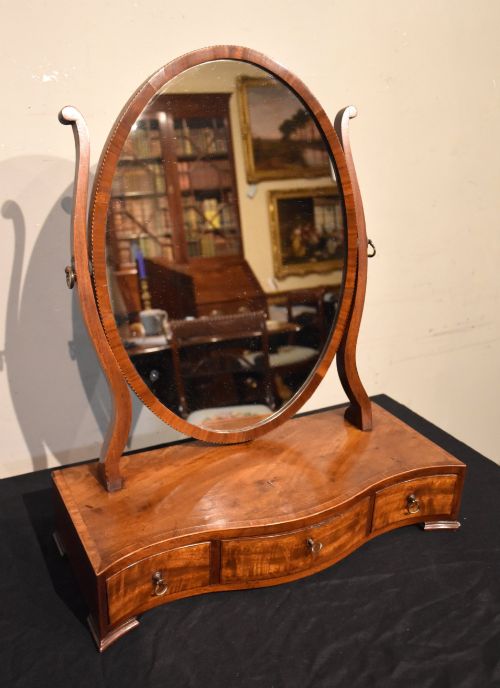
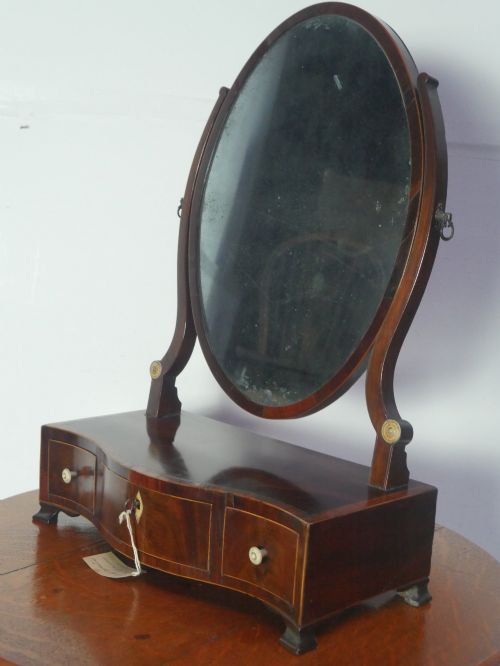
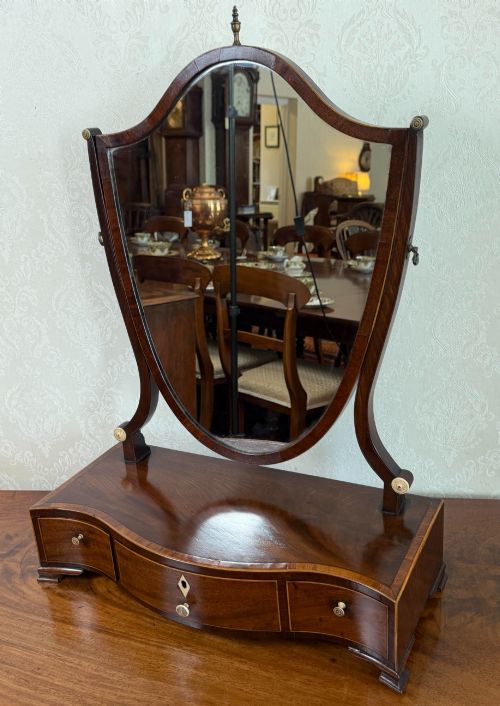
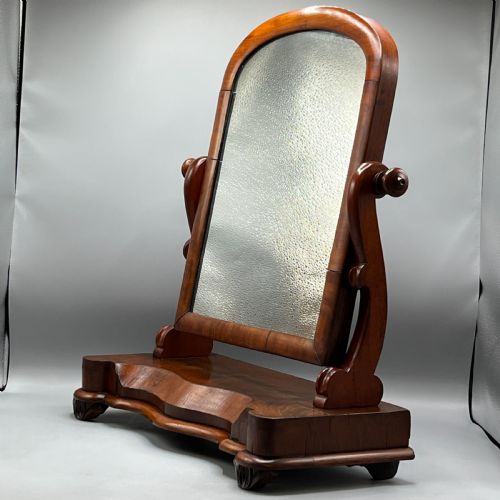
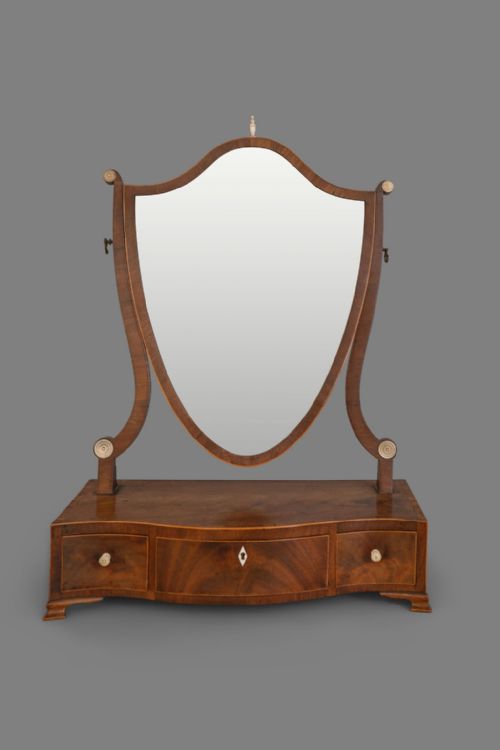
A serpentine mahogany dressing mirror is a tabletop glass set within a frame, mounted on upright arms above a small base fitted with drawers. These pieces sit upon chests or dressing tables, functioning as both functional looking glasses and sculptural woodwork.
The version most commonly met on this page dates from the Georgian and Victorian periods, often taking the form of a swing mirror with three drawers beneath a shaped front. Makers built these items using rich timber grains, incorporating oval or rectangular glass plates.
Object types include dressing table mirrors, toilet mirrors, and box dressing mirrors. The serpentine outline defines the form, curving outward at the centre and inward at the sides to create movement across the base.
Materials and construction methods
Makers constructed these mirrors primarily from solid mahogany and flame mahogany veneers, often highlighting the timber with boxwood inlay, bone escutcheons, and satinwood stringing. Glass plates provide the reflection, held securely within pivoting wooden frames attached to upright standards.
Brass fittings, including pivoting screw knobs and small drawer pulls, secure the glass and allow the plate to tilt. Joinery relies on traditional techniques to form the small box bases, incorporating dovetails for the drawers that hold daily accessories.
Listings span the 18th century, Georgian period, 19th century, and Victorian era, utilising materials including mahogany, glass, brass, bone, boxwood inlay, and satinwood.
Distinctions in craftsmanship and design
The crispness of the serpentine curve across the timber base distinguishes finer examples from simpler workshops. Sharply defined moulding and subtle proportions indicate skilled hand-carving during the Georgian or Victorian eras.
Finer pieces integrate decorative stringing such as boxwood inlay alongside select flame mahogany veneers. The balance between the swing frame and the lower drawer box governs the overall visual harmony.
The Serpentine Mahogany Dressing Mirror Glossary
- Serpentine
- A curved outline featuring a convex centre flanked by concave wings. This undulating shape creates dynamic movement across the drawer fronts.
- Toilet mirror
- A smaller tabletop looking glass used during dressing routines. These pieces typically sit upon a chest of drawers or dedicated dressing table.
- Swing mirror
- A glass plate hung on pivots between two upright arms. This arrangement allows the user to tilt the angle of reflection.
- Boxwood inlay
- Contrasting light wood inserted into recesses within the darker mahogany surface. This technique creates geometric borders and decorative lines.
- Flame mahogany
- Timber veneer exhibiting a flickering, flame-like grain pattern. Cabinet makers selected this figured wood for prominent display surfaces.
Serpentine Mahogany Dressing Mirror: Frequently Asked Questions
What is a serpentine mahogany dressing mirror?
A serpentine mahogany dressing mirror is a tabletop looking glass featuring a curved wooden base with drawers. These pieces served as functional dressing aids in bedrooms and boudoirs.
They combine cabinet making with pivoting glass frames, resting securely on larger furniture surfaces rather than standing independently on the floor.
Where do these mirrors sit?
These mirrors traditionally sit upon a chest of drawers, a washstand, or a dedicated dressing table. Their compact box bases occupy minimal surface area while elevating the glass to a usable height.
Living with them requires a stable horizontal surface and adequate clearance for the frame to tilt freely back and forth.
How do I date a dressing mirror?
Dating relies upon observing the joinery, timber selection, hardware, and overall silhouette. Georgian examples often display slender proportions and subtle boxwood stringing, whereas Victorian pieces frequently appear larger with bolder flame mahogany veneers.
Drawer construction and the profile of the serpentine front also provide clear indicators of the period of manufacture.
How were dressing mirrors used?
Owners used these mirrors for personal grooming, applying cosmetics, and arranging hair during the eighteenth and nineteenth centuries. The adjustable swing mechanism allowed users to alter the angle of the glass for optimal light and visibility.
The small drawers beneath the glass provided secure storage for pins, trinkets, and small personal items.