
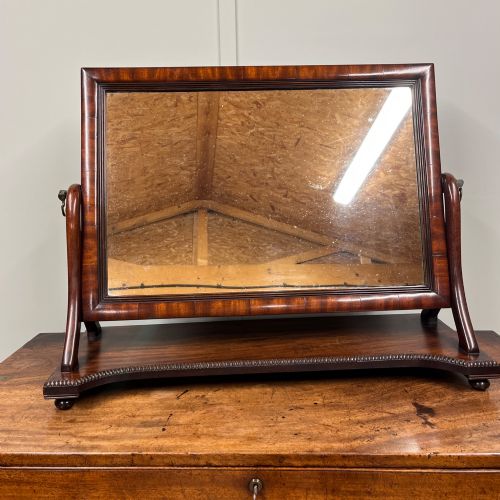
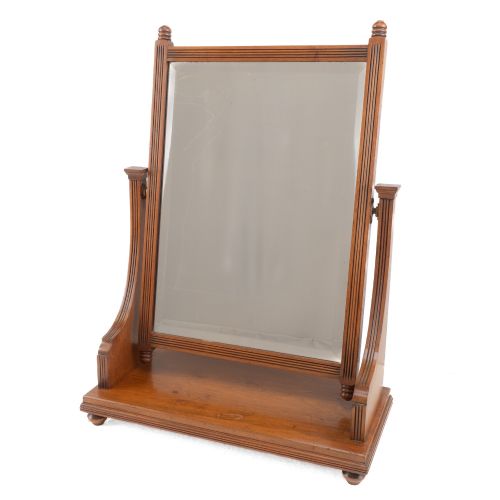
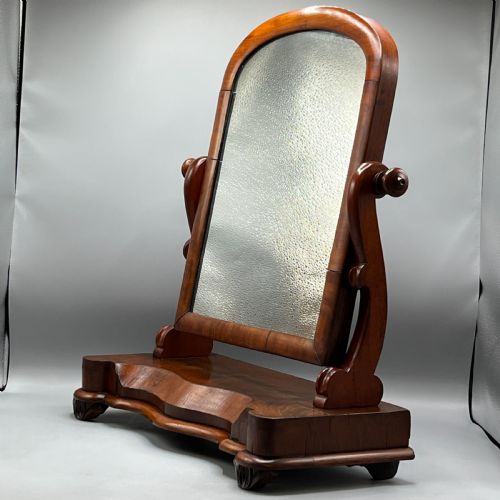


Victorian Mahogany Swivel Mirror
These victorian mahogany swivel mirror pieces offer practical reflection and rich timber grain, bringing period proportion to dressing spaces.
Victorian Mahogany Swivel Mirror
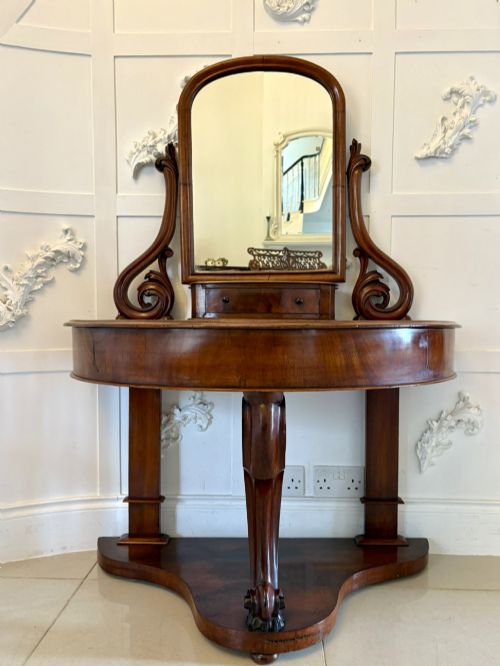
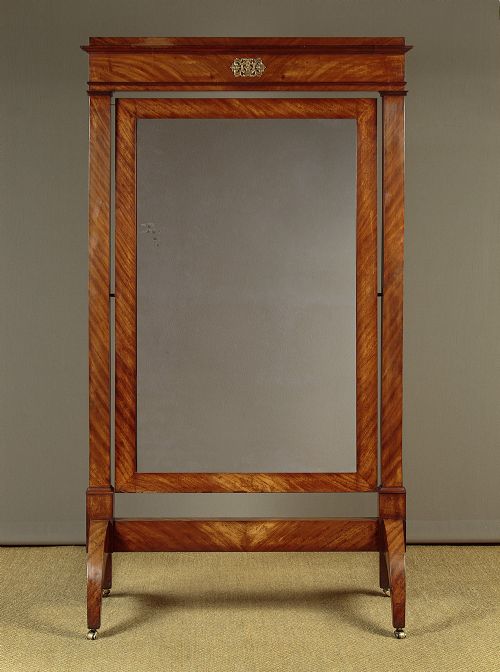
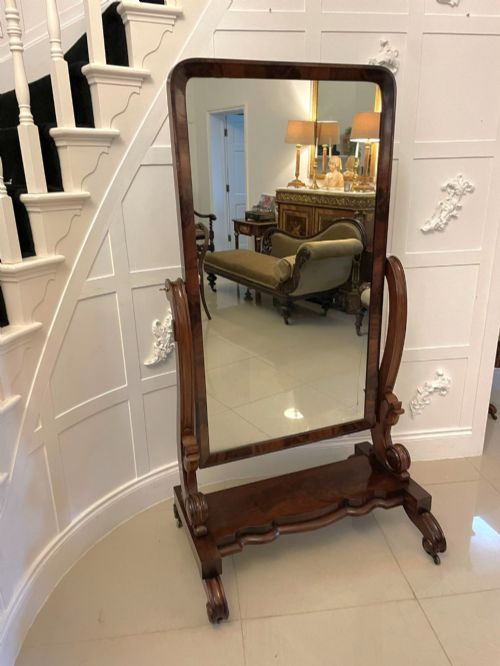
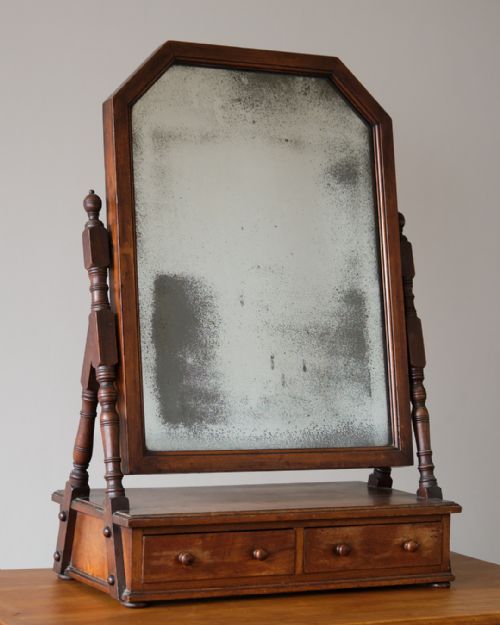
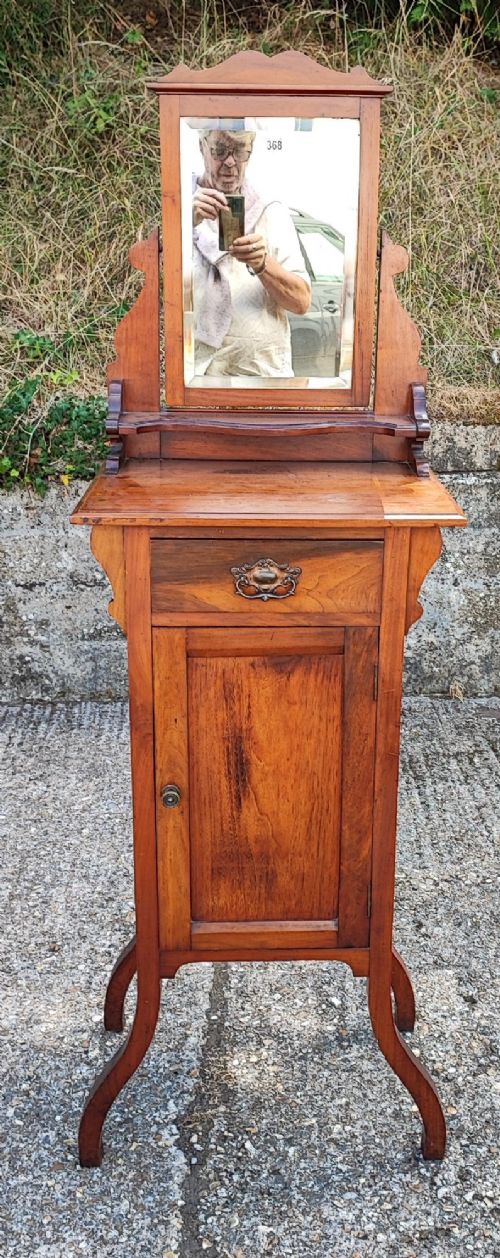
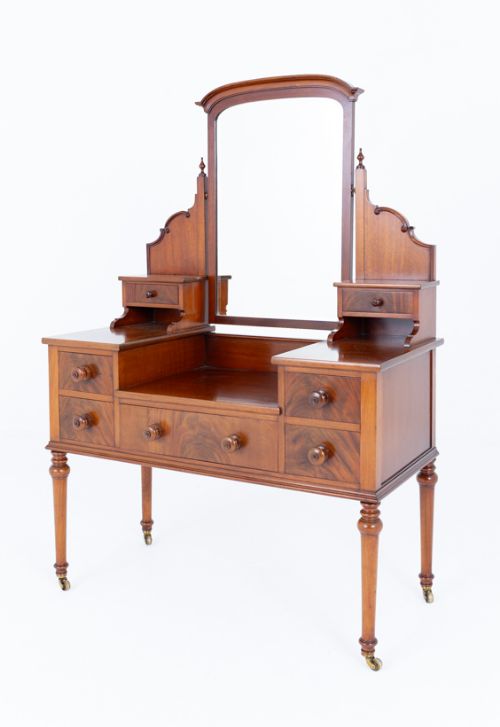
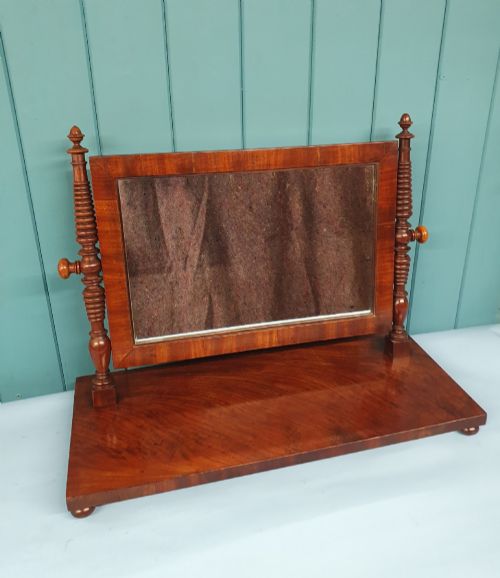
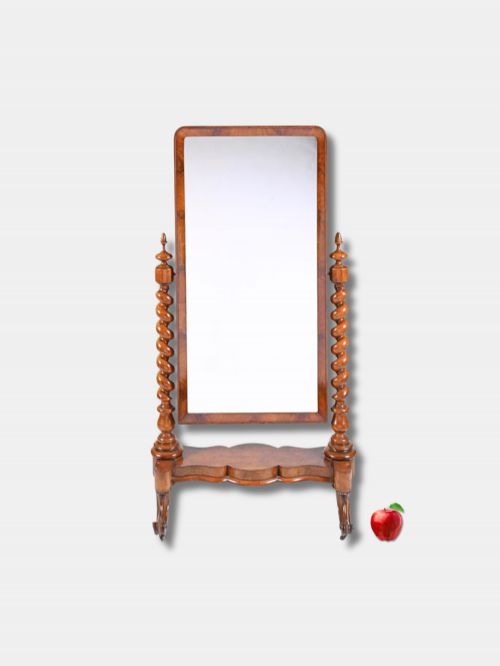
A victorian mahogany swivel mirror takes several distinct forms, appearing most frequently as a compact table top dressing glass or as a larger cheval mirror standing upon the floor. These pieces emerge predominantly from the nineteenth century, spanning periods from Regency and William IV through to Edwardian dates.
Table top versions sit upon dressing tables or chests, while full length cheval variants stand independently on sabre legs, barley twist supports, or pedestal bases. The evidence shows these functional items were retailed by established houses such as Harrods and Heal & Sons alongside makers like Thomas Rubergall.
Materials and Technique
Makers utilised solid mahogany and flame mahogany veneer over secondary timbers, combining dense grain patterns with glass mirrors and brass hardware. Brass candle holders, articulated arms, sabots, and castors appear frequently on larger cheval examples.
Joinery techniques incorporate turned wooden supports, such as barley twists, alongside carved frames and pivoting swing mechanisms held by brass screw pins. Marble tops occasionally provide a heavy, stable base for tabletop or swing mirror configurations.
Listings feature mahogany, glass, brass, marble, walnut, bone, and flame mahogany veneer across nineteenth century periods.
Evaluating Construction
Superior examples demonstrate depth in the mahogany grain, particularly where flame veneer is selected, paired with heavy cast brass fittings rather than plated base metals. The turning on supports and the crispness of carved wooden details reveal the hand of a skilled cabinet maker.
The integrity of the pivoting mechanism and the quality of the original mirror glass determine how well a piece survives use. Heavier structural elements, such as robust sabre legs or solid marble bases, separate substantial furniture from lighter domestic items.
Heal & Sons·Thomas Rubergall
The Victorian Mahogany Swivel Mirror Glossary
- Cheval mirror
- A full length swing mirror supported in a frame that allows it to tilt freely. These large standing pieces were designed for dressing rooms and bedrooms.
- Toilet mirror
- A smaller glass mounted on a stand or small drawers, designed to sit upon a dressing chest or table. They provide an adjustable reflection for close grooming.
- Flame mahogany
- A decorative veneer cut from timber where the branches join the main trunk, creating a distinctive flickering flame pattern. This figuring was highly prized in cabinet making.
- Sabot
- A metal shoe or cap fitted to the foot of a furniture leg to protect the timber and add ornament. They appear frequently in brass on Regency and William IV supports.
- Barley twist
- A spiral turning resembling a twisted loaf of bread, popular on vertical supports during the nineteenth century. This decorative technique added texture to structural framing.
Victorian Mahogany Swivel Mirror: Frequently Asked Questions
How do I date a swivel mirror?
Dating relies upon stylistic markers such as Regency sabre legs, William IV proportions, or later Victorian barley twist supports. Secondary woods, screw types, and bevelled glass edges also help establish the decade of manufacture.
Cabinet construction evolved across the nineteenth century, shifting from hand cut joints and heavy mahogany planks to lighter veneered frames and mass produced hardware by the Edwardian era.
Where should I place a cheval mirror?
A standing cheval mirror requires a stable floor space and sufficient clearance to tilt the frame without striking nearby walls or furniture. Placing the piece near a window captures and reflects natural light into darker corners of a room.
Because these mirrors pivot freely, positioning them away from heavy foot traffic prevents accidental bumps to the projecting legs and brass castors.
Can I replace the mirror glass?
Original mirror glass often exhibits silvering loss, foxing, and dark spots that reflect age and authenticity. Many collectors prefer to retain this original glass despite minor blemishes.
If the glass is broken beyond use, a modern replacement can be fitted into the old rebate, though this alters the historic fabric of the antique.