

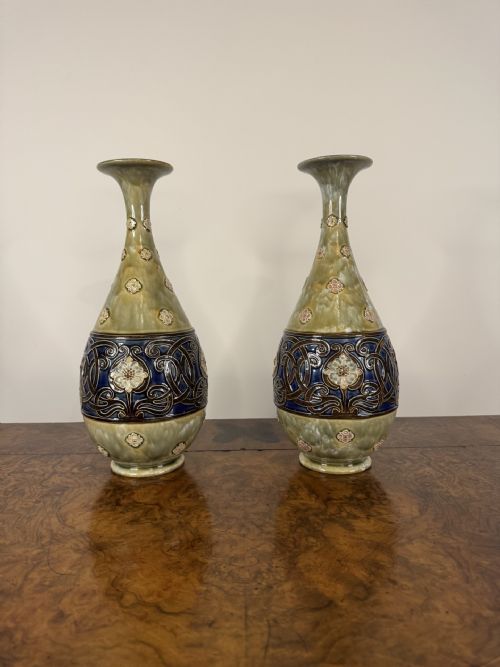


Doulton Stoneware Vessel
A doulton stoneware vessel brings tactile weight and rich, textured ornament from late Victorian and Edwardian workshops straight to a modern mantelpiece.
Doulton Stoneware Vessel
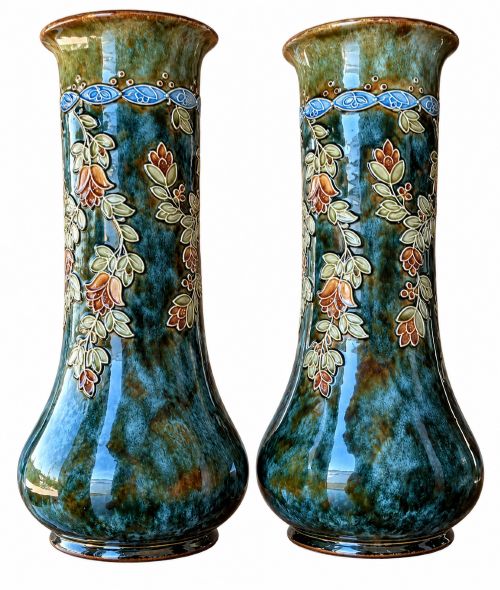
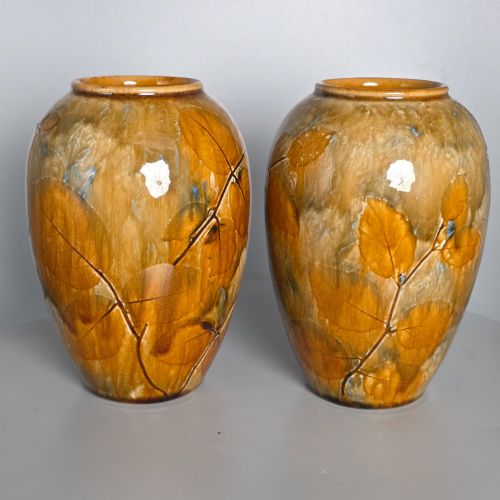
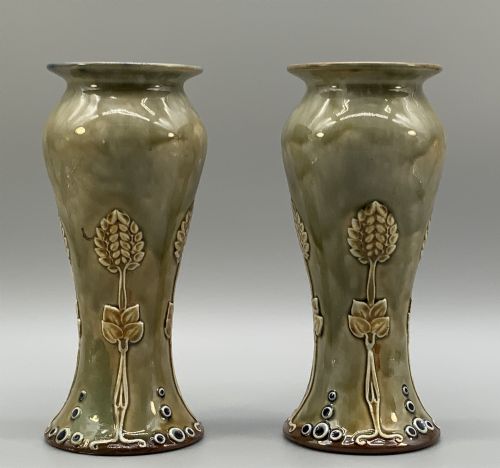
A doulton stoneware vessel encompasses sturdy jugs, decorative vases, and large jardinieres produced largely across the late nineteenth and early twentieth centuries. Collectors searching this phrase encounter substantial ceramic bodies shaped in Victorian and Edwardian aesthetics, spanning simple salt-glaze utility to elaborate Art Nouveau flora.
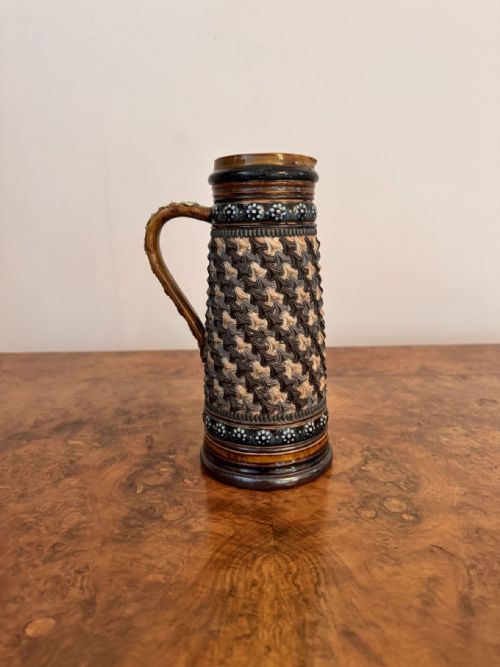
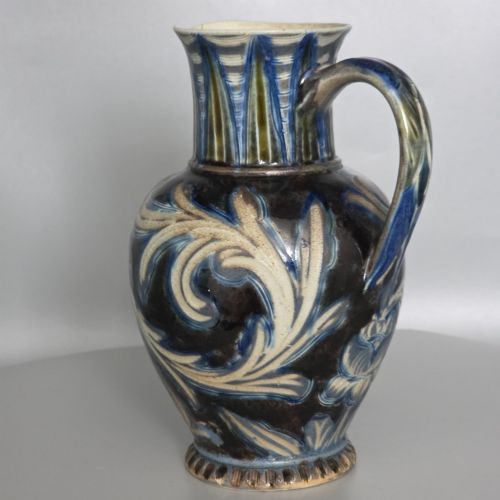
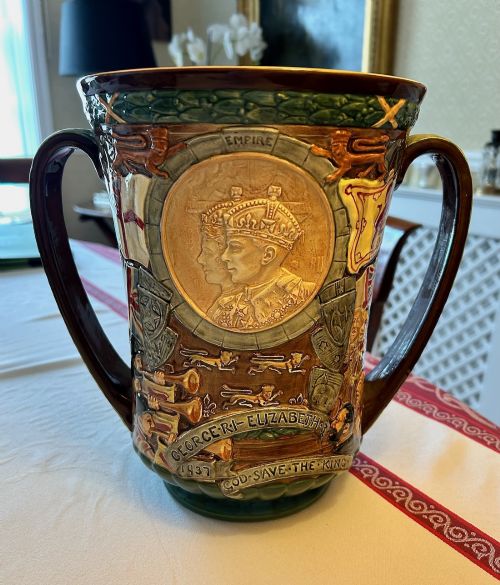
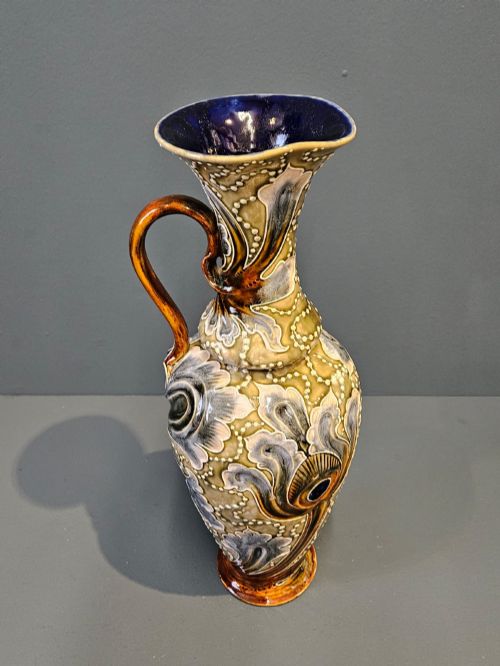
The most common forms on this page are baluster vases and jugs originating from the Lambeth pottery, often bearing incised patterns or applied decoration. Pieces range from modest nineteenth-century mugs to monumental exhibition pieces and commemorative coronation vessels.
Dated examples ground the selection in specific stylistic eras, notably the 1880s and 1900s, reflecting the peak years of art pottery production. These items bridge domestic utility and studio craft, serving as functional containers or decorative centrepieces.
Materials and methods
Makers utilised dense stoneware and ceramic bodies capable of holding liquids and accepting salt glazes fired at high temperatures. Many surfaces received enamel highlights, coloured slips, and incised geometric or organic motifs directly into the clay before firing.
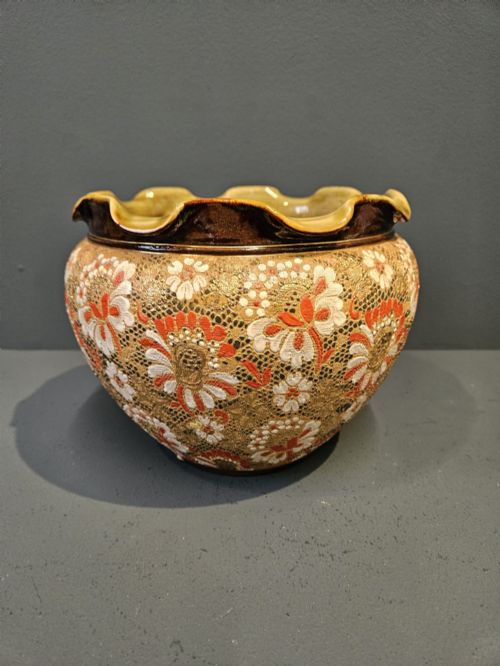
Some items incorporate sterling silver rims or mounts, combining heavy ceramic forms with fine metalwork. Patent techniques like Slaters patent introduced textured lace impressions into the clay body, creating distinct patterned fields beneath the glaze.
The inventory here spans periods from the 1870s through the 1940s, capturing the evolution of salt glaze and enamelled ceramic vessels.
Assessing quality in stoneware
Quality rests upon the clarity of the incising and the dexterity of the hand-applied decoration, particularly on pieces bearing named artist ciphers. Crisp execution of leaf patterns and botanical motifs separates standard production items from masterworks.
The ambition of the form dictates distinction, moving from simple utilitarian jugs to large exhibition pieces, elaborate pairs, and items featuring specialised silver mounts. Intricate surface treatments, such as pâte-sur-pâte or detailed enamel work, elevate individual examples.
Royal Doulton·Doulton Lambeth·Florence E Barlow·Eliza Simmance·Louisa Wakely·Emily Stormer·Ethel Beard
The Doulton Stoneware Vessel Glossary
- Stoneware
- A dense, impermeable ceramic pottery fired at high temperatures until vitrified. It resists liquids naturally without requiring a transparent glaze.
- Salt glaze
- A glassy, slightly textured finish achieved by throwing common salt into the kiln during high-temperature firing. This creates a characteristic orange-peel texture on the ceramic surface.
- Tyg
- A large drinking vessel featuring multiple handles, traditionally designed to be passed around a table. These pieces often date from the nineteenth century.
- Jardiniere
- An ornamental ceramic pot or stand intended to hold a living plant or floral arrangement. They appear frequently in Victorian and Edwardian interiors.
- Baluster
- A vase or architectural form that swells outward toward the base before tapering upward. This profile provides stable weight for heavy stoneware bodies.
Doulton Stoneware Vessel: Frequently Asked Questions
What is a doulton stoneware vessel?
A doulton stoneware vessel is a heavy ceramic piece produced by the Doulton potteries, primarily in Lambeth, featuring durable stoneware bodies and decorative glazes.
These items range from everyday jugs and vases to large exhibition jardinieres and commemorative loving cups.
How were these vessels used historically?
Many vessels served practical household functions, such as holding liquids, ale, or displaying cut flowers in domestic interiors.
Larger jardinieres and planters occupied orangeries and patios, while commemorative jugs marked royal coronations and jubilees.
How do I identify a Victorian piece?
Victorian examples typically display dense salt-glaze finishes, rich autumnal tones, and hand-incised foliage characteristic of late nineteenth-century arts and crafts production.
Stamps and artist monograms stamped into the clay base frequently point to specific decades and makers.
What styles appear in these listings?
The selection is dominated by Victorian, Arts and Crafts, and Art Nouveau styles, showcasing organic motifs and naturalistic textures.
Edwardian art pottery pieces also feature prominently, carrying forward the tradition of studio ceramics into the twentieth century.