



Doulton Lambeth Art Pottery
Doulton lambeth art pottery brings together textured stoneware bodies and rich glazes, made to be displayed.
Doulton Lambeth Art Pottery
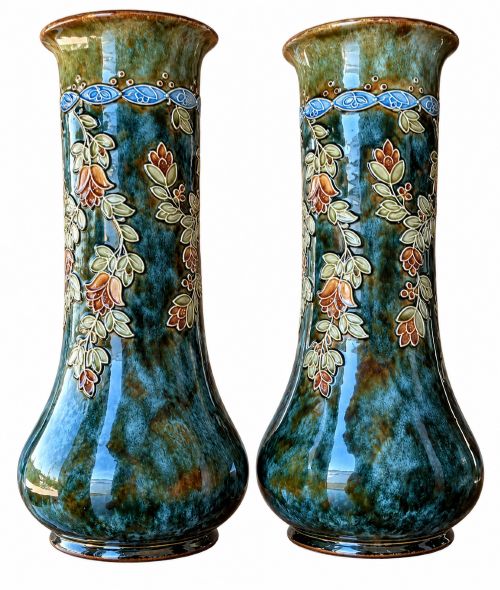
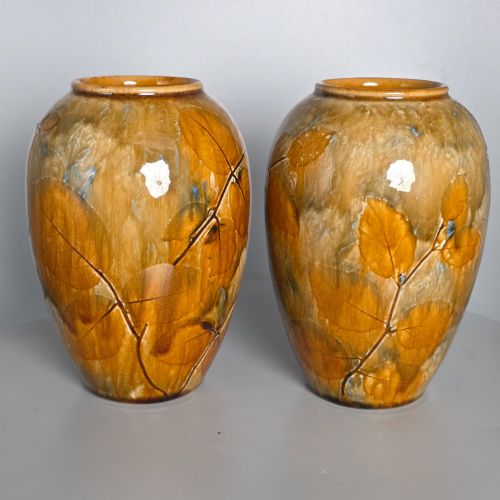
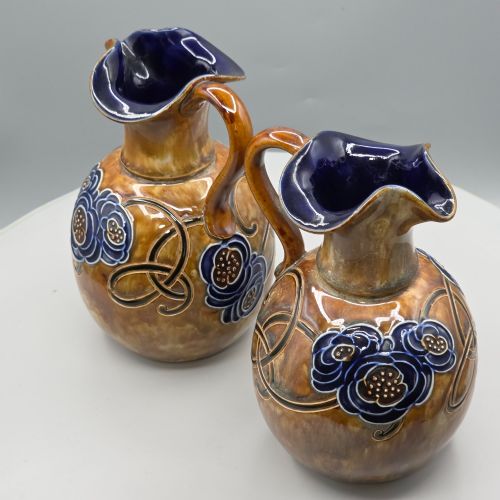
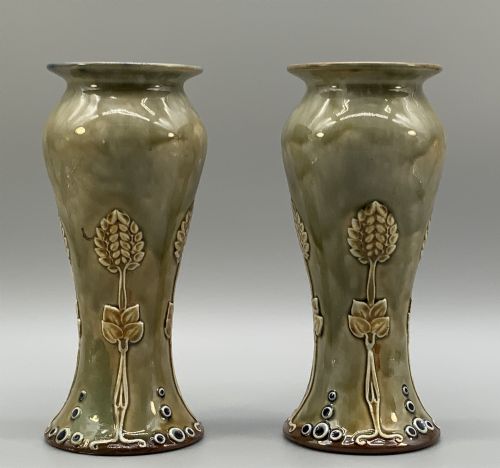
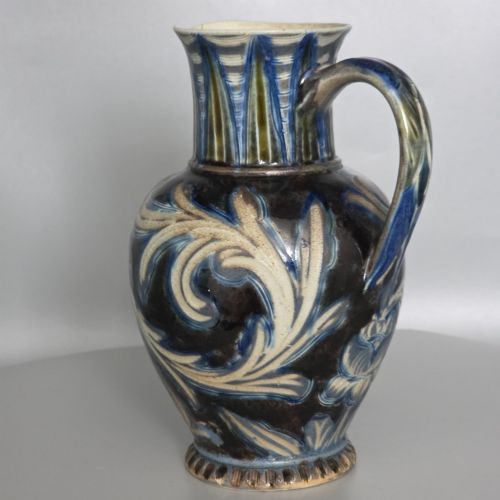
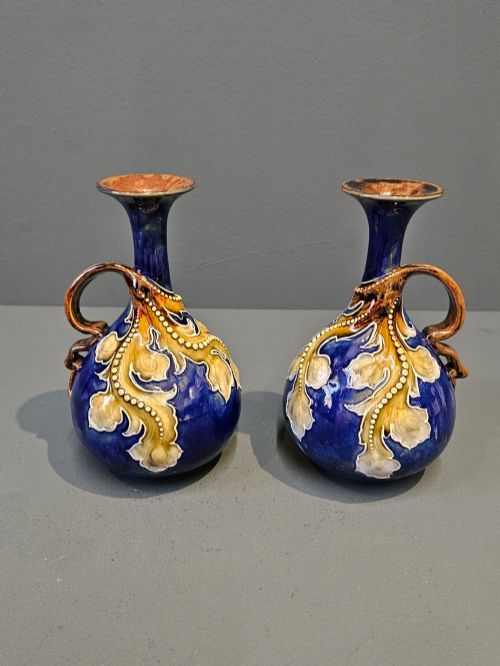
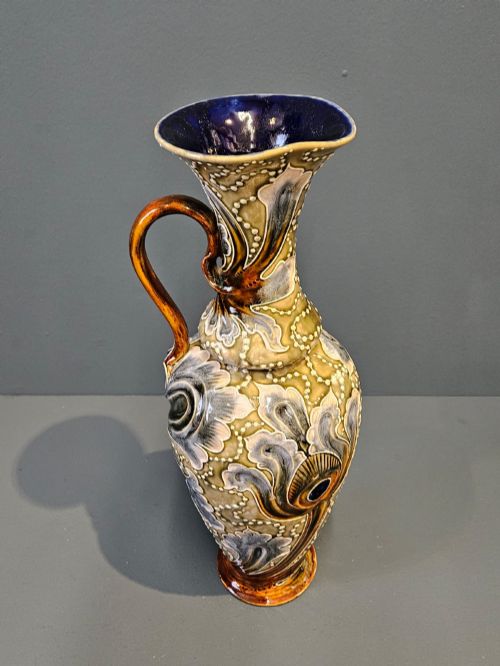
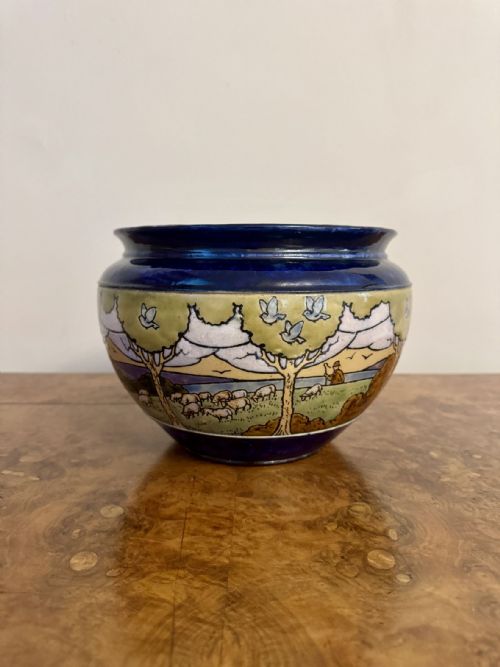
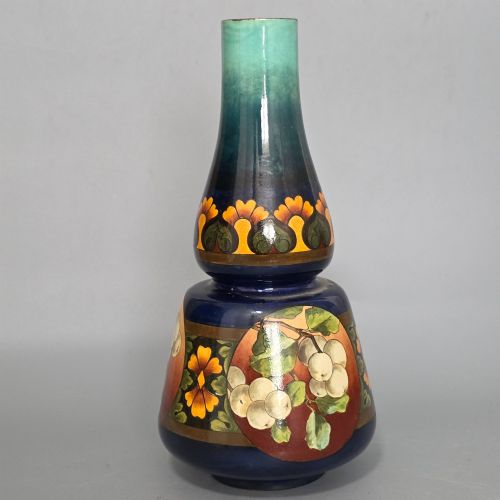
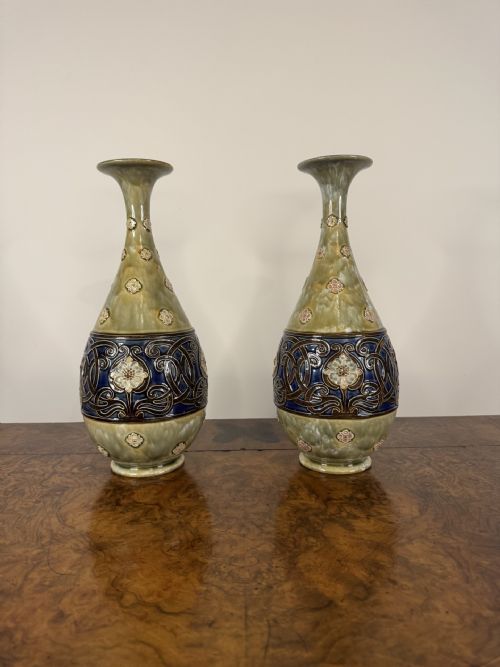
When you search for doulton lambeth art pottery, you enter a field of Victorian and Edwardian vessels defined by heavy stoneware bodies and distinctive studio decoration. The pieces you meet most often on this page take the form of vases, jugs, and jardiniere vessels produced across the nineteenth and early twentieth centuries.
Makers working within this tradition produced both domestic vessels and decorative showpieces, drawing on periods from the Victorian era through to the nineteen-twenties. Forms range from modest baluster vases to large ewers and loving cups, reflecting the output of a major British ceramic institution.
The aesthetic bridges utility and ornament, encompassing styles from strict Victorian design to fluid Art Nouveau and geometric Arts and Crafts motifs. These items survive as key examples of British art pottery, appealing to collectors of historical ceramics.
Materials and Technique
Potters built these items using dense stoneware and earthenware bodies capable of holding rich surface ornament. Salt glaze and standard glaze applications provided a durable, lustrous finish that sealed the clay body while enhancing incised patterns.
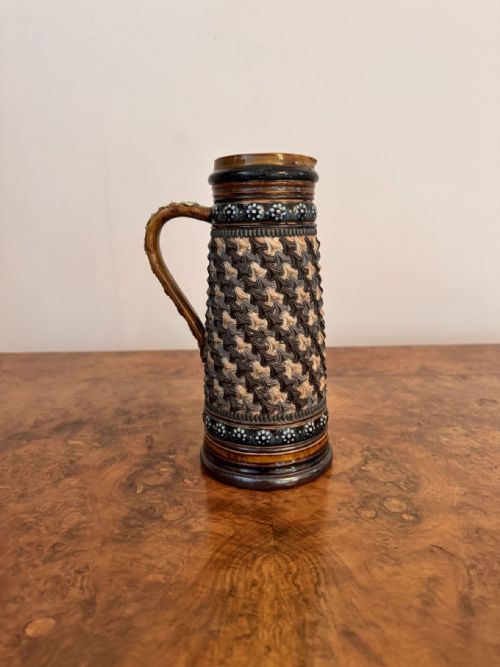
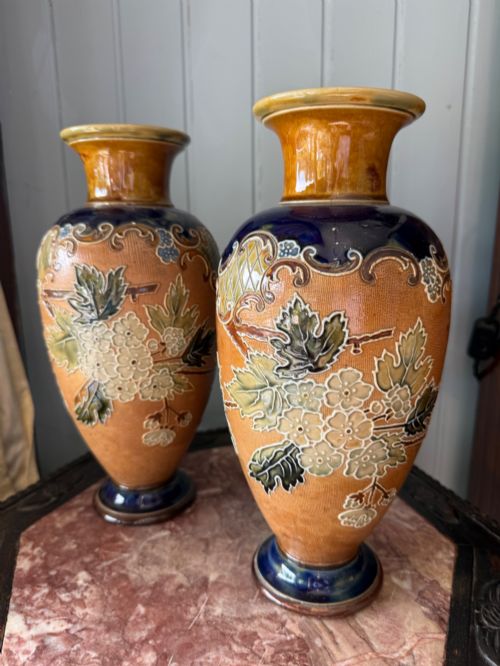
Decoration relied on incised carving, applied enamel floral decor, and specialised patent techniques like Slaters patent texturing. Individual artists added distinct painted details, working directly onto the damp clay before firing.
Some ewers wear silver hats.
Evaluating Quality
Quality rests in the crispness of the incised carving and the depth of the glaze application. Pieces decorated by named studio artists display superior control and individual artistic expression compared to standard factory output.
The integration of metal mounts, such as silver rim fittings, and the complexity of multi-coloured enamel decoration also separate standard production wares from high-end exhibition pieces.
Alice Euphemia Thatcher·Florence E Barlow·Louisa Wakely·Eliza Simmance·Emma Shute·Frank Butler·Emily Edwards·Emily Stormer·Ethel Beard
The Doulton Lambeth Art Pottery Glossary
- Stoneware
- A dense, vitrified pottery body fired at high temperatures until non-porous. It forms the heavy, durable foundation for most pieces in this category.
- Salt Glaze
- A finish created by throwing common salt into the kiln during high-temperature firing, producing a distinctive pitted texture similar to orange peel.
- Slaterware
- A patented technique utilising lace or fabrics pressed into damp clay to create textured background patterns before glazing.
- Faience
- Tin-glazed earthenware used as a smooth canvas for painted artistic decoration rather than incised stoneware carving.
- Baluster
- A vase form featuring a rounded body that tapers upward into a narrow neck, common in nineteenth-century studio pottery.
Doulton Lambeth Art Pottery: Frequently Asked Questions
What is doulton lambeth art pottery?
These items are decorative ceramic and stoneware vessels produced by the Doulton studios in London. They encompass vases, jugs, and jardiniere forms created during the Victorian and Edwardian eras.
The works combine mass production capabilities with individual artistic input, often featuring hand-incised patterns and specialised glazes applied by named studio specialists.
How were these ceramic pieces used?
Original owners utilised these vessels primarily for interior display on mantelpieces, sideboards, and drawing-room tables. Larger pieces such as jardiniere bowls held indoor plants and ferns.
Some forms served practical functions in the home, including jugs for serving beverages and beakers fitted with silver rims for domestic dining.
How do I date these items?
Dating relies on identifying stylistic markers such as Victorian revival motifs, Arts and Crafts geometric designs, or flowing Art Nouveau lines. Period categories span from the eighteen-seventies through to the nineteen-twenties.
Factory stamps, impressed monogram marks, and artist signatures found on the base provide concrete evidence for chronological placement.
How do I display them at home?
These pieces suit placement on wooden sideboards or open shelving where their textured stoneware surfaces catch natural light. Grouping items of differing heights creates a balanced arrangement.
Keep them away from direct heat sources and handle them carefully by the body rather than narrow handles or rims to protect the historical material.