
Dished Top Tripod Table
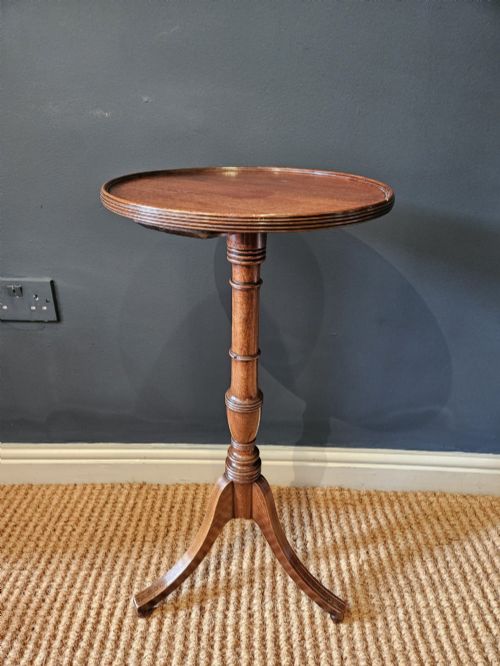
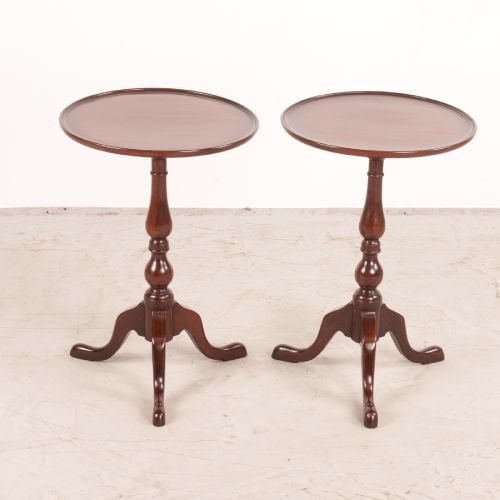
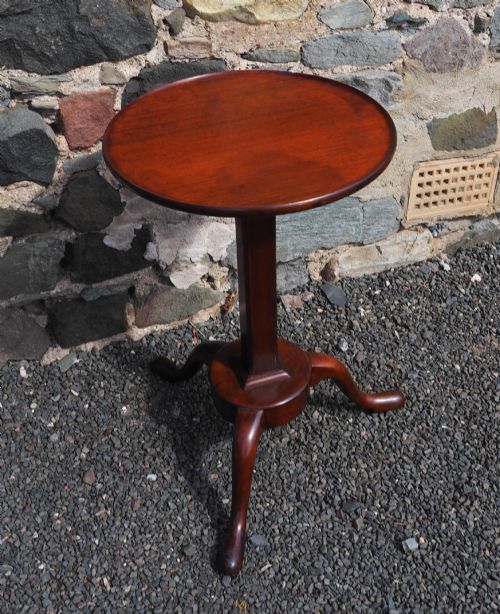
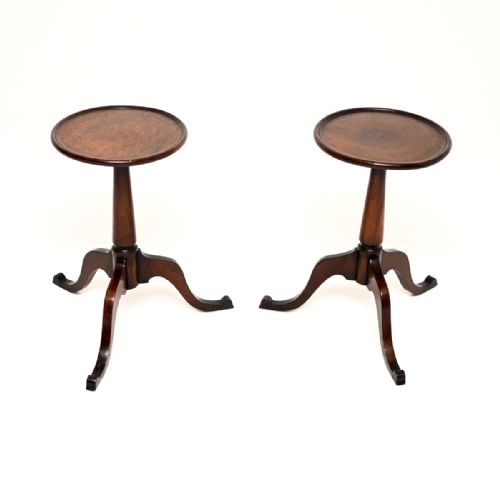
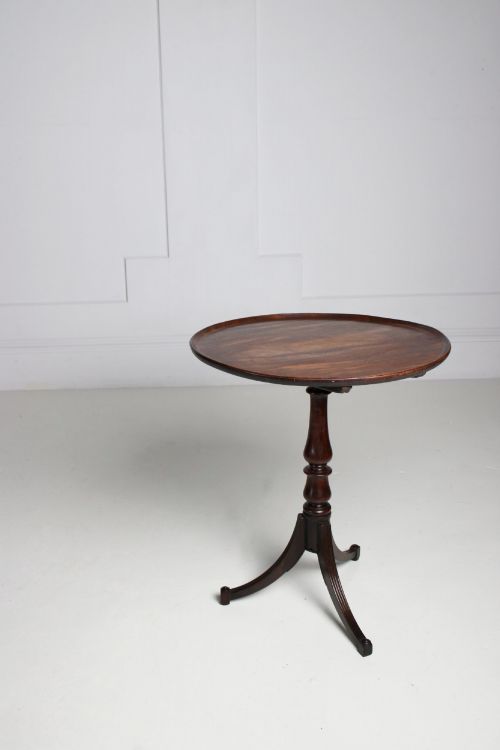
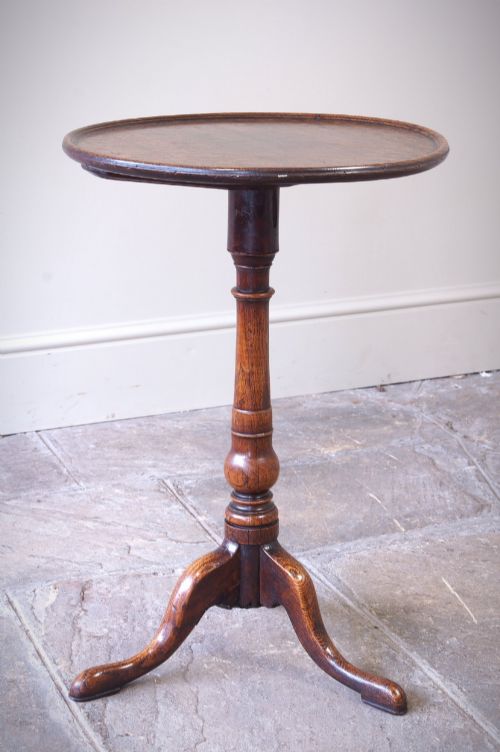
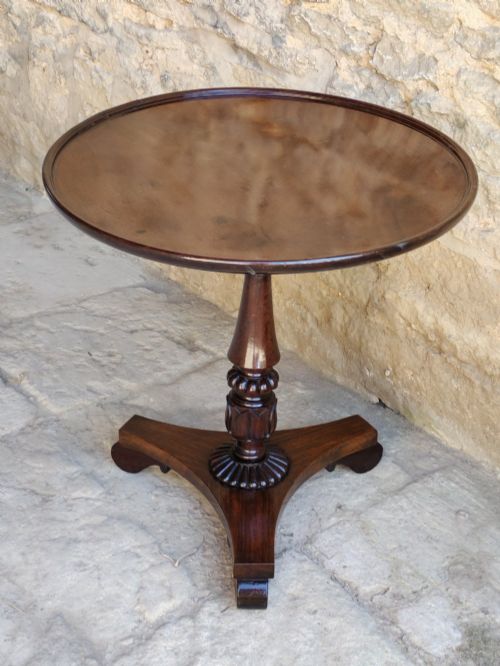
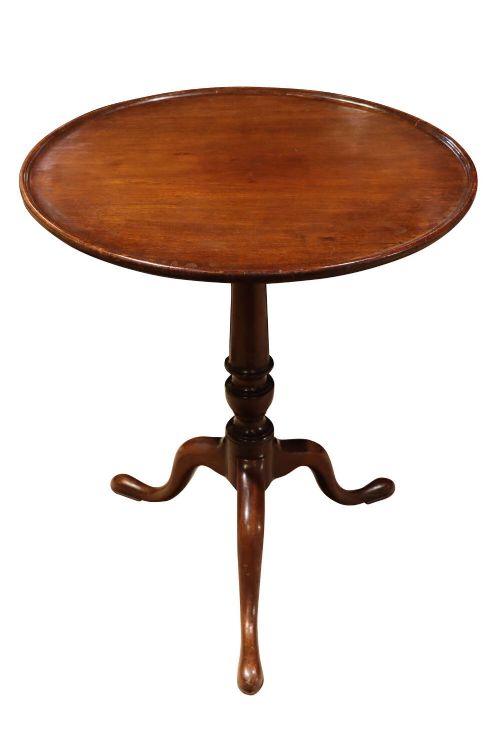
A dished top tripod table is a sturdy, raised-rim occasional piece designed to hold candles, wine, or tea without items sliding off.
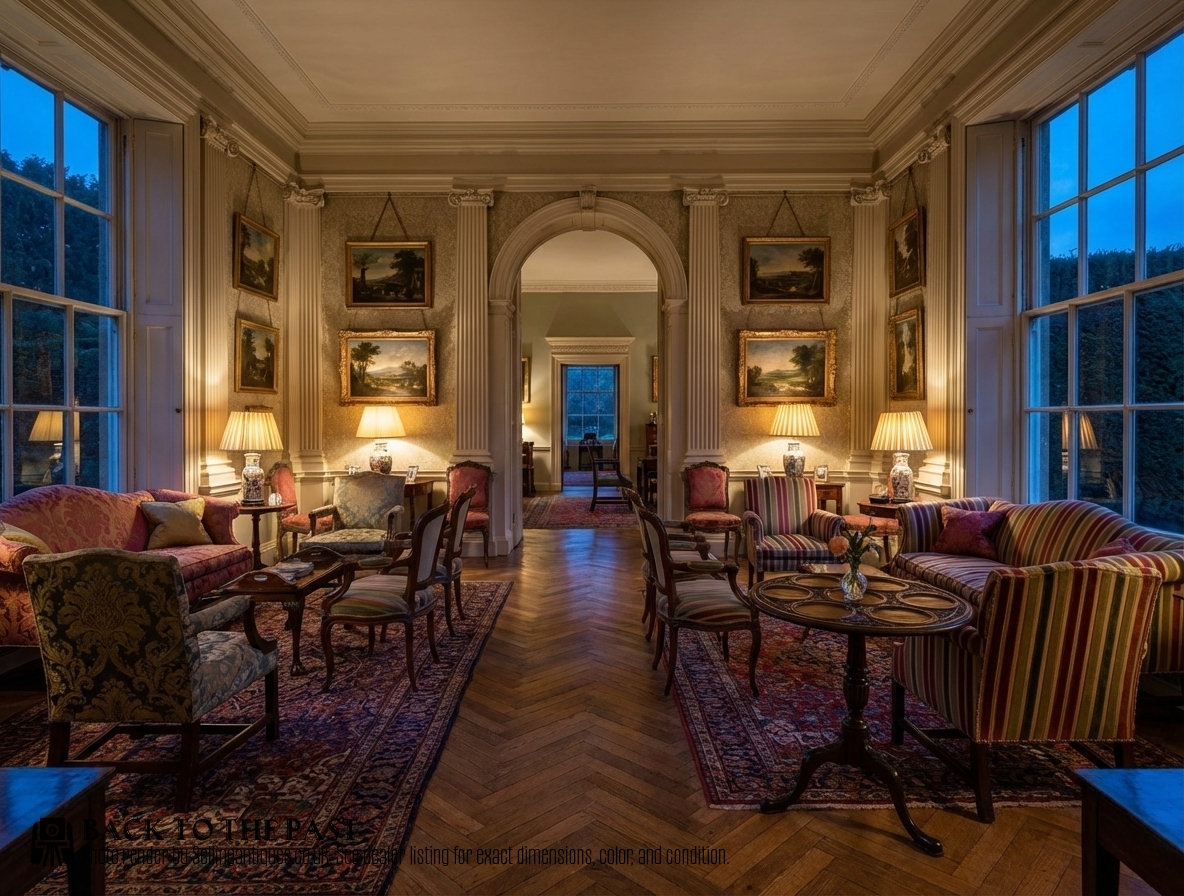
Dished Top Tripod Table
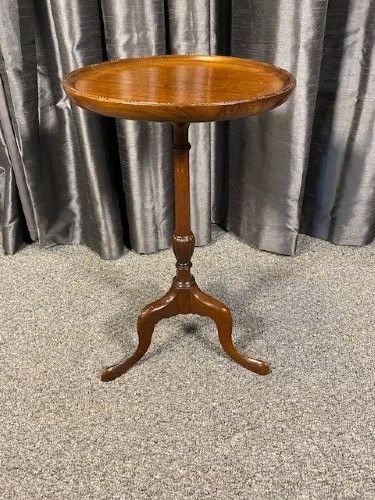
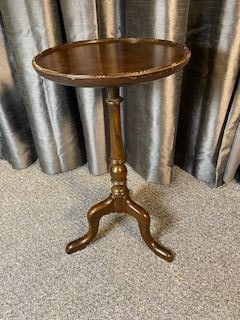
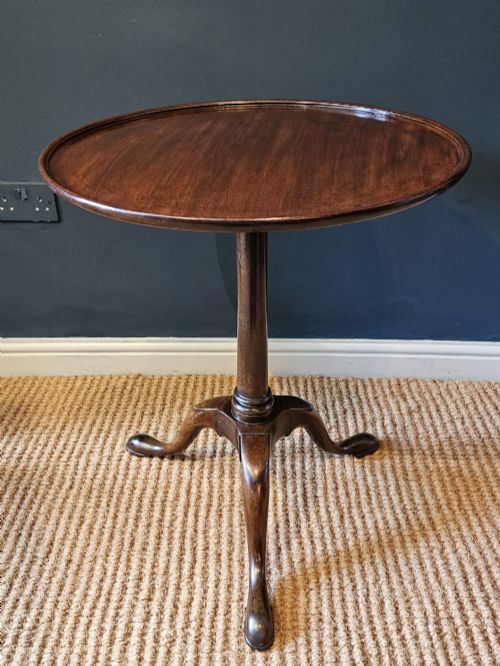
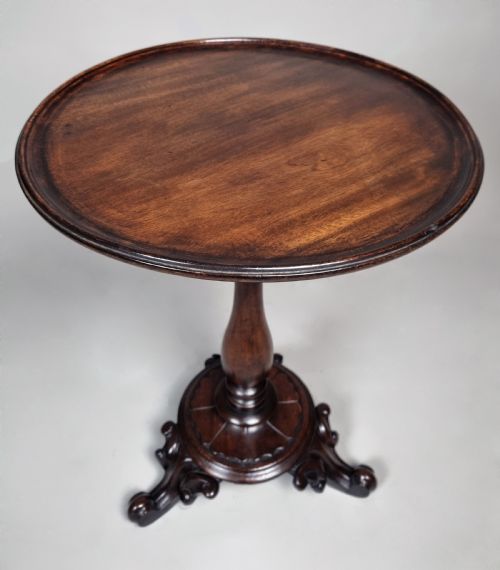
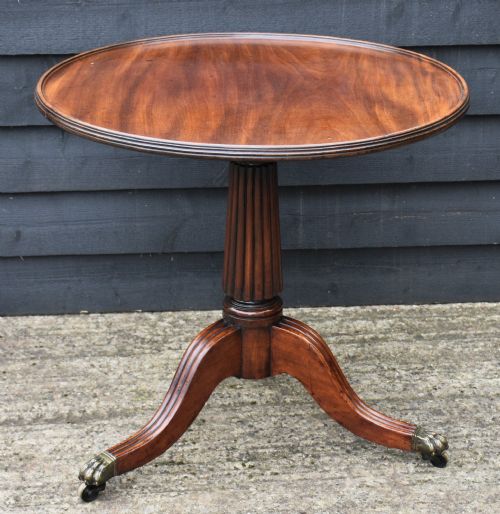
A dished top tripod table stands on a central pillar supported by three splayed legs, keeping the structure stable on uneven older floors. The defining feature is the circular top with a raised rim carved or turned directly from the solid timber.
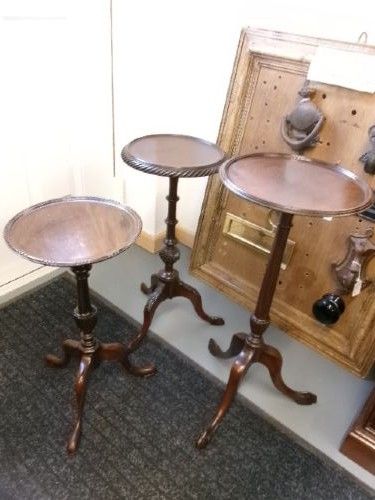
You will most frequently encounter mahogany examples dating from the Georgian period through to the nineteenth century, often referred to interchangeably in the trade as wine tables, kettle stands, or candlestands. These compact forms served flexible domestic roles in sitting rooms and parlours, moving easily beside chairs or sofas.
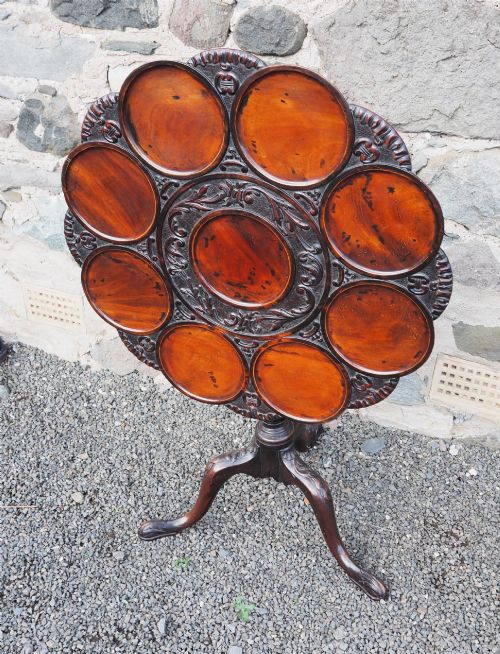
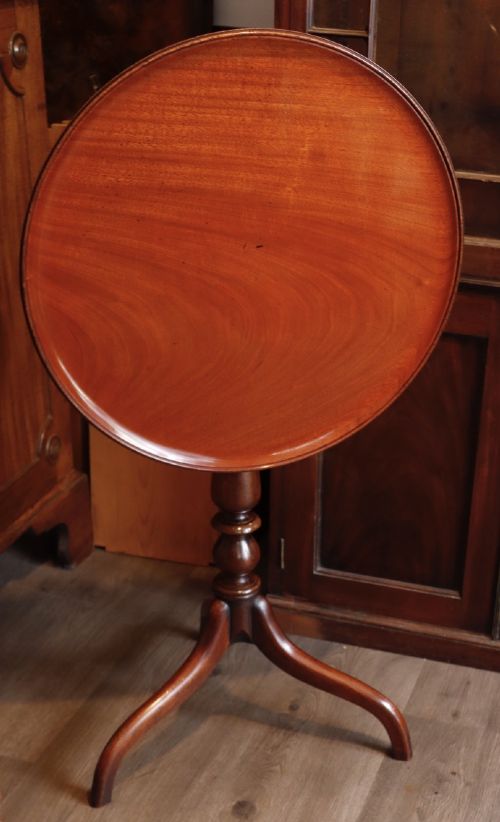
The archive and current listings show variations including tilt-top mechanisms, birdcage mountings that allow the top to revolve and tip, and simpler fixed surfaces. Oak, ash, and walnut also appear in earlier regional iterations alongside the dominant mahogany stock.
How they were made
Cabinetmakers constructed these tables primarily from dense hardwoods like mahogany and walnut, turning the central column on a lathe while shaping the three legs to form a cohesive tripod base. The distinctive raised dish top was laboriously carved down from a solid thick board rather than added as a separate applied moulding, ensuring structural integrity.
Many examples incorporate clever mechanical joinery, such as birdcage framing blocks that permit the table top to pivot or tilt upright for storage against a wall when not in use. Brass fittings and hinges occasionally appear on specific Regency or Victorian iterations to reinforce moving parts.
Listings span the Georgian, Regency, Victorian, and Edwardian eras, with mahogany remaining the predominant timber used across centuries.
What varies in quality
The distinction between ordinary and superior examples lies in the crispness of the turning on the central pillar and the elegance of the leg profile, where slender, well-proportioned cabriole or tapered forms demonstrate greater artisanal skill. Timber selection dictates the visual depth, with dense, finely figured grain commanding higher regard than plain stock.
Integration of the tilt mechanism and birdcage pivot affects desirability, as tight, smooth movement without excessive wobble reflects meticulous original fitting. The execution of the dished rim itself - whether sharp, uniform, and cleanly integrated into the top board - marks the difference between standard production and master cabinetwork.
Gillows
The Dished Top Tripod Table Glossary
- Birdcage
- A timber framework beneath the table top that allows it to both rotate and tilt. This clever assembly uses small turned spindles connecting two parallel platforms.
- Snap top
- A table top fitted with a spring catch or latch that locks the surface flat for use or releases it to tilt vertically. It allows the furniture to sit flat against a wall when not needed.
- Tripod base
- A support structure comprising three legs radiating from a central turned pedestal. This design prevents rocking on uneven floorboards.
- Cabriole leg
- A furniture leg that curves outward at the knee and tapers inward toward the foot, often ending in a pad or claw.
- Kettle stand
- A small specialised table designed to hold a boiling water vessel for tea preparation. These share the compact dimensions and raised rims of wine tables.
Dished Top Tripod Table: Frequently Asked Questions
What were dished top tripod tables used for?
These tables served primarily as portable stands for holding wine bottles, tea equipment, or candlesticks within domestic rooms. Their compact size allowed servants to move them easily wherever refreshments were required.
The raised rim prevented expensive glassware or ceramic vessels from sliding off the edge when bumped. Owners often placed them beside seating areas during social gatherings.
How do I tell an 18th century table from a later copy?
Eighteenth-century examples show hand-cut joinery marks, genuine timber shrinkage, and wear patterns consistent with heavy age. The turning on the central columns tends to be crisper and more bespoke than mass-produced later versions.
Later Victorian and Edwardian reproductions often utilise heavier internal hardware and machine-cut elements. Examining the underside of the top reveals the tool marks left by original cabinetmakers.
Can I use a wine table as a lamp table?
Yes, their sturdy tripod bases and compact surface areas make them ideal platforms for modern lighting. They fit neatly into corners or beside reading chairs without taking up excessive floor space.
The raised rim also contains small items like remotes or coasters effectively. Ensure the weight of the lamp matches the stability of the particular three-legged base.
Why do some tops tilt?
Tilt mechanisms were originally engineered to save floor space in crowded Georgian and Regency interiors. When the room was not in use for dining or drinking, servants tipped the surfaces vertically.
This feature also made the furniture much easier to transport between different rooms. Today, it remains a helpful indicator of period mechanical ingenuity.