


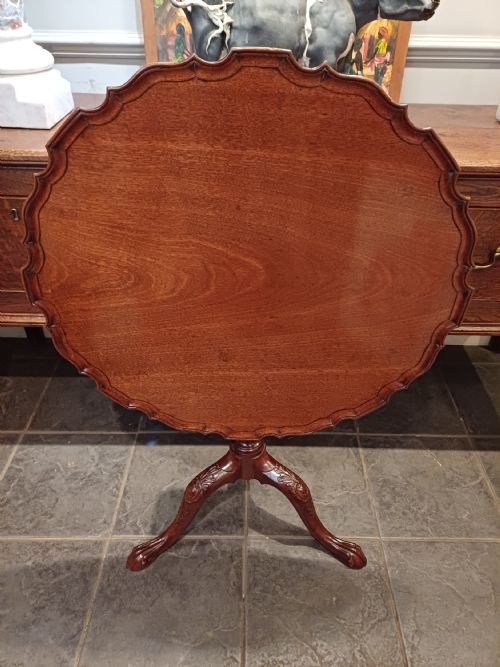


Rich Mahogany Wine Table
A rich mahogany wine table offers compact surface space with traditional tripod framing, bringing warmth to any room.
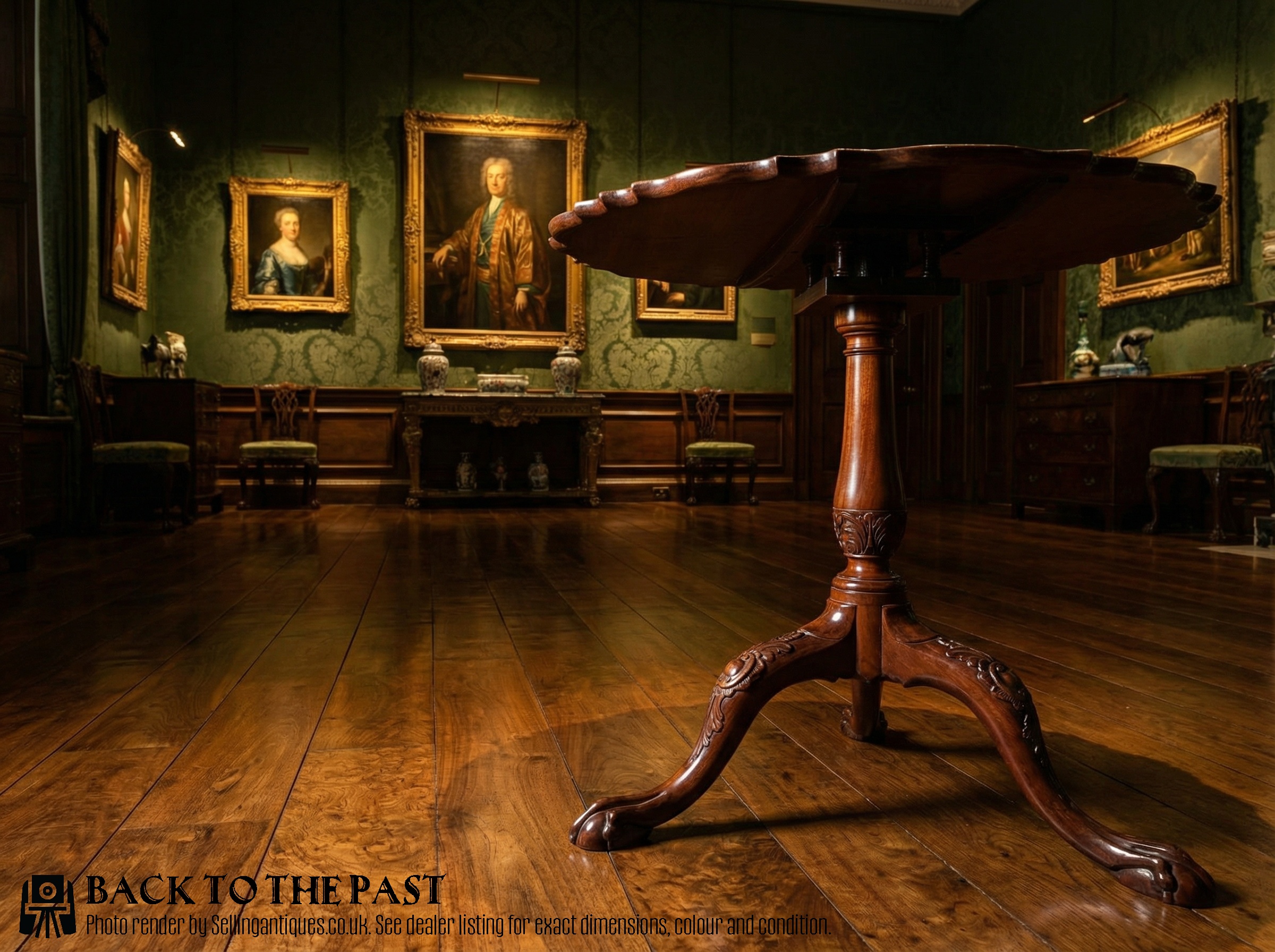
Rich Mahogany Wine Table
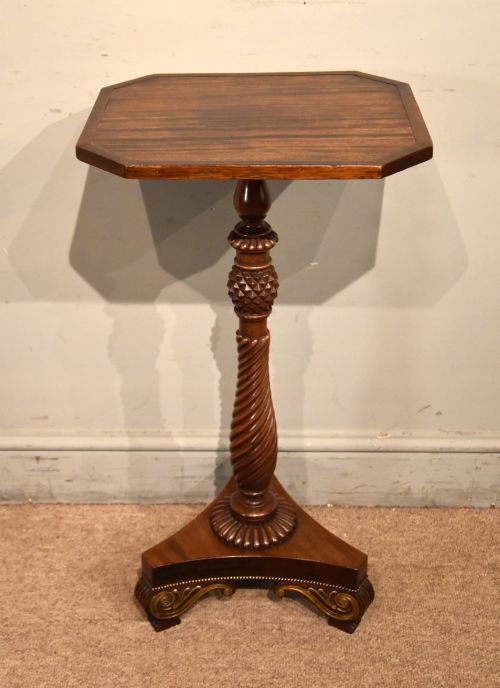
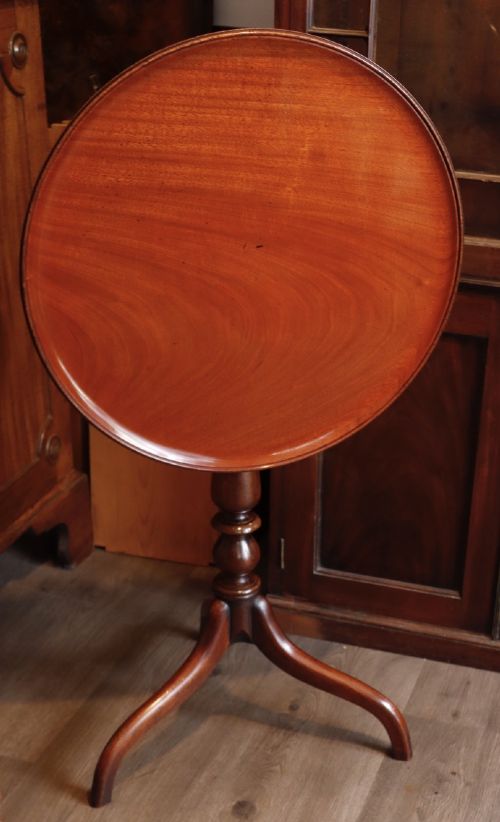
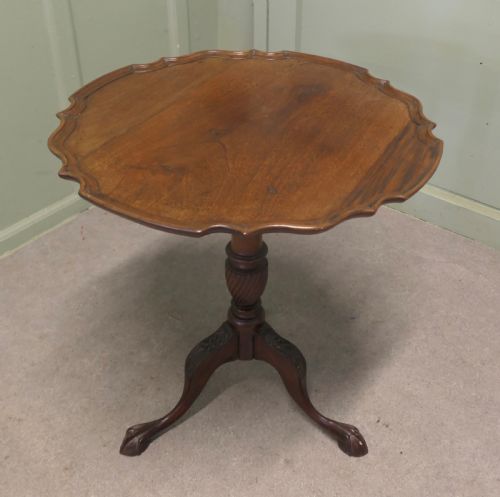
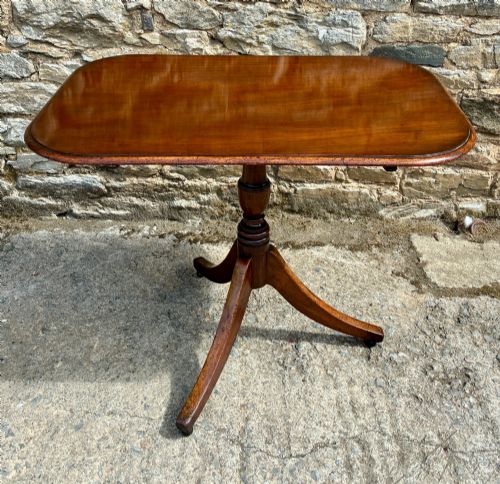
A rich mahogany wine table serves as a portable and versatile surface, often featuring a distinctive tripod base and a circular top. These items appear across multiple eras, including the Georgian, Regency, and Victorian periods.
Buyers encounter forms such as tilt-top tables, birdcage supports, and octagonal lamp tables designed for domestic use. The predominant materials recorded in the evidence are mahogany and brass.
Objects range from eighteenth-century George II tripod tables to Edwardian occasional pieces and later 1930 examples. Many pieces incorporate mechanical actions like snap-top or tilt-top functions for ease of storage.
How they were made
Construction relies heavily on solid and figured mahogany timber, shaped into slender turned pedestals and curving tripod legs. Cabinetmakers utilised timber selection to highlight natural grain patterns across the circular tops.
Many examples incorporate pivoting mechanisms, birdcage mounts, and brass fittings to allow the table top to tilt vertically when not in use. Joinery techniques connect the central pillar to three supportive legs for stability.
The listings include mahogany and brass across periods spanning the George II era through to the 1930s.
What varies in quality
Quality rests in the depth of the timber's finish, often described as a rich patina, alongside the crispness of turned details on the pedestal. Superior examples display carefully proportioned tripod bases that balance the weight of the top securely.
The sophistication of the mechanism differentiates standard domestic items from finer reception pieces, particularly where birdcage actions or tilt-top joints operate smoothly without excess movement.
Gillows
The Rich Mahogany Wine Table Glossary
- Tilt top
- A table top hinged to the pedestal so it can be turned to a vertical position. This allows the furniture to stand flat against a wall when not in use.
- Birdcage
- A wooden framework beneath the table top that permits both rotation and tilting. It adds height and mechanical complexity to tripod tables.
- Tripod base
- A support structure consisting of three diverging legs connected to a central pillar. This design ensures stability on uneven floors.
- Piecrust edge
- A raised, carved moulding along the perimeter of the table top resembling pastry work. It is typically associated with eighteenth-century craftsmanship.
- Snap top
- A spring-loaded or catch mechanism that locks a tilting table top securely into the horizontal position. It prevents accidental tipping during use.
Rich Mahogany Wine Table: Frequently Asked Questions
What is a rich mahogany wine table?
A rich mahogany wine table is a small, movable surface supported by a central pillar and three legs, designed for holding drinks or small objects.
These pieces date from the eighteenth century onwards and frequently feature tilting tops for convenient storage.
How were these tables used originally?
Originally placed beside seating in reception rooms, these tables held glasses, decanters, or lamps during social gatherings.
Their light construction allowed servants to move them easily around a room as needed.
What does tilt top mean?
A tilt top mechanism includes a hinge beneath the surface that allows the wooden top to rotate ninety degrees into a vertical plane.
This clever design saved valuable floor space in historic interiors when the furniture was idle.
How do I identify a Georgian table?
Georgian tables often display restrained classical proportions, finely turned central columns, and pad or spade feet on the tripod base.
Craftsmen of this era focused on timber figure and structural harmony rather than heavy ornamentation.