

Dark Wood Tilt Top
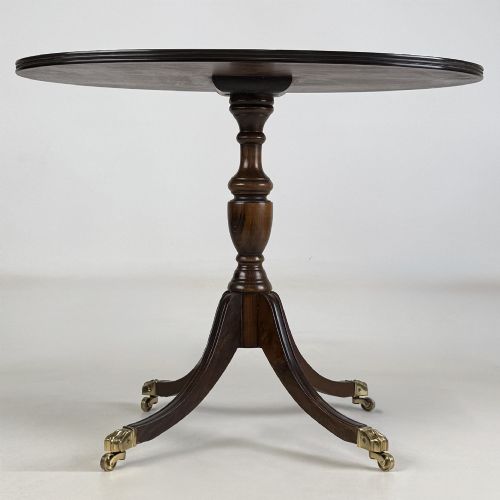
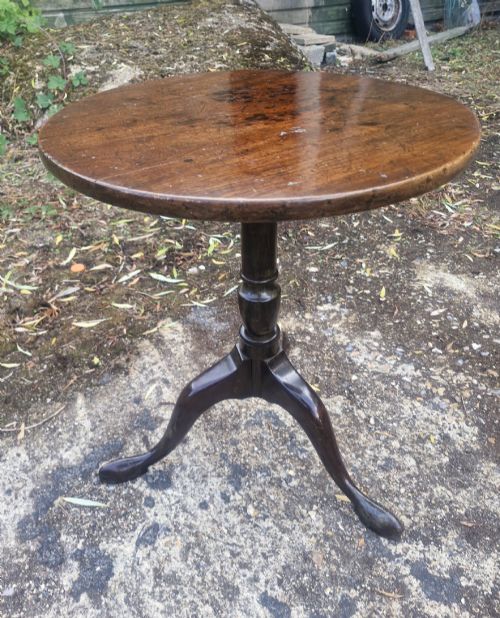
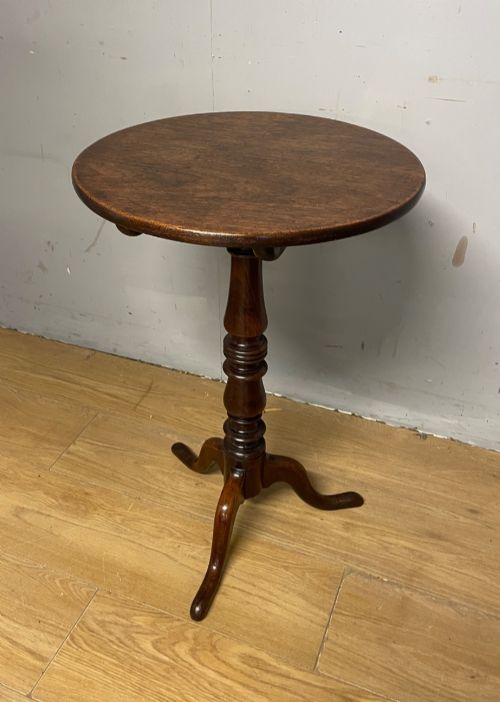
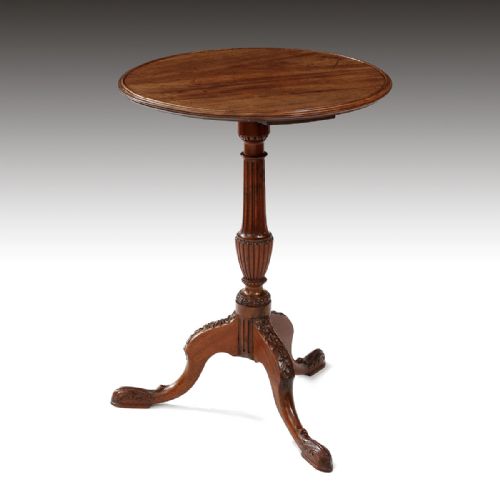
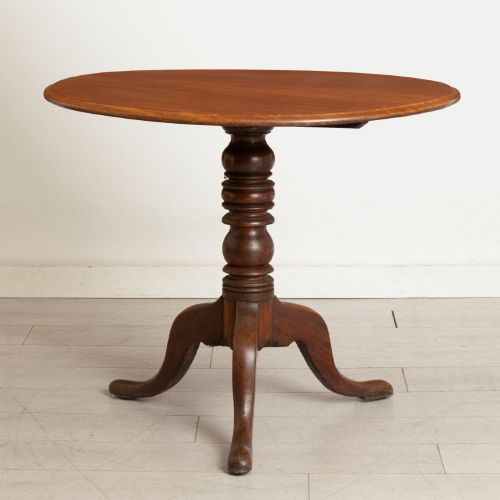
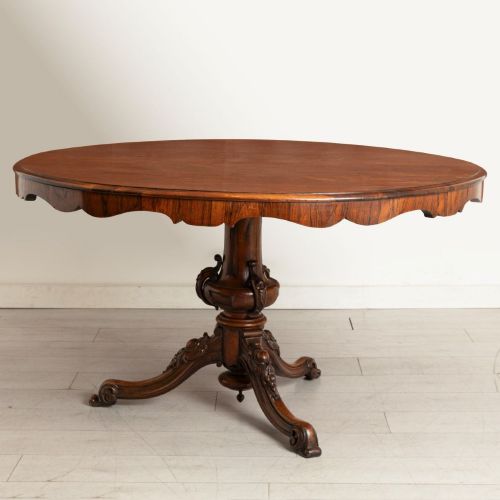
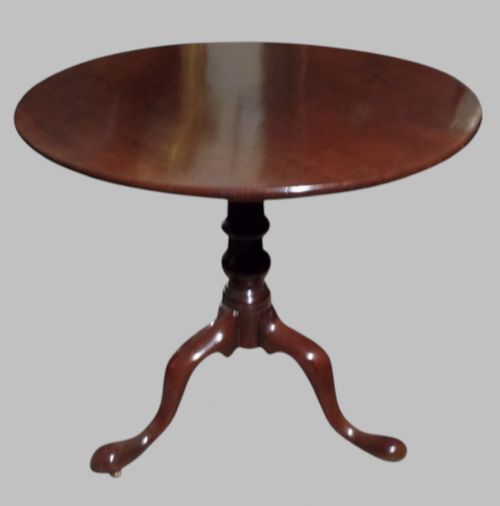
These dark wood tilt top tables are practical surfaces built to tip upright when not in use, spanning the Georgian, Regency and Victorian periods.
Dark Wood Tilt Top
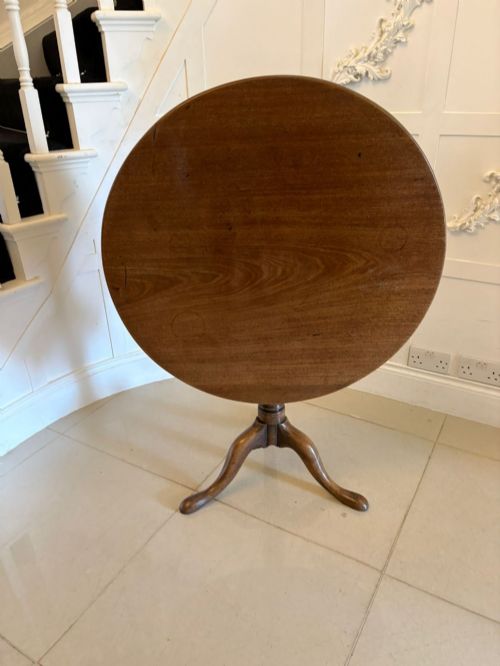
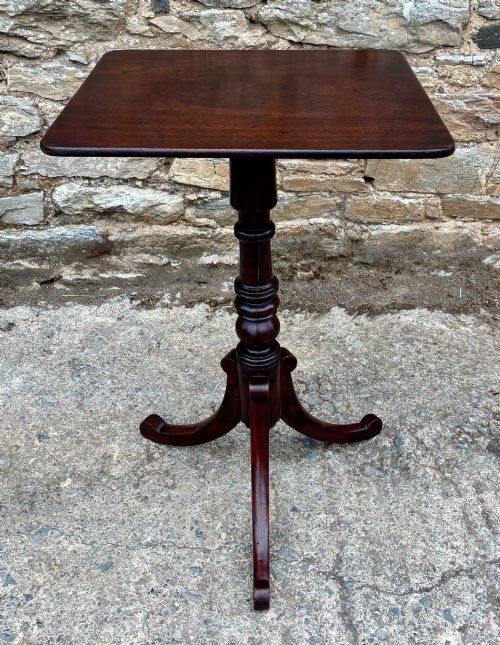
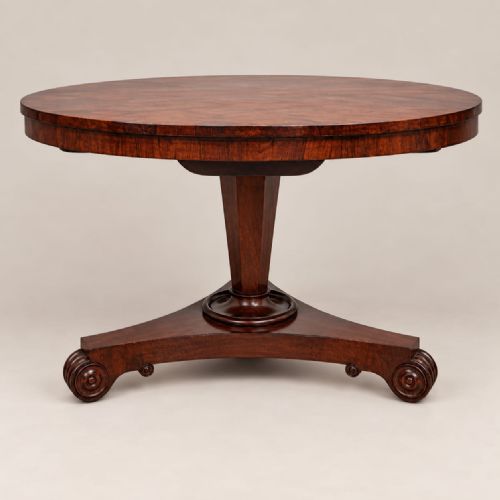
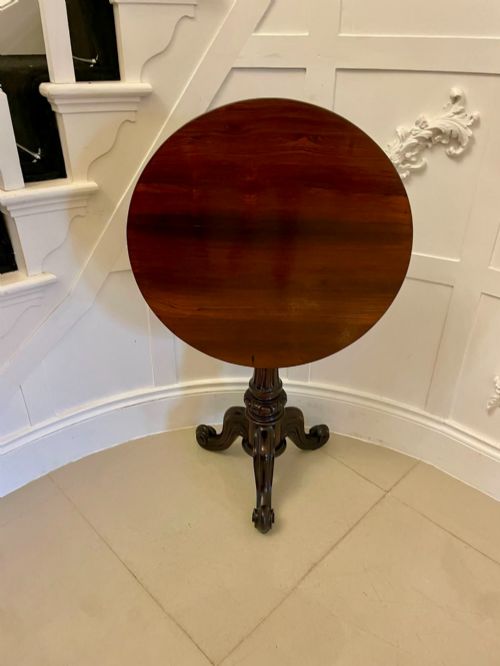
A dark wood tilt top table is a multi-purpose occasional piece designed to save space by pivoting its surface upright against its support column. The selections span from compact wine tables and reading stands to larger breakfast and centre tables created during the Georgian, Regency and Victorian eras.
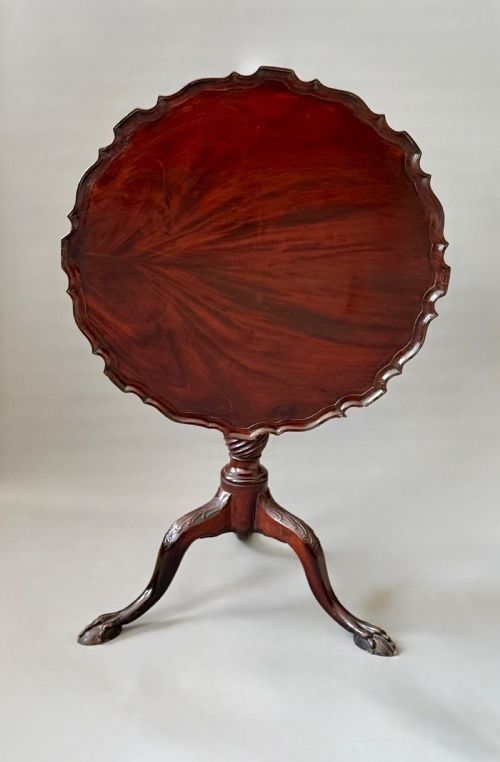
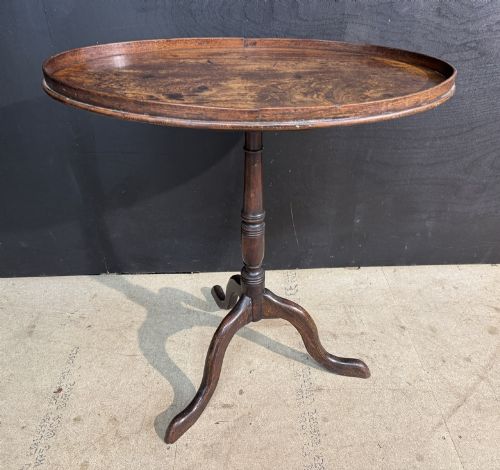
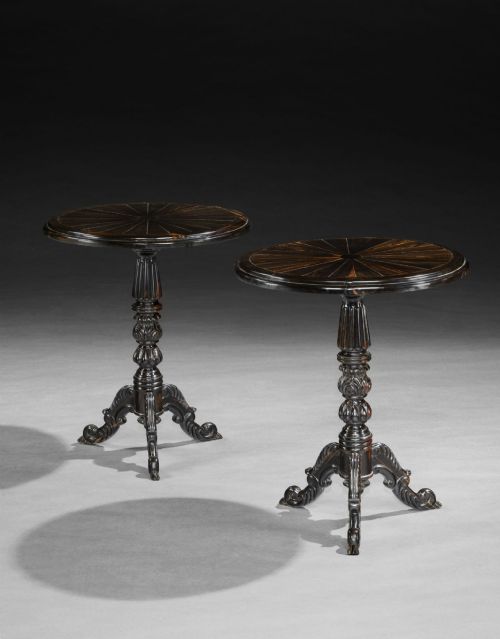
Most examples found here rest on a central pillar supported by three feet, frequently referred to as a tripod base. Forms range from simple circular lamp tables to octagonal surfaces and specialised pieces fitted with chess boards or birdcage mechanisms.
How they were made
Cabinet makers utilised dense hardwoods such as mahogany, rosewood, walnut and ebony, alongside figured veneers like burr oak. Timber selection determined the weight and stability of the column and top.
Joinery involved turned and carved solid wood bases supporting hinged surfaces, sometimes incorporating specialised mechanisms like birdcages to allow the top to both rotate and tilt.
Listings feature woods spanning mahogany, rosewood, walnut, ebony, oak, burr oak veneer, padauk, fruitwood and linden wood.
What varies in quality
Quality rests in the crispness of the carving upon the pillars and feet, alongside the choice of timber figure, such as figured walnut or dense Cuban mahogany. Superior examples display thoughtful proportions where the weight of the top balances securely against the tripod base without wobble.
The sophistication of the mechanism also marks the grade of the piece, from standard pivot hinges to intricate birdcage mounts that permit smooth rotation as well as tilting.
Gillows
The Dark Wood Tilt Top Glossary
- Tilt top
- A table top hinged to pivot from horizontal to vertical. This mechanism allowed tables to be pushed against walls when the room was needed for other purposes.
- Birdcage
- A wooden lattice framework beneath the table top that connects the surface to the central pillar. It permits the top to rotate independently of the base.
- Tripod base
- A pedestal support terminating in three individual feet. This design ensures the table remains stable on uneven floors.
- Pie crust
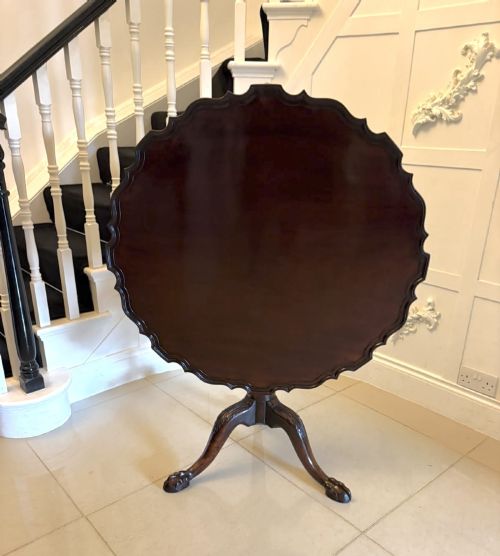
- A raised, carved moulding along the edge of a round table top shaped to resemble pastry work. It appears on finer Georgian tables.
- Centre table
- A freestanding piece finished on all sides intended to sit in the middle of a room rather than against a wall.
Dark Wood Tilt Top: Frequently Asked Questions
How do you use a tilt top table?
These tables function as standard surfaces for lamps, drinks or reading material during daily use. When floor space is needed, the catch is released and the surface pivots upright to flat against the base.
Historically, this allowed large dining or breakfast tables to be stored safely at the edge of a parlour or drawing room between meals.
What is a birdcage mechanism?
A birdcage is a small rotating assembly fitted between the underside of the table top and the vertical pillar. It uses parallel wooden rings and spindles that let the surface spin in a full circle.
This added movement worked alongside the tilt hinge so the user could angle the surface towards a light source or user with ease.
How do I identify a Georgian tilt top?
Georgian examples, typically dating from the eighteenth century, frequently rely on dense mahogany with restrained carving on the tripod knees and pad or claw feet. They often feature solid timber tops rather than heavy layered veneers.
Many incorporate birdcage mounts beneath the surface, a construction method that became less common in later Victorian manufacturing.
Where should I place a tilt top table?
These pieces suit corners or empty wall spaces where their slender pillars take up minimal floor area. Keeping the top tilted against the wall reveals the carved pillar and underside structure as a decorative feature.
They also serve effectively beside armchairs or sofas as lamp and wine tables, provided the tripod base has adequate clearance.