
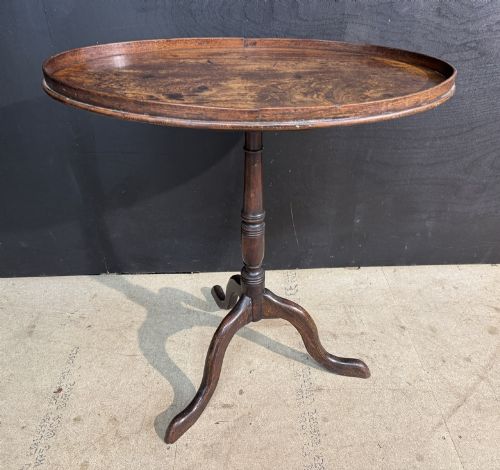
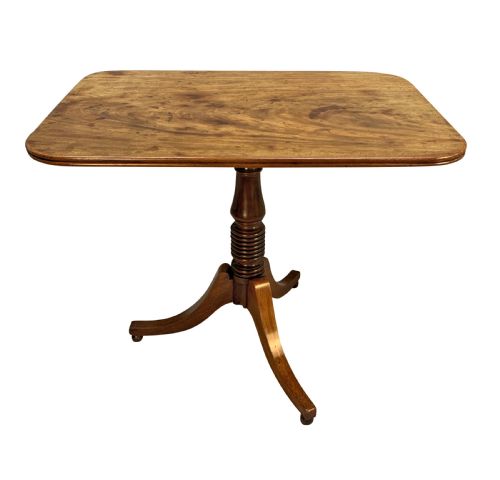
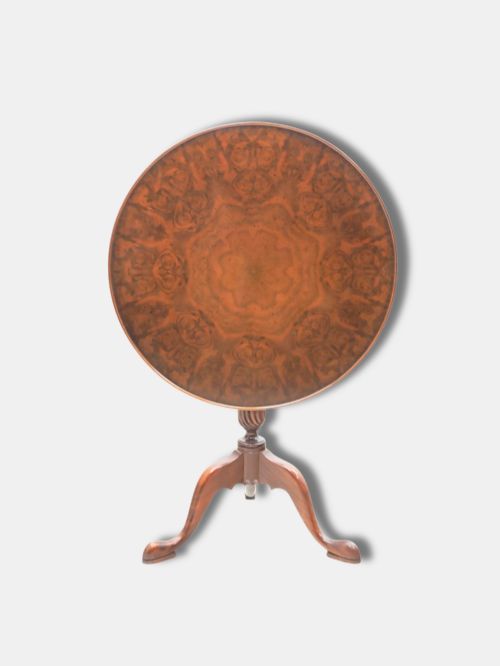
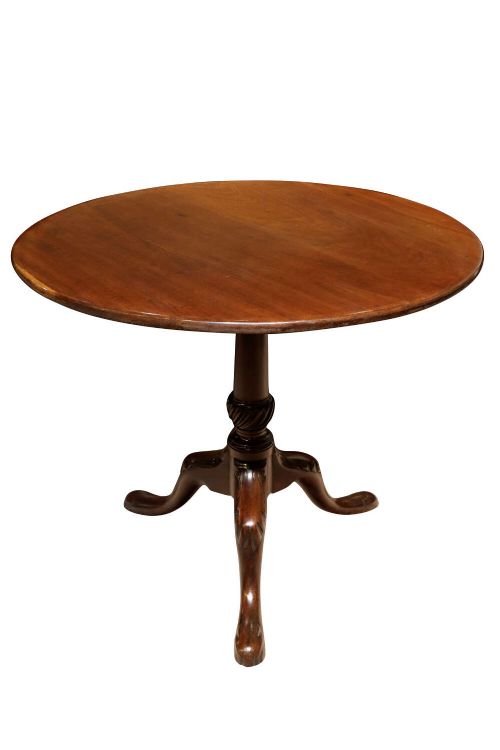
Snap Top Wine Table
A snap top wine table offers compact surface utility on a stable tripod base, designed to tilt upright when floor space is needed.
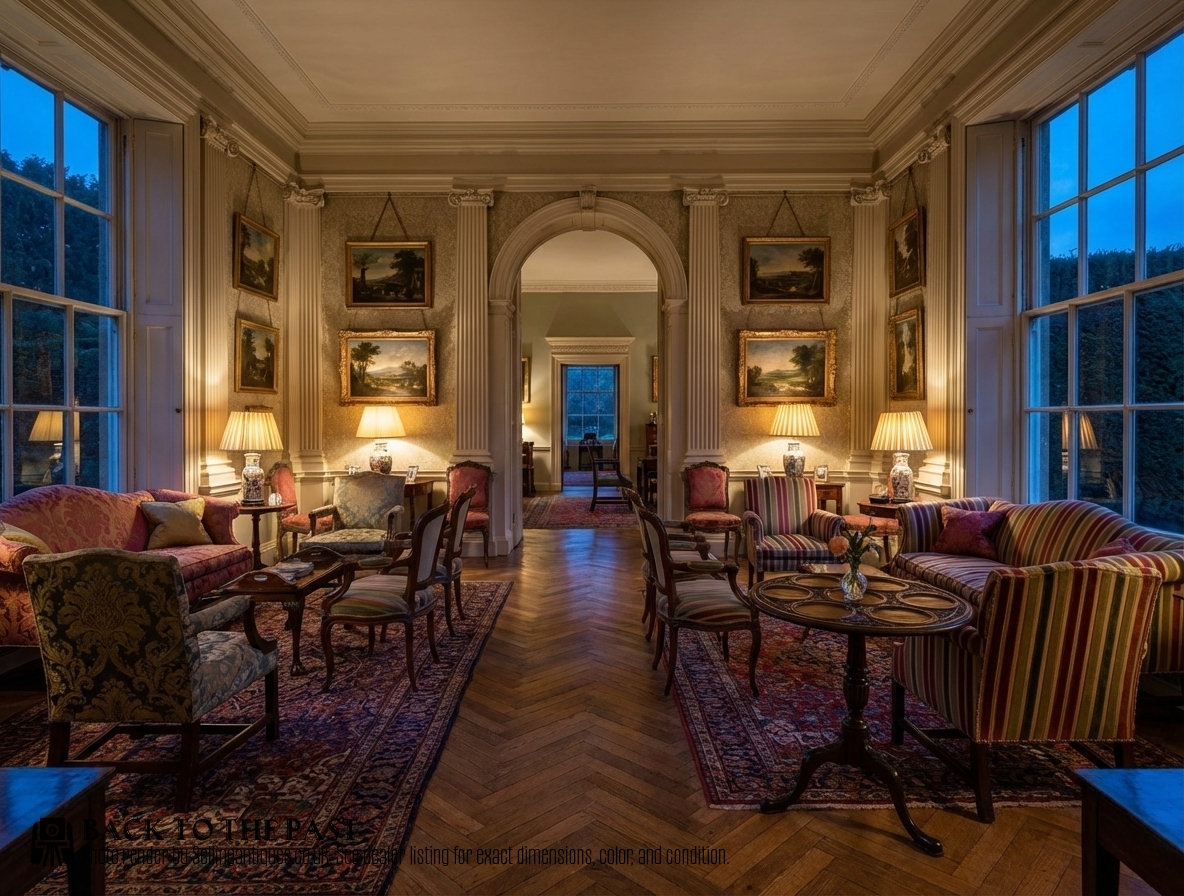
Snap Top Wine Table
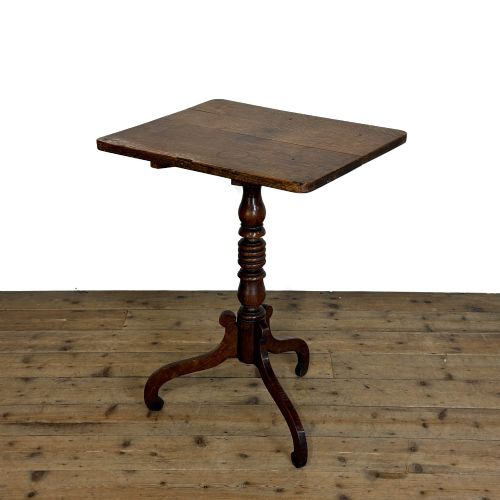
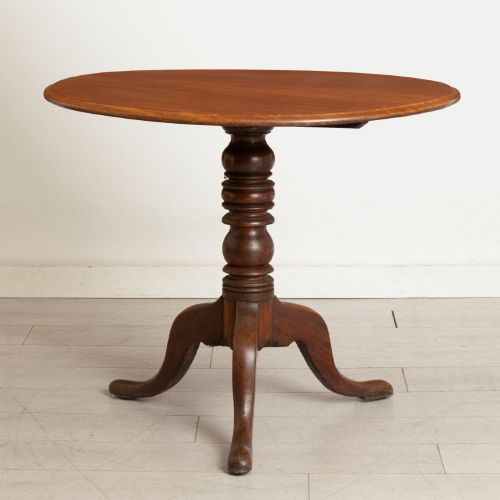
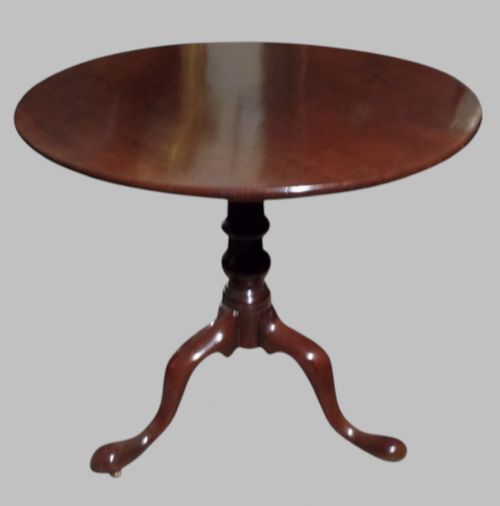
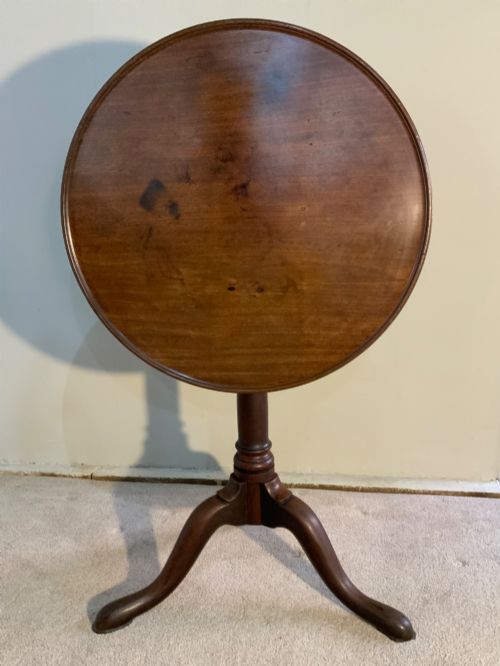
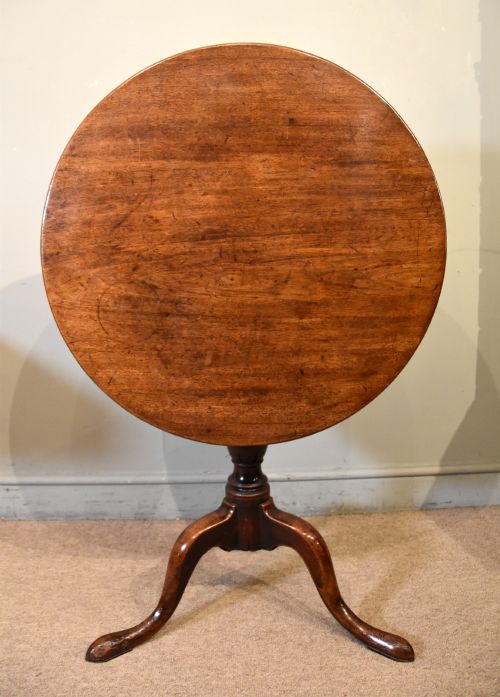
A snap top wine table is primarily found as a compact occasional or tea table dating from the eighteenth and nineteenth centuries. These pieces appear frequently in Georgian, Regency and Victorian periods, often taking the form of a circular top supported by a central pillar and three legs.
The format serves multiple domestic functions within historic interiors, acting as a small surface for drinks or reading materials. Most examples on this page are constructed from timber, though occasional variations include lacquer finishes or painted decorative surfaces.
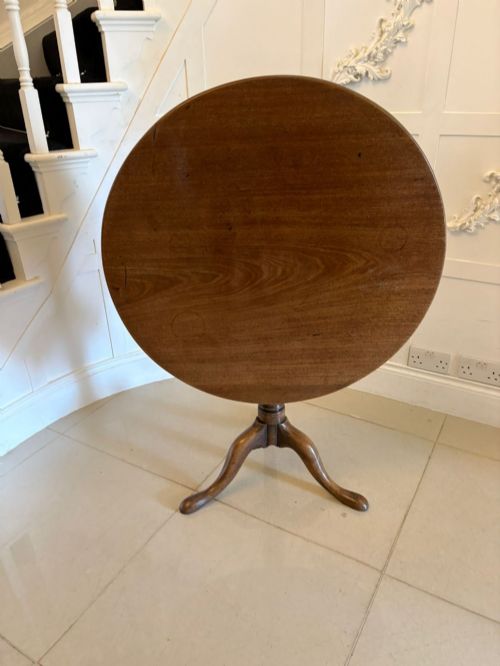
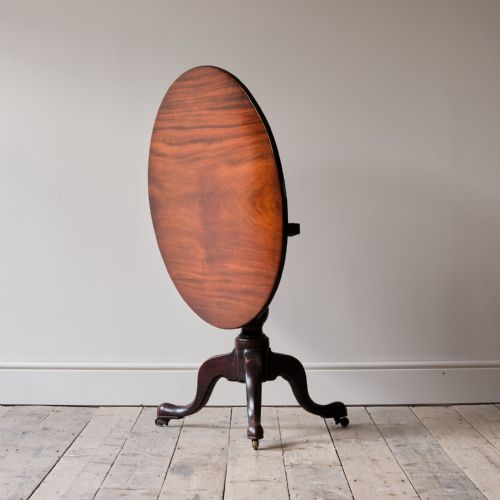
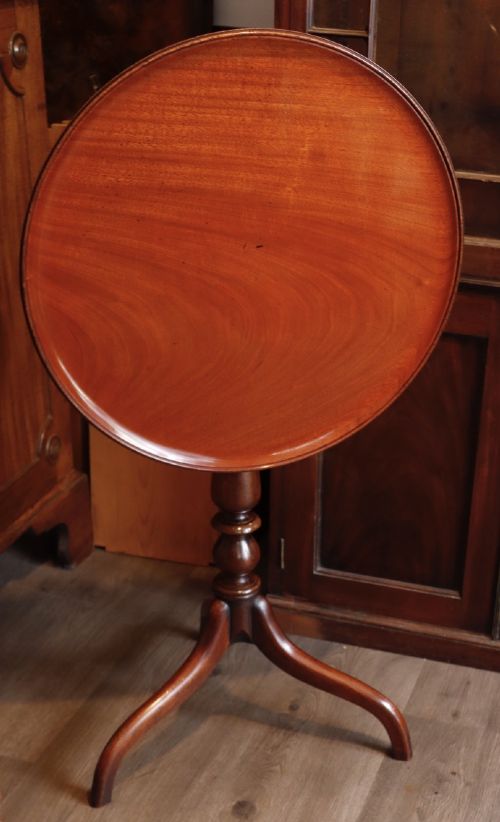
Makers designed these small tables to fold vertically against a wall when not in use, making them practical for smaller rooms. The mechanism relies on a catch or birdcage assembly that allows the surface to pivot and lock securely.
Materials and construction
Cabinetmakers utilised dense timbers such as mahogany, oak, walnut and fruitwood to construct these durable tripod tables. Mahogany predominates across the Georgian and Regency periods, valued for its strength and ability to take a fine polish.
The turning of the central column and the shaping of the tripod legs required precise lathe work and joinery. Clever mechanisms like the birdcage pivot allowed the tabletop to revolve as well as tilt, involving intricate small-scale carpentry.
Mahogany is the predominant timber across these listings, alongside walnut, oak and exotic woods such as amboyna.
Distinctions in quality
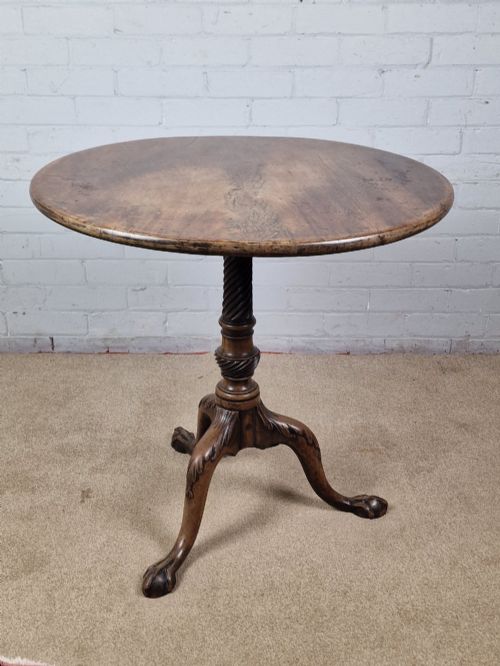
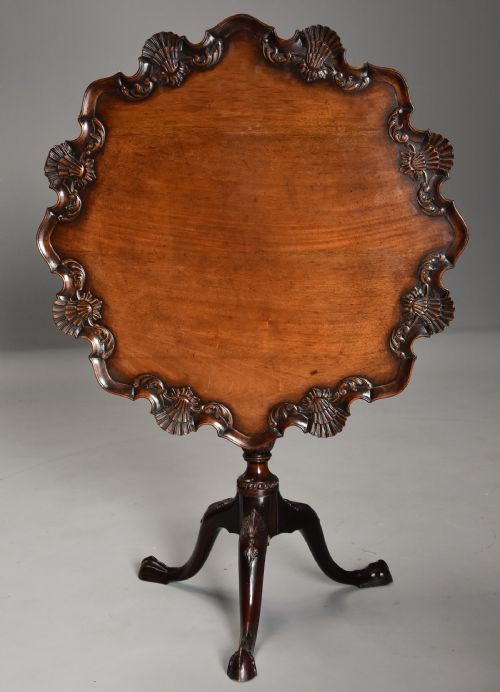
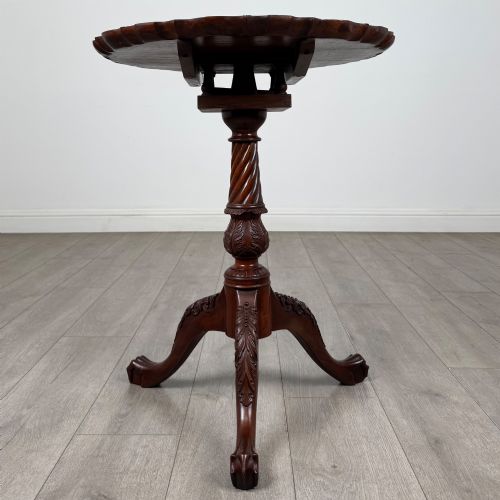
The refinement of the timber and the crispness of the carving on the tripod base distinguish superior pieces. Plain turned columns contrast with examples featuring spiral twists, fluting or detailed claw and ball feet.
The integrity of the tilting mechanism dictates structural performance over time. High grade construction ensures the tabletop locks firmly into position without lateral wobble when lowered.
The Snap Top Wine Table Glossary
- Snap top
- A tabletop design that hinges vertically to rest flat against the central column when not in use. This mechanism uses a spring catch to secure the surface horizontally.
- Tripod base
- A support structure consisting of three curved legs radiating from a central pillar. It provides stability on uneven historic floorboards.
- Birdcage
- A timber framework beneath the tabletop that enables the surface to both rotate and tilt. This component indicates careful construction in eighteenth-century examples.
- Piecrust edge
- A raised, scalloped rim carved directly from the solid timber of the tabletop. Craftsmen shaped this border by hand using gouges.
- Occasional table
- A small, movable piece of furniture designed for specific, temporary domestic uses. These items include wine tables, tea tables and lamp stands.
Snap Top Wine Table: Frequently Asked Questions
What is a snap top wine table?
A snap top wine table is a small historic pedestal table featuring a hinged top that locks flat for use and tilts upright when stored. These pieces were historically utilised for holding drinks or small personal items in reception rooms.
Most surviving examples date from the Georgian and Victorian eras, constructed from timbers like mahogany and oak. Their compact dimensions make them practical for contemporary interiors as side or lamp tables.
How does the tilt mechanism work?
The mechanism typically uses a small wooden catch or a metal latch fitted beneath the tabletop. When released, the top pivots on a horizontal axis connected to the central pillar.
More complex examples incorporate a birdcage device that allows the surface to revolve as well as tilt. This engineering kept the table rigid and stable during use.
Where should I place one at home?
These tables fit easily beside armchairs, sofas or in unused corners as bedside or lamp stands. Their small footprint allows them to occupy tight spaces without cluttering a room.
Some owners utilise the tilting feature to display the decorative timber grain of the tabletop against a wall when the surface is not needed.
How do I tell periods apart?
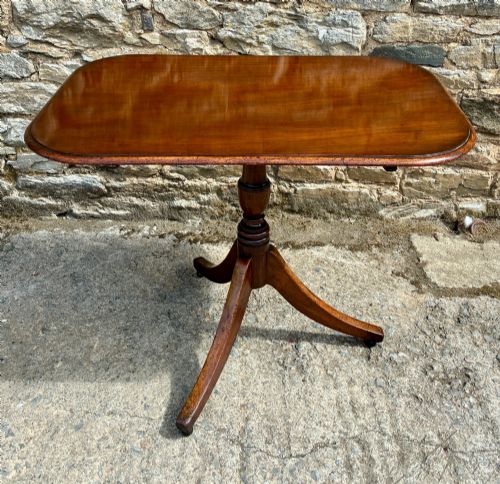
Eighteenth-century pieces often display restrained lines, Cuban mahogany timber and delicate pad or spade feet. The Regency period introduced bolder brass casters, rosewood or amboyna veneers, and pillar designs.
Victorian iterations frequently exhibit heavier proportions, darker finishes and sometimes later decorative painted additions. Examining the timber species and leg profiles helps determine the manufacturing era.