
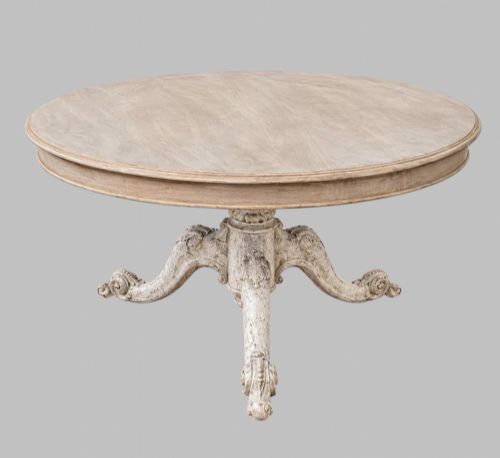
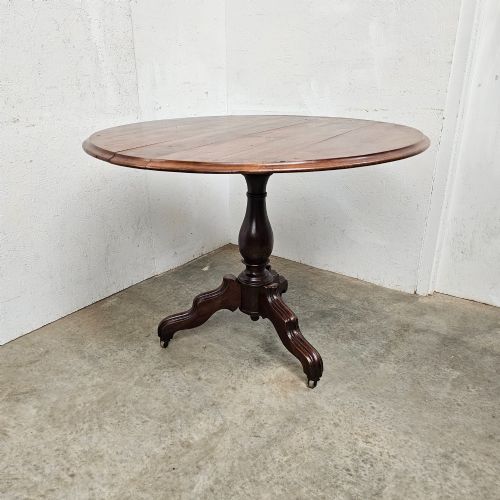


Carved Circular Supper Table
A carved circular supper table is a versatile round dining or occasional piece designed for easy tilting and compact storage when not in use.
Carved Circular Supper Table
A carved circular supper table brings traditional craftsmanship to a room, offering a round surface supported by a central pillar and tripod base. When searching for a carved circular supper table, collectors encounter forms spanning the Georgian, Victorian, and nineteenth-century periods. These objects function primarily as occasional tables, display surfaces, and dining tables, frequently featuring tilt-top or snap-top mechanisms.
The versions most commonly met on this page include mahogany and walnut examples from the eighteenth and nineteenth centuries. English and Italian origins appear among the selections, alongside George III and William IV stylistic influences. Many pieces incorporate tripod legs and circular tops suitable for hallways, reception rooms, and dining spaces.
How they were made
Cabinet makers constructed these tables using dense timbers such as mahogany, walnut, and rosewood, often combining contrasting woods for visual depth. The tops were shaped into circular formats, sometimes featuring decorative moulded edges like pie crust designs.
Structural stability relied on a central pillar resting upon a tripod base of three legs, allowing the surface to tilt or snap shut vertically via a clever pivot mechanism. Brass hardware occasionally appears in the fittings and hinges of these folding and tilting tables.
Some tabletops snap shut with a satisfying click, ready for midnight snacks or midnight gossip.
What varies in quality
The distinction between standard examples and finer pieces lies in the crispness of the woodwork carving on the pillar and legs. Superior tables exhibit harmonious proportions between the circular top and the supporting tripod base.
Choice of timber grain and the smooth operation of the tilt-top mechanism dictate the overall refinement of the table. Subtle decorative details such as moulded borders elevate certain pieces above plain utilitarian formats.
The Carved Circular Supper Table Glossary
- Tilt-Top Table
- A table with a hinged top that pivots to a vertical position for storage against a wall. This mechanism saves space when the table is not in use.
- Tripod Table
- A piece supported by a single central pillar resting on three legs. This design prevents wobbling on uneven floors.
- Pie Crust Edge
- A raised, carved moulding along the perimeter of a circular table top, shaped with undulating curves. It adds ornamental detail to the dining surface.
- Snap-Top
- A spring-loaded catch mechanism that locks a tilting table top securely into its horizontal position. It keeps the surface steady during use.
Carved Circular Supper Table: Frequently Asked Questions
What is a supper table used for?
A supper table provided a convenient surface for evening meals in private parlours or drawing rooms before dedicated dining rooms became standard. Their circular tops allowed guests to gather comfortably.
Many examples were designed to tilt upright when the meal finished, clearing floor space in smaller reception rooms.
How do you tilt the top?
The top pivots on a hinge mechanism attached to the central pillar, held horizontally by a catch or snap-top fitting. Releasing this catch allows the surface to fold flat against the base.
This clever engineering enabled homeowners to tuck the furniture against walls when clearing a room for entertaining.
Are these tables good for small spaces?
Their compact circular footprint and narrow tripod bases make them exceptionally practical for tighter corners and hallways. They occupy minimal floor area compared to rectangular dining furniture.
When the top is tilted upright, the piece requires almost no floor space at all.
How do I identify a Georgian table?
Georgian pieces typically date from the eighteenth or early nineteenth century, constructed from heavy timbers like mahogany or walnut. They frequently showcase tripod bases and sophisticated carving.
Stylistic markers often align with the reigns of George III, displaying restrained elegance and sturdy pillar supports.