

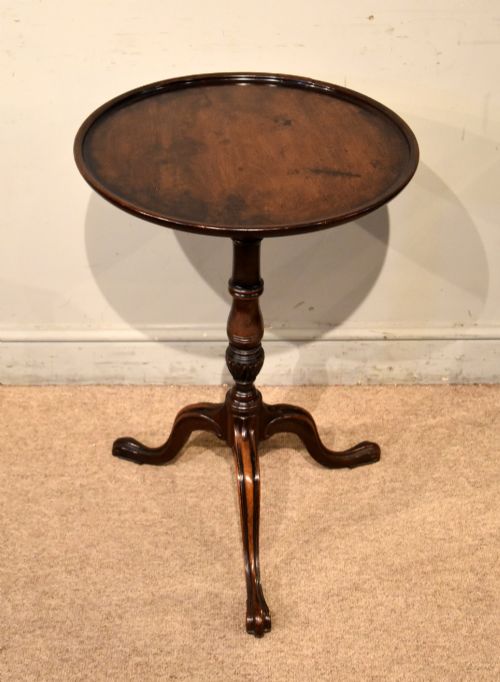
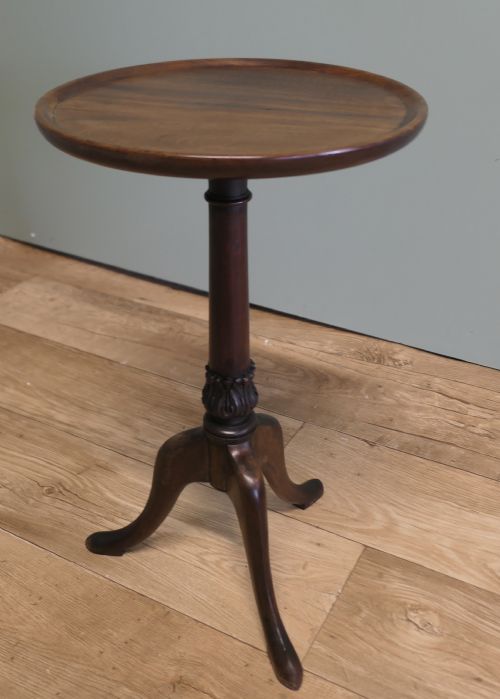
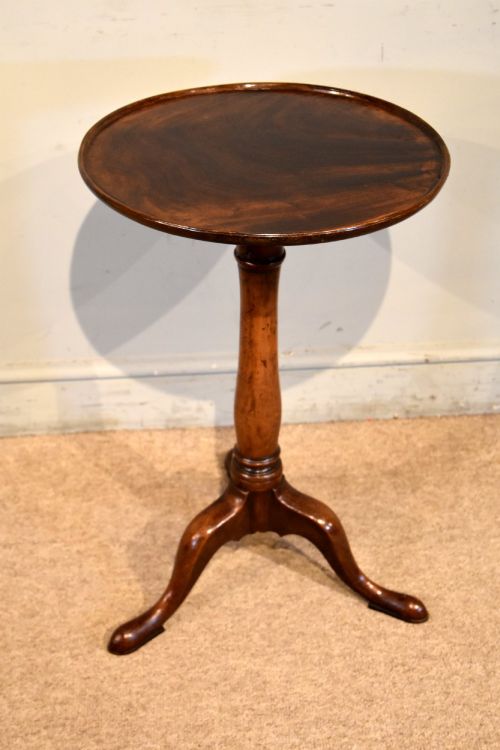
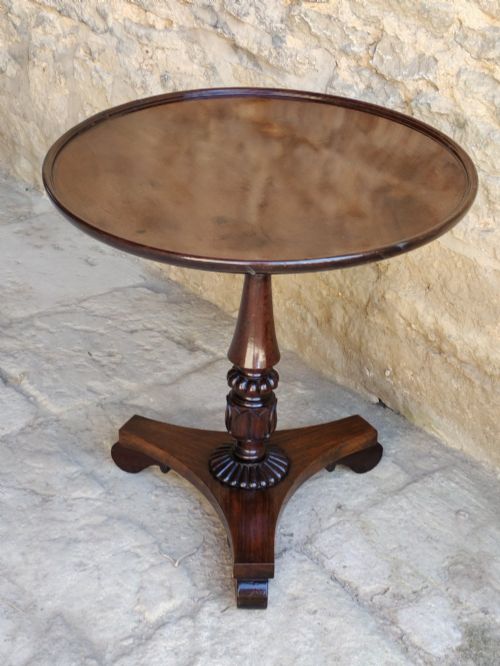
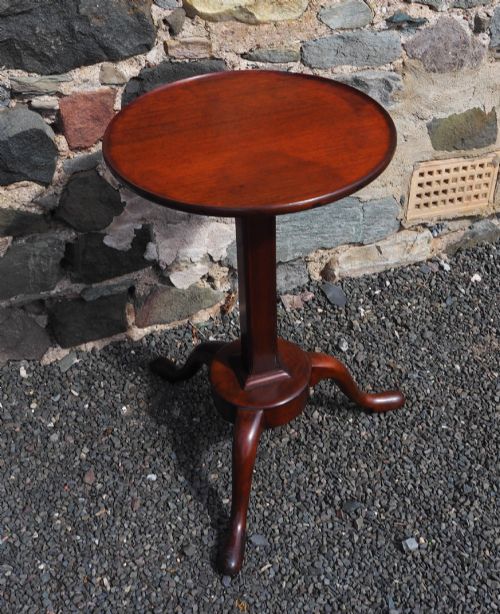
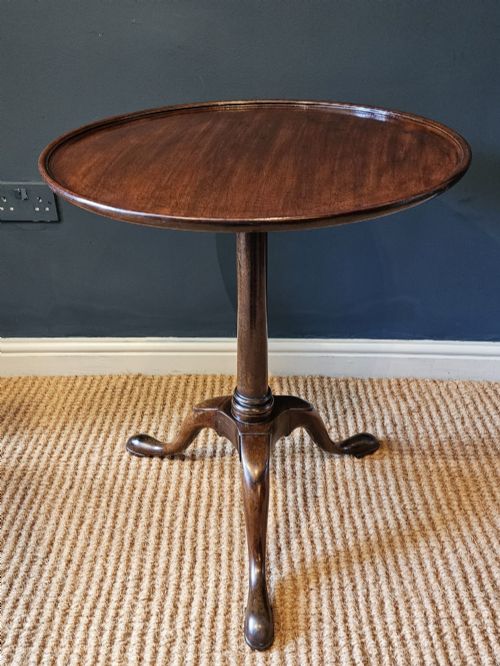
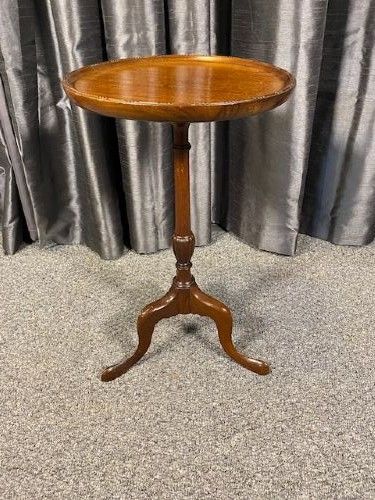
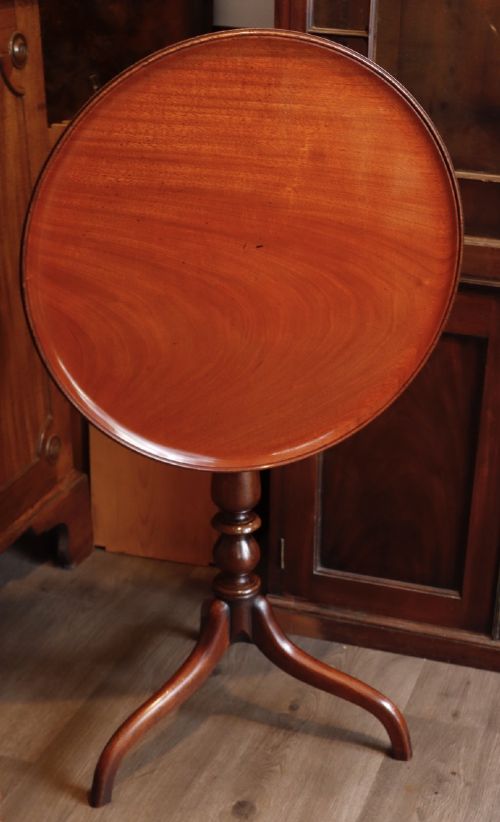
Dish Top Tripod Table
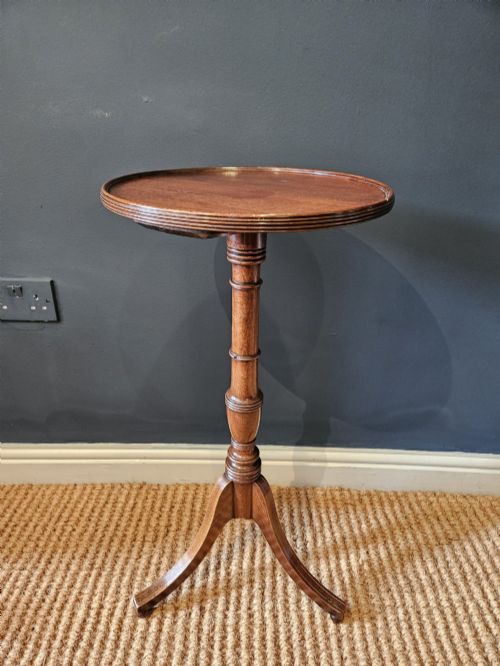
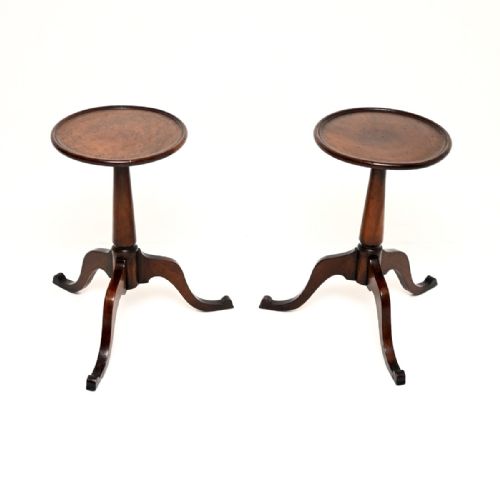
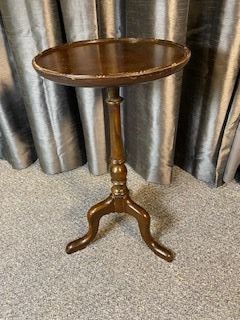
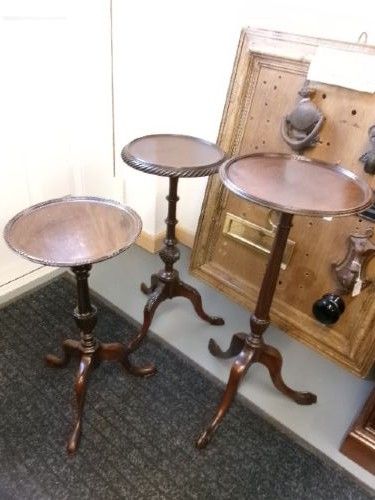
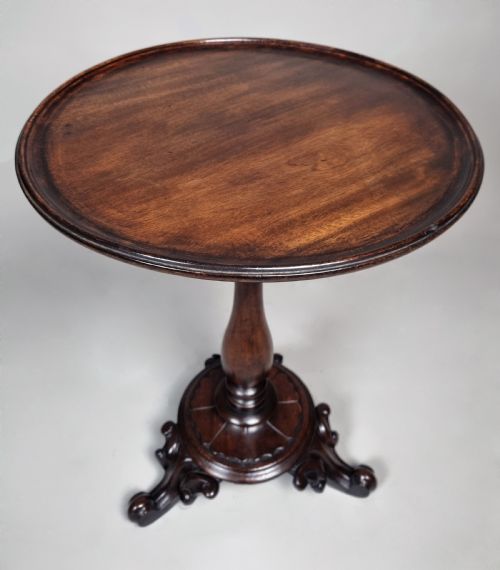
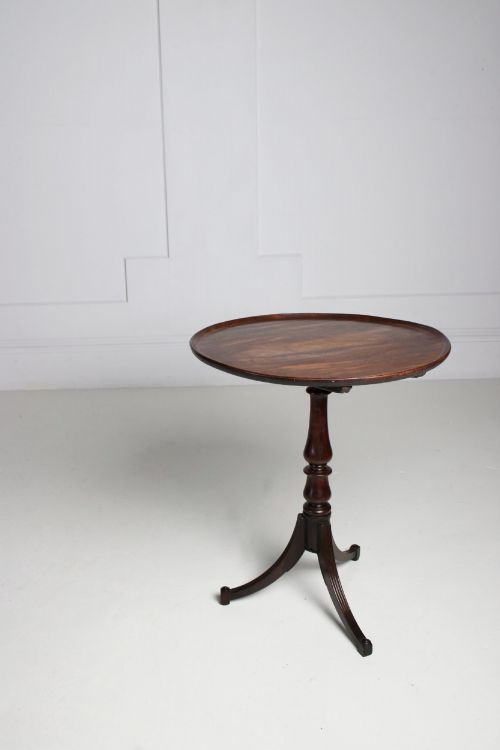
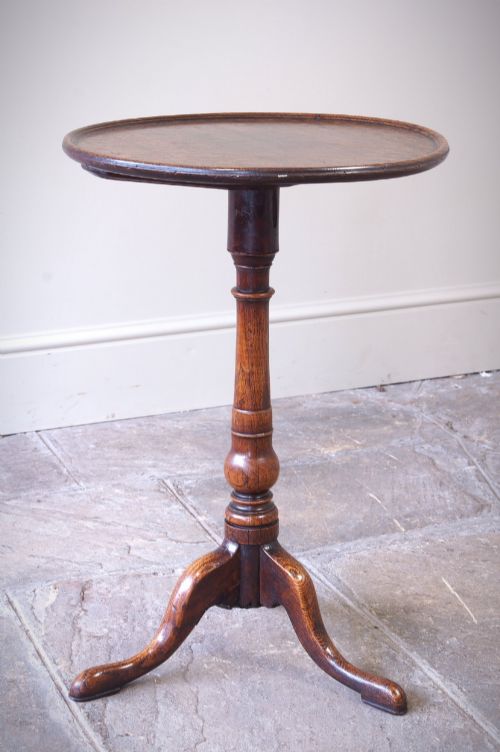
A dish top tripod table balances a turned pillar and three splayed legs beneath a circular, raised edge designed to keep small items secure.

Dish Top Tripod Table
The dish top tripod table appears primarily in Georgian and Regency forms, designed for serving wine, holding candles or supporting tea items. These pieces combine a central pillar with a distinct raised circular rim turned directly from the solid wood or applied to the edge.
Materials and Technique
Cabinetmakers utilised solid timbers such as mahogany, red walnut and oak, turning the central column on a lathe and shaping the three legs to terminate in pad, snake or scroll feet. The distinctive raised rim of the top required careful turning from a thick slab of wood to leave a solid protruding edge.
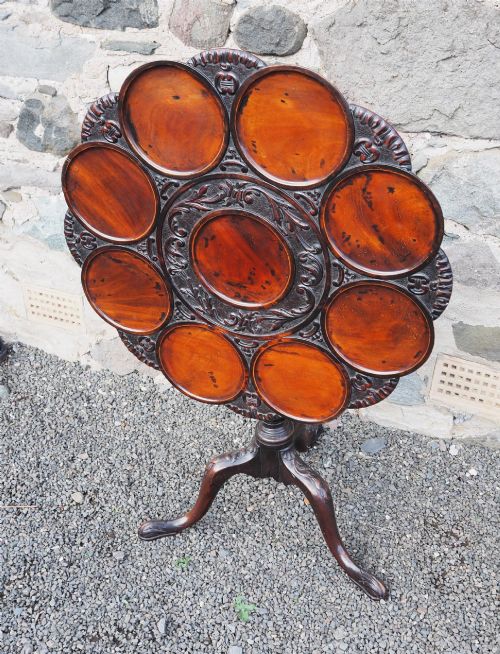
Many versions incorporated a birdcage mechanism or a brass snap catch, allowing the tabletop to pivot and tilt for compact storage alongside chairs or against walls.
Dish Top Tripod Table Retail Price Guide 2026
Typical asking prices for dish top tripod table among the pieces listed under this phrase on Sellingantiques today, from the lower quarter to the upper quarter. They describe what is for sale here now, not the wider market.
Some tilt tops feature revolving birdcages so the tea could spin while the drinker stayed still.
Gradations in Execution
Quality rests in the crispness of the turning on the central pillar and the proportion between the height of the column and the diameter of the circular top. Superior examples show careful selection of figured timber for the top and tight joinery at the leg joints where the tripod meets the base.
The refinement of the dish rim itself marks the distinction between standard utilitarian items and finer parlour pieces, where the moulded edge is smoothly integrated rather than crudely applied.
Gillows
The Dish Top Tripod Table Glossary
- Snap top
- A spring-loaded mechanism beneath the surface that locks the tabletop horizontally or releases it to tilt vertically.
- Birdcage
- A wooden framework beneath the top that allows the surface to both tilt and revolve independently of the pedestal column.
- Tripod base
- A three-legged support system designed to remain stable on uneven floors by distributing weight across three points.
- Kettle stand
- A small variant of the table intended to elevate a hot water urn or beverage vessel near seating areas.
- Red walnut
- An early timber choice prized for its rich tone and dense grain before mahogany became the dominant material.
Dish Top Tripod Table: Frequently Asked Questions
What was a dish top tripod table used for?
These small tables served multiple domestic purposes, frequently holding wine bottles, tea services, or lighting during evening gatherings.
The raised rim prevented cups and small vessels from sliding off when the surface was in use.
How do you identify an 18th century table?
Eighteenth-century examples typically display pegged tenon joints, hand-turned pillars, and dense mahogany or oak timbers without modern adhesives.
Subtle tool marks on the underside of the top often indicate manual shaping rather than machine production.
Why does the top tilt?
The tilting mechanism allowed servants or homeowners to store the furniture flat against a parlour wall when floor space was required.
Many versions include a rotating catch or birdcage box to facilitate this movement.
Where should I place one at home?
Their compact footprint makes them suitable as occasional side tables beside armchairs or as lamp stands in corners.
They function well in living spaces where surface area is needed without crowding the room.