


Diamond Lavalier Pendant
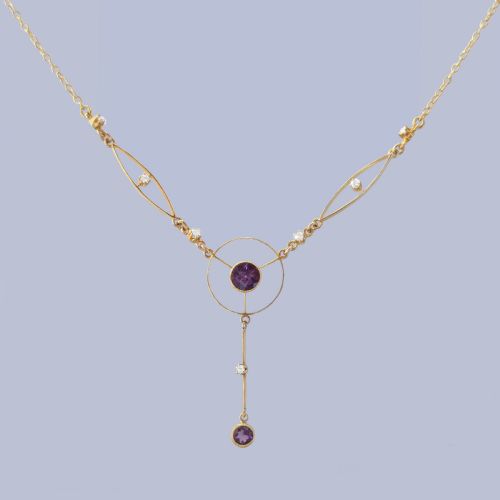
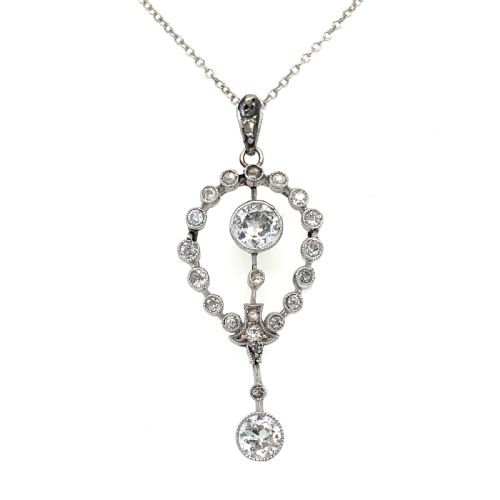
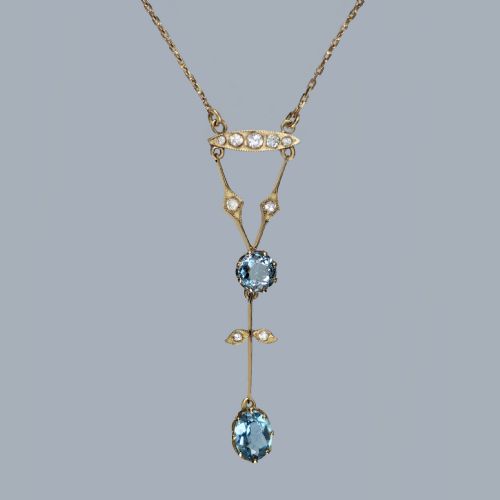
A diamond lavalier pendant swings from the neck with characteristic grace, dangling stones in suspended tiers that define the jewellery of the early twentieth century.
Diamond Lavalier Pendant
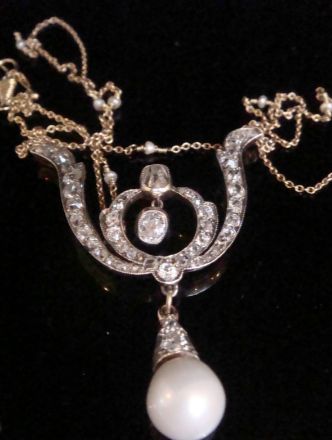
A diamond lavalier pendant suspended by a delicate chain is what you encounter most frequently when exploring this phrase. These pieces trace their origins primarily through the Edwardian and Victorian eras, alongside later Art Deco and Mid-Century iterations.
The characteristic drop configuration arranges stones in cascading vertical sequences, often incorporating pearls, amethysts, opals, and aquamarines alongside the central diamonds. Necklaces, pendant brooches, and convertible pieces appear across the selection, showing how makers adapted these delicate frames for versatile wear.
Materials and Technique
Goldsmiths and jewellers utilised a combination of yellow gold, white gold, 15ct gold, 18ct gold, and platinum to set old cut diamonds, rose cut diamonds, and natural gems. Platinum emerged fully during the Edwardian period to create lace-like openwork mountings that maximised the play of light through each stone.
Handcrafted settings relied on bezel and collet techniques alongside delicate wirework to articulate the drops, allowing the lower tiers to sway independently with the wearer's movement.
Some Edwardian pendants are so delicately articulated they seem to shiver independently whenever someone speaks nearby.
Evaluating Quality and Execution
The refinement of the piercing and the delicacy of the articulation distinguish finer examples from simpler production. Superior workshops achieved an airy lightness in platinum or gold wirework that makes the metal structure visually recede behind the gems.
The integration of secondary stones, such as natural pearls, tourmalines, or sapphires, dictates the overall harmony of the drop. Better pieces maintain balance between the primary diamond cluster and the swinging pendant elements without appearing heavy or crowded.
The Diamond Lavalier Pendant Glossary
- Lavalier
- A pendant featuring a swinging drop suspended from a necklace, popularised during the late nineteenth and early twentieth centuries. This form typically incorporates multiple tiers of gems hanging loosely.
- Old Cut
- A precursor to the modern brilliant cut, characterised by a smaller table, higher crown, and open culet. These stones were hand-faceted to catch candle or gas light.
- Rose Cut
- A vintage diamond cut featuring a flat base and a domed crown covered in triangular facets. It presents a soft, translucent lustre rather than intense brilliance.
- Platinum
- A dense, white precious metal adopted widely in Edwardian jewellery for its strength. It allowed jewellers to cast exceedingly fine settings that held diamonds securely.
Diamond Lavalier Pendant: Frequently Asked Questions
How do I wear a diamond lavalier pendant?
These drop necklaces sit close to the collarbone on fine gold or platinum chains, catching the light with every movement.
Because the lower sections articulate freely, they pair naturally with evening wear or open necklines that allow the cascading stones full freedom of motion.
Are these pendants convertible?
Many examples from the Victorian and Edwardian periods were designed to function as both brooches and pendants.
They feature hidden loops or detachable bails that let you pin the jewel to a lapel or suspend it from a chain.
How do I distinguish Edwardian from Victorian pieces?
Edwardian work leans toward platinum settings, garland motifs, and light, airy lace-like openwork.
Victorian pieces often employ yellow or 15ct gold with heavier bezels and more robust structural framing.
What gems accompany the diamonds?
Pearls, amethysts, aquamarines, opals, and sapphires frequently appear alongside the diamonds in these drop designs.
These coloured stones define the palette of the period, contrasting against white platinum or warm yellow gold.