
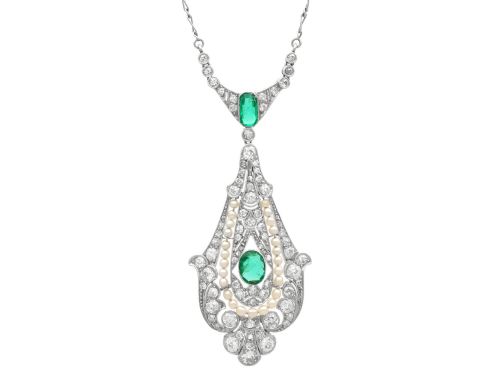
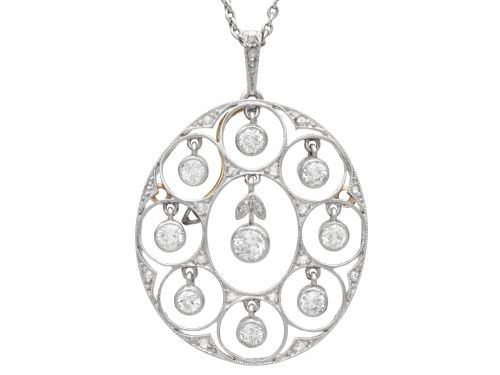
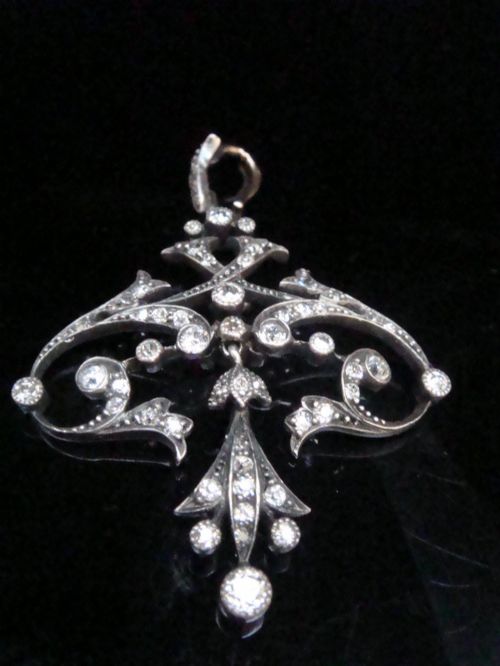


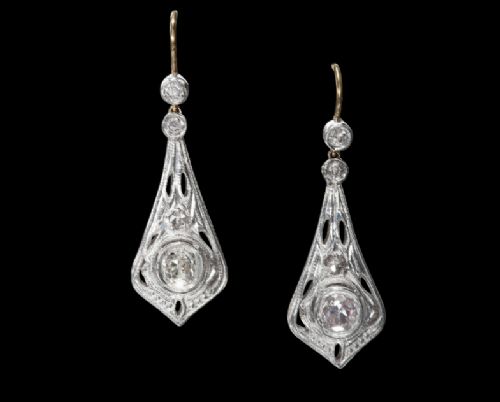

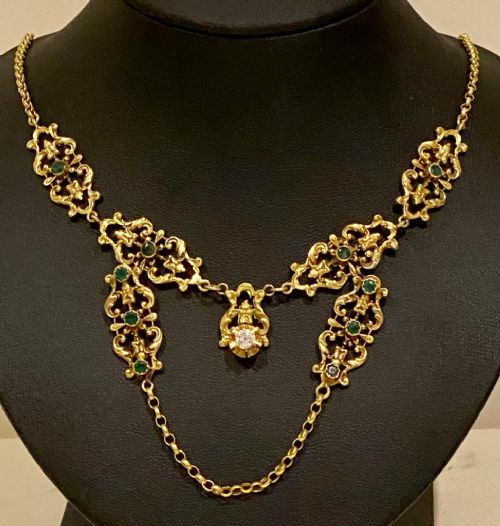

Filigree Diamond Pendant
A filigree diamond pendant brings delicate metalwork and sparkling stones together, offering the intricate charm that collectors seek in antique jewellery.
Filigree Diamond Pendant
When you search for a filigree diamond pendant, you are looking at delicate, openwork jewels that showcase fine metal threads alongside sparkling stones. These pieces combine intricate wirework with precious gems to create lightweight yet striking ornaments.
The versions you are most likely to meet on this page hail from the Edwardian, Art Deco, and Victorian periods, often taking the form of drop pendants, lavalieres, or necklaces. They capture the stylistic shifts from flowing organic lines to geometric precision over several decades.
Makers shaped these ornaments in gold, white gold, platinum, and silver, sometimes pairing diamonds with tourmaline or emeralds. Such variety ensures that each example reflects the specific decorative taste of its era of origin.
How they were made
Goldsmiths constructed these pieces using platinum, 18ct white gold, yellow gold, and silver, often soldering fine metal threads together to form openwork patterns. This wirework created a lace-like effect that held gemstones securely while reducing the overall weight of the ornament.
Cutter set old-cut diamonds directly into the metal framework, occasionally combining them with tourmalines, seed pearls, or emeralds. The integration of hand-twisted wires and precision-set stones defined the artisanal methods of the period.
Filigree Diamond Pendant Retail Price Guide 2026
Typical asking prices for filigree diamond pendant among the pieces listed under this phrase on Sellingantiques today, from the lower quarter to the upper quarter. They describe what is for sale here now, not the wider market.
Listings feature Edwardian, Victorian, and Art Deco styles, utilising platinum, yellow gold, white gold, and silver.
What varies in quality
The fineness of the wirework and the complexity of the openwork design distinguish one piece from another. Tighter, more intricate soldered patterns require greater skill from the metalsmith.
The selection and integration of the stones also alter the character of the jewel, particularly when old-cut diamonds are matched with platinum or white gold settings. Heavier metal gauges and superior stone clarity elevate the overall execution.
The Filigree Diamond Pendant Glossary
- Filigree
- Fine wirework soldered together in open, lace-like patterns. This technique creates lightweight jewellery with intricate decorative motifs.
- Lavaliere
- A pendant featuring a dangling drop suspended from a necklace chain. This style gained popularity during the Edwardian and Victorian eras.
- Old-cut
- A diamond cutting style characterised by a high crown and small table, typical of antique stones. These cuts produce a softer sparkle under candlelight.
- Platinum
- A dense, durable white metal prized for secure stone settings. It allows for very fine wirework without sacrificing structural strength.
Filigree Diamond Pendant: Frequently Asked Questions
What periods do these pendants come from?
The listings span several distinct eras, including the Edwardian period, the Victorian era, and the Art Deco years of the 1920s and 1930s, alongside mid-century examples from 1950.
Each period imparts specific stylistic traits, moving from flowing organic shapes to sharper geometric forms.
How should I care for antique filigree jewellery?
Due to the delicate nature of fine wirework, these pendants require gentle handling and storage away from harder pieces that might bend the metal threads.
Professional cleaning by a jeweller helps maintain the openwork without damaging the soldered joints or loosening the set stones.
What metals were commonly used?
Goldsmiths worked with platinum, 18ct white gold, yellow gold, and silver to create the structural framework for these ornaments.
Platinum and white gold became especially popular during the Edwardian and Art Deco periods for their bright finish and strength.
Are these pieces marked with hallmarks?
Many antique jewels carry stamps or metal purity marks on the loop or reverse, though older or handmade pieces can sometimes lack a complete set of marks.
Testing the metal or examining the construction style helps determine the material and period origins.