




Diamond Drop Necklace
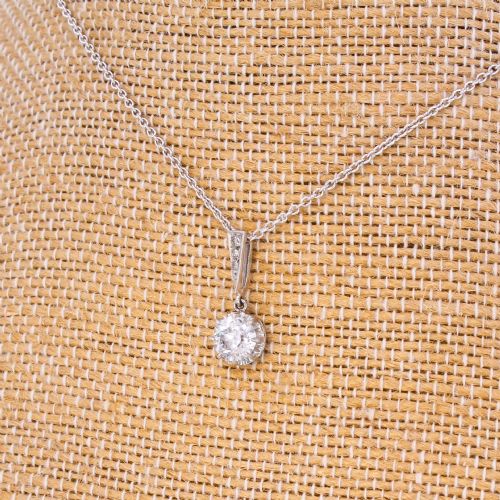
A diamond drop necklace brings together sparkling stones and fine metalwork, offering an elegant focal point for the neckline.
What a diamond drop necklace is
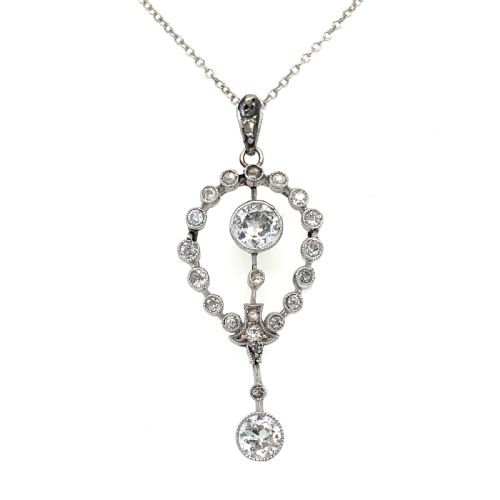
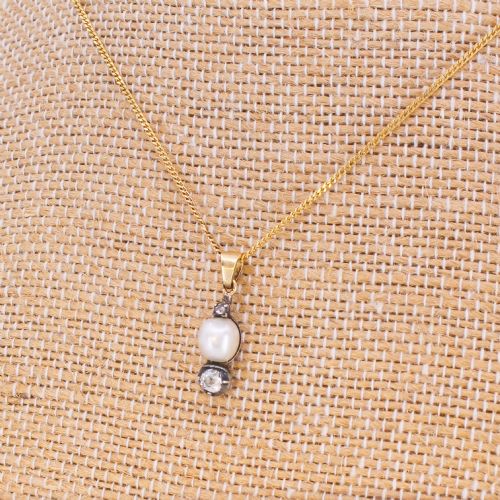
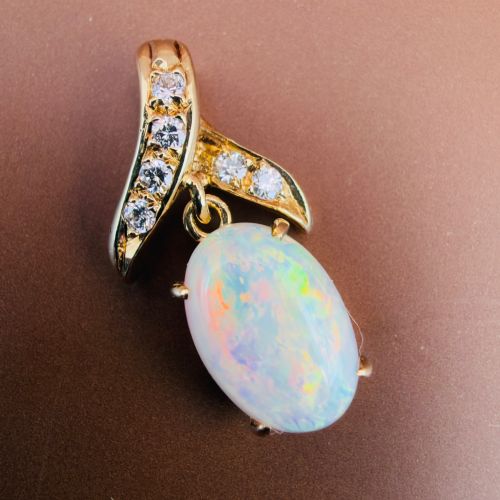
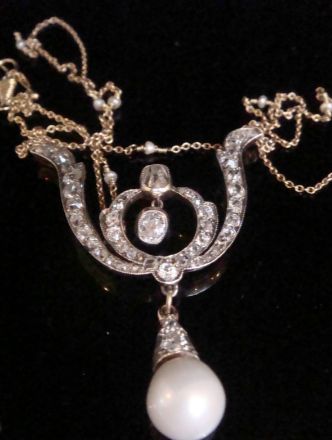
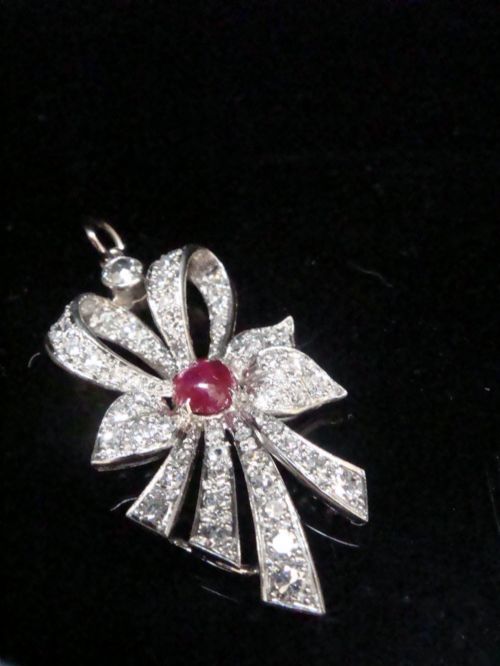
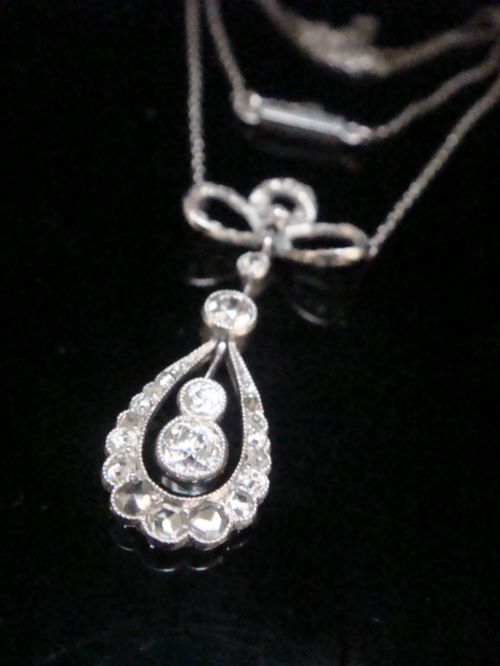
A diamond drop necklace suspends stones from a fine chain, creating a delicate focal point that catches the light with every movement. These pieces appear in forms ranging from simple pendants to elaborate arrangements featuring multiple gems.
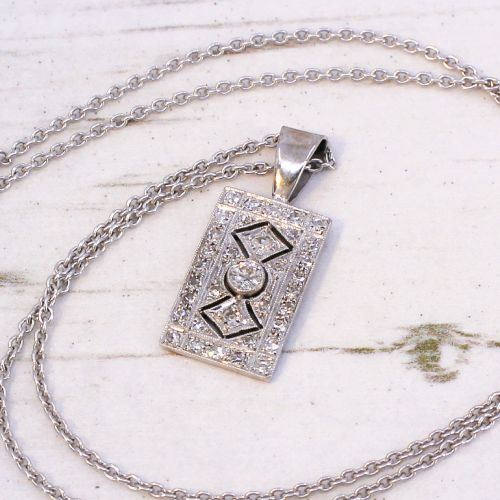
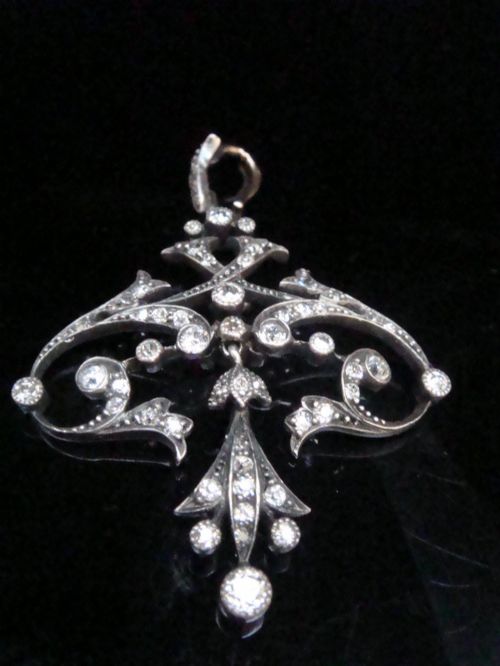
The diamond drop necklace examples found here span the Victorian era, the Art Deco period, the nineteen fifties, and nineteen sixties. Pieces from these diverse eras showcase shifting tastes in gemstone arrangement and mount design.
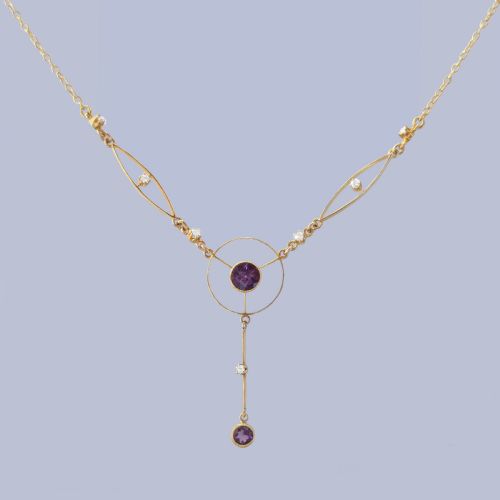
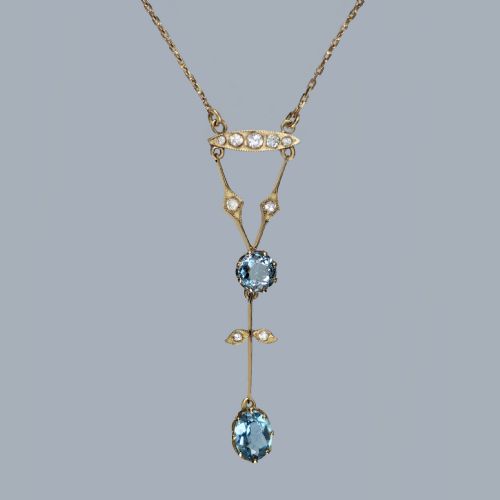
Buyers frequently encounter platinum and white gold settings, alongside traditional yellow gold mounts. Gemstone companions such as yellow quartz, garnet, amethyst, and seed pearls occasionally accompany the central diamonds.
How they were made
Makers utilised durable metals like platinum and various grades of gold, including eighteen carat white gold, fourteen carat gold, and nine carat gold, to secure the stones safely. These metals provide both the strength needed for delicate work and a bright background for the gems.
Goldsmiths set old cut diamonds, rose cut diamonds, and brilliant cuts into the mounts by hand. Seed pearls and coloured stones such as yellow quartz, garnet, blue topaz, and amethyst were integrated using traditional claw and bezel techniques.
Retail Price Guide 2026
Typical UK retail prices for diamond drop necklace, calculated from the Sellingantiques database of over a million retail prices indexed since 2003. This retail price guide relies exclusively on Sellingantiques data; no external sources or auction records are used, so the figures do not describe the wider market.
Listings feature four distinct eras: Victorian, nineteen twenty, nineteen fifty, and nineteen sixty.
What varies in quality
The refinement of the metalwork separates ordinary pieces from superior examples. Master jewellers achieved exceptional precision in prong placement and metal finishing, ensuring the mounts complement rather than overpower the stones.
Stone selection dictates the overall character of the piece. Superior examples feature well matched diamonds with clear sparkle, while others incorporate distinctive coloured quartz, garnets, amethysts, or seed pearls to create specific visual warmth.
The Diamond Drop Necklace Glossary
- Platinum
- A dense, strong, and naturally white precious metal favoured for secure gemstone settings. It holds fine detail exceptionally well without tarnishing over time.
- Old cut
- An earlier diamond cutting style characterised by a smaller table, higher crown, and open culet. These stones catch candlelight and softer indoor illumination with a distinctive charm.
- Rose cut
- A vintage diamond cut featuring a flat base and a domed crown faceted with triangular shapes. This style produces a subtle, gentle shimmer rather than intense modern brilliance.
- Seed pearl
- A very small, natural or cultured pearl utilised in historical jewellery for delicate detail and texture. These pearls provide a soft contrast to faceted diamonds and gold mounts.
- Bezel setting
- A method of securing a gemstone where a thin metal collar wraps around the outer edge of the stone. This technique holds the gem firmly while offering a clean, smooth outline.
Frequently Asked Questions
What periods do these necklaces come from?
These necklaces originate from the Victorian era, the nineteen twenties Art Deco period, and mid-century decades like nineteen fifty and nineteen sixty. Each period brings distinct design characteristics to the mount and chain.
Art Deco pieces focus on geometric lines and platinum settings, whereas Victorian and mid-century examples often incorporate coloured gems or warmer gold tones alongside the diamonds.
Which metals are used in these pieces?
The listings feature platinum, eighteen carat white gold, fourteen carat gold, and nine carat gold. Platinum offers a bright, durable finish popular in early twentieth century jewellery.
White gold and yellow gold provide alternative looks that influence the overall warmth of the necklace. The choice of metal often reflects the era in which the piece was constructed.
Are coloured stones found with the diamonds?
Yes, several necklaces combine diamonds with coloured stones such as yellow quartz, garnets, amethysts, blue topaz, and seed pearls. These combinations add distinct colour contrast to the central drop.
Coloured gemstones were frequently paired with diamonds during the mid-century and Victorian periods to create varied decorative effects.
How do old cut diamonds differ from modern stones?
Old cut diamonds feature hand-cut facets designed to catch softer light sources like gaslight or candles. They typically have smaller tables and deeper pavilions than modern brilliant cuts.
This historic cutting technique gives each stone a unique, charming appearance that differs from the standardised brilliance of contemporary diamonds.