




1920s Diamond Pendant
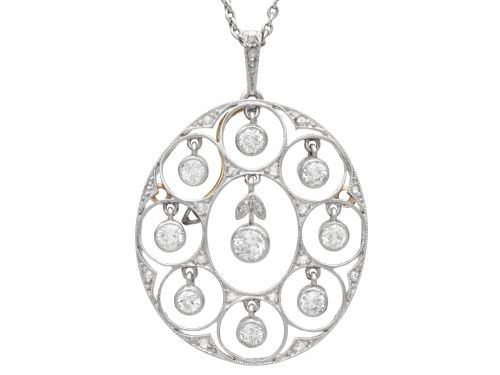
A 1920s diamond pendant brings the geometry and crisp sparkle of the Jazz Age directly to the neckline.
1920s Diamond Pendant
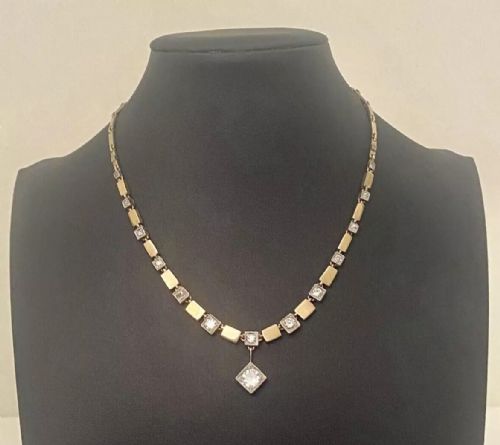
A 1920s diamond pendant embodies the distinct linear vocabulary of the Art Deco period, often taking the form of drop necklaces, halo arrangements, or convertible brooch hybrids. These pieces frequently pair white precious metals with central stones, displaying an architectural symmetry that defined interwar design.
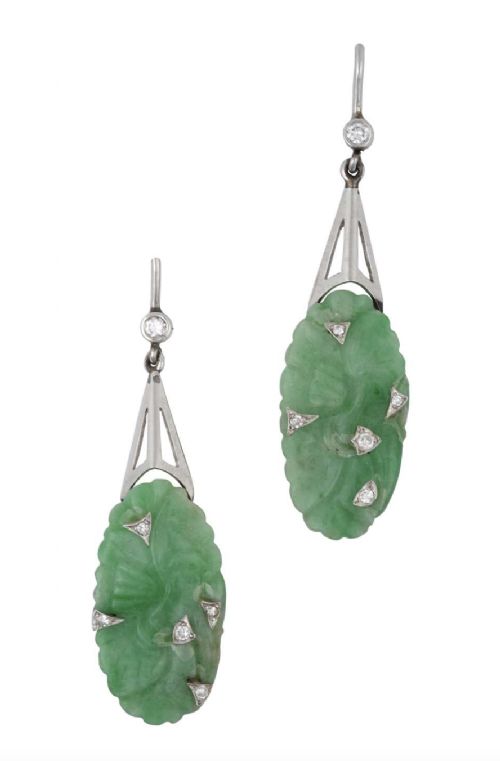
Buyers browsing this selection will most commonly encounter platinum settings carrying substantial diamonds, sometimes accented by aquamarines, pearls, or jadeite. Alongside dedicated pendant necklaces, the listings include related drop earrings and lorgnettes sharing the exact same stylistic grammar.
How they were made
Makers of this era relied heavily on platinum to achieve ultra-fine structural components that could hold stones securely without heavy metal surrounds. Alongside platinum, workshops utilised 18ct white gold and 14ct gold to build the intricate framework characteristic of the decade.
Stones were cut and set to maximise reflection under artificial lighting, a requirement of the expanding social nightlife of the period. Millegrain edging - a technique involving tiny raised beads of metal along the outer borders - was applied to soften the transitions between the metal mounts and the gems.
Some pendant designs doubled as opera glasses, ensuring society attendees could watch the stage through a wall of diamonds.
What varies in quality
The distinction between ordinary and exceptional examples rests upon the precision of the metalwork and the integration of secondary gems. Superior pieces show hand-pierced openwork that remains crisp and uniform under magnification, whereas lesser items display rigid or repetitive casting marks.
Stone selection also dictates the tier of the piece, with top-grade items featuring cleanly matched diamond carat weights and well-saturated aquamarines or uniform pearls. The articulation of drop elements determines how fluidly the pendant moves when worn.
The 1920s Diamond Pendant Glossary
- Art Deco
- A design style dominant in the 1920s and 1930s characterised by symmetrical geometric shapes, stylised motifs, and streamlined forms. It replaced the flowing curves of the preceding Edwardian and Art Nouveau eras.
- Platinum
- A dense, ductile, and malleable silver-white precious metal prized in the 1920s for its strength. It allowed jewellers to create delicate, lace-like settings that securely held diamonds.
- Millegrain
- A decorative technique consisting of a line of tiny, raised metal beads bordering the edge of a setting. This method adds a textured, refined finish to platinum jewellery.
- Halo pendant
- A central gemstone encircled by a concentric ring of smaller pavé-set diamonds. This arrangement maximises overall light return and visual presence on the neck.
1920s Diamond Pendant: Frequently Asked Questions
How do I wear a 1920s pendant today?
These pendants pair naturally with contemporary evening wear or simple daytime necklines that allow the geometric drop to rest against fabric without competing patterns.
Because many feature adaptable bails or conversion fittings, they transition easily between different chain lengths depending on the occasion.
Are these pieces made entirely of platinum?
While platinum is the predominant white metal found across the selection, builders also employed 18ct white gold and 14ct yellow gold.
Each metal choice alters the overall tone of the piece, with platinum offering a bright, silvery finish and gold introducing warmer highlights.
What stones accompany the diamonds?
Aquamarines, pearls, and jadeite appear frequently alongside the central diamond configurations in these specific designs.
These coloured stones provide contrast and reflect the period's taste for vibrant, contrasting mineral palettes.
How can I tell a 1920s piece from a later reproduction?
Authentic pieces exhibit hand-finished millegrain work and construction methods consistent with interwar bench jewellery rather than modern casting.
The integration of platinum with early stone cuts provides physical evidence of the period's manufacturing standards.