
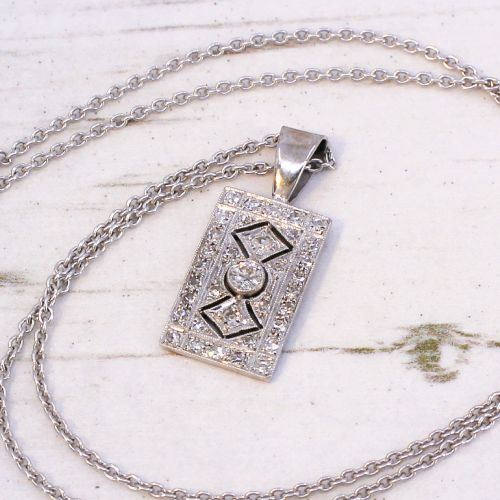


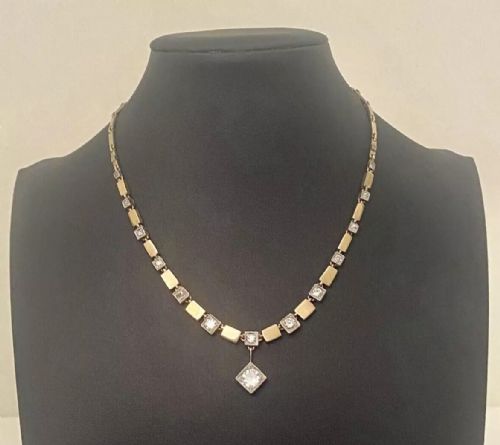

Geometric Diamond Pendant
A geometric diamond pendant brings sharp lines and brilliant stones together, offering the clean architectural elegance collectors seek.
Geometric Diamond Pendant
The items found here encompass forms such as pendants, necklaces, fob watches, and convertible double clip brooches. Platinum and white gold frequently form the framework for these stones, paired alongside yellow and rose gold or accented by sapphire, moonstone, pearl, and onyx.
How they were made
Metals such as platinum and white gold provide the robust yet pliable structure necessary for holding intricate stone arrangements. Goldsmiths and platinumsmiths utilised these metals to create articulated drops and secure settings.
Diamonds are combined with materials like palladium, 18ct white gold, and occasional coloured gems such as sapphires. The assembly relies on precision work to align old cut diamonds within linear metal frameworks.
Geometric Diamond Pendant Retail Price Guide 2026
Typical asking prices for geometric diamond pendant among the pieces listed under this phrase on Sellingantiques today, from the lower quarter to the upper quarter. They describe what is for sale here now, not the wider market.
Listings span the Edwardian era through the nineteen forties, featuring platinum, white gold, palladium, diamonds, sapphires, and moonstones.
What varies in quality
The standard of workmanship depends on the precision of the metalwork and the integration of the stones within the linear design. Finer examples display meticulous articulation and balanced proportions between the precious metals and the diamond weight.
Material selection also defines the tier of a piece, distinguishing items set entirely in platinum from those utilising mixed gold alloys or additional gemstones like sapphires and onyx.
The Geometric Diamond Pendant Glossary
- Art Deco
- A design style from the nineteen twenties and nineteen thirties characterised by symmetrical geometric shapes, clean lines, and stylised motifs. This movement heavily influences the structure of these pendants.
- Edwardian
- A period spanning the early twentieth century known for delicate garland styles and lighter metal frameworks. Pieces from this era often precede the bolder geometry of the Art Deco years.
- Old Cut
- A diamond cutting style typical of antique jewellery featuring smaller tables, higher crowns, and deep pavilions. These stones produce a distinctive softer light reflection compared to modern brilliant cuts.
- Platinum
- A dense, durable white metal favoured for fine jewellery due to its strength in thin settings. It allows intricate openwork designs to remain secure.
Geometric Diamond Pendant: Frequently Asked Questions
What periods do these pieces date from?
These items predominantly originate from the Edwardian era, the nineteen twenties, nineteen thirties, and early nineteen forties. Art Deco design heavily shapes the inventory.
Craftsmanship from these decades relies on platinum and white gold settings housing old cut diamonds.
How do I wear a convertible clip brooch pendant?
Convertible pieces function both as dress clips and as hanging pendants on a chain or necklace. This versatility allowed owners to alter their jewellery depending on the occasion.
Mechanisms securely lock the components together when worn as a brooch.
What metals are commonly used?
Platinum and white gold appear frequently, providing a bright neutral background for diamonds. Yellow gold, rose gold, and palladium also feature in various listings.
Choice of metal often aligns with the specific manufacturing date and prevailing style.
Are coloured stones included with the diamonds?
Several examples incorporate gemstones such as sapphires, moonstones, pearls, and onyx alongside the central diamonds. These additions introduce contrast to the geometric compositions.
Coloured accents help date specific pieces to the Art Deco period.