

Desk Stationery Organiser
These desk stationery organiser pieces keep correspondence orderly, bringing period craftsmanship and useful elegance to any writing surface.
Desk Stationery Organiser
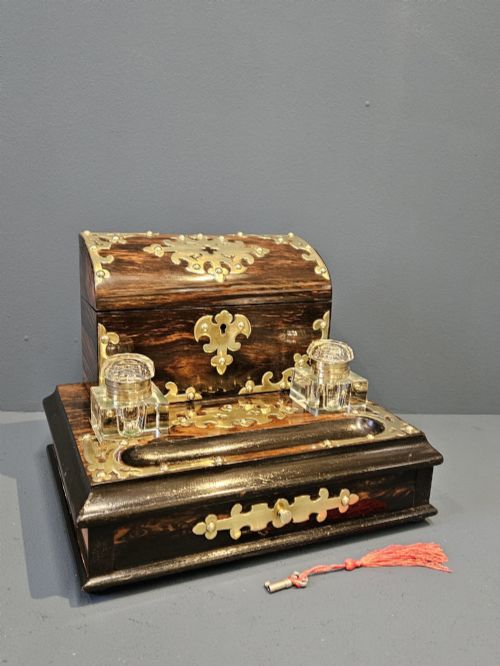
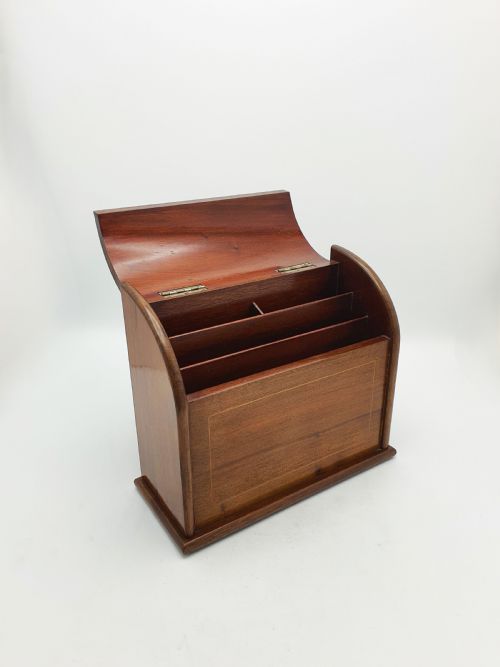
A desk stationery organiser serves to sort letters, envelopes and writing implements on a desktop, grouping items like inkstands, letter racks and correspondence boxes together.
Most examples found on this page date from the Victorian and Edwardian periods, alongside a few nineteenth-century and Georgian pieces.
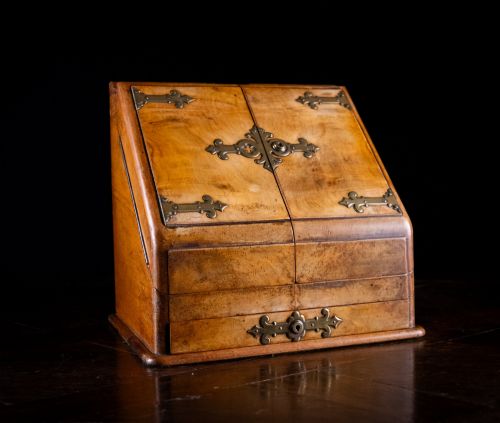
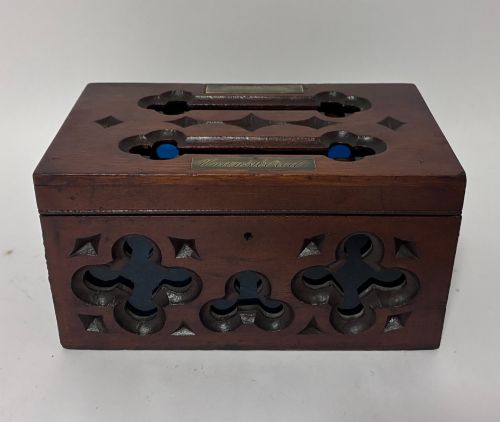
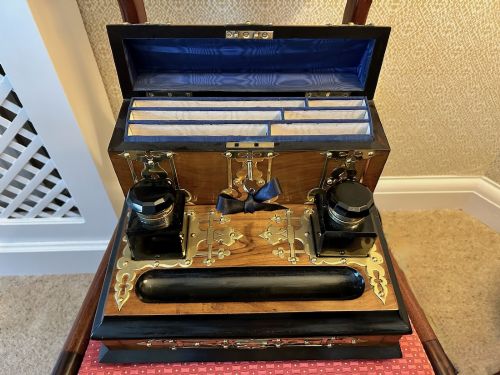
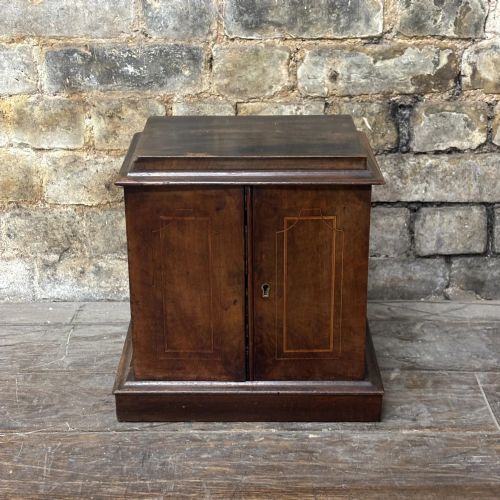
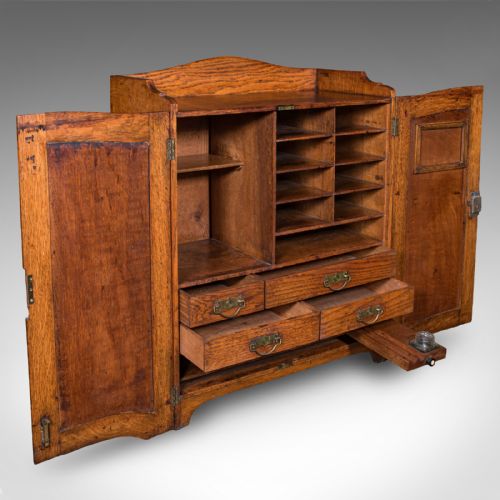
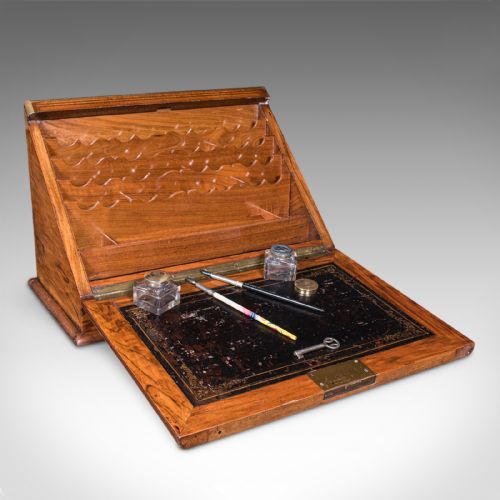
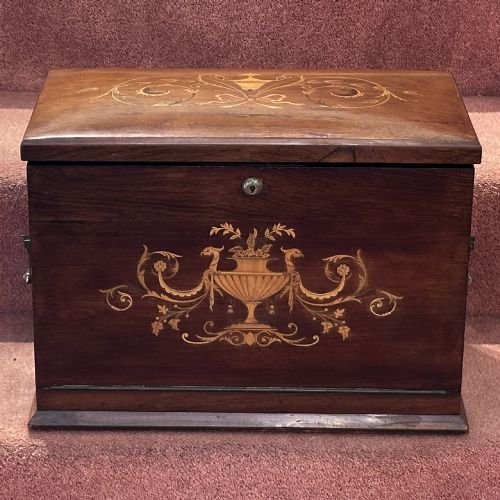
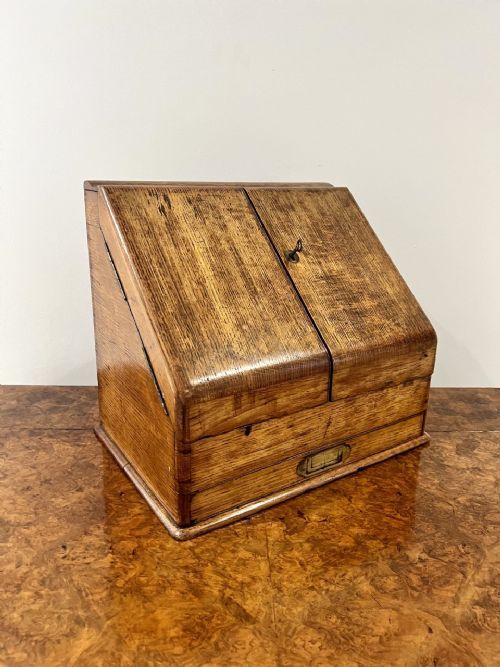
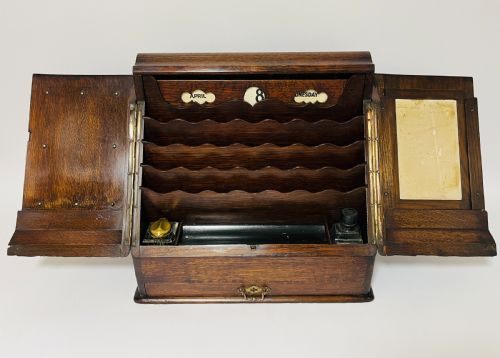
The common forms include stationery cabinets with fall fronts or hinged lids, desktop cartonnieres, and open letter racks made for domestic and office use.
Materials and construction
Cabinetmakers utilised hardwoods such as oak, mahogany, walnut, rosewood and coromandel, often framing these timbers with brass mounts and hinges.
Decorative detailing incorporates glass, leather, silver, mother of pearl and lacquerwork, reflecting styles from Gothic Revival to Arts and Crafts.
Listings span the Victorian and Edwardian eras through to the nineteenth century, featuring oak, walnut, brass and mahogany forms.
Assessing quality
The distinction between ordinary and superior pieces rests on the choice of figured timber, the crispness of brass or ormolu mounts, and the integration of fitted interiors.
Better examples display refined joinery, intact original glass or silver fittings, and signed maker details like Tunbridge Ware attribution.
The Desk Stationery Organiser Glossary
- Cartonnier
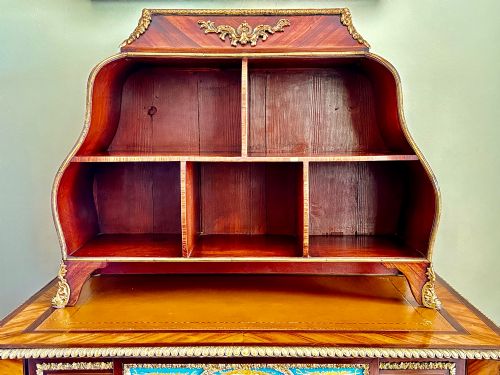
- A desktop cabinet containing multiple tiers of shallow drawers or compartments for papers. It keeps loose documents sorted.
- Correspondence box
- A lidded box designed to hold writing paper and envelopes. These often feature interior dividers.
- Inkstand
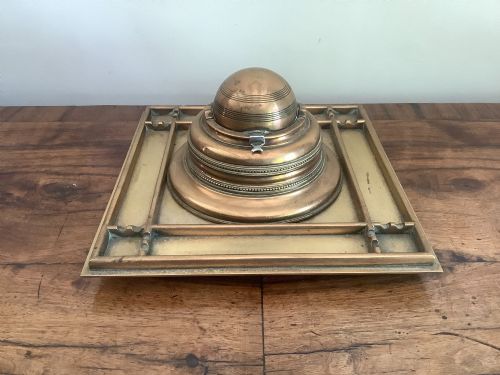
- A tray or stand holding one or more inkwells alongside pen rests. It forms a central part of desk accessories.
- Letter rack
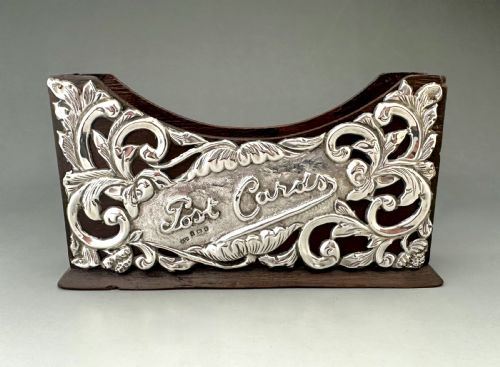
- An open framework designed to hold incoming and outgoing post upright. It allows quick sorting of daily correspondence.
Desk Stationery Organiser: Frequently Asked Questions
What is a desk stationery organiser?
A desk stationery organiser is a container or rack designed to keep letters, envelopes and writing materials tidy on a desk.
These pieces range from simple wooden letter racks to elaborate cabinets with fall fronts and integrated inkstands.
How were stationery boxes used?
Victorian and Edwardian users stored writing paper, envelopes and stamps inside these boxes to keep writing surfaces neat.
Many featured internal partitions and slots to separate different sizes of correspondence.
What materials are common?
Common materials include hardwoods such as oak, walnut, mahogany and rosewood.
Many examples feature brass hardware, glass inkwells, leather linings and decorative accents like mother of pearl.