


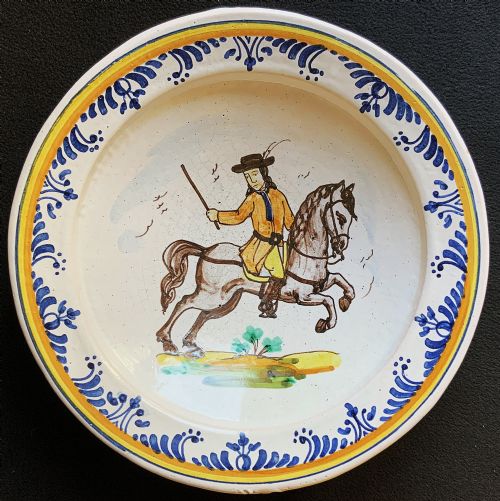

Delftware Wall Dish
A delftware wall dish brings tin-glazed earthenware and vibrant cobalt oxide painting straight to a vertical display.
Delftware Wall Dish
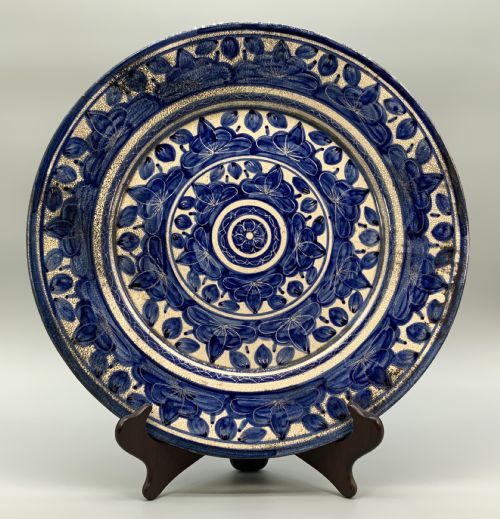
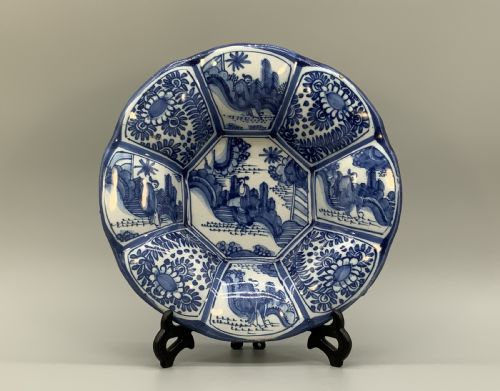
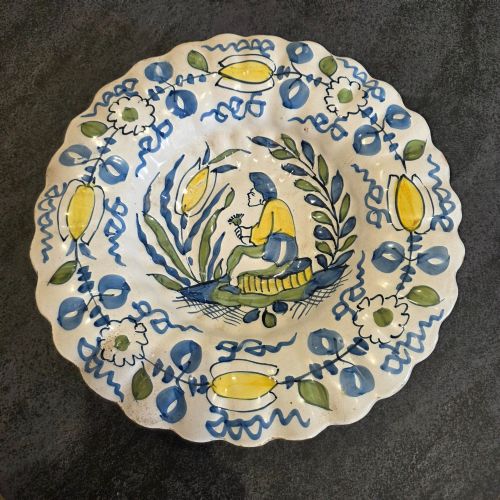
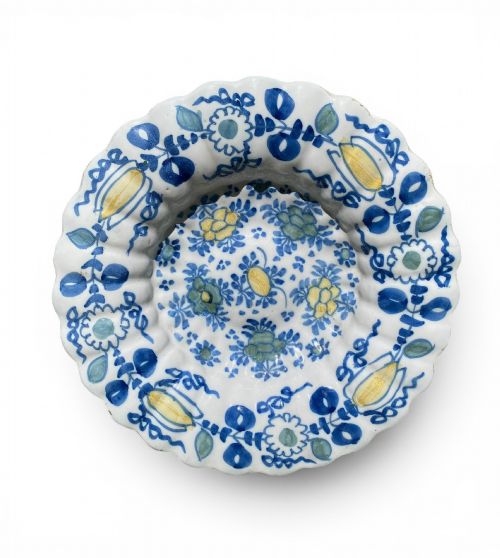
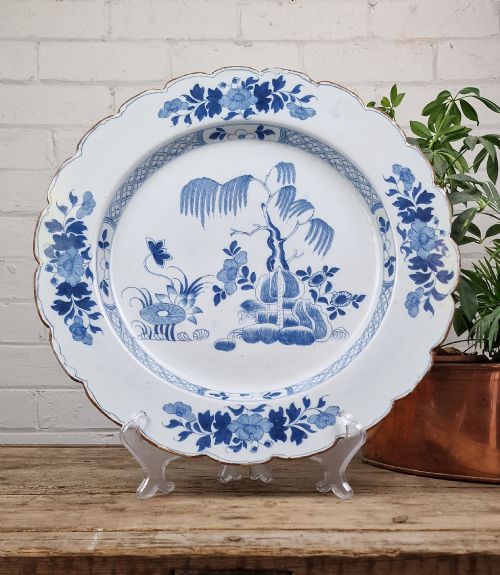
A delftware wall dish spans large chargers, shallow bowls, and decorative plates designed primarily for display rather than dining. The pieces you encounter most often on this page belong to the eighteenth and seventeenth centuries, originating from Dutch, English, or continental potteries.
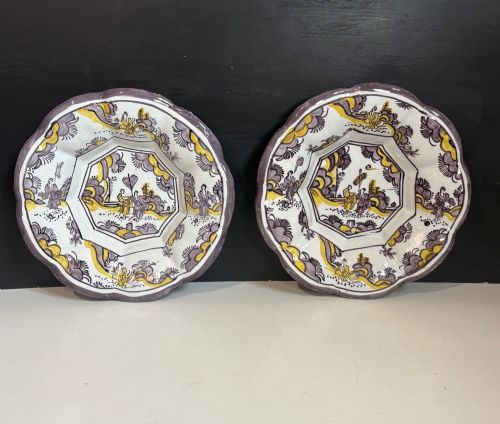
Makers shaped these items into wide, circular chargers and lobed dishes intended to catch the light on timber panelled walls. The form ranges from modest plates to monumental chargers exceeding thirty centimetres in diameter.
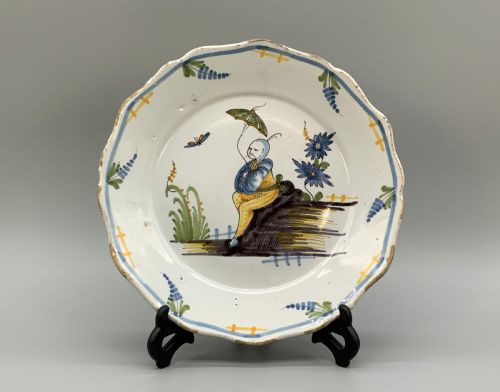
Continental examples often display distinct regional traits, such as Spanish Catalan or French faience traditions alongside standard Dutch output. English production from centres like Lambeth and Bristol appears frequently among these selections.
Materials and construction
Potters formed the body using basic earthenware, coated subsequently in an opaque tin glaze that created a smooth white surface for painting. Artisans applied cobalt pigment and manganese directly onto this absorbent unfired glaze before single-firing the ceramic.
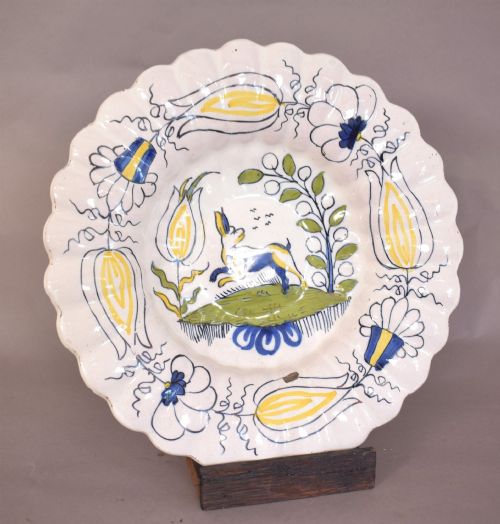
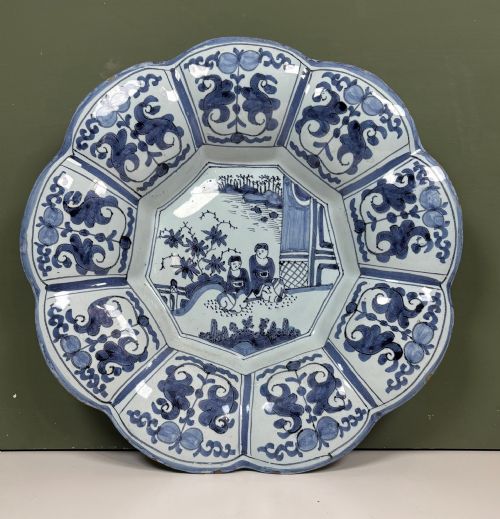
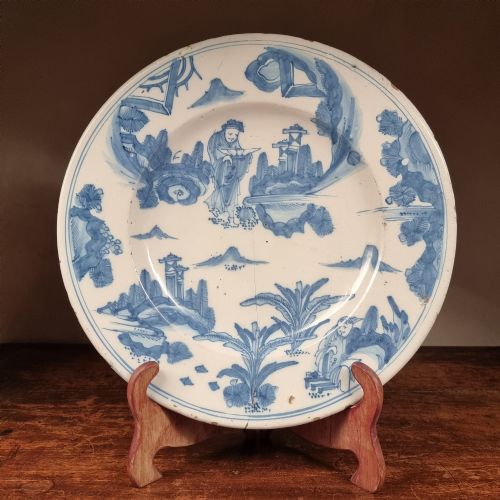
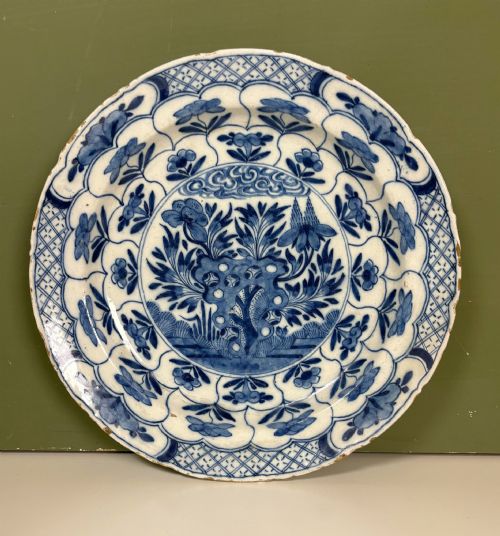
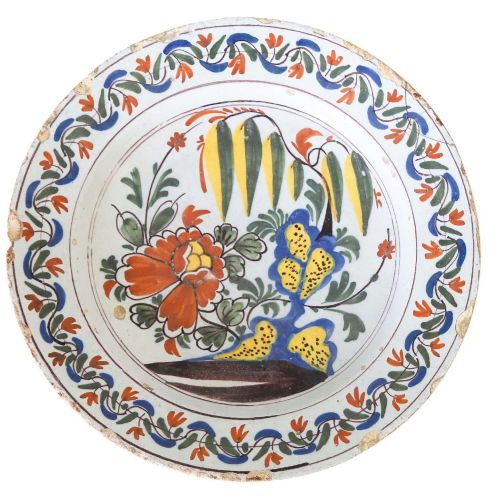
Decoration relied on hand-painted brushwork, encompassing traditional blue and white schemes as well as polychrome palettes involving yellow and manganese. Many surfaces adopted Chinese-inspired Chinoiserie or Kraak motifs drawn from imported porcelain.
Evaluating the standard
Quality rests upon the crispness of the hand-painted decoration and the density of the tin glaze over the earthenware body. Superior examples display confident, fluid brushwork in the cobalt pigment or polychrome oxides.
The ambition of the design dictates much of the distinction, separating simple geometric plates from complex Kraak-style chargers with intricate floral panels. Preservation of the tin glaze across the broad surface of a large charger also influences the overall merit.
The Delftware Wall Dish Glossary
- Tin-Glazed Earthenware
- Earthenware pottery covered with an opaque white glaze containing tin oxide. This surface provided a bright ground for painted ceramic decoration.
- Charger
- A large decorative plate or dish intended for display on a wall or sideboard. These items measured significantly wider than standard dining plates.
- Polychrome
- Decoration utilising multiple colours rather than a single pigment. On these dishes, this typically involved combinations of blue, yellow, and manganese.
- Chinoiserie
- European artistic styles reflecting Chinese motifs and landscapes. Artisans painted these imaginative oriental scenes onto seventeenth and eighteenth-century ceramics.
- Kraak Style
- A type of imported Chinese porcelain featuring segmented panel decoration that inspired European potters. Dutch and English workshops frequently copied these distinct radial layouts.
Delftware Wall Dish: Frequently Asked Questions
How were delftware wall dishes hung?
Historic dishes often relied on pierced footrings or applied wire attachments added by later collectors for vertical display.
Modern mounting usually involves specialist spring hangers that grip the rim safely without damaging the earthenware body.
What is the difference between delft and faience?
Delft specifically denotes tin-glazed earthenware made in the Netherlands, particularly in Delft, though the term also covers English production.
Faience generally refers to the equivalent tin-glazed pottery produced in France, Spain, and other continental European regions.
Can these dishes be used for food?
Tin-glazed earthenware is relatively soft and porous compared to modern ceramics, making historical chargers unsuitable for daily dining.
Historic glazes can also be sensitive to acids and moisture, so these pieces remain strictly intended for decorative display.
How do you date a delft dish?
Dating relies on stylistic clues like brushwork techniques, colour palettes, and the specific thickness of the earthenware body.
Earlier seventeenth-century pieces often show heavier potting and distinct Kraak influences, whereas later eighteenth-century examples lean towards lighter English polychrome designs.