

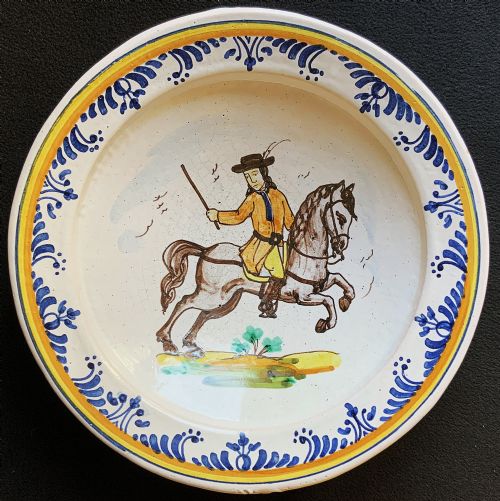


Large Delftware Charger Plate
A large delftware charger plate brings broad, tin-glazed earthenware presence to a wall or dresser, prized for its generous diameter and painted surface.
Large Delftware Charger Plate
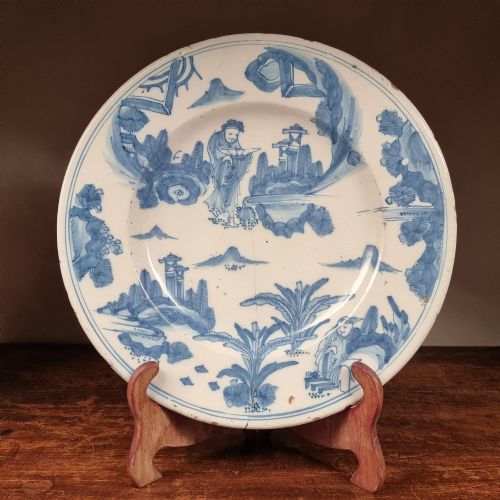
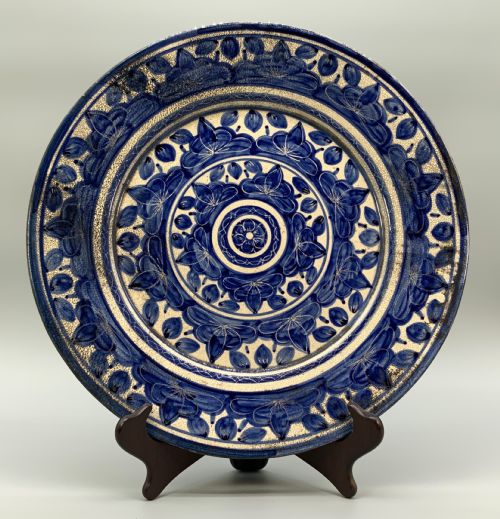
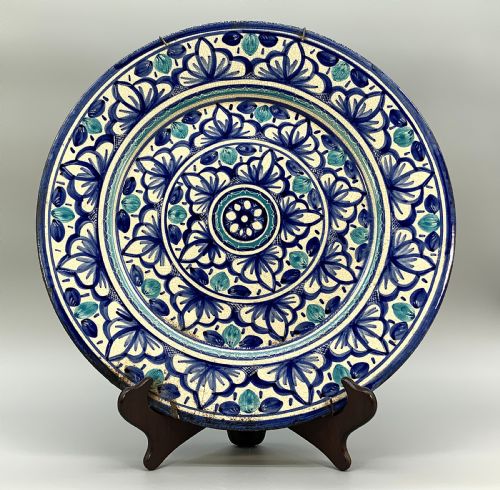
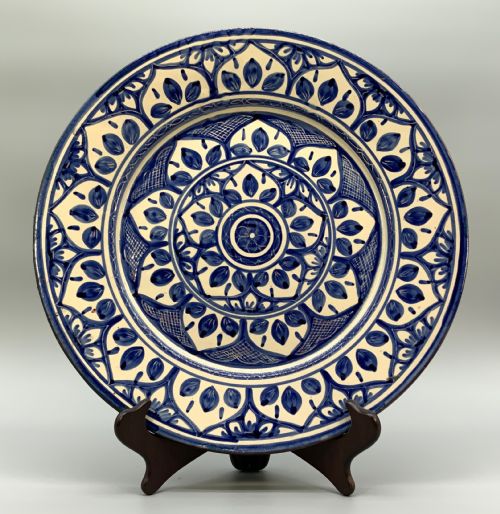
A large delftware charger plate serves primarily as a decorative dish or wall plate, measuring well beyond ordinary dining ware to display elaborate painted scenes or patterns. When searching for a large delftware charger plate, buyers encounter substantial earthenware discs originating from seventeenth-century, eighteenth-century, and twentieth-century traditions.
The evidence shows forms ranging from standard charger plates and wall plates to platters, decorative dishes, and bowls. Dutch, Spanish, and Moorish styles dominate the selections, alongside specific designs such as the orchard pattern, Kraak layouts, and geometric floral motifs.
Origin periods span widely from the seventeenth century and eighteenth century into nineteenth-century examples and twentieth-century continental interpretations dated around nineteen-forty. These pieces capture various regional aesthetics, notably Dutch Baroque and Moorish Revival sensibilities.
Materials and construction
Makers formed these large pieces from basic earthenware bodies, coating the clay in an opaque tin glaze or faience glaze that provided a smooth, pale canvas for decoration. This white or off-white tin-glaze layer created the characteristic surface required before any pigment was applied.
Decoration relied heavily on cobalt pigment and cobalt oxide to achieve deep blue tones, while select examples incorporate polychrome palettes and manganese for varied colour depth. Pigments were painted directly onto the unfired or lightly fired glaze, fusing permanently during the kiln firing process.
Listings feature tin-glazed earthenware and ceramic forms spanning the seventeenth, eighteenth, and twentieth centuries.
Assessing quality and character
Quality rests in the crispness of the painted design, whether executing intricate geometric floral motifs, Kraak arrangements, or expansive orchard scenes across a wide earthenware surface. The control of cobalt pigment and the richness of polychrome or manganese detailing distinguish superior brushwork from simpler execution.
The handling of the tin glaze and faience glaze affects the visual depth of the plate, with smoother, more even surfaces and well-managed kiln results elevating the piece. Age also plays a role, with seventeenth-century and eighteenth-century examples carrying distinct historical weight compared to later twentieth-century Moorish style interpretations.
The Large Delftware Charger Plate Glossary
- Charger plate
- A large decorative plate or platter traditionally displayed on walls or sideboards rather than used for daily dining. These broad earthenware pieces showcase extensive painted artwork.
- Tin-glazed earthenware
- Pottery coated with a white, opaque glaze containing tin oxide, which creates a smooth surface for painting. This technique forms the foundation of all delftware production.
- Faience glaze
- A term often synonymous with tin glaze, used to describe the opaque, light-coloured vitreous coating applied to earthenware ceramics in European traditions. It absorbs painted pigments before firing.
- Cobalt oxide
- A metallic colourant utilised to produce deep blue painted designs on ceramic surfaces. It remains stable under high kiln temperatures.
- Kraak plate
- A style of ceramic plate featuring panelled border designs and central motifs, originally inspired by imported porcelain and adapted by European delftware makers.
Large Delftware Charger Plate: Frequently Asked Questions
How were large charger plates displayed?
These large plates were primarily hung on walls using wire attachments or set upright on sideboards and dressers to showcase their painted surfaces. Their substantial diameter made them key visual elements in domestic interiors.
Because they exceeded normal dining dimensions, owners treated them as display art rather than functional tableware.
What colours appear on these plates?
Blue and white dominates through the use of cobalt pigment and cobalt oxide on a tin glaze background. Other examples incorporate polychrome schemes and manganese for richer multicoloured palettes.
These pigments soak into the glaze during firing, creating lasting depth across floral, geometric, and pictorial designs.
How do seventeenth and eighteenth-century pieces differ?
Seventeenth-century examples often align with early Dutch production and Kraak styles, reflecting specific import influences of the period. Eighteenth-century pieces expand into broader Dutch polychrome work, English production, and Spanish Catalana bowl forms.
Stylistic shifts in floral arrangements and border panels help separate these eras.
What is Moorish style delftware?
Moorish style delftware references continental pieces produced with distinct decorative influences reminiscent of Spanish and North African ceramic traditions. These twentieth-century examples, often dated around nineteen-forty, utilise the traditional earthenware and glaze medium for specific revival aesthetics.
They combine familiar tin-glaze techniques with older ornamental layouts.