

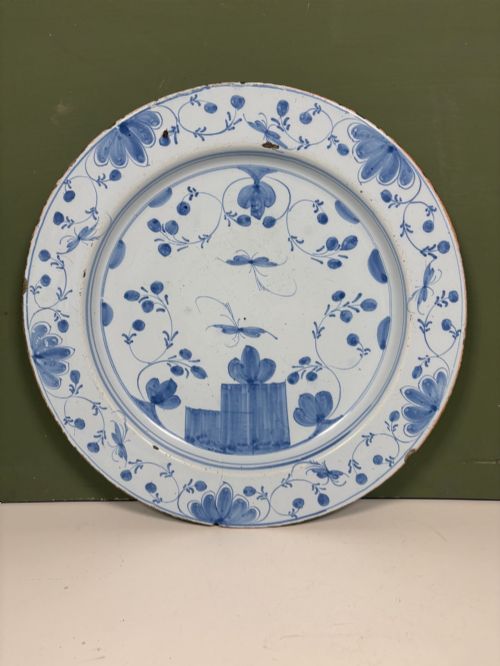


Delftware Display Charger Plate
These delftware display charger plate pieces offer rich tin-glazed earthenware surfaces, bringing centuries of hand-painted blue and white or polychrome artistry to your walls and tables.
Delftware Display Charger Plate
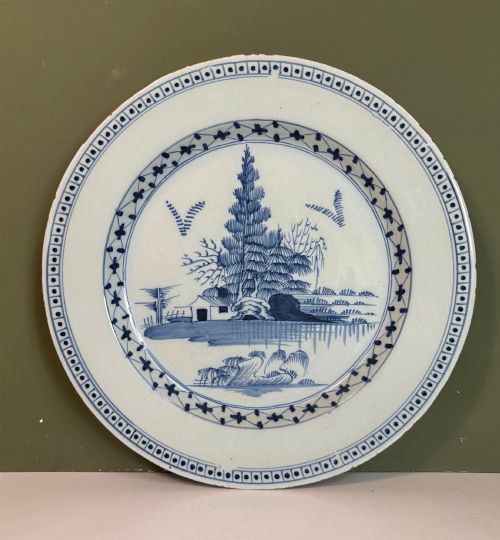
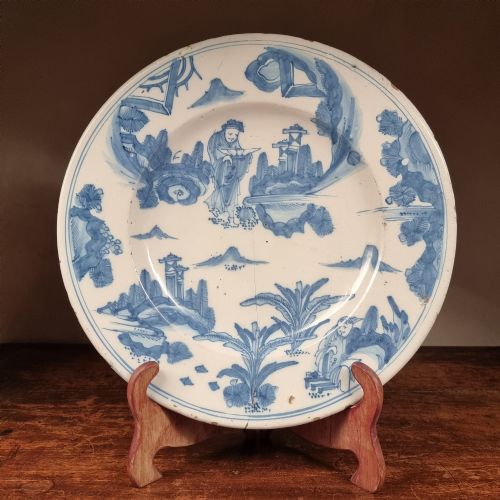
A delftware display charger plate is a large decorative dish produced primarily during the seventeenth and eighteenth centuries across England, Holland, and France. These generous earthenware vessels were designed to make a visual statement in domestic interiors rather than for heavy dining use.
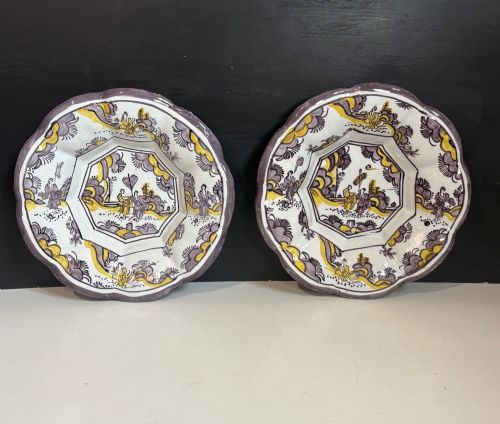
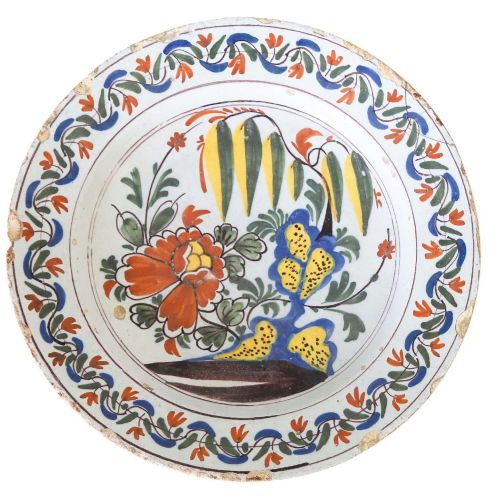
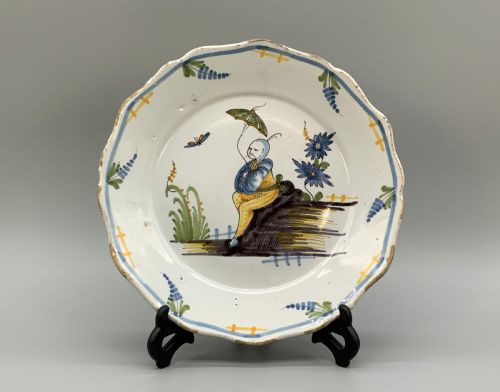
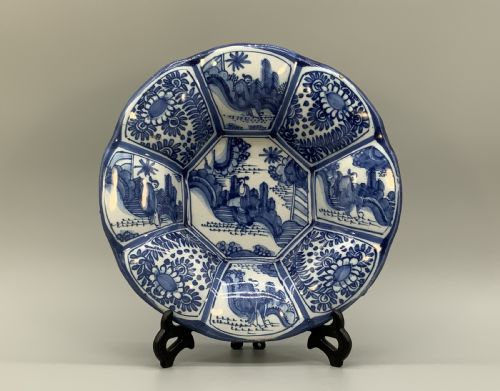
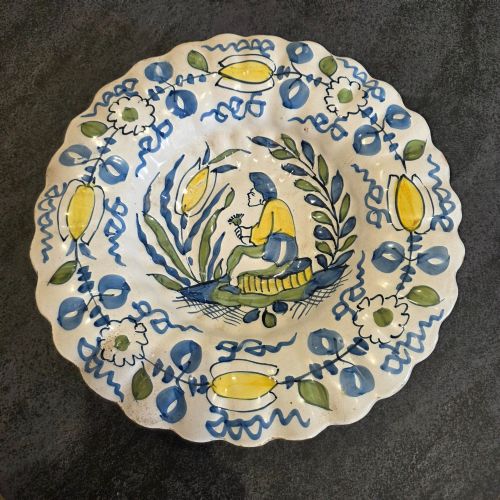
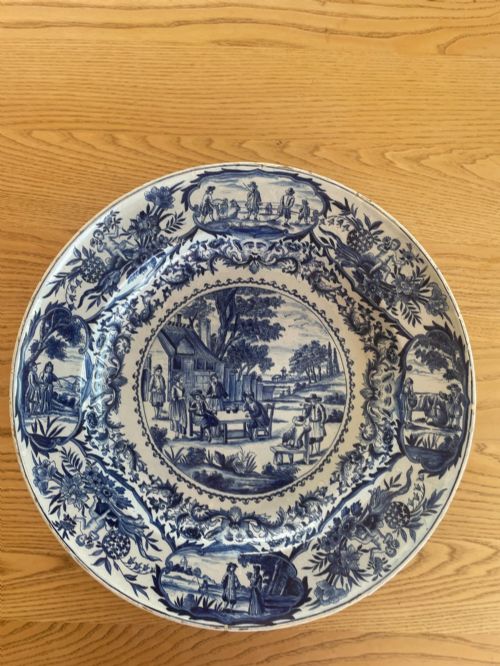
The pieces you will encounter most frequently on this page date from the eighteenth century, featuring characteristic hand-painted motifs executed in cobalt blue, manganese, yellow, or rich polychrome palettes. Forms range from simple circular chargers to lobed dishes displaying geometric, floral, or Chinese-inspired Chinoiserie designs.
How they were made
Potters shaped these objects from earthenware clay before coating the biscuit body in an opaque tin-glaze that provided a smooth, white canvas for painters. Artisans then applied pigments directly to the absorbent raw glaze surface, fixing the colours during the firing process.
Grand feu techniques allowed certain pigments to fuse deeply with the tin glaze under high heat, creating vibrant results in manganese and polychrome. Cobalt pigment remained the standard choice for deep blue decoration, while Kraak styles and floral patterns drew inspiration from imported Asian ceramics.
Potters occasionally incorporated lively geometric flowers that looked remarkably cheerful despite enduring centuries of domestic history.
What varies in quality
The distinction between ordinary production and finer examples rests upon the confidence of the brushwork and the clarity of the tin glaze. Deliberate, fluid strokes in the hand-painted decoration reveal the skill of the individual artisan working at the kiln.
Depth of colour and complexity of design also separate standard plates from exceptional display pieces. Rich polychrome palettes utilising manganese and yellow alongside blue demand greater technical control than simple monochrome painting.
De Witte Ster
The Delftware Display Charger Plate Glossary
- Tin-Glazed Earthenware
- Earthenware pottery covered with a white tin oxide glaze that provides an opaque background for painted decoration. This technique forms the defining foundation of all pieces on this page.
- Chinoiserie
- European decorative design inspired by Chinese artistic traditions, frequently appearing on eighteenth-century plates and chargers. Painters adapted these motifs with freehand brushwork.
- Polychrome
- Decoration employing multiple distinct colours beyond standard blue and white, often incorporating yellow, green, and manganese. These richer palettes appear on English and Dutch pieces.
- Charger
- A large decorative plate traditionally used for display or ceremonial service rather than everyday dining. Their substantial diameter provides a broad field for intricate painted scenes.
- Grand Feu
- A high-temperature firing technique that fuses pigment directly into the raw tin glaze. This method produces distinctive depth and permanence in colours such as manganese.
Delftware Display Charger Plate: Frequently Asked Questions
How were delftware chargers used historically?
These large dishes served primarily as decorative wall plates or centrepiece displays on sideboards in prosperous homes. Their generous proportions allowed hosts to showcase artistic painted scenes to visitors.
While technically capable of holding food, their soft earthenware bodies and tin glazes made them vulnerable to heavy utility. Most survived by remaining on display or stored safely in cabinets.
How do I hang a heavy charger safely?
Displaying these plates requires a secure, properly sized wire hanger that distributes weight evenly around the rim without putting pressure on the ceramic body. Professional framers can provide custom brass mounts tailored to the exact depth of the dish.
Wall placement should avoid areas prone to direct sunlight, high humidity, or heavy vibrations from doors. Ensuring the wall fixing is anchored into solid masonry or a stud keeps the piece secure.
How can I tell English delft from Dutch?
Distinguishing between English and Dutch origins often involves examining the glaze tone, rim profile, and painting style. English pieces from centres like Lambeth frequently exhibit softer, warmer glaze characteristics.
Dutch production, particularly from factories around Delft, often displays crisp cobalt blue painting and tighter adherence to Kraak or oriental motifs. Pigment combinations and footrim construction provide further clues for attribution.
What is the difference between a plate and a charger?
The primary distinction lies in physical scale and intended function within historic domestic settings. Chargers measure significantly larger in diameter, making them suitable for wall display.
Standard plates were produced in smaller formats intended for table service or lighter decorative arrangements. Both share the same tin-glazed earthenware construction and hand-painted techniques.