






Delft Earthenware
Delft earthenware brings together tin-glazed ceramic forms and hand-painted cobalt pigments from seventeenth and eighteenth-century workshops.
Delft Earthenware
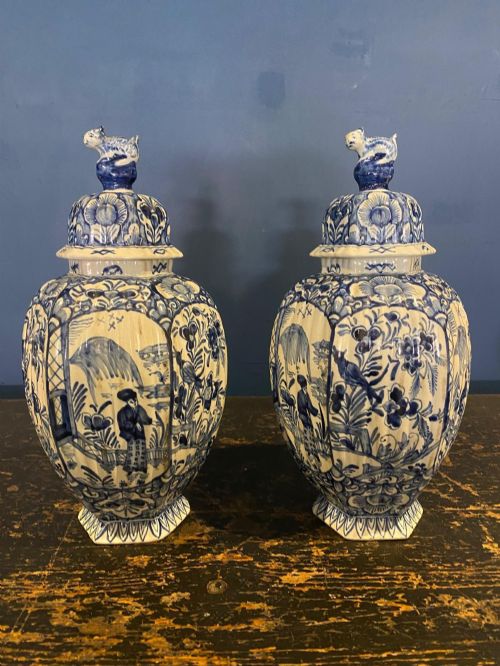
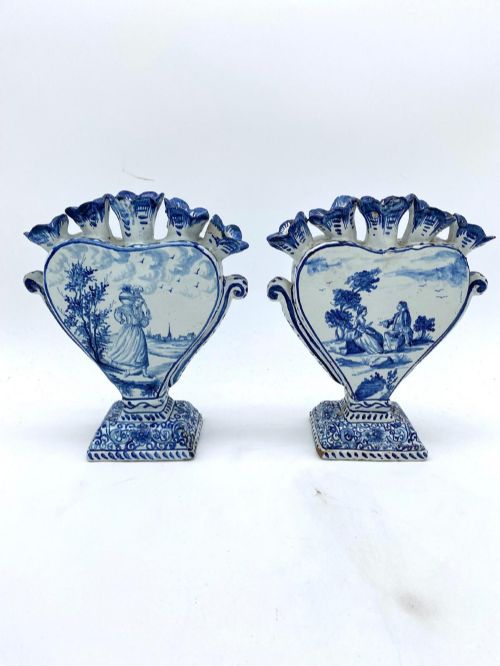
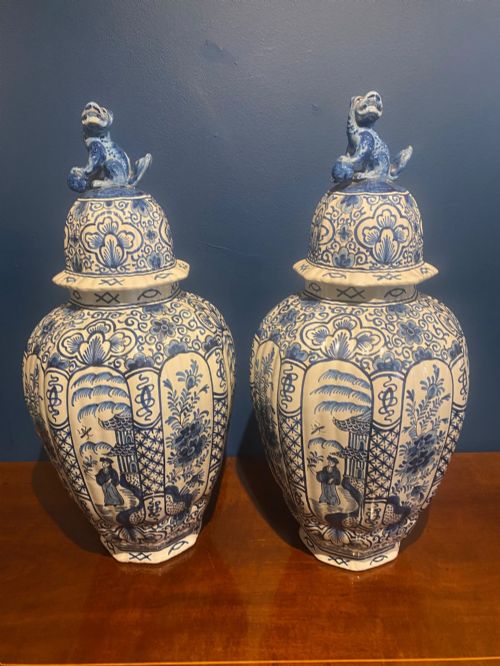
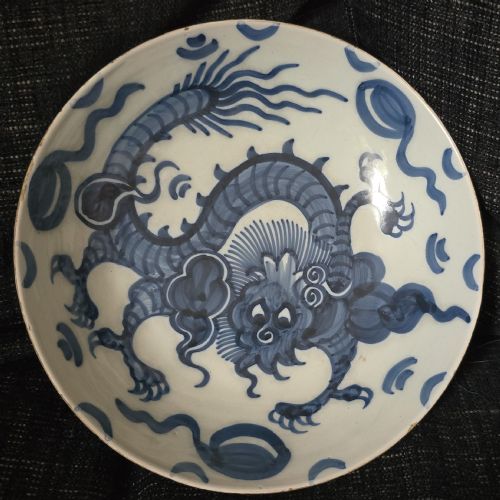
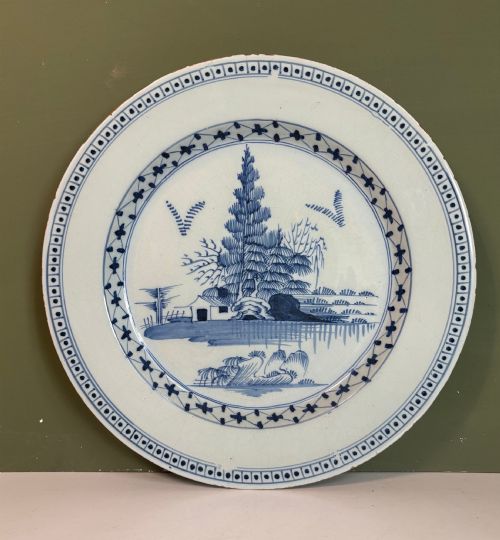
Buyers seeking delft earthenware encounter a range of chargers, decorative plates, and baluster vases originating primarily from Dutch and English kilns. The selection spans seventeenth-century blue and white pieces to later nineteenth-century revivals and Moorish-style chargers.
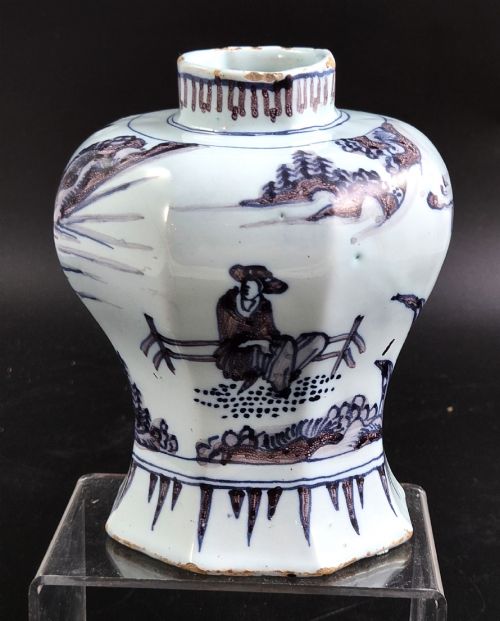
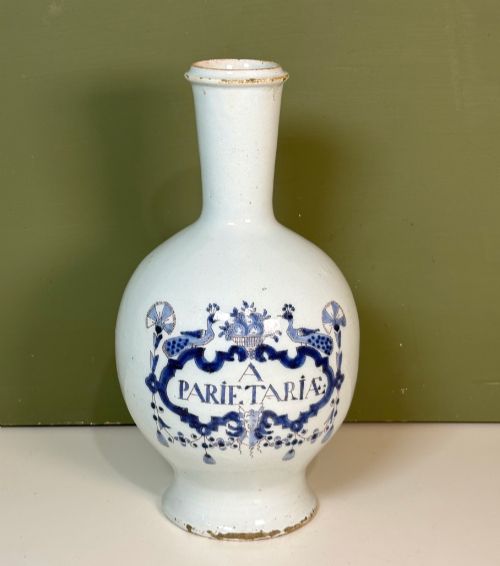
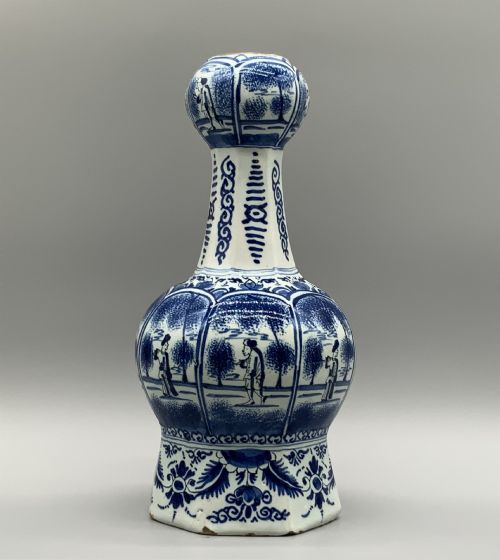
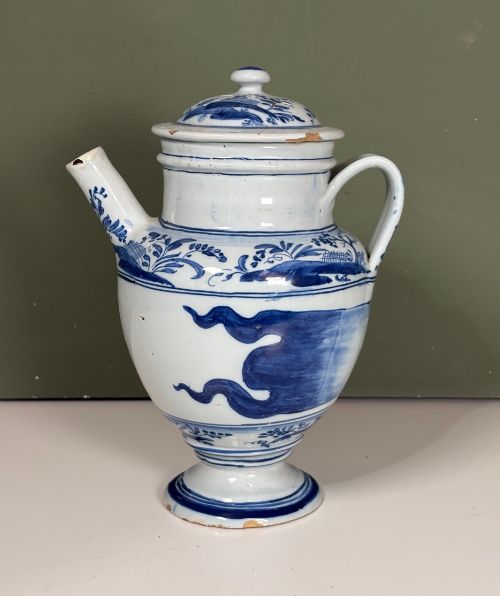
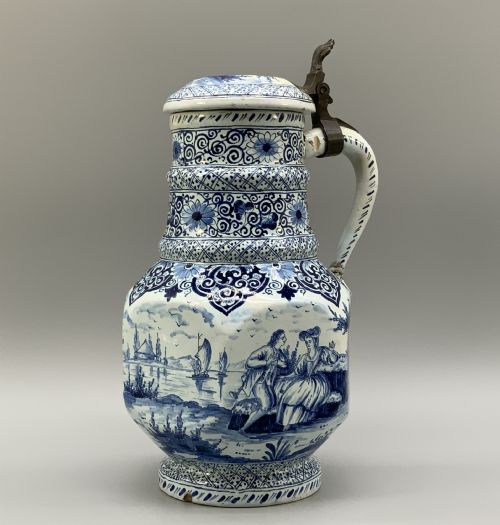
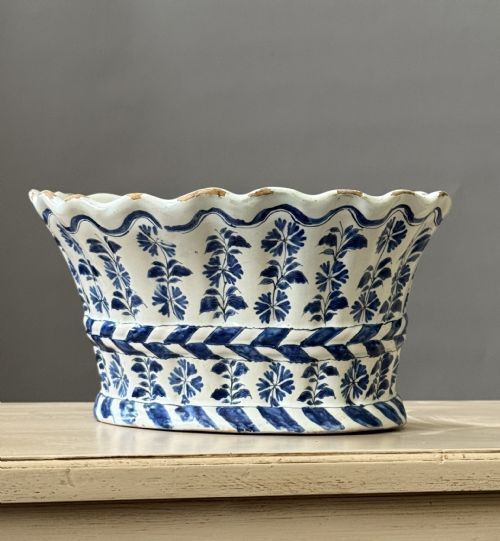
Vessels take many shapes, including apothecary bottles, posset pots, puzzle jugs, and lidded jars alongside traditional wall chargers. Eighteenth-century examples frequently feature Chinese scholar motifs or floral patterns executed in cobalt or manganese pigments.
The material appears across distinct periods, with seventeenth and eighteenth-century items representing the core tradition. Nineteenth-century reproductions and continental faience also populate the category alongside individual tiles and ceramic cows.
Materials and Technique
Potters formed objects from earthenware clay, coating the surface with an opaque white tin glaze to create a smooth ground for painting. Painters applied cobalt oxide and manganese pigments directly onto the unfired glaze, absorbing the colour before a final kiln firing.
Makers utilised hand-painted brushwork to render intricate Chinoiserie scenes, floral sprays, and figures. Pewter mounts occasionally appeared on jugs and pitchers, supplementing the ceramic bodies produced across European workshops.
Delft Earthenware Retail Price Guide 2026
Typical asking prices for delft earthenware among the pieces listed under this phrase on Sellingantiques today, from the lower quarter to the upper quarter. They describe what is for sale here now, not the wider market.
Materials across the selection include earthenware, ceramic, cobalt pigment, and tin glaze configured into vases, chargers, and bowls.
Quality and Execution
The refinement of the painted brushwork dictates the visual success of a piece, distinguishing quick commercial production from meticulous hand-painted detail. Cobalt depth and manganese clarity create tonal richness across the tin-glazed surface.
The stability of the earthenware body and the evenness of the white glaze layer affect the overall integrity of chargers and vases. Early pieces retain historical character through glaze pooling and firing imperfections inherent to period kilns.
Pieter Verburg
The Delft Earthenware Glossary
- Tin-Glazed Earthenware
- Ceramic pottery coated with a lead glaze made opaque by the addition of tin oxide. This white surface serves as the canvas for blue and polychrome painting.
- Faience
- European tin-glazed earthenware, often associated with French, Dutch, and German production. The term describes pottery sharing technical roots with traditional delftware.
- Charger
- A large decorative plate designed for display on walls or sideboards rather than dining use. These wide dishes frequently showcase elaborate painted scenes.
- Chinoiserie
- European artistic style reflecting Chinese motifs and landscapes. Painters adapted these Eastern designs onto seventeenth and eighteenth-century ceramic vessels.
- Manganese
- A purple-brown metallic oxide used by potters as a pigment. It appears in monochrome designs or alongside cobalt blue on tin-glazed dishes.
Delft Earthenware: Frequently Asked Questions
What is delft earthenware?
Delft earthenware is tin-glazed pottery produced primarily in the Netherlands and England from the seventeenth century onward. Potters coated earthenware bodies with a white tin glaze before applying hand-painted blue or polychrome decoration.
Items range from large wall chargers and vases to apothecary jars and tiles. The aesthetic draws heavily on imported Chinese porcelain and European domestic scenes.
How were chargers displayed?
Large chargers served primarily as decorative wall hangings or sideboard centrepieces in historic homes. Their broad surfaces provided ample space for detailed Chinoiserie landscapes and floral compositions.
Collectors today continue to exhibit these plates on plate rails or wall mounts. The painted designs remain visual focal points within a room.
How do I identify seventeenth-century pieces?
Seventeenth-century items often feature robust earthenware bodies with characteristic tin glaze characteristics and early Dutch or English motifs. Kraak style influences and cobalt blue palettes predominate in this foundational period.
Examining the glaze consistency and pigment behaviour helps separate early production from later nineteenth-century revivals. Historical forms like posset pots and apothecary bottles further anchor pieces to specific eras.
How do I care for tin-glazed pottery?
Tin-glazed earthenware requires gentle handling to protect the ceramic body and surface glaze from impact. Dusting with a dry, soft cloth preserves the painted decoration without introducing moisture.
Keeping pieces away from direct sunlight and damp environments protects the historic glaze stability. Display areas should offer stable temperature conditions.