







Delft Blue Earthenware
Delft blue earthenware brings together tin-glazed surfaces and cobalt pigment across chargers, vases, and apothecary jars from the seventeenth to the nineteenth centuries.
Delft Blue Earthenware
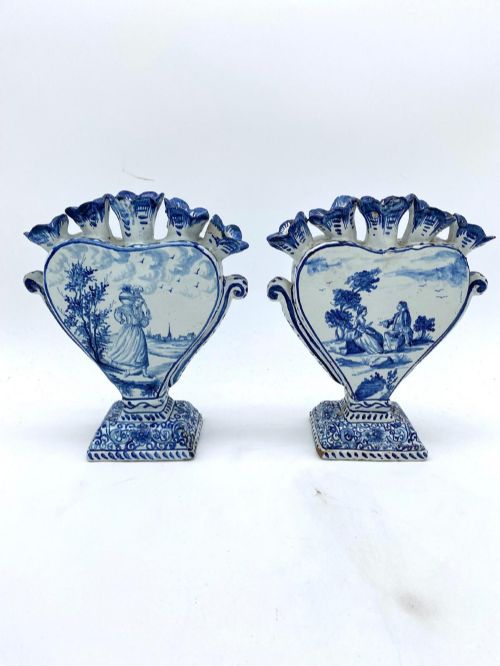
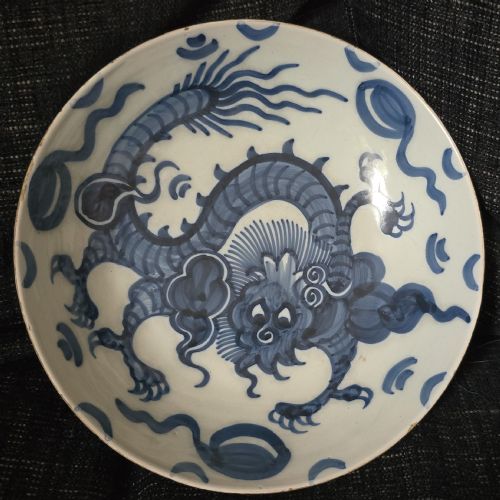
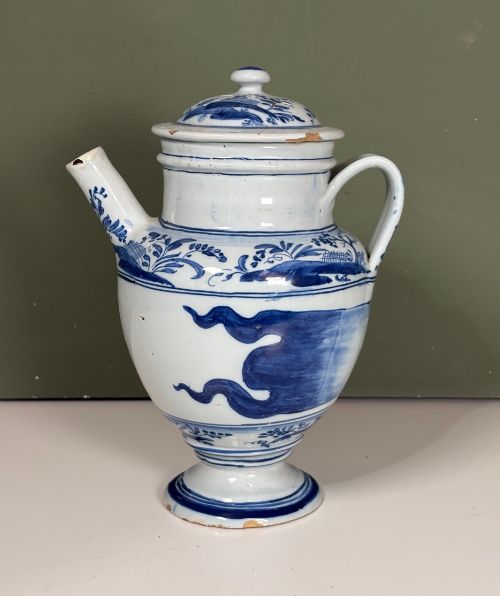
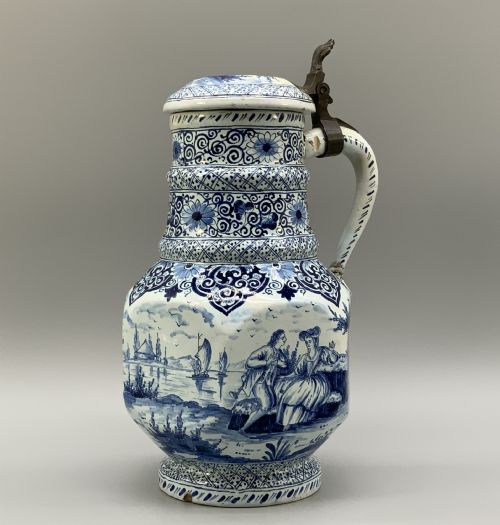
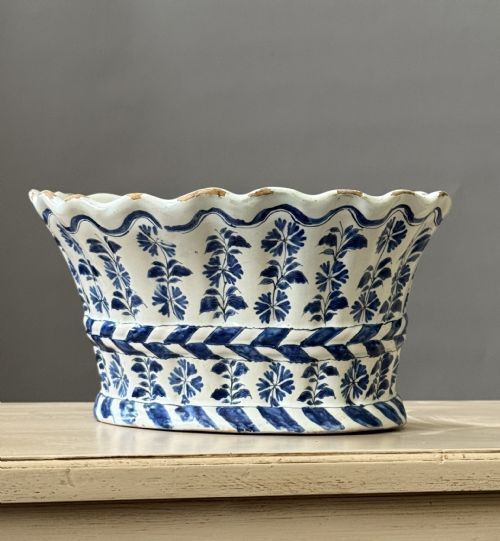
Delft blue earthenware spans decorative chargers, wall plates, large baluster vases, and specialised vessels such as apothecary bottles, posset pots, and puzzle jugs. Buyers encounter utilitarian forms sitting alongside purely ornamental pieces, including figural cows, monkey Toby jugs, and tulipieres.
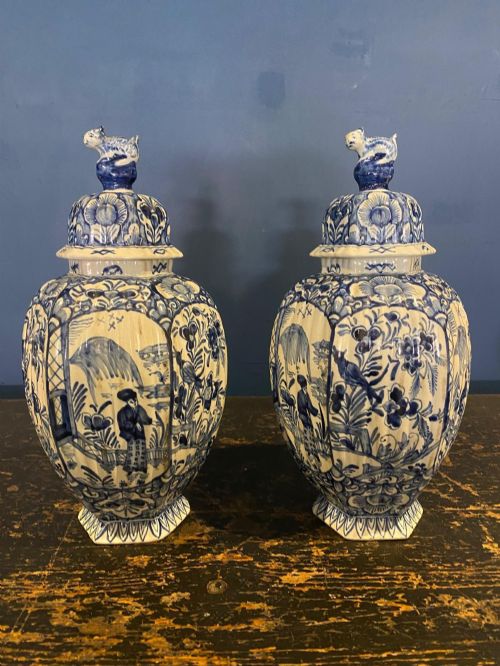
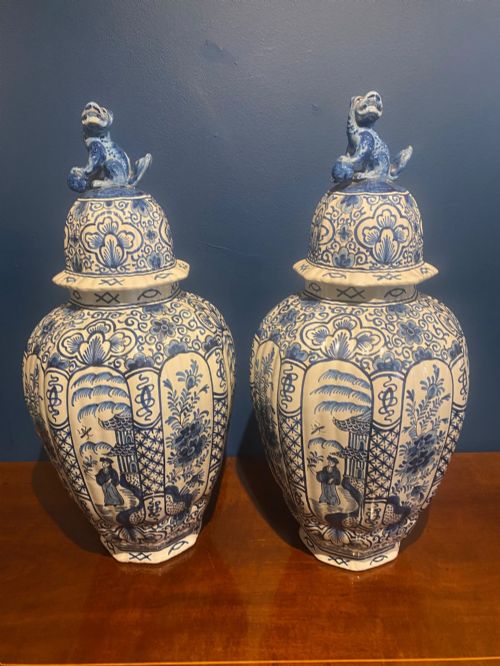
The material reaches back to the seventeenth century through nineteenth-century revivals, drawing on Dutch Baroque and Georgian Chinoiserie traditions. Chargers and bowls dominate the earlier periods, while lidded vases and pairs of vessels emerge frequently in nineteenth-century manifestations.
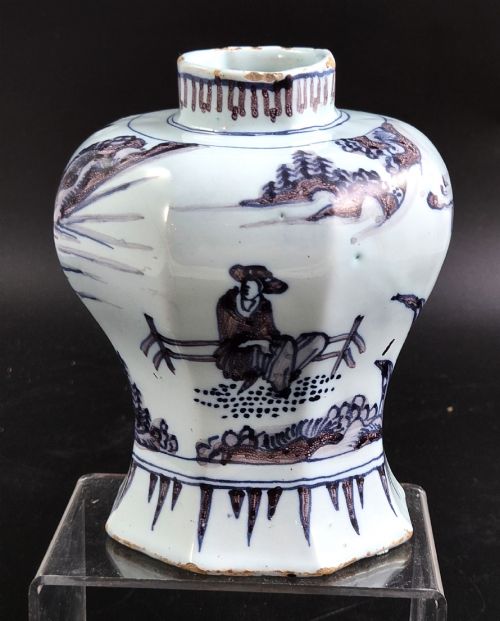
Continental and English workshops both produced these tin-glazed pieces, incorporating manganese touches alongside the standard cobalt blue. Collectors navigate everything from flat wall dishes to three-dimensional animals and lidded bough pots.
Materials and technique
Potters formed the base body from earthenware clay before coating the vessel in an opaque tin glaze that provided a smooth, white canvas for painting. Cobalt oxide or cobalt pigment was then applied directly to the unfired or raw glaze, soaking into the surface during the single- or double-firing process.
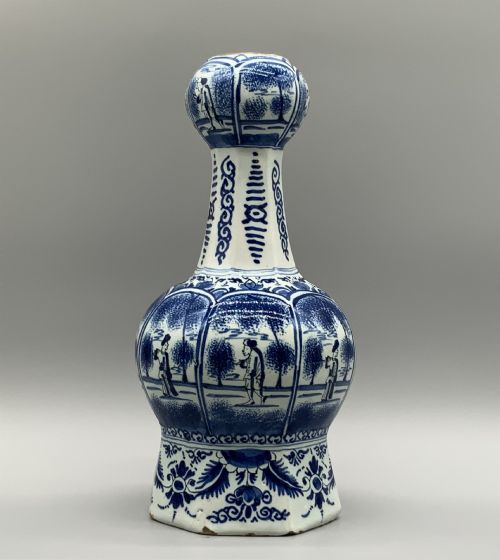
Manganese pigment often joined cobalt to create deep purple-brown details on octagonal baluster vases and chargers. Hand-painted floral motifs, Chinese scholar scenes, and Kraak style panels were executed with fluid brushwork directly onto the absorbent tin glaze.
Delft Blue Earthenware Retail Price Guide 2026
Typical asking prices for delft blue earthenware among the pieces listed under this phrase on Sellingantiques today, from the lower quarter to the upper quarter. They describe what is for sale here now, not the wider market.
Listings span the seventeenth, eighteenth, and nineteenth centuries, utilising tin-glazed earthenware, ceramic, and cobalt pigment across vases, chargers, and apothecary jars.
Judging quality in tin glaze
Quality rests upon the crispness of the cobalt painting and the stability of the tin glaze over the earthenware body. Crisp rendering of Chinoiserie figures and botanical sprays separates ordinary production from works with sharper detail and better tonal depth.
The condition of the glaze surface dictates much of the appeal, as tin glaze is prone to chipping along the rims of chargers and edges of vases. Pieces that retain an even, glossy white ground without excessive flaking command greater appreciation among collectors.
Pieter Verburg
The Delft Blue Earthenware Glossary
- Tin-Glazed Earthenware
- Pottery covered with a lead glaze made opaque by the addition of tin oxide. This creates the characteristic milky white surface used for painting.
- Cobalt Pigment
- A metallic oxide colorant that produces intense blue tones under high kiln temperatures. It remains the defining colour for traditional delft decoration.
- Charger
- A large decorative plate intended for display on a wall or sideboard rather than for dining use. These items form a major part of early production.
- Faience
- A European term for tin-glazed earthenware, particularly wares decorated with coloured metal oxides on an opaque white glaze. It encompasses both Dutch and continental styles.
- Baluster Vase
- A vessel with a rounded body that tapers toward the base and swells near the centre, often fitted with a matching lid. This shape appears frequently in seventeenth- and eighteenth-century inventories.
Delft Blue Earthenware: Frequently Asked Questions
What is delft blue earthenware?
Delft blue earthenware is pottery covered in an opaque tin glaze and painted with cobalt blue pigment. The tradition developed primarily in the Netherlands and England during the seventeenth and eighteenth centuries.
Potters shaped these ceramics into domestic vessels, large display chargers, and apothecary jars. The style often emulates imported Chinese porcelain through blue and white decorative schemes.
How were apothecary jars used?
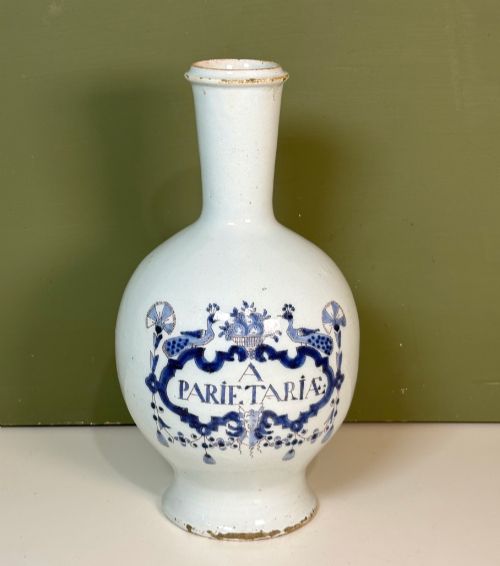
Apothecary jars and bottles held dried herbs, liquid medicines, and pharmaceutical preparations in dispensaries. Their tin-glazed surfaces resisted chemical absorption and bore painted labels to identify the contents.
Chemists and merchants displayed these vessels on wooden shelves within shops. Today, collectors value them for their historical inscriptions and medicinal forms.
How do I care for tin glaze?
Tin glaze is softer than modern porcelain and benefits from gentle handling away from abrasive surfaces. Dusting with a dry, soft cloth preserves the delicate edges and painted tin glaze.
Keep these earthenware pieces out of damp environments and avoid liquid immersion to protect the porous clay body beneath the glaze.
What distinguishes Kraak style delft?
Kraak style delft borrows its panelled decorative layout from late Ming dynasty Chinese porcelain exported to Europe. The surface is divided into segmented borders surrounding a central motif of landscapes or flowers.
Painters used cobalt pigment to fill these compartments with stylized floral sprays and auspicious symbols. This aesthetic appears predominantly on seventeenth-century dishes and bowls.