
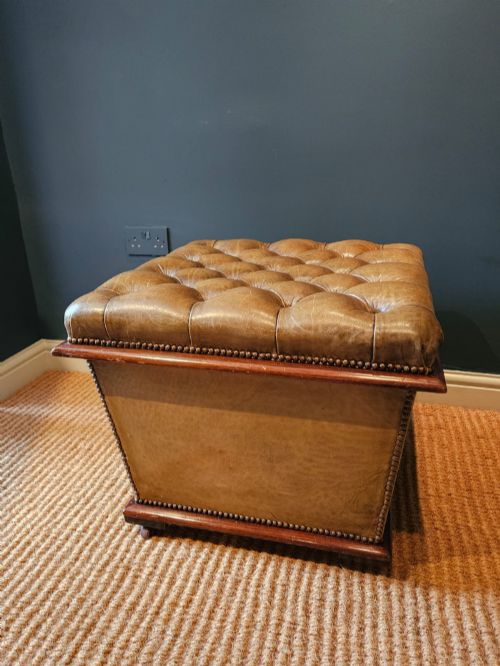


Deep Tufted Ottoman
A deep tufted ottoman brings tactile leather and traditional buttoning into a room, offering low seating or a place to rest your feet.
Deep Tufted Ottoman
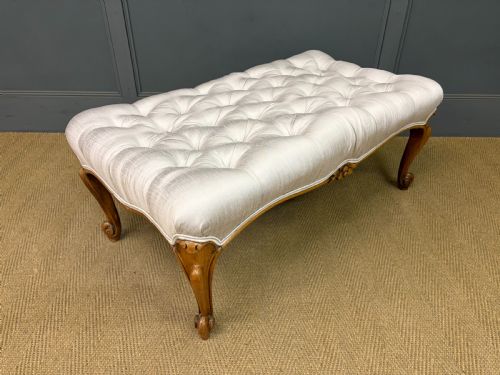
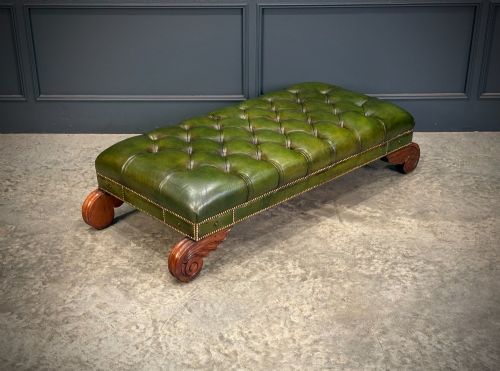
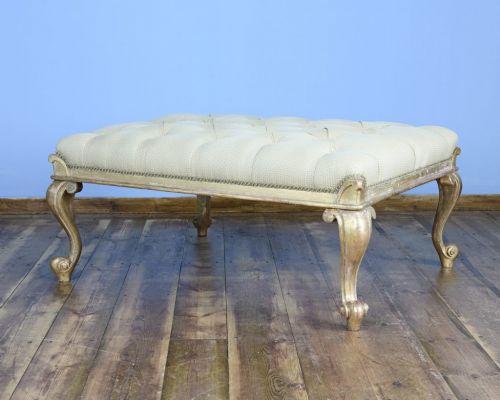
A deep tufted ottoman appears across the Victorian, Regency, and Georgian periods, taking the form of footstools, long stools, window seats, and larger centre pieces. These low upholstered seats combine substantial proportions with deeply recessed buttoning, often designed for libraries, drawing rooms, and country house interiors.
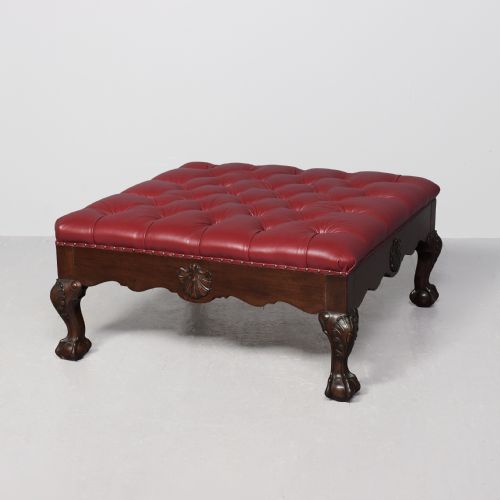
The version most commonly met on this page is the Victorian leather-upholstered footstool or ottoman, frequently featuring turned wooden legs, mahogany frames, or cabriole supports. Alongside these, buyers find larger Regency and George III examples, plus occasional matching armchair sets.
Forms range from compact square footstools to grand scale parcel gilt designs and library window seats. The unifying trait across these variations is the deep buttoned upholstery technique that defines the surface texture.
Assessing quality in construction
The integrity of the timber frame and the weight of the wood set baseline standards, with dense mahogany and walnut offering superior stability compared to lighter alternatives. Joinery execution and the proportions of the turned legs reveal the hand of a skilled cabinet maker.
Upholstery detail separates standard work from exceptional pieces, particularly in the regularity of the hand-applied brass studs and the tension of the buttoning. Fine hide ages with a rich patina, while superior hides maintain suppleness across large expanses.
Many of these sturdy footstools outlived the original drawing room armchairs they once accompanied by several generations.
James Shoolbred
The Deep Tufted Ottoman Glossary
- Buttoned
- An upholstery method where stitches pass through padding to anchor buttons in a recessed grid pattern. This technique creates distinct surface dimples and keeps internal stuffing from shifting.
- Cabriole leg
- A furniture leg that curves outward at the knee and tapers inward toward an ankle or foot. It draws inspiration from animal limbs and appears frequently on 19th-century walnut and mahogany stools.
- Castor
- A small wheel attached to the base of furniture legs to ease movement across floors. They are frequently cast in brass and mounted on Victorian and Regency stools.
- Hide
- Unsplit animal skin dressed for upholstery use. Hand-dyed leather hides develop characteristic patinas through age and handling.
Deep Tufted Ottoman: Frequently Asked Questions
What is a deep tufted ottoman?
A deep tufted ottoman is a low, upholstered seat characterised by recessed buttons that pull the fabric or leather into a tight grid. These pieces function as footstools, centre tables, or window seats.
Originating largely in the 19th century, they were designed for comfort and utility in formal drawing rooms and libraries. Their sturdy wooden frames and padded tops make them versatile additions to modern interiors.
How do I care for leather upholstery?
Leather upholstery requires regular dusting with a soft, dry cloth to prevent grit accumulation in the button folds. Applying a quality leather conditioner periodically keeps the hide supple and prevents cracking.
Keep antique leather pieces away from direct sunlight and heat sources to preserve their natural colour and original patina. Gentle handling ensures the surface remains resilient over time.
Are these ottomans sturdy enough to sit on?
These pieces were built using solid hardwoods like mahogany and walnut, constructed to support regular seating. Many feature reinforced frames and heavy internal webbing.
While grand scale and country house examples often double as extra seating or coffee tables, it is wise to check the frame stability of individual pieces. Their robust construction generally allows for everyday functional use.
How can I tell a Victorian stool from a Georgian one?
Victorian stools often feature heavier proportions, darker woods like rosewood or walnut, and turned cabriole legs fitted with castors. Buttoning tends to be deep and regular across the entire top surface.
Georgian and Regency examples typically display leaner proportions, lighter mahogany or satinwood frames, and more restrained decorative carving. Upholstery styles and brass-studding placement also shift subtly between these periods.