
Deep Buttoned Chesterfield
A deep buttoned chesterfield brings formal nineteenth-century presence into a room through generous sprung seating and intricate tufted upholstery.
Deep Buttoned Chesterfield
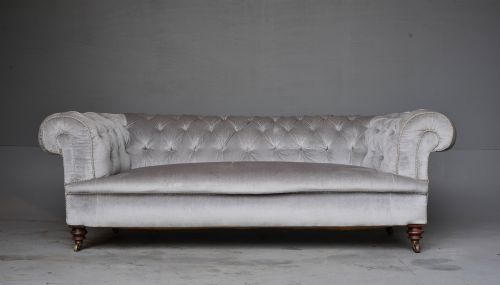
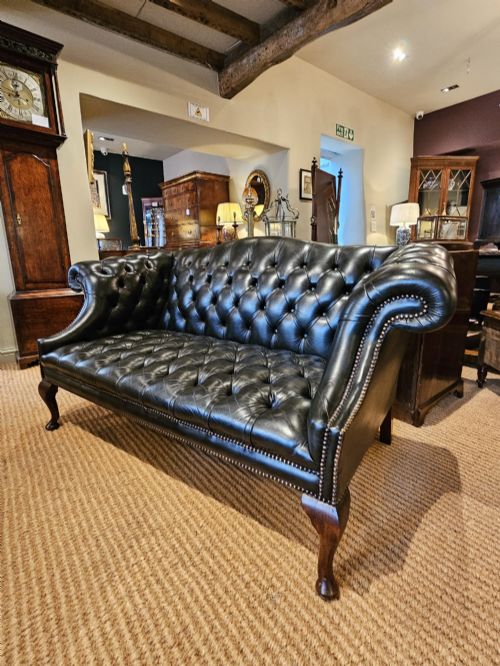
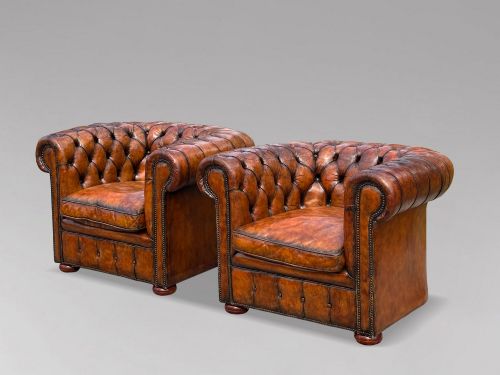
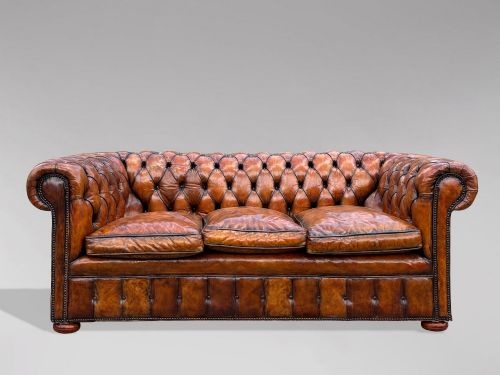
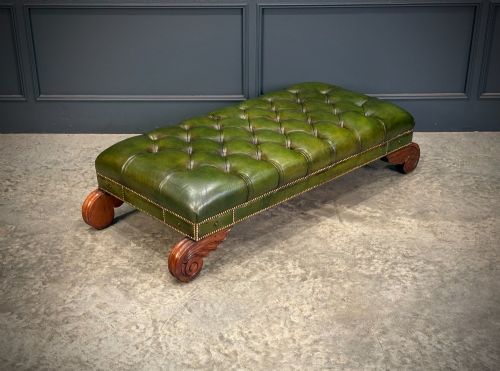
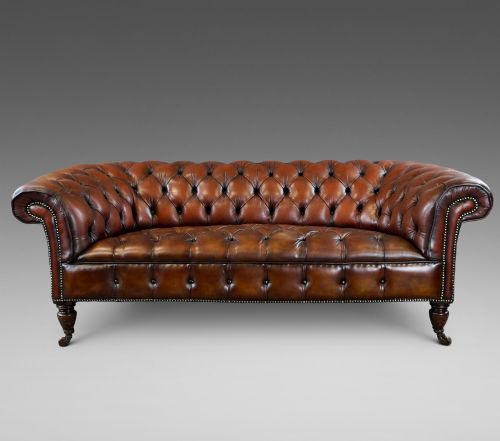
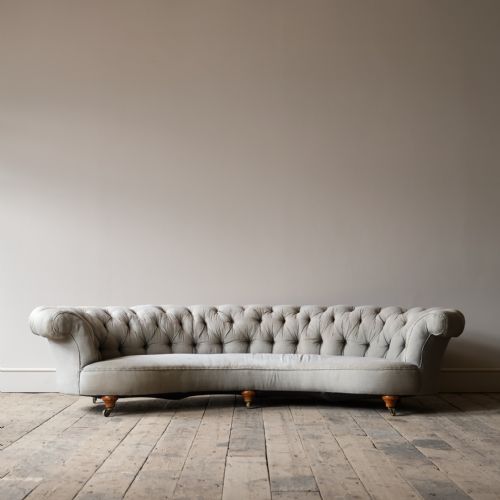
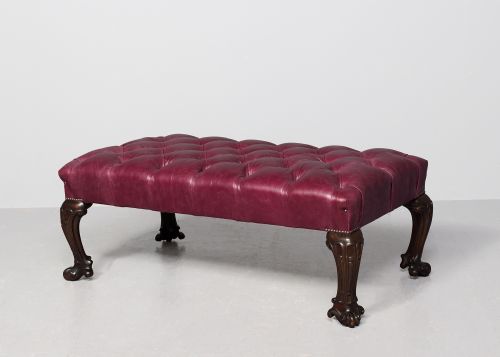
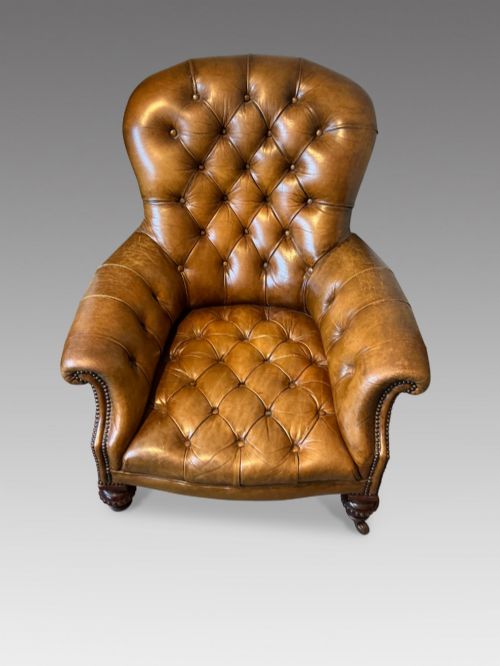
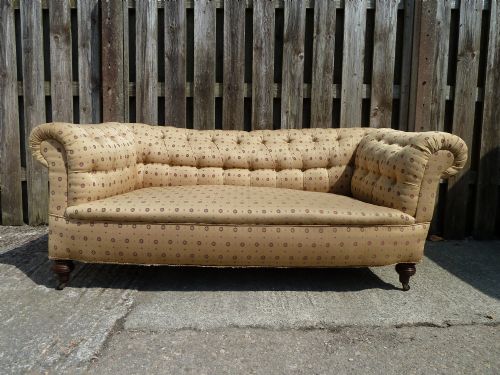
A deep buttoned chesterfield represents a traditional seating form defined by its low back, scrolled arms of equal height, and distinctive recessed tufting. The selection ranges widely from large three-seater library sofas and club armchairs to compact footstools, ottomans, and office desk chairs.
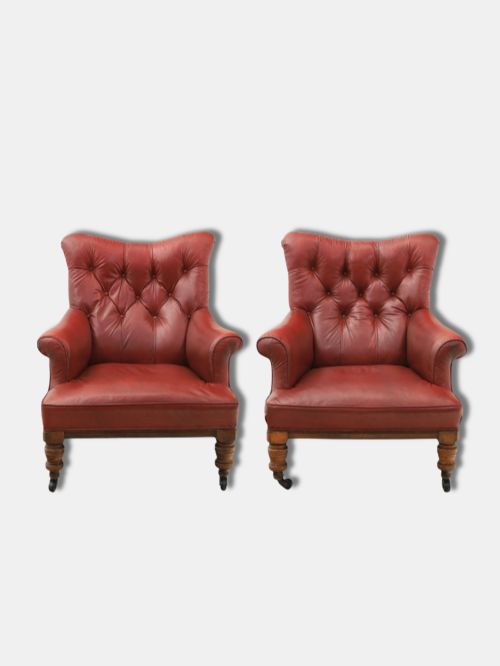
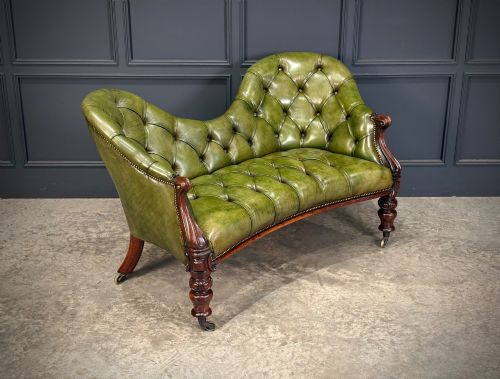
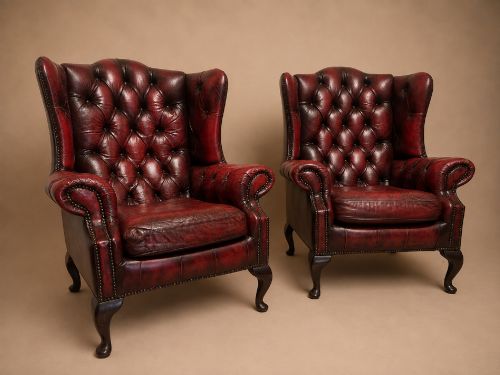
Victorian and nineteenth-century examples dominate the offerings, alongside later twentieth-century interpretations, Edwardian pieces, and revival items built in the Georgian or Regency style. Buyers encounter varied formats including standard sofas, wing armchairs, corner arrangements, and pairs of matching club seats.
Makers and workshops of the nineteenth and early twentieth centuries utilised robust timber frames to support substantial upholstery and deep springs. The resulting forms serve equally as central drawing room centrepieces or heavy-duty library seating.
How they were made
Construction relies upon internal hardwood timber frames made from mahogany and general hardwoods, providing a rigid skeleton for heavy coil springing and horsehair stuffing. Traditional pieces utilise hand-tied coil interior springing and deep buttoning secured directly through the upholstery layers to the internal webbing.
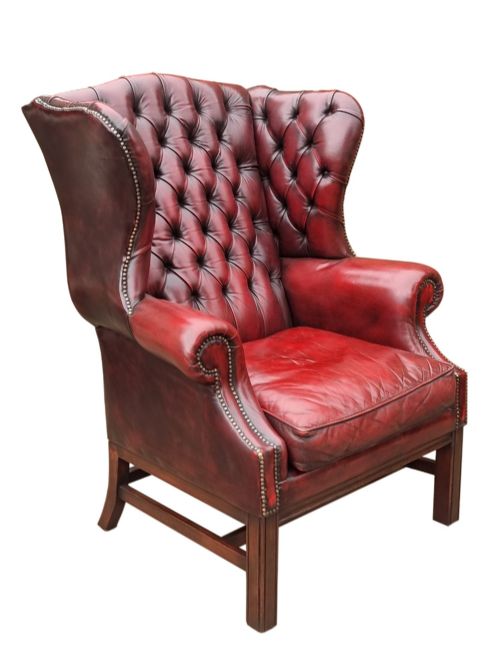
Exterior surfaces are predominantly upholstered in leather, raw leather prepared for hand-dyeing, oxblood rexine, velvet, or fabric. Detail work incorporates brass nail tacks outlining the scrolled arms and borders, while exposed woodwork appears on mahogany-framed footstools and desk chairs.
Some nineteenth-century library stools were built large enough for an exhausted statesman to lie down entirely flat between debates.
What varies in quality
Quality rests upon the integrity of the internal frame construction, the depth and responsiveness of the coil springing, and the grade of the leather hide. Early pieces retaining original horsehair stuffing and hand-dyed hides demonstrate superior traditional craftsmanship compared to later utility variations.
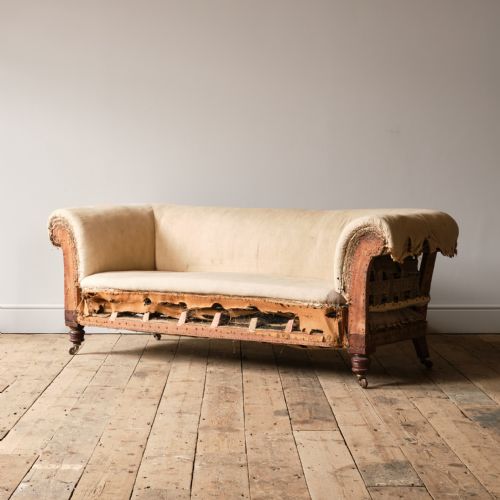
The precision of the deep buttoning alignment and the stability of the timber framework dictate the longevity and overall dignity of the seating. Examples requiring complete reupholstering offer insight into the raw structural bones beneath the surface leather.
Howard and Sons·Hampton and Sons
The Deep Buttoned Chesterfield Glossary
- Chesterfield
- A large upholstered sofa or settee featuring arms and back of the exact same height. This traditional British seating form is synonymous with deep tufted buttoning.
- Deep Buttoning
- An upholstery technique where buttons are pulled deep into the padding and secured to the internal webbing to create a diamond-patterned tufted surface. This method secures the internal horsehair filling while providing firm support.
- Rexine
- A brand of artificial leather cloth utilised as an upholstery material during the early twentieth century. It offered a durable, wipe-clean alternative to natural hide.
- Horsehair Gilled
- An interior stuffing method utilising cleaned animal hair packed beneath the upholstery cover to maintain resilient shape and bounce. This traditional material predates modern synthetic foam fillings.
- Wing Armchair
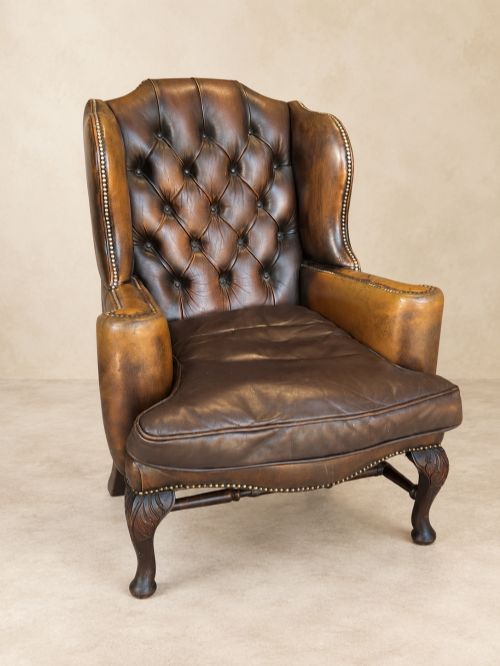
- A fireside seat featuring protective side panels attached to the backrest to deflect draughts. These chairs frequently incorporate deep buttoned leather and low wooden legs.
Deep Buttoned Chesterfield: Frequently Asked Questions
What is a chesterfield sofa?
A chesterfield sofa is a traditional British seating design defined by low scrolled arms that match the height of the backrest. The entire surface is typically covered in deep buttoned leather.
Historically used in gentlemen's clubs and libraries, the form provides upright support combined with a formal silhouette.
How do I date a chesterfield?
Dating relies upon examining the timber framework, the style of the legs, and the materials used for internal stuffing. Nineteenth-century examples often feature heavy mahogany frames and hand-tied coil springs.
Later twentieth-century versions display standardised construction methods and different leather finishing techniques, such as factory hand-dyeing.
Are chesterfields comfortable for daily use?
Chesterfields offer a firm, supportive sit due to the tension of the deep buttoning and internal coil springing. They are designed for upright posture rather than slouching.
Over decades of use, the horsehair stuffing and springs settle to accommodate the body while retaining structural firmness.
What is hand dyed leather?
Hand dyed leather involves applying colour pigments by hand to raw or crust leather hides after the upholstery process is complete. This technique builds rich tonal variations across the surface.
Restored pieces often utilise this method to replicate the patina found on antique club furniture.