

Brown Leather Chesterfield
Brown leather chesterfield seating brings deep buttoned comfort and rich historical character into sitting rooms and studies.
Brown Leather Chesterfield
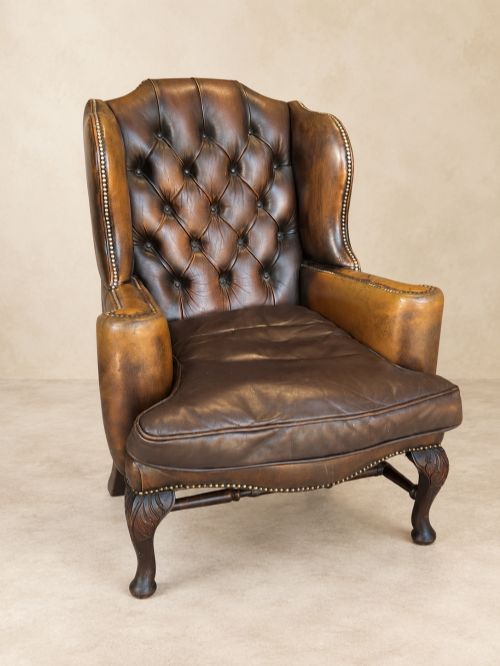
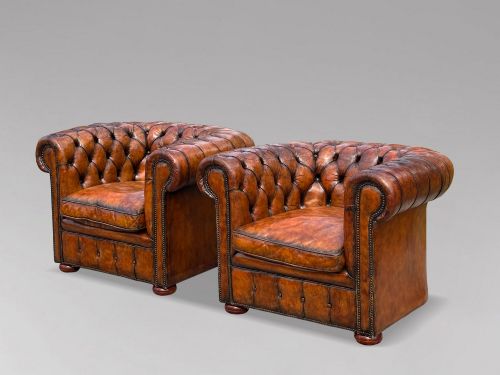
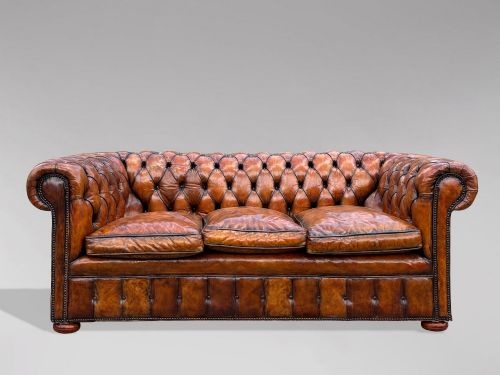
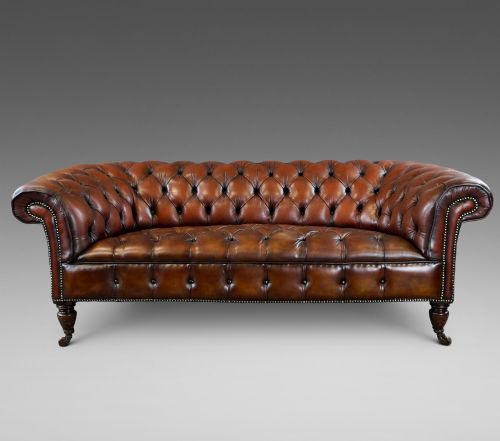
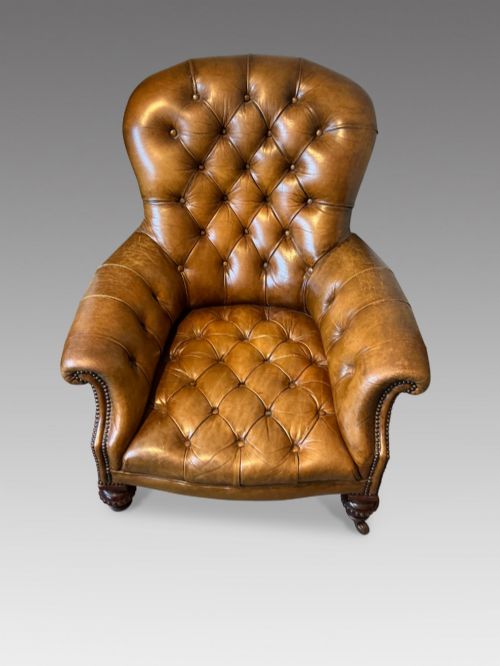
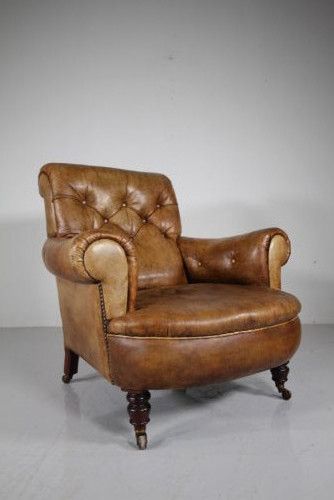
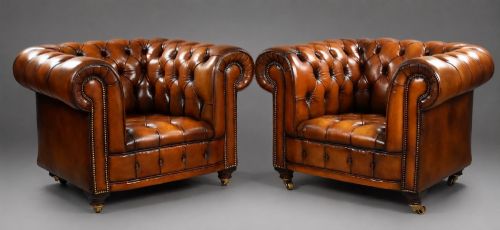
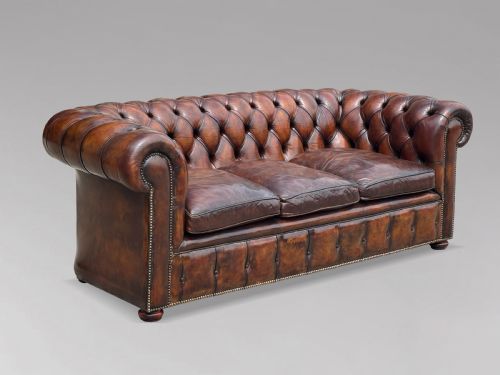
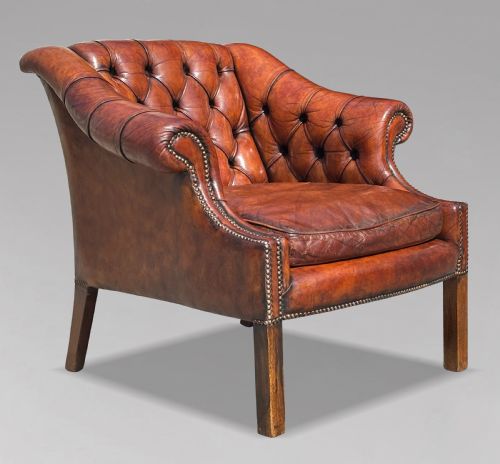
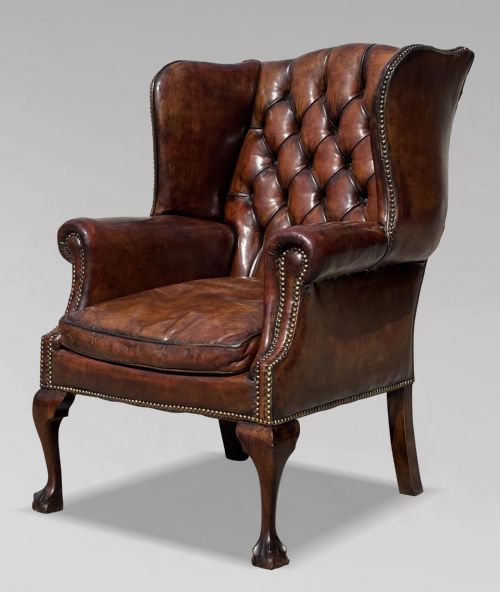
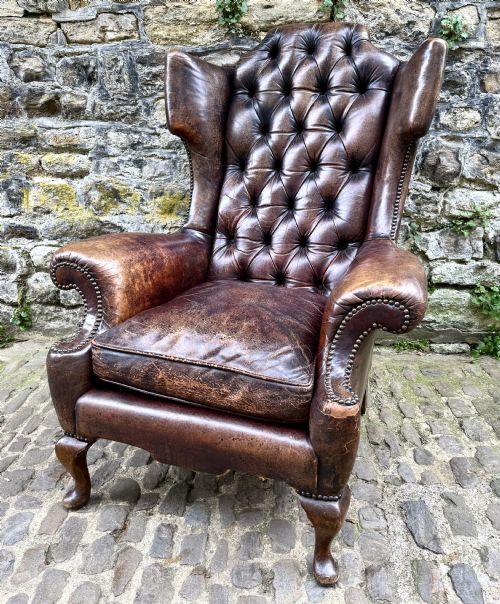
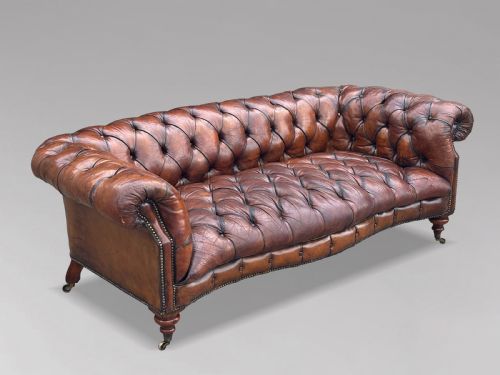
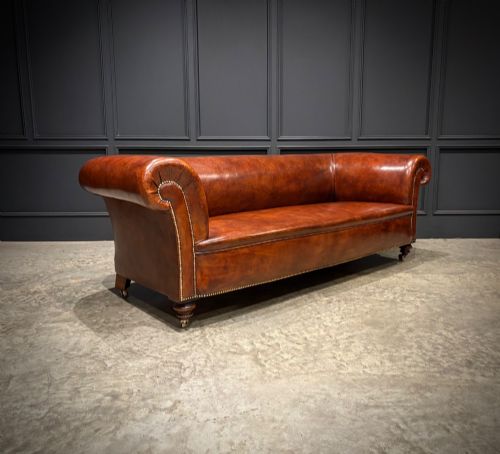
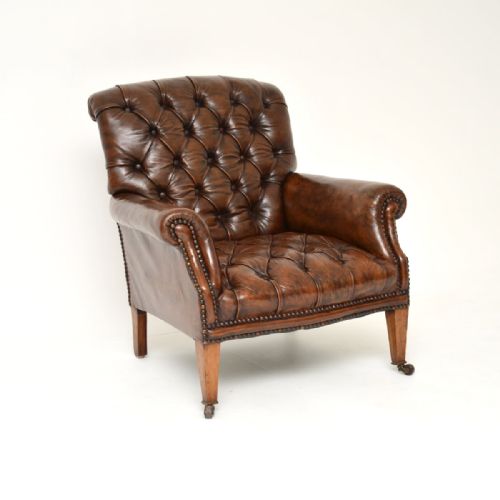
A brown leather chesterfield represents a traditional seating form defined by deep buttoning, rolled arms, and substantial proportions. Pieces meeting this description span armchairs, club chairs, wingbacks, and multi-seater sofas originating from the nineteenth and early twentieth centuries.
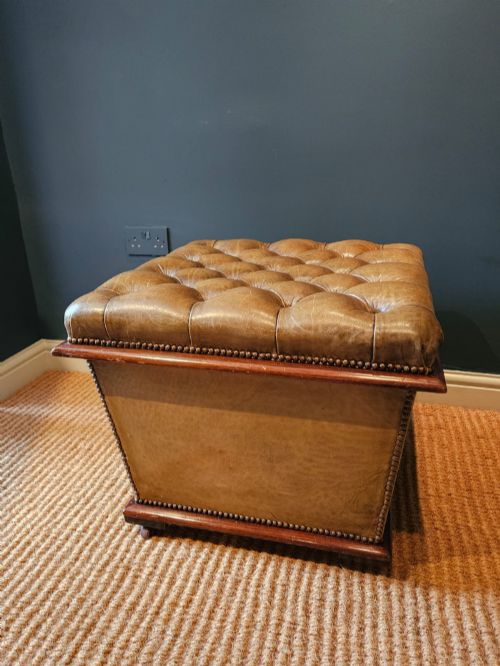
The selection ranges from Victorian three-seater sofas and late nineteenth-century club armchairs to Edwardian examples and low ottomans. Makers and styles trace through Georgian interpretations up to pieces bearing nineteenth-century workshop provenance.
Buyers encounter versions finished in tan, whiskey, conker, and cigar brown hides, often exhibiting the patination acquired through decades of use. Standard configurations include buttoned backs, individual seat cushions, and turned wood supports fitted with brass castors.
Materials and Construction
Frames rely on sturdy native hardwoods such as English oak, mahogany, and general timber to support heavy sprung interiors. Traditional stuffing methods incorporate horsehair and coil systems that create resilient seat pads and supportive backs.
Upholstery utilises full-hide leather secured by hand-driven brass studs or nails along the scrolled arms and borders. Frame construction frequently integrates corner blocking and traditional joinery to withstand the structural tension of deep button tufting.
Some nineteenth-century pieces retain the original horsehair stuffing that occasionally settles into wonderfully lumpy contours after generations of enthusiastic lounging.
Qualities of Distinction
Quality rests upon the depth of patination in the hide and the integrity of the original buttoning work. Superior examples display even wear across natural leather without modern respraying masking the underlying grain.
Structural merit distinguishes finer items through substantial timber frames, firm coil springing, and intact horsehair stuffing. Maker attribution and untouched nineteenth-century condition elevate specific pieces above standard domestic seating.
Howard And Sons·Hampton And Sons Of Pall Mall·Robert Mouseman Thompson·Gillows Of Lancaster
The Brown Leather Chesterfield Glossary
- Chesterfield
- A traditional British upholstered sofa or armchair characterised by low seats, rolled arms, and deep buttoning.
- Buttoning
- A upholstery technique where depressions are created by pulling cord or twine through the padding and securing it to the frame.
- Patina
- The surface sheen and colour variation developed by leather over years of handling, polishing, and exposure to light.
- Wingback
- An armchair featuring protective side panels designed to shield the sitter from draughts near a fireplace.
- Castor
- A small wheel fitted to the base of furniture legs to allow easier movement across floor surfaces.
Brown Leather Chesterfield: Frequently Asked Questions
How do I identify a Victorian chesterfield?
Victorian examples typically feature heavy hardwood frames, traditional horsehair stuffing, and hand-tied coil springs beneath deep buttoned leather.
Closer inspection of the timber base, castors, and wear patterns around the arms helps confirm nineteenth-century production dates.
What is hand dyed leather?
Hand dyed leather refers to hides treated with aniline dyes and finished by hand to produce nuanced tonal variations like whiskey or cigar brown.
This method allows the natural grain and texture of the hide to remain visible beneath the colouring.
Are these sofas comfortable for daily use?
Chesterfield sofas provide firm support through deep coil springs and dense horsehair stuffing designed for upright sitting.
Over decades, the internal padding adapts to the user while maintaining structural stability across the seat base.
How should I care for antique leather?
Maintaining antique leather requires regular dusting with a soft cloth and occasional application of appropriate leather balms to prevent drying.
Keeping pieces away from direct sunlight and heat sources preserves the natural hide and prevents cracking.