

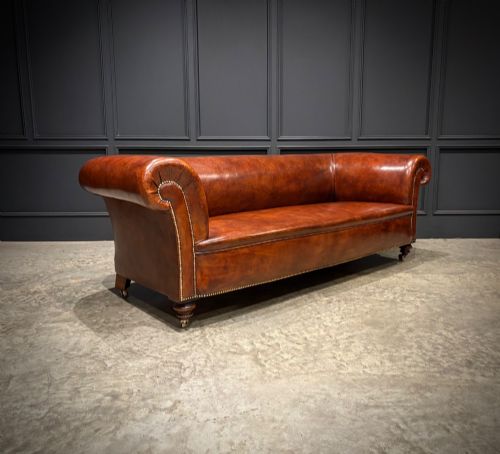


Chestnut Leather Settee
A chestnut leather settee offers the deep buttoned comfort and rich patina that anchor a traditional room.
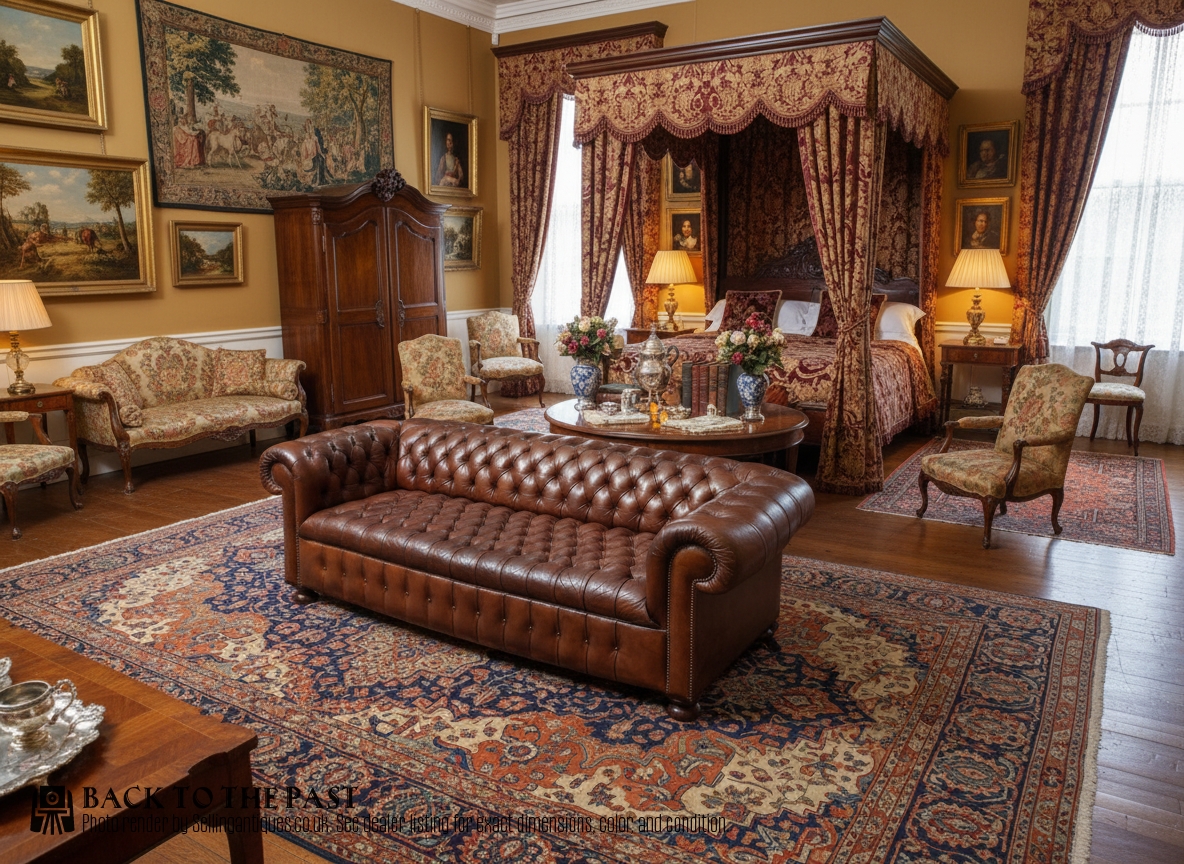
What a chestnut leather settee is
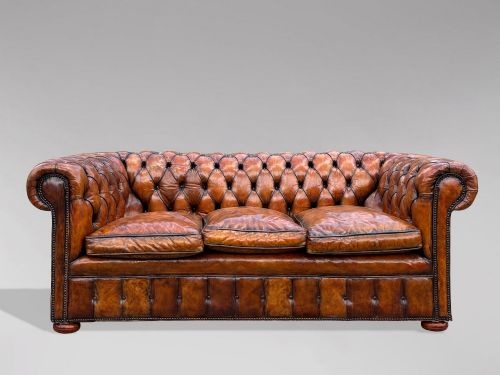
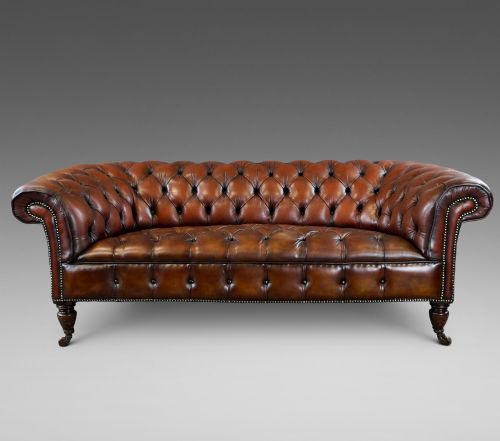
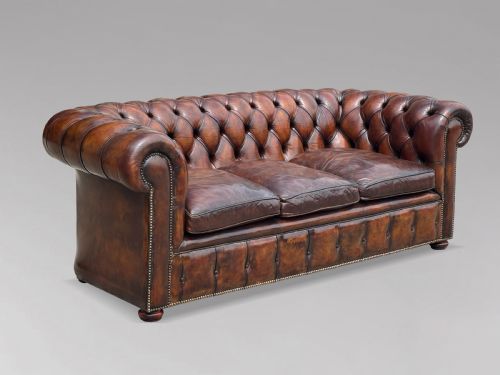
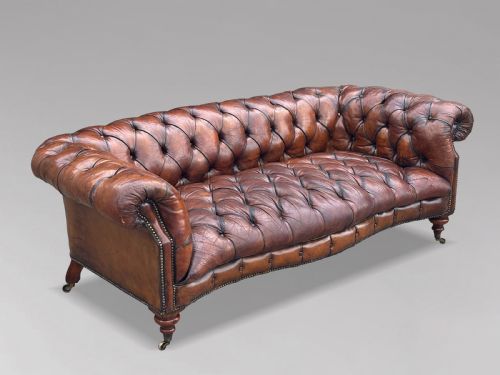
When you search for a chestnut leather settee, you are looking at substantial Victorian Chesterfield sofas upholstered in leather that ranges from brown to deep chestnut tones. The pieces seen here span from the mid-nineteenth century up through the early twentieth century, taking the form of large three-seater sofas and pairs.
You are most likely to meet traditional English Chesterfields featuring deep buttoning and generous proportions. These seating pieces appear in materials including mahogany and rosewood frames alongside the characteristic leather upholstery and brass detailing.
The historical spread of these settees covers the Victorian era and carries through to nineteen-twenty productions. They function as both central decorative anchors and practical seating within period interiors.
How they were made
The construction of these settees relies on sturdy hardwood and mahogany internal frames that support heavy-duty upholstery. Traditional methods incorporate horsehair stuffing and fully loose coil springing to achieve resilience and comfort.
The visible exterior is defined by hand-dyed leather secured with brass elements. Skilled artisans applied deep buttoning techniques to shape the hide across the generous backrests and scrolled arms.
Retail Price Guide 2026
Typical UK retail prices for chestnut leather settee, calculated from the Sellingantiques database of over a million retail prices indexed since 2003. This retail price guide relies exclusively on Sellingantiques data; no external sources or auction records are used, so the figures do not describe the wider market.
Some early twentieth-century examples still contain their original horsehair gilling, whispering tales of long-ago comfort straight into your living room.
What varies in quality
The distinction between standard examples and the finest items rests upon the depth of the hand-dyeing and the integrity of the original horsehair stuffing. Superior pieces retain deep buttoning that has settled evenly through decades of use without losing the structural tension of the coil springs.
Excellence also shows in the choice of secondary woods within the frame and the preservation of the chestnut leather surface. Pieces from notable workshops demonstrate a higher grade of joinery and more refined proportions in the arms and back.
Howard & Sons
The Chestnut Leather Settee Glossary
- Chesterfield
- A traditional style of sofa characterised by rolled arms and a back of the same height, typically featuring deep button upholstery. It remains a defining form in British seating furniture.
- Deep buttoning
- An upholstery technique where buttons are pulled deep into the padding in a diamond pattern to secure the filling and create distinct folds. This method provides both structural support and visual texture.
- Horsehair
- A traditional stuffing material gathered from the manes and tails of horses, valued for its natural springiness and durability. It was widely used in quality nineteenth-century seating.
- Coil springing
- A system of interconnected metal coil springs mounted within the seat frame to distribute weight evenly and enhance comfort. Fully loose coil setups represent traditional high-grade construction.
Frequently Asked Questions
How do I identify a Victorian chesterfield?
Look for traditional construction methods such as hand-tied coil springs and horsehair stuffing beneath the leather. The frames typically utilise hardwoods like mahogany or rosewood.
Examine the chestnut leather for natural ageing, patination, and the characteristic deep buttoning pattern associated with nineteenth-century English workshops.
What is hand dyed leather?
Hand dyed leather involves the manual application of colour onto the hide rather than a uniform factory finish. This technique allows the natural grain and varied chestnut tones to show through.
Over time, this method of colouring develops a rich patina that highlights the historical character of the settee.
How do I care for antique leather?
Keep antique chestnut leather settees away from direct sunlight and heat sources to prevent the hide from drying out. Regular dusting with a soft cloth maintains the surface.
Apply appropriate leather conditioners sparingly to preserve the suppleness of the material without altering the historic finish.
Are these sofas comfortable for daily use?
Victorian settees were built with generous proportions and robust internal spring systems designed for substantial daily seating. The combination of coil springs and horsehair provides firm yet yielding support.
Their deep seats and supportive scrolled arms make them well-suited for relaxed lounging in contemporary living spaces.