


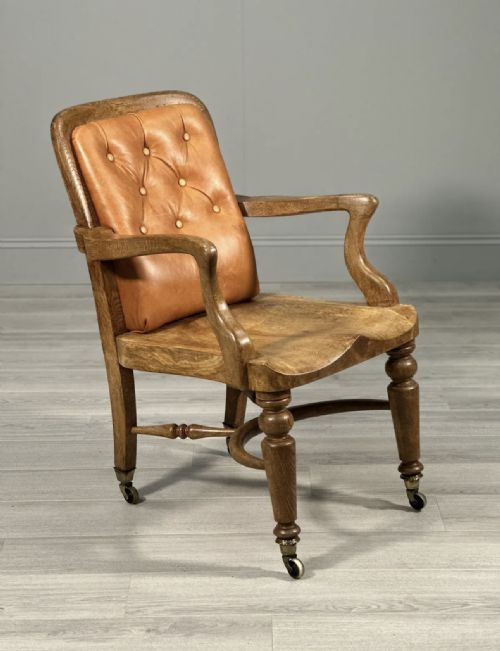


Antique Leather Upholstery
Antique leather upholstery brings character to a room through sturdy hides fitted to timber frames.
Antique Leather Upholstery
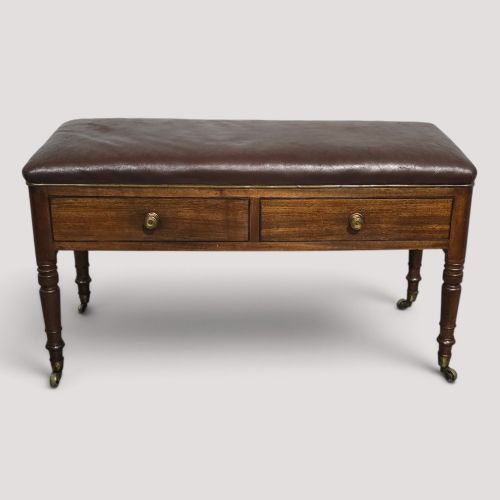
Antique leather upholstery encompasses seating and furnishings built across the nineteenth and twentieth centuries, featuring hides paired with wooden and metal frameworks. Buyers seeking antique leather upholstery find forms ranging from Chesterfield sofas and club armchairs to library desks chairs, ottomans, stools, and fireplace fenders.
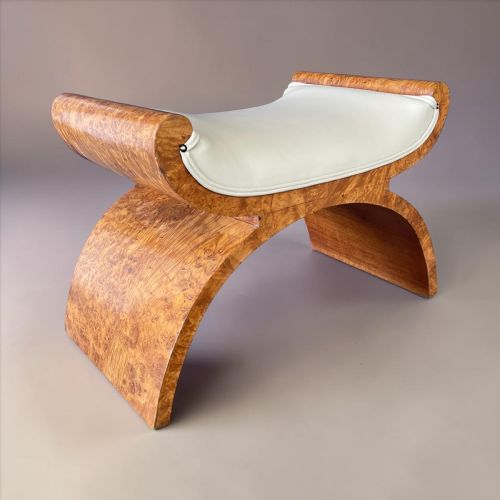
The pieces appearing most frequently derive from the Victorian and Regency periods, alongside later twentieth-century Art Deco examples. Makers such as Howard and Son's and Harry and Lou Epstein represent the range of production found within these categories.
Frames employ timber foundations including mahogany, oak, walnut, and burr walnut, while certain fenders incorporate steel alongside leather and brass detailing. These items serve functional seating and furnishing roles within traditional and period interiors.
How they were made
Construction relies upon solid timber frames shaped from mahogany, oak, and walnut, providing structural support for the upholstered components. Artisans joined these wooden foundations using traditional joinery methods suited to heavy seating.
Hides were stretched across sprung or padded interiors and secured using materials like brass studs and metal elements. Steel components also appear in specific functional forms such as club fenders.
One ottoman arrived with ambitions so grand it takes up nearly as much floor space as a small bed.
What varies in quality
Quality differences emerge through the selection of primary timbers, where burr walnut and figured mahogany indicate finer craftsmanship than standard woods. The precision of the joinery and the execution of carved details further separate standard productions from superior works.
The integration of the hide with the frame dictates the overall finish, distinguishing master workshops from ordinary cabinetmakers.
Howard and Son's·Harry and Lou Epstein
The Antique Leather Upholstery Glossary
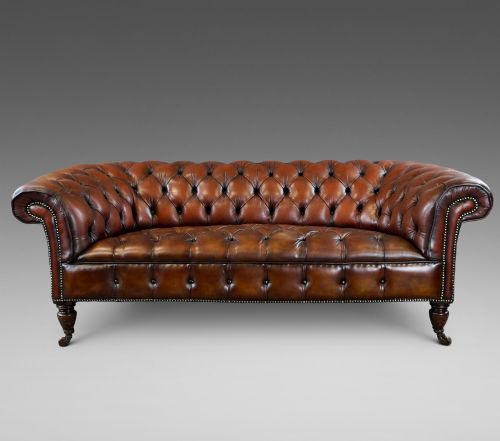
- Chesterfield
- A deep-buttoned sofa style featuring rolled arms of equal height to the back. This form remains a staple of nineteenth-century seating.
- Club fender
- A low fireside seat with upholstered top rails built over a metal or brass base. These items originally surrounded hearths to provide warmth.
- Showwood
- Timber framework left exposed around the upholstered elements of a chair or sofa. Walnut and mahogany were frequently utilised for this purpose.
- Ottoman
- A padded seat or footstool lacking arms or a back. Regency examples often display generous proportions and turned supports.
Antique Leather Upholstery: Frequently Asked Questions
How do I identify a Victorian Chesterfield?
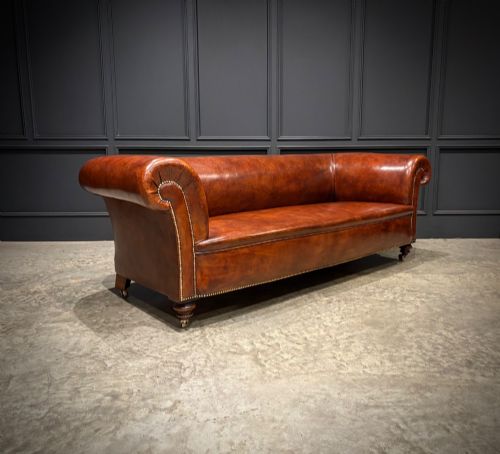
Victorian Chesterfields are characterised by deep-buttoned leather upholstery and rolled arms that match the height of the back. They utilise sturdy timber frames hidden beneath the padding.
These sofas typically employ brown or green hides secured with brass tacking. Their proportions are generally deep and low to the ground.
What is a club fender?
A club fender is a low seating structure designed to fit around a fireplace hearth. It combines metal bases, often in brass or steel, with leather-upholstered top rails.
These pieces allowed people to sit close to the fire while protecting them from sparks. Nineteenth-century examples often feature open metalwork frames.
How do I care for antique leather?
Antique leather requires consistent maintenance to prevent the hide from drying out or cracking over time. Natural balms and waxes help preserve the supple texture of older skins.
Keeping pieces away from direct sunlight and excessive heat sources protects the material. Regular dusting prevents particulate accumulation in the crevices and button tufts.
What woods were used for frames?
Cabinetmakers utilised a variety of hardwoods including mahogany, oak, walnut, and burr walnut for framing and exposed showwood. The choice of timber often reflected the prevailing style and period of manufacture.
Regency and Victorian pieces frequently favoured mahogany and walnut. Oak appears commonly in library and desk chairs from the nineteenth century.