
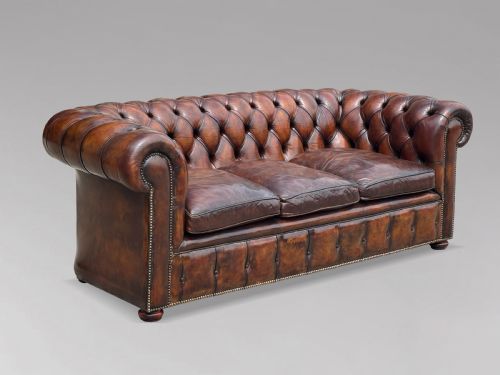


Brass Studded Sofa
These brass studded sofa pieces combine traditional timber frames with hand-dyed leather upholstery, offering robust comfort and classic character.
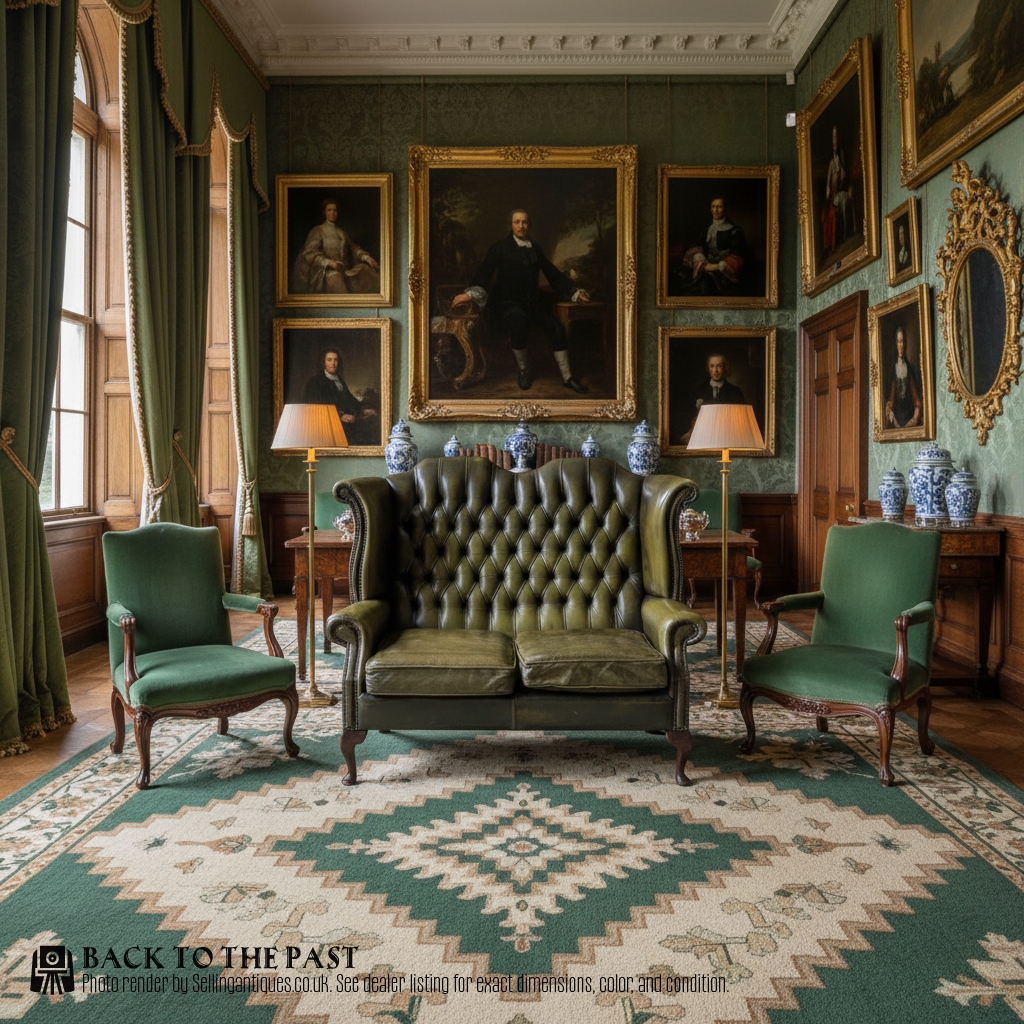
Defining the brass studded sofa
A brass studded sofa brings together sturdy hardwood frameworks and upholstered hide, traditionally shaped for formal or club settings. When you search for a brass studded sofa, you encounter substantial seating options designed to anchor a room with visual weight.
The selections available here span from Victorian origins through to the early decades of the twentieth century. These pieces encompass specific regional styles including traditional English work and Art Deco sensibilities.
You meet variations ranging from two-seater button-backed editions to expansive three-seater Chesterfield forms and moustache-backed gentleman's club designs. Each iteration relies on substantial timber framing beneath the hide.
Materials and construction
Makers built these frames using solid woods, hardwood, mahogany, and general timber to ensure structural longevity. Upholstery methods utilised traditional fillings including horsehair stuffing alongside coil springs to support the seat.
Outer coverings typically consist of quality leather finished by hand dyeing. Individual brass studs were driven along the seams and borders to secure the hide and provide decorative definition.
Retail Price Guide 2026
Typical UK retail prices for brass studded sofa, calculated from the Sellingantiques database of over a million retail prices indexed since 2003. This retail price guide relies exclusively on Sellingantiques data; no external sources or auction records are used, so the figures do not describe the wider market.
Judging quality and craftsmanship
Superior examples demonstrate meticulous attention to the internal stuffing and the tension of the coil springs beneath the leather. The depth and character of the hand-dyed finish on the hide separate standard utilitarian builds from finer creations.
The precision of the brass stud placement along the woodwork reflects the original maker's standard of execution. Well-proportioned timber frames with integrity in the mahogany or hardwood components distinguish the higher end of the range.
Howard And Sons
The Brass Studded Sofa Glossary
- Chesterfield
- A traditional style of upholstered sofa typically characterised by deep buttoning and rolled arms of equal height. This form remains a staple of classic British seating.
- Moustache back
- A distinctive curved wooden or upholstered upper rail resembling the shape of a Victorian moustache. It adds an ornamental flourish to the top of the seat back.
- Coil sprung
- An interior support system using metal springs tied together to distribute weight evenly across the seat base. It provides durable resilience over decades of use.
- Horsehair gilled
- A traditional stuffing method using animal hair packed beneath the leather to maintain firmness and shape. This natural material breathes well and holds its form.
Frequently Asked Questions
How do I care for antique leather upholstery?
Antique leather requires gentle cleaning and regular conditioning to prevent the hide from drying out. Avoid placing these pieces in direct sunlight or near heat sources.
Applying specialised balms helps maintain the suppleness of the hand-dyed surface without altering the historical patina.
What is a moustache back sofa?
The moustache back refers to a specific serpentine curve carved into the top wooden rail of the sofa back. This decorative flourish is typical of Victorian gentleman's club seating.
It combines structural support with an ornate aesthetic that lifts the visual profile of the furniture.
How can I date an older leather sofa?
Dating relies on examining the timber frame, the upholstery materials beneath the leather, and the fastening techniques used for the brass studs. Victorian examples often feature mahogany or hardwood frames with hand-tied coil systems.
Later pieces from the early twentieth century may incorporate simpler internal webbing or transitional Art Deco styling cues.