




Decorative Wooden Tea Chest
These decorative wooden tea chest examples combine fine cabinet-making with domestic history, offering tactile storage for dried leaves and precious keepsakes.
Decorative Wooden Tea Chest
A decorative wooden tea chest serves as a container for storing loose tea leaves securely under lock and key. The selection spans Georgian, Regency, and Victorian periods, reflecting shifting domestic habits and cabinet-making styles across centuries.
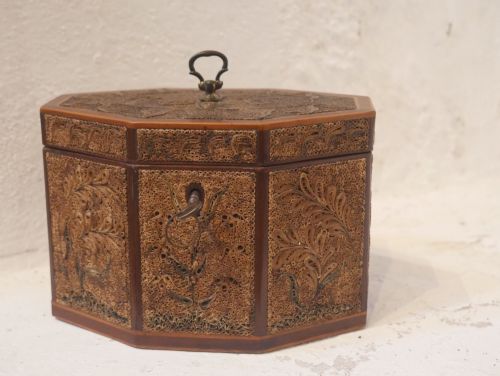
Most pieces encountered on this page belong to the Georgian and Regency eras, executed in forms ranging from rectangular boxes to navette and hexagonal shapes. Makers utilised domestic and exotic timbers to construct receptacles that sat prominently in the parlour or dining room.
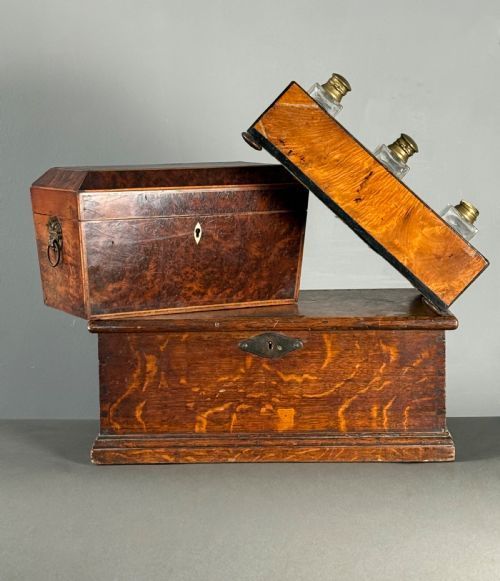
Beyond standard tea caddies, listings incorporate related containers such as keepsake boxes and decanter boxes. These shared similar internal arrangements and decorative surfaces, designed to safeguard valuable household commodities.
Materials and Construction Techniques
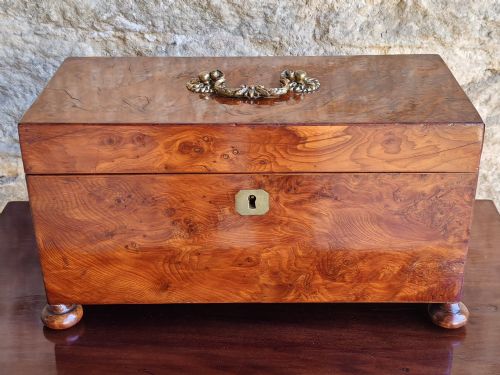
Cabinet-makers relied on dense tropical hardwoods like rosewood, mahogany, and padouk, alongside native timbers such as walnut, yew, and satinwood. These woods formed the structural carcase, often enhanced through fine veneers applied in symmetrical patterns.
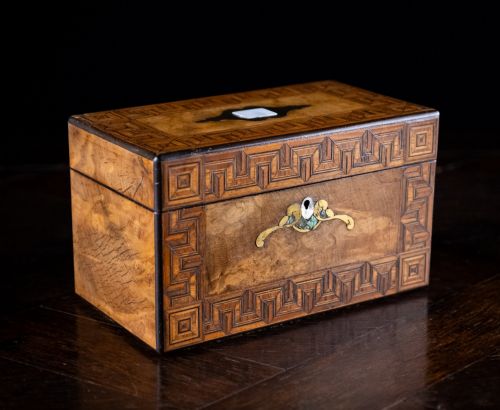
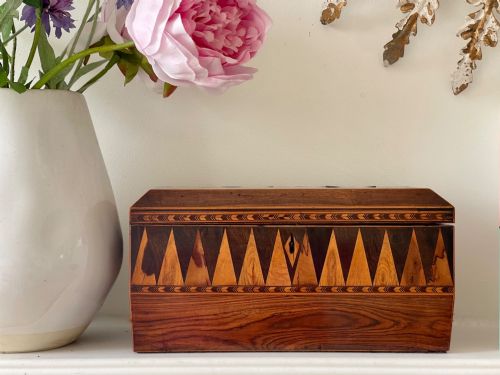
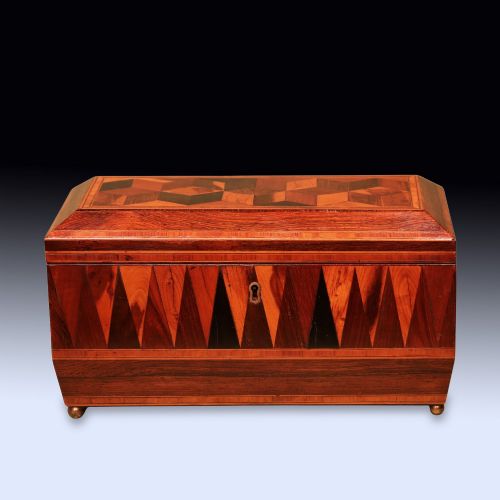
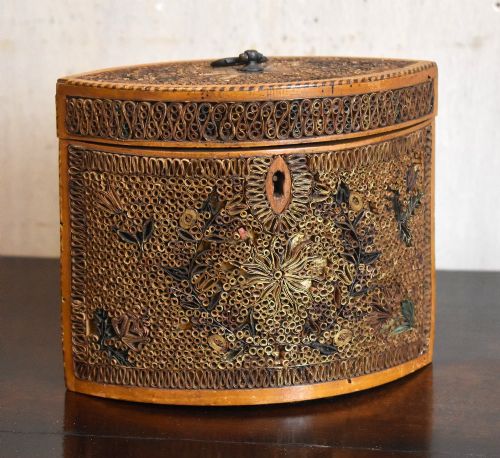
Surface enrichment relied heavily on contrasting inlay work, utilising boxwood, bone, mother of pearl, and brass stringing to create geometric or floral motifs. Some examples incorporated parquetry and marquetry, while others featured specialised techniques like paper filigree and Tunbridge ware.
Internal fittings frequently included veneered wooden lids, foil-lined compartments, and occasionally original glass mixing bowls or metal canisters. Brass escutcheons, handles, and feet provided functional and visual accents to the exterior.
Listings demonstrate a strong representation of Georgian and Regency periods, utilising rosewood, mahogany, and tortoiseshell.
Distinctions in Execution and Material
Quality rests primarily in the ambition of the timber selection and the precision of the cabinet-making. Dense burr veneers, highly figured amboyna, and complex parquetry indicate workshop output intended for wealthy patrons.
The sophistication of the decorative embellishment separates standard boxes from superior examples. Finely cut brass inlay, delicate shell motifs, and intact internal components demonstrate a higher tier of craftsmanship than plain mahogany or simple veneered carcasses.
Tahan of Paris
The Decorative Wooden Tea Chest Glossary
- Parquetry
- Geometric wood mosaic work forming patterns on the exterior surface. This technique requires precise cutting of various timber species to fit flush across the box carcase.
- Navette
- A boat-shaped outline with pointed ends popular during the Georgian period. Such curved forms demanded advanced woodworking skill to shape timber cleanly.
- Marquetry
- Elaborate veneer patterns depicting pictorial or floral designs using diverse woods. Artisans shaded individual pieces in hot sand before gluing them to the surface.
- Escutcheon
- A protective metal plate surrounding the keyhole. It is typically cast from brass and secured with small pins to prevent wear on the surrounding wood.
- Tunbridge ware
- Small wood-mosaic decoration created by gluing thousands of tinted wooden rods together and slicing cross-sections. This technique produced intricate geometric panels characteristic of specific English production.
Decorative Wooden Tea Chest: Frequently Asked Questions
What were tea chests used for?
These containers stored expensive black and green tea leaves securely when tea was a luxury taxed heavily by the Crown. Servants or the master of the house kept the leaves locked away to prevent theft.
Inside, lidded compartments separated different grades of tea, while central glass bowls allowed hosts to blend leaves before brewing.
How do I date a wooden tea chest?
Dating relies on combining the overall silhouette, the primary timber, and internal construction details. Georgian boxes often feature simpler mahogany or satinwood construction with light stringing, while Regency examples lean towards heavy rosewood with bold brass inlay.
Victorian pieces frequently employ coromandel or burr walnut with elaborate marquetry. Hinge types and lock mechanisms also provide clues to the decade of manufacture.
Are the interiors usually original?
Interiors vary significantly, with many surviving examples retaining their original veneered lids, foil linings, and divider boards. Compartments often held separate caddies for different tea varieties.
Some retain ancillary items like glass mixing bowls or mother of pearl spoons, though many lost these fragile components over centuries of domestic use.
How do I care for a rosewood tea chest?
Maintain the wood by keeping the box away from direct sunlight and sudden changes in central heating humidity. This prevents the delicate veneers and brass inlays from lifting.
Apply a microcrystalline wax sparingly to nourish the timber surface without building up sticky residue or harming antique polish.