
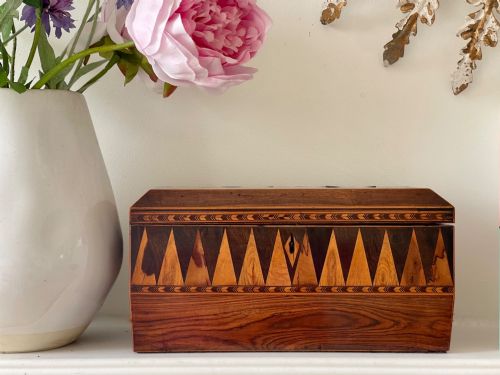

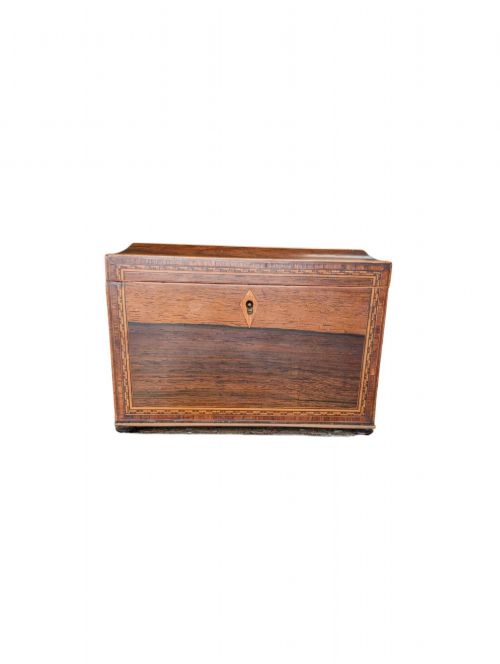
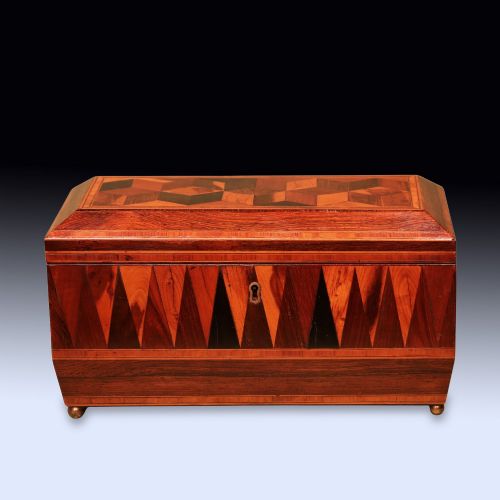


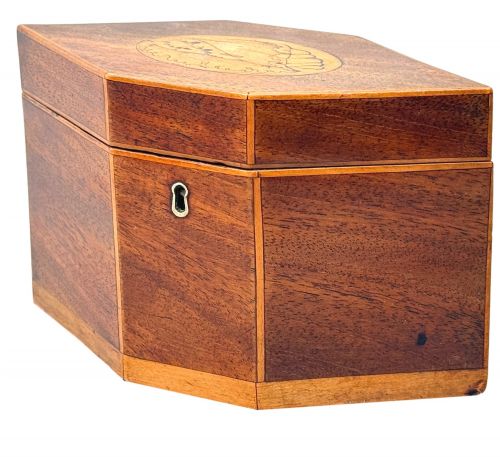


Inlaid Wooden Tea Chest
An inlaid wooden tea chest is a fitted box for storing precious leaves, combining fine cabinetmaking with period design.
Identifying an inlaid wooden tea chest
An inlaid wooden tea chest takes the form of a tea caddy, emerging across the Georgian, Regency, and Victorian eras in various timber constructions. These containers served to protect high-value dry leaves under lock and key in the formal rooms of the house.
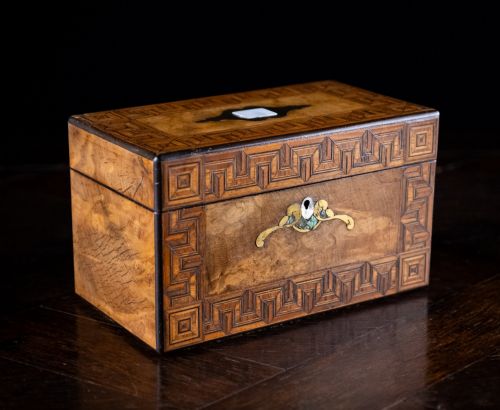
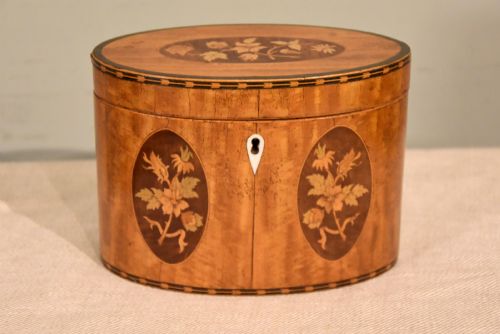
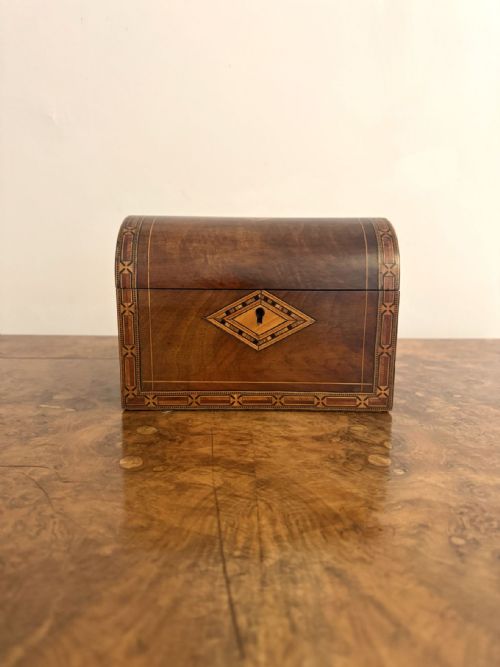
The specimens seen here appear primarily as mahogany or burr walnut tea caddies, alongside rarer exotic hardwoods like gonçalo alves and amboyna. Individual examples show single harewood configurations or feature star and marquetry inlay work set into the lid or body.
Materials and construction
Cabinetmakers constructed these chests from solid or veneered timber carcasses, applying marquetry inlay, wood inlay, or contrasting veneers such as harewood and sycamore. Metal fittings like brass hinges and escutcheons secured the lids and provided structural corners.
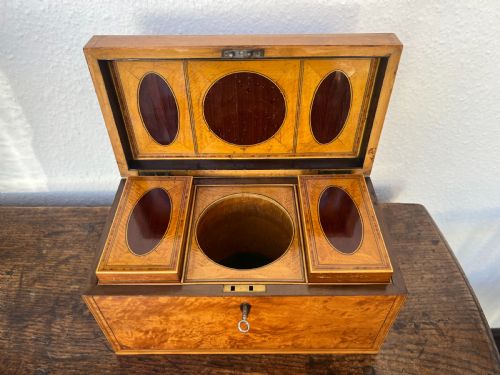
The decorative surfaces rely on precise cutting of different wood species to create geometric or pictorial motifs, often framed with banding. Interior compartments were frequently lined to keep the dry leaves separate and fresh.
Retail Price Guide 2026
Typical UK retail prices for inlaid wooden tea chest, calculated from the Sellingantiques database of over a million retail prices indexed since 2003. This retail price guide relies exclusively on Sellingantiques data; no external sources or auction records are used, so the figures do not describe the wider market.
Current listings demonstrate materials ranging from standard mahogany to exotic gonçalo alves and amboyna.
Judging the quality
The distinction between ordinary and exceptional pieces lies in the choice of timber and the precision of the marquetry inlay. Richly figured grains like amboyna and gonçalo alves elevate a piece beyond standard mahogany or walnut.
Superior execution shows seamless integration of brass hardware and meticulous alignment in the wood inlay patterns across the corners and lid. The depth of the timber's natural figure and the crispness of the geometric detailing separate standard production from masterwork.
The Inlaid Wooden Tea Chest Glossary
- Marquetry Inlay
- A decorative technique where thin veneers of various woods are assembled to form pictorial or geometric patterns on the surface. This method demands immense precision from the artisan.
- Harewood
- Sycamore timber that has been stained green, commonly utilised in Georgian and Regency decorative banding and inlay. It adds a subtle, distinctive colour contrast to darker primary woods.
- Gonçalo Alves
- A dense exotic hardwood with striking contrasting grain patterns, frequently chosen for luxury nineteenth-century cabinetwork. It provides a heavily figured exterior surface.
- Sarcophagus
- A box style featuring a sloping lid and inverted base, mimicking monumental stone tombs popular in Regency design. This architectural form gives the tea chest substantial visual weight.
- Escutcheon
- A protective plate surrounding the keyhole, typically cast in brass to prevent the surrounding wood from splintering during use. It also serves as a decorative focal point on the front panel.
Frequently Asked Questions
What is a tea chest?
A tea chest, or tea caddy, is a small storage box designed to hold loose tea leaves securely under lock. In past centuries, tea was an expensive commodity kept under the direct supervision of the head of the household.
These boxes typically feature internal compartments to separate different varieties of tea. Their construction combined functional security with decorative cabinetmaking for display in reception rooms.
How do I date a tea chest?
Dating relies on observing the primary woods, decorative styles, and construction techniques used in the piece. Georgian and Regency examples often employ mahogany, harewood, or elaborate marquetry inlay, while Victorian pieces show distinct shifts in proportion.
Hardware details like brass hinges and escutcheons also offer clues to the period of manufacture. Comparing the wood species and inlay motifs against documented examples helps narrow down the decade.
Were these boxes used every day?
These chests were utilised daily in affluent households where tea drinking formed a central part of social entertaining. The hostess would retrieve the leaves from the caddy to prepare the beverage in the presence of guests.
Because tea carried high status and value, the box remained locked when not in use. This careful handling preserved the polished timber and delicate inlay over generations.
How do I care for wood inlay?
Wood inlay and marquetry require stable environmental conditions away from direct sunlight and sudden temperature shifts. Excessive heat can cause the fine veneers and stringing to dry out and lift from the carcass.
Routine maintenance involves gentle dusting with a dry, soft cloth to protect the polished surface. Avoid using harsh chemical sprays or excessive moisture on antique timber.