




Decorative Walnut Wooden Box
A decorative walnut wooden box brings figured grain and clever joinery to a desktop, serving as a handsome home for letters, jewellery, and small treasures.
Decorative Walnut Wooden Box
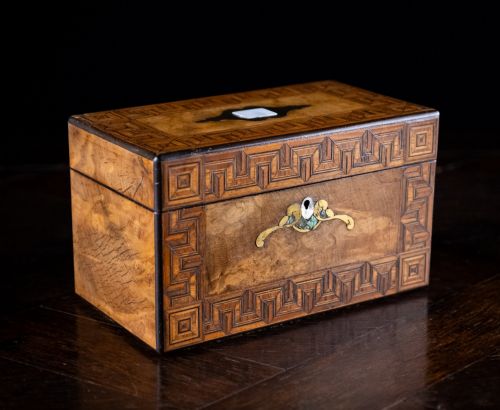
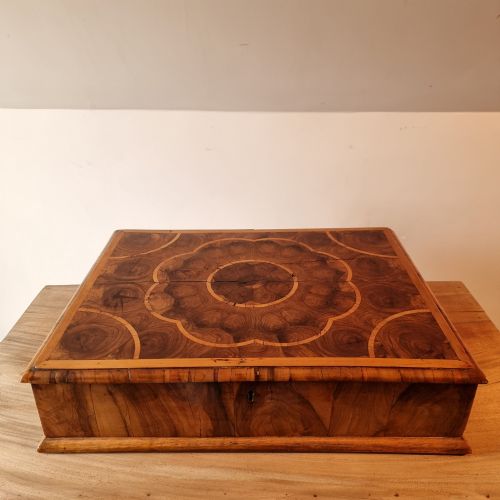
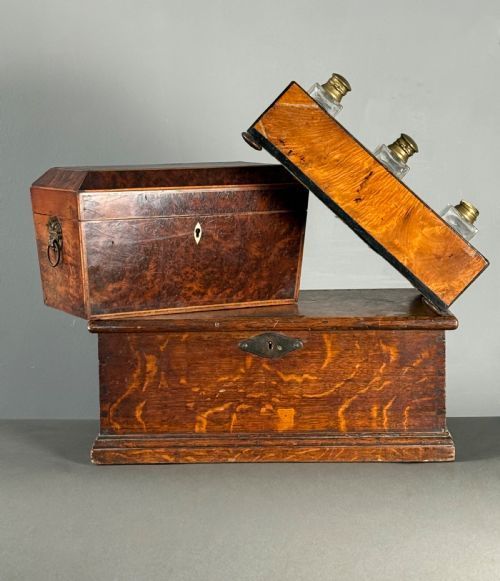
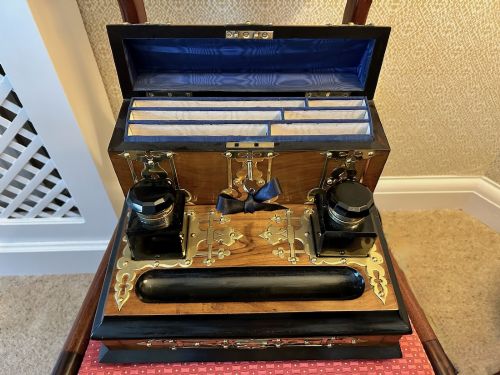
A decorative walnut wooden box encompasses a diverse range of functional containers designed for personal storage and display across several centuries. Buyers frequently encounter Victorian examples featuring rich burr veneers alongside Georgian tea caddies and earlier seventeenth-century marquetry pieces.
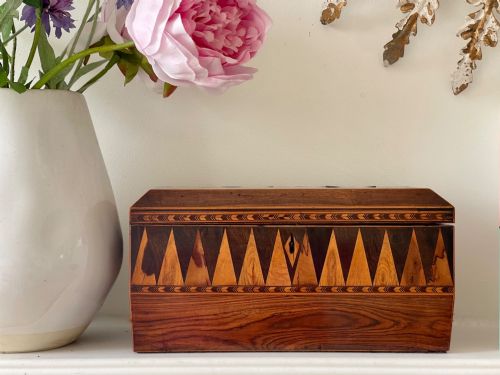
The forms vary widely according to their original domestic purpose, including specialised compartments for writing slopes, jewellery caskets, music boxes, and sewing cases. Walnut predominates as the primary timber, often enhanced by contrasting stringing and geometric parquetry patterns.
Origins stretch from English workshops to continental centres such as the Black Forest and Switzerland, showcasing regional specialisms in carving and inlay. These receptacles functioned as prized possessions in period parlours and studies, combining utility with decorative refinement.
What varies in quality
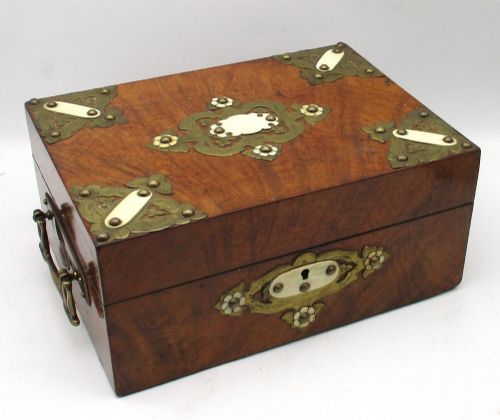
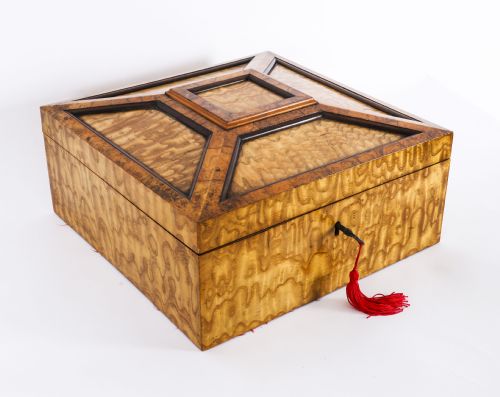
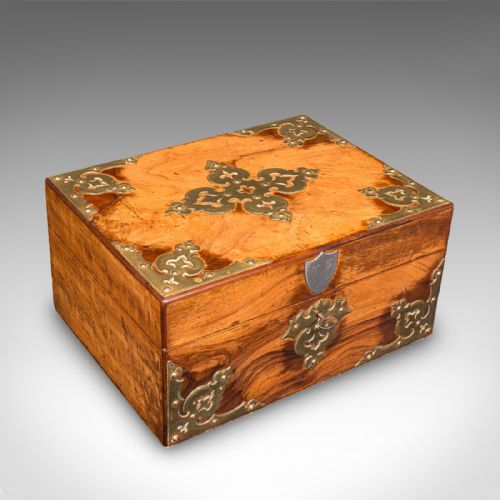
The visual appeal depends largely on the selection of timber veneers, where intensely figured burr walnut or crisp parquetry geometric work elevates a piece above plain surfaces. Finer examples display meticulous attention to detail in the execution of inlaid motifs and the harmonious integration of brass hardware.
Interior fittings also distinguish better pieces, particularly those retaining original velvet linings, fitted compartments, and working locks with matching keys. Superior execution is visible in the tightness of corner joints and the flush alignment of lids and doors over time.
Listings feature walnut boxes spanning from the seventeenth century through to the Edwardian era, incorporating materials such as brass, bone, mother of pearl, and glass.
The Decorative Walnut Wooden Box Glossary
- Burr walnut
- A prized veneer taken from the knotted growth of a walnut tree, producing swirling, highly decorative grain patterns. Cabinet makers selected these sections to create dramatic focal points on box lids and panels.
- Parquetry
- Geometric wood mosaic work formed by small veneer pieces arranged in repeating patterns. It differs from marquetry by strictly using geometric angles rather than pictorial scenes.
- Marquetry
- The art of applying decorative veneer pieces to form pictorial designs, floral sprays, or arabesques. Craftsmen cut various woods and sometimes bone or shell together to achieve snug fits.
- Tunbridge ware
- A distinct form of woodworking originating in Kent involving thousands of tiny tinted wood prisms assembled to create mosaic pictures. These intricate designs typically decorated the lids of Victorian boxes and trinket cases.
- Tea caddy
- A specialised container originally built to store valuable loose tea leaves securely under lock and key. Many feature internal lidded compartments to separate different tea varieties.
Decorative Walnut Wooden Box: Frequently Asked Questions
What were decorative walnut wooden boxes used for?
These receptacles served specific domestic functions in period homes, holding precious commodities like tea leaves, writing materials, letters, and personal jewellery.
Their secure compartments and fitted interiors kept valuable items organised and protected from dust and light in the parlour or study.
How can I tell the period of a walnut box?
Dating relies on observing construction methods, hardware styles, and the specific decorative techniques employed by makers of different eras. For instance, seventeenth-century examples often feature floral marquetry, while Victorian pieces frequently incorporate elaborate parquetry and brass mounts.
Secondary woods inside the box and the style of the hinges provide further clues regarding the manufacturing decade.
Are all these boxes made entirely of solid walnut?
Most pieces combine a secondary structural timber carcase, such as pine or mahogany, with a decorative walnut veneer applied to the exterior surfaces. Solid walnut was generally reserved for mouldings, feet, or specific construction elements where structural strength was paramount.
The use of burr walnut veneer allowed craftsmen to display dramatic grain patterns that solid planks rarely provided.
How do I care for antique walnut boxes at home?
Preserving these items involves keeping them away from direct sunlight and extreme fluctuations in central heating, which can dry out the timber and cause veneers to lift. Maintaining a stable indoor climate prevents the historic wood and glue from shrinking.
Occasional light application of appropriate furniture wax helps nourish the timber and protect the polished finish without sealing the pores.