



Antique Floral Inlay Casket
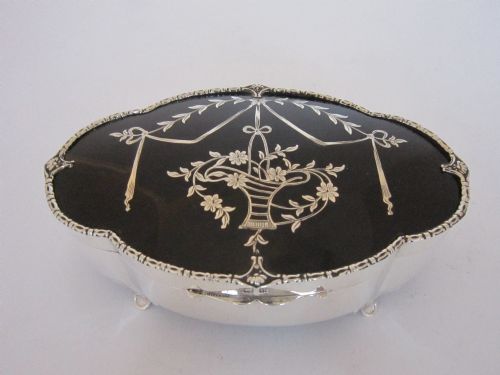
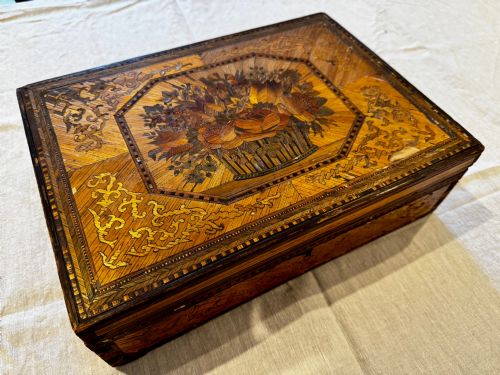
An antique floral inlay casket is a small lidded box adorned with botanical marquetry, offering a secure home for letters or trinkets.
Antique Floral Inlay Casket
When you search for an antique floral inlay casket, you encounter a variety of receptacles designed for personal treasures, from jewellery boxes to stationery caskets and workboxes. These pieces span the seventeenth century up to the Victorian era, reflecting shifting domestic tastes across English, French, German and Italian workshops.
The domestic boxes and caskets appearing here range from small trinket containers to substantial music boxes and perfumed storage pieces. Their forms serve specific functions in the nineteenth-century household, while seventeenth-century examples offer a much heavier, architectural presence.
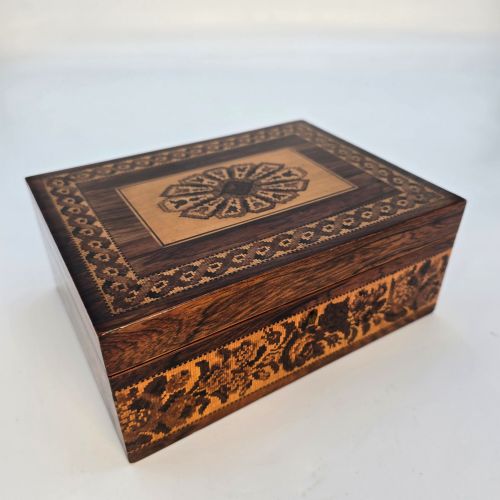
You are most likely to meet Victorian and nineteenth-century rosewood or papier-mâché items decorated with marquetry floral motifs. These frequently utilise boxwood, fruitwood and mother-of-pearl accents to build detailed botanical scenes across the lid and sides.
How they were made
Cabinetmakers constructed these boxes using dense timbers such as rosewood and walnut, or moulded them from papier-mâché before applying lacquered finishes. Metal mounts in brass or ormolu often reinforced the corners, hinges and locking plates of the caskets.
Makers formed the floral ornamentation through marquetry and Tunbridge Ware techniques, carefully cutting fine veneers of boxwood, fruitwood and mother-of-pearl. These contrasting plant materials were assembled into intricate scrolling leaf and flower patterns before being pressed into the timber surface.
Antique Floral Inlay Casket Retail Price Guide 2026
Typical asking prices for floral inlay casket among the pieces listed under this phrase on Sellingantiques today, from the lower quarter to the upper quarter. They describe what is for sale here now, not the wider market.
A prisoner-of-war carved delicate straw-work into a workbox, proving that even captivity could not halt the urge to decorate a lid.
What varies in quality
The standard of an antique floral inlay casket rests primarily on the precision of the veneer work and the variety of woods employed. Finer pieces demonstrate tight joints in the marquetry where boxwood and fruitwood meet without visible gaps.
Material choice dictates the upper tier of these objects, particularly when makers incorporate mother-of-pearl highlights or cast ormolu mounts alongside the standard rosewood carcass. The complexity of the floral design and the structural integrity of the box itself separate standard production items from exceptional workshop commissions.
Edmund Nye
The Antique Floral Inlay Casket Glossary
- Marquetry
- The art of applying decorative pieces of veneer to a structural carcass to form floral or geometric patterns. This technique defines the surface decoration of many nineteenth-century caskets.
- Tunbridge Ware
- A specialised form of woodworking originating in Kent, utilising thousands of tiny coloured wood blocks to create mosaic pictures. It appears on specific nineteenth-century boxes.
- Ormolu
- Gilded bronze mounts and feet applied to furniture and decorative boxes. These metal fittings provide structural reinforcement and decorative contrast to the timber.
- Papier-mache
- A composite material made of paper pulp mixed with adhesive, moulded and then lacquered. It serves as the primary body for certain Victorian stationery and jewellery boxes.
- Pietra Dura
- The inlay technique of using cut and fitted polished coloured stones to create images. This appears on specific Italian boxes alongside ebonised wood.
Antique Floral Inlay Casket: Frequently Asked Questions
What is an antique floral inlay casket used for?
These caskets served various domestic storage needs in past centuries, functioning as secure receptacles for letters, stationery, jewellery, and personal trinkets. Some specialised versions also contained musical movements to entertain guests.
Today, collectors use them on dressing tables, desks, or living room surfaces to store small modern items while retaining period decorative character.
How do I date an antique floral inlay casket?
Dating relies on observing the timber species, construction methods, and stylistic markers recorded across different eras. For instance, seventeenth-century examples show heavier architectural proportions, whereas Victorian pieces often feature bright rosewood veneers and brass fittings.
Examining the interior lining, hinges, and locking mechanisms also provides clues to the manufacturing decade, distinguishing early nineteenth-century work from later Victorian production.
How should I care for a marquetry box?
Keep the box away from direct sunlight and steady heat sources to prevent the delicate wood veneers and mother-of-pearl inlays from drying out and lifting. Environmental stability is the primary requirement for preserving antique timber.
Apply a gentle microcrystalline wax occasionally to nourish the polished surface, avoiding modern liquid polishes that can seep into the marquetry joints.