
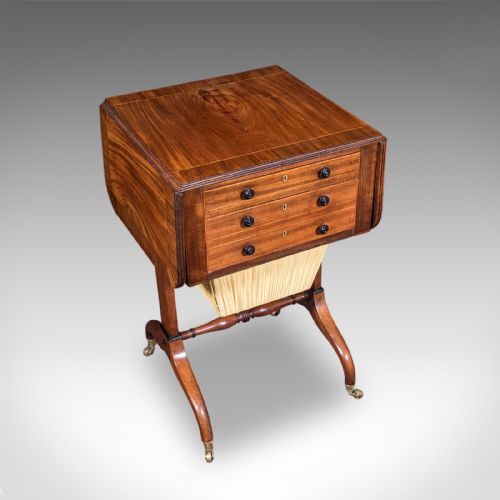


Carved Wood Writing Box
A carved wood writing box is a portable desk crafted to hold correspondence and stationery while offering a firm surface for the hand.
Carved Wood Writing Box
When you search for a carved wood writing box, you encounter portable desks designed to keep letters, ink, and paper together in one secure compartment. These items bridge domestic utility and travel convenience, appearing in various dense timbers that survived heavy use.
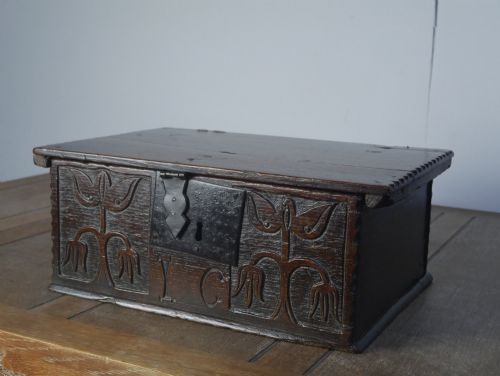
The versions most commonly met on this page range from nineteenth-century exotic hardwoods to earlier English oak specimens. Makers constructed these boxes to travel or sit upon tables, often incorporating sloping lids that double as writing surfaces.
How they were made
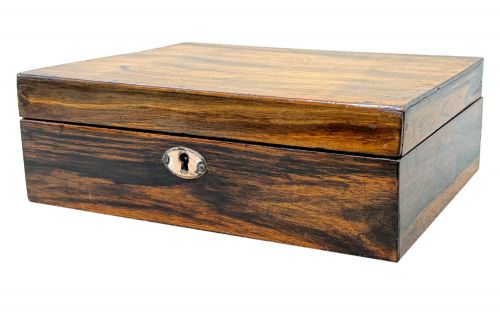
Craftsmen utilised dense timbers such as oak, mahogany, coromandel, and ebony to construct the carcass of each box, frequently applying intricate surface carving or inlay. These woods provided the necessary durability for items intended to endure frequent handling and travel.
Metal components like brass hardware reinforced corners and hinges, while secondary materials such as bone and mother-of-pearl formed decorative accents. Joinery methods varied from early pegged joints in seventeenth-century oak to more refined box construction in later periods.
A secret compartment often hides behind a false drawer divider, ready to guard love letters or spare nibs from curious eyes.
What varies in quality
The refinement of the surface carving and the selection of timber dictate the standing of a box within its range. Pieces featuring dense exotic woods like coromandel or elaborate regional carving demonstrate superior craftsmanship compared to plain utility items.
Internal arrangement and the integrity of fitted compartments also separate standard boxes from finer examples. The precision of the joinery and the survival of original brass mounts or interior linings determine the overall standard of preservation.
The Carved Wood Writing Box Glossary
- Writing slope
- A portable box with an angled lid designed to hold writing materials and provide a slanted surface for correspondence. These often fold open to reveal a leather-lined writing surface.
- Coromandel wood
- A dense, heavily variegated timber imported from Asia, prized for its rich dark brown colour and striking black stripes. Cabinetmakers utilised it for high-status nineteenth-century boxes.
- Marquetry
- A decorative technique where small pieces of wood veneer are arranged in floral or geometric patterns upon a solid wooden background. This method appears on seventeenth-century and later decorative surfaces.
- Stationery box
- A desk accessory designed specifically to hold folded paper, envelopes, and cards in upright compartments. These typically feature hinged lids or open fronts.
- Bible box
- A sturdy wooden chest originally built to store sacred texts and domestic documents securely. Early examples often rest on stands or feature carved front panels characteristic of seventeenth-century joinery.
Carved Wood Writing Box: Frequently Asked Questions
What is inside a writing box?
Most writing boxes contain internal compartments for inkwells, pens, and paper, often accompanied by a slanted surface covered in leather or fabric. Some feature secret drawers accessed by removing internal panels.
These fitted interiors allowed writers to transport all necessary writing implements safely within a single lockable wooden case.
How do I date a wooden box?
Dating relies on examining the timber species, joinery techniques, hardware style, and overall decorative motifs. Seventeenth-century pieces typically show pegged oak construction and floral carving, while nineteenth-century boxes often use exotic hardwoods like coromandel and ebony.
Secondary woods inside the box and the style of any brass hinges or escutcheons offer further clues regarding the period of manufacture.
Were these boxes used for travel?
Yes, many writing boxes functioned as portable desks for travellers, military officers, and administrators who required a stable writing surface away from home. Their robust construction and secure locks protected contents during transit.
Later Victorian examples continued this tradition while also serving as stationary desk accessories in domestic boudoirs and drawing rooms.
How do I care for antique wood?
Antique timber benefits from stable indoor humidity and protection from direct sunlight, which can fade dark tropical hardwoods and dry out old oak. Light application of appropriate wax helps nourish the polished surface without building up residue.
Avoid placing damp items or liquid inkwells directly onto antique wooden surfaces to prevent staining the historic finish.