
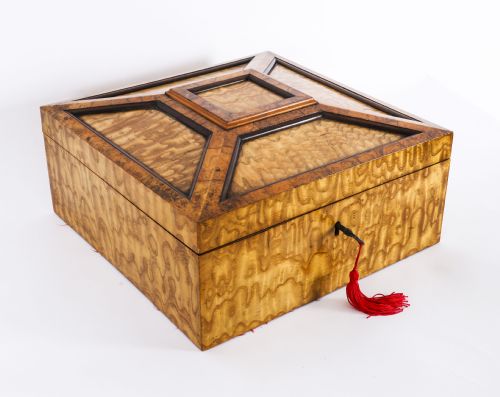

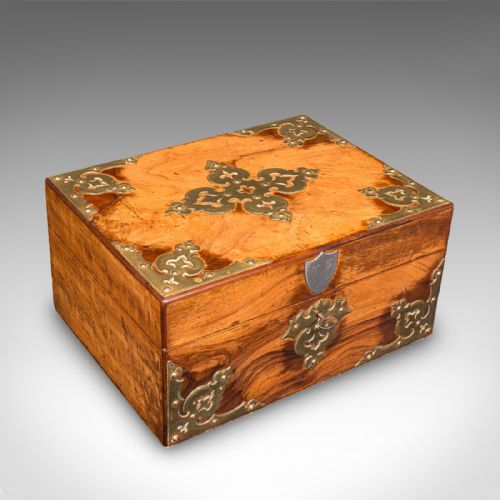


Decorative Walnut Casket
A decorative walnut casket brings rich warmth and tactile beauty to a room, holding centuries of craftsmanship in a compact form.
Decorative Walnut Casket
When you search for a decorative walnut casket, you encounter a varied selection of antique boxes and caskets spanning the seventeenth, nineteenth, and early twentieth centuries. These pieces serve as functional receptacles for jewellery, letters, tea, games, and keepsakes, offering a glimpse into domestic life of past eras.
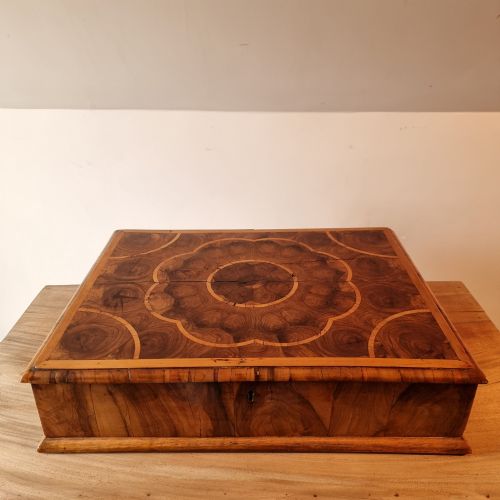
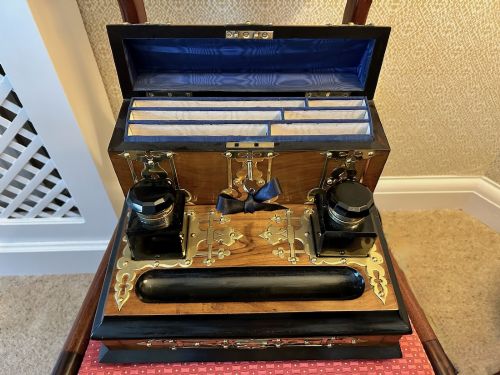
The pieces listed on this page range from seventeenth-century lace boxes and table cabinets through to nineteenth-century Victorian burr walnut caskets, tea caddies, and desk stands. Styles shift across periods from William and Mary and Baroque to Gothic Revival, Arts and Crafts, and Black Forest carvings.
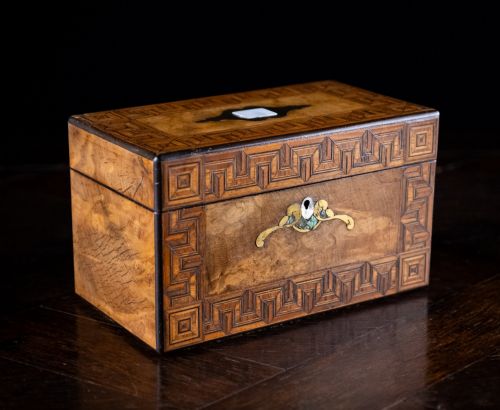
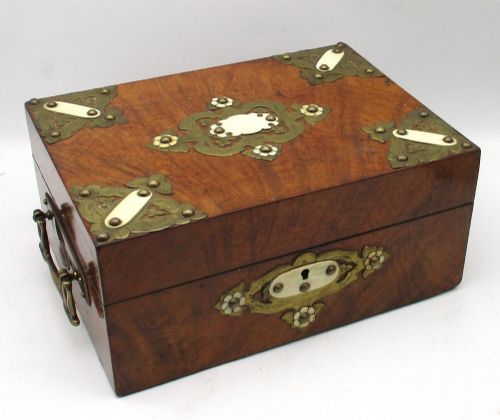
You are most likely to meet nineteenth-century Victorian examples featuring parquetry, brass mounts, and marquetry inlay. These domestic boxes reflect the era's taste for intricate surface decoration and organised storage.
Assessing quality and execution
Quality in a decorative walnut casket lies in the precision of the parquetry and marquetry, where the alignment of contrasting woods demands exact hand-cutting and fitting. Finer examples display continuous grain patterns across the lid and sides rather than mismatched veneer patches.
Interior fittings and hardware further distinguish the range. Superior boxes retain their original velvet or silk linings, fitted compartments, and working brass locks with matching keys, showing a commitment to interior utility alongside exterior display.
Listings feature walnut combined with brass, mother of pearl, boxwood, and malachite across Victorian, William and Mary, and Arts and Crafts styles.
The Decorative Walnut Casket Glossary
- Burr walnut
- A prized veneer taken from the growth excrescence on a walnut tree, revealing a swirling, highly figured grain pattern. It was frequently selected for the top panels of nineteenth-century luxury boxes.
- Parquetry
- A geometric mosaic of wood veneers arranged in regular patterns such as cubes, diamonds, or stripes. This technique creates a structured optical effect on box lids.
- Marquetry
- The art of forming decorative pictures or patterns using thin veneers of different coloured woods, shells, or metals. Floral motifs are commonly rendered this way on seventeenth and nineteenth-century pieces.
- Tunbridge Ware
- A distinct form of British woodworking originating from Tunbridge Wells, characterised by mosaic tiles assembled from thousands of tiny tinted wood blocks to create pictorial or geometric scenes. These appear frequently on Victorian trinket and glove boxes.
- Gothic Revival
- An architectural and decorative style drawing inspiration from medieval forms, featuring pointed arches, tracery, and heavy iron or brass mounts. Boxes in this style reflect nineteenth-century romanticism.
Decorative Walnut Casket: Frequently Asked Questions
What were these boxes used for originally?
These caskets served designated domestic purposes for storing valuable personal items like jewellery, lace, correspondence, or tea reserves. Interiors often featured segmented trays or velvet linings tailored to these specific contents.
Over time, owners adapted them for general keepsakes and trinkets, valuing their secure lids and compartmentalised layouts for everyday organisation.
How can I tell a seventeenth-century box from a Victorian one?
Seventeenth-century pieces, such as lace boxes or table cabinets, typically exhibit heavier timber construction, simpler rectangular or domed proportions, and early floral marquetry or plain ebony and walnut surfaces. Their joinery and hardware reflect seventeenth-century hand tools and methods.
Victorian examples from the nineteenth century frequently employ burr walnut veneers, complex parquetry, brass mounts, and specialised internal lift-out trays. The decorative vocabulary during the Victorian era drew freely from earlier revivals and industrial innovations.
How do I care for a walnut casket at home?
Keep wooden caskets away from direct sunlight and heat sources to prevent the walnut veneer from drying out or splitting. Maintaining stable room humidity preserves the wood and prevents warping.
Dust the exterior gently with a dry, soft cloth and avoid chemical polishes that can build up on delicate parquetry or damage old French polish finishes.
What is the difference between a tea caddy and a keepsake box?
A tea caddy was built specifically to store dry tea leaves, traditionally featuring internal foil-lined compartments or separate canisters with fitted lids to preserve aroma. They often include a small lock to protect expensive imported tea.
Keepsake and jewellery boxes feature open tray layouts, velvet compartments, or mirror inserts in the lid for personal adornment and letters, lacking the airtight compartments found in tea caddies.