
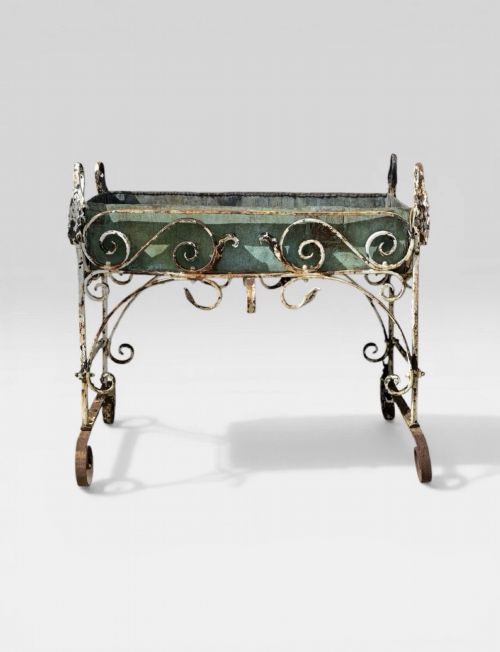
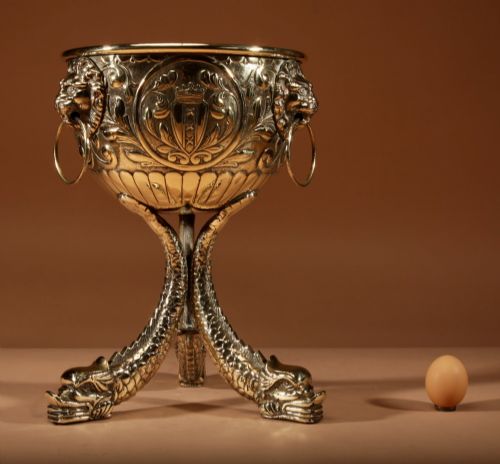

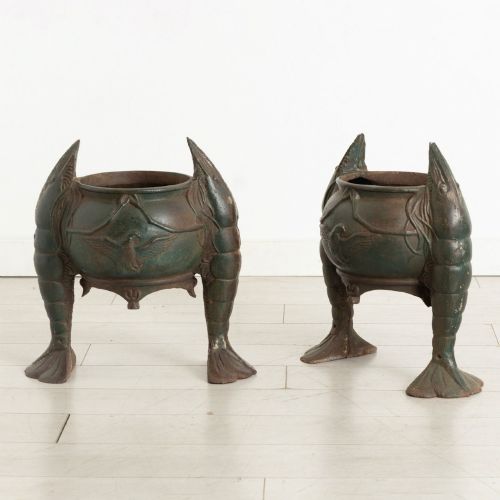


Decorative Urn Stands
Decorative urn stands elevate heavy vessels and garden planters, bringing sculptural form and architectural height to interior rooms and garden terraces.
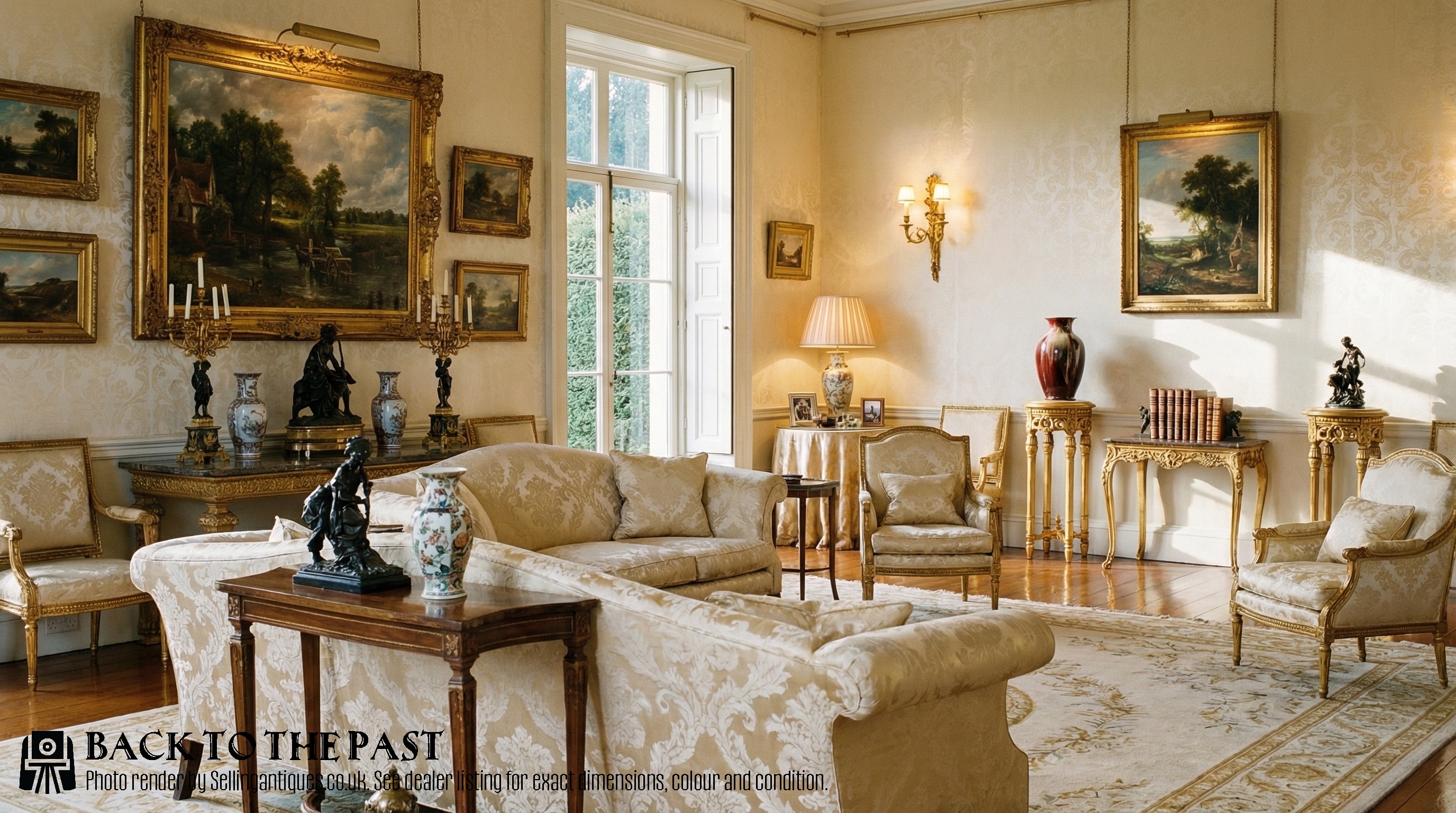
Decorative Urn Stands
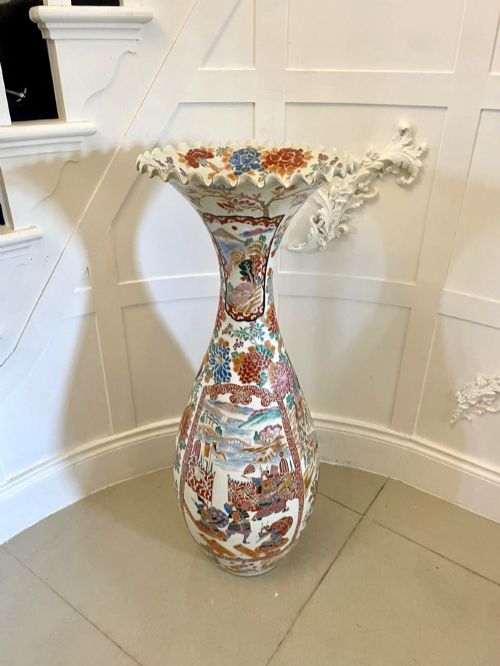
Decorative urn stands encompass plant stands, pedestals, plinths and torcheres designed to elevate vases, jardinieres and jars. They serve to display heavy vessels at eye level, transforming functional containers into focal points within a room or garden.
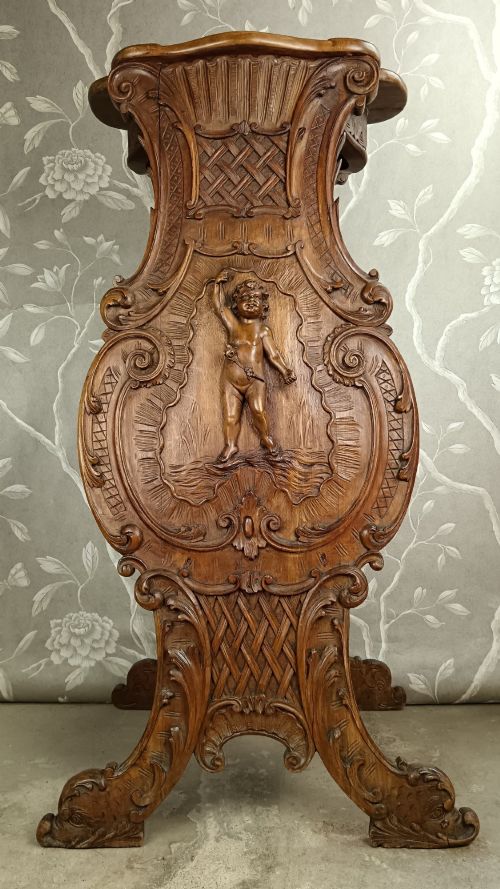
The pieces appearing on this page span the nineteenth century, Victorian, Edwardian and early twentieth century periods. Common forms include carved walnut columns, marble pillars, giltwood torcheres and tripod bases.
Stylistic influences range from Neoclassical and Italian Renaissance Revival to French Rococo and Japanese designs. Buyers encounter everything from solid marble pedestals to wrought iron garden planters.
Materials and construction
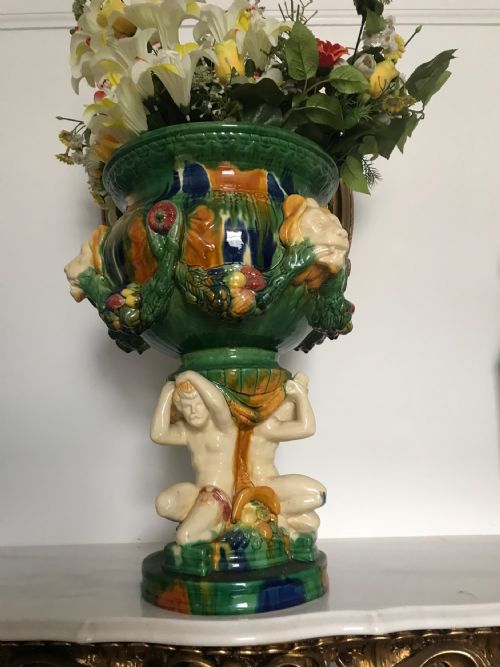
Makers utilised a wide variety of materials, pairing carved woods such as walnut, mahogany, oak and giltwood with metals like brass, copper, bronze and cast iron. Marble, terracotta, porcelain and majolica ceramic frequently provide the surfaces for both the stands and the mounted vessels.
Traditional woodworking methods join with metal casting, hand-carving and ceramic glazing. Construction often involves heavy turned columns, mortise and tenon joinery for wooden tables, and embossed or pressed sheet brass for jardiniere stands.
Periods represented span the nineteenth century, Victorian, Edwardian and early twentieth century.
Evaluating the range
Quality rests upon the selection of materials and the depth of craftsmanship. Solid carved marble, finely figured walnut and substantial cast bronze or brass sit at the top of the scale, showing crisp detail in acanthus leaf carvings and figural elements.
Lighter pieces utilising pressed sheet metal or simple turned timber represent simpler manufacture. The weight of the stone or timber and the precision of the joinery or casting determine the structural integrity of each support.
The Decorative Urn Stands Glossary
- Torchere
- A tall, slender stand designed to hold a light or a vase. These pieces often feature carved timber or giltwood shafts.
- Jardiniere
- An ornamental pot or stand for holding plants or flowers. They are frequently cast in brass, pottery or majolica ceramic.
- Pedestal
- An architectural support used to elevate a bust, urn or vase. They appear in marble, wood and terracotta.
- Cloisonné
- A metalwork technique where enamel is applied within compartments created by soldered wire. Pieces utilising this method display intricate coloured patterns.
Decorative Urn Stands: Frequently Asked Questions
What is an urn stand used for?
These supports elevate heavy ceramic, bronze or stone vessels to display them properly within a space. They bring height and structural interest to large floor vases and planters.
Historically, they allowed gardeners and homeowners to showcase specimen plants and decorative art pieces off the floor.
How do I distinguish between Victorian and Edwardian stands?
Victorian pieces tend to exhibit heavier carving, darker woods like walnut, and robust Neoclassical or Gothic influences. They often feature dense ornamentation and substantial proportions.
Edwardian examples frequently demonstrate lighter construction, brighter mahogany timbers, and refined neoclassical or giltwood detailing.
Can these stands support heavy stone vessels?
Many examples are constructed from solid marble, cast iron or dense hardwoods specifically to bear considerable weight. The base material dictates the load capacity.
Stands built from stone, heavy timber columns or cast brass offer the necessary stability for large terracotta jars and bronze urns.
Where should I place a torchere stand?
Torcheres suit corners, hallways and reception rooms where vertical height enhances empty wall space. They provide a structural platform for decorative vases or lamps.
Their slender profile allows them to fit into compact areas while drawing the eye upward.