





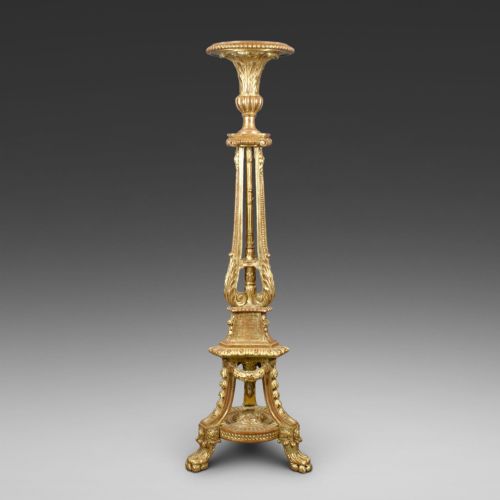

Louis XVI Torchere
A louis xvi torchere brings classical French elegance to an interior, offering a slender stage for display.
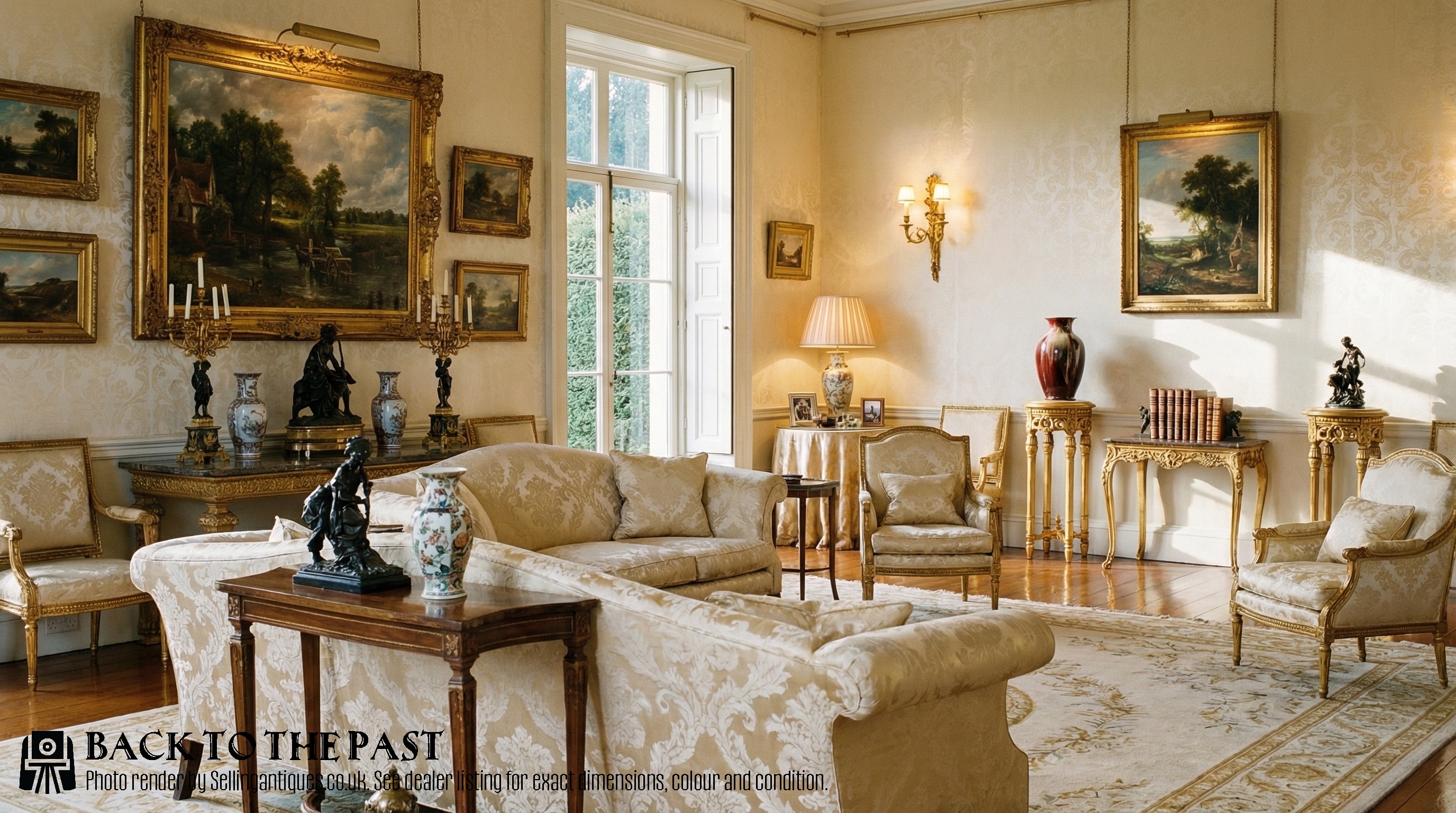
Louis XVI Torchere
A louis xvi torchere embodies the neoclassical taste through tall, upright forms designed to elevate lights or decorative objects. On this page, these pieces appear in revival styles alongside related pedestals and stands from the nineteenth and early twentieth centuries.
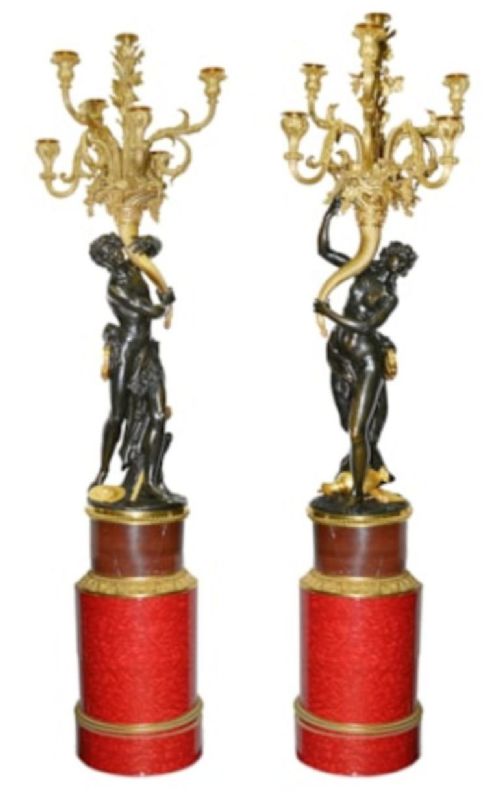
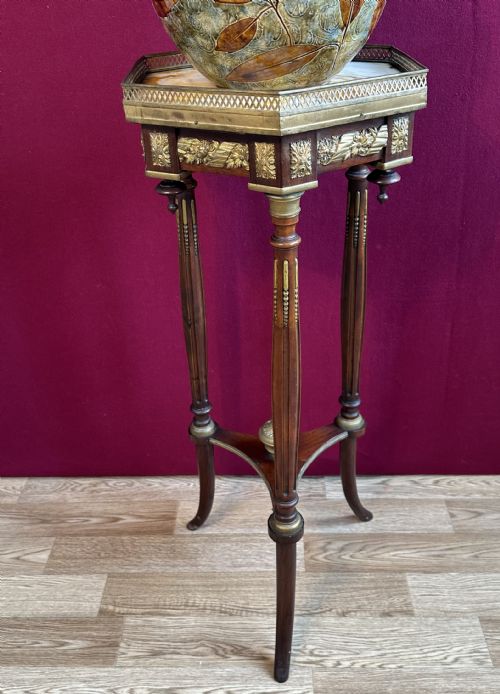
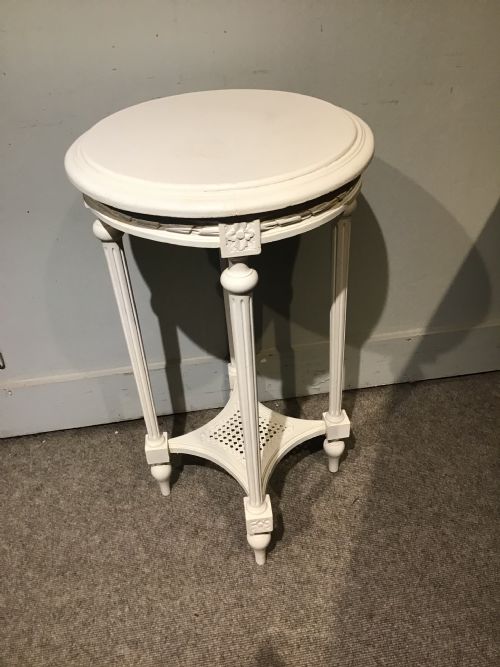
Makers drew on French chateau designs, producing slender stands and wall-mounted versions that echo eighteenth-century proportions. The forms include gilt torchere stands, plant stands, and occasional tables reflecting Louis XVI style.
The selection encompasses pieces from the Victorian and Edwardian eras, as well as items dated specifically to the eighteen-seventies, eighties, nineties, and nineteen-twenties. These later interpretations capture the ornate character of French neoclassical and rococo revival aesthetics.
Materials and construction
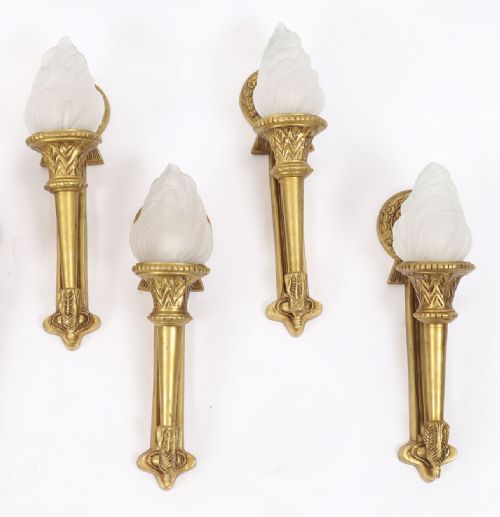
Makers relied on carved timber enriched with gesso and giltwood surfaces to achieve the opulent sheen characteristic of French styles. Ormolu and gilt bronze elements provide metallic contrast and structural detail on wall lights and candelabra.
Marble tops appear frequently on tables and stands, offering a cool, durable surface that complements gilded wood and bronze frames. Brass, ebony, and frosted glass also feature in the construction of these decorative furnishings.
Louis XVI Torchere Retail Price Guide 2026
Typical asking prices for louis xvi torchere among the pieces listed under this phrase on Sellingantiques today, from the lower quarter to the upper quarter. They describe what is for sale here now, not the wider market.
Judging quality
The standard of carving and gilding dictates the visual impact of a torchere, with crisp detail in the acanthus leaves and fluting marking superior pieces. Heavier cast bronze or ormolu mounts indicate finer workshop production compared to lighter alloy alternatives.
Proportion and stability separate standard decorative stands from exceptional examples, as slender shafts require precise balance and sound joinery. The integration of inset marble tops and the depth of the original surface finish reveal the maker's underlying skill.
The Louis XVI Torchere Glossary
- Torchere
- A tall stand designed to support a lamp, candle, or decorative object. Originally built for illumination, later examples served purely for display.
- Ormolu
- Gilt bronze mounted on furniture or used for decorative objects. The technique involves applying a gold amalgam to bronze before heating.
- Giltwood
- Wood that has been coated with a thin layer of gold leaf or powder. It forms the lustrous surface seen on many classical stands.
- Neoclassical
- A style reviving classical Roman and Greek motifs, characterised by symmetry and straight lines. It directly inspired the Louis XVI aesthetic.
- Gesso
- A plaster mixture applied to wood surfaces as a base for gilding. It allows carvers to achieve sharp, detailed ornament before applying gold leaf.
Louis XVI Torchere: Frequently Asked Questions
How do I date a louis xvi torchere?
Dating relies on examining the materials, construction methods, and surface wear of the piece. Many examples found today are nineteenth-century or early twentieth-century revivals rather than eighteenth-century originals.
Revival pieces often combine period motifs with the manufacturing techniques of the Victorian or Edwardian eras. Tool marks on the timber and the composition of the gilt layers help narrow down the decade of creation.
Where should I place a torchere stand?
These tall stands suit corners, empty wall spaces, or flanking larger furniture items. Their vertical proportions draw the eye upward without taking up much floor space.
Placing one in a hallway or drawing room allows it to display plants, urns, or decorative lighting effectively. Ensure the location is stable to prevent tipping due to the narrow footprint.
What is the difference between a torchere and a pedestal?
A torchere historically held a light source, while a pedestal was designed purely to support a bust or sculpture. Over time, the terms began to overlap significantly in revival furniture.
Both forms utilise slender vertical proportions and classical decorative vocabulary. On this page, they share similar origins in nineteenth and twentieth-century French styles.