


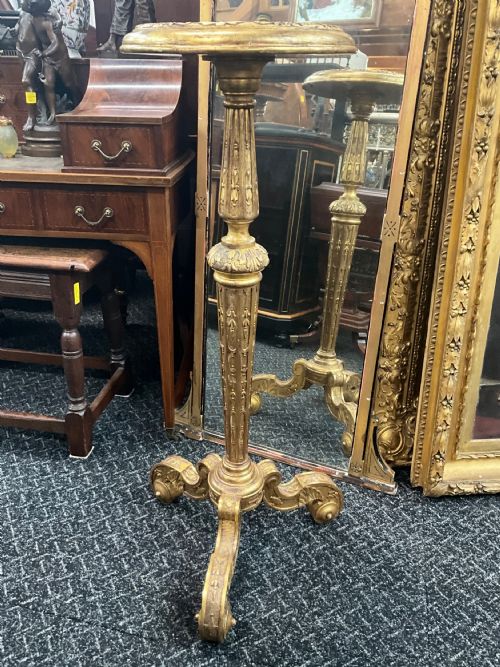
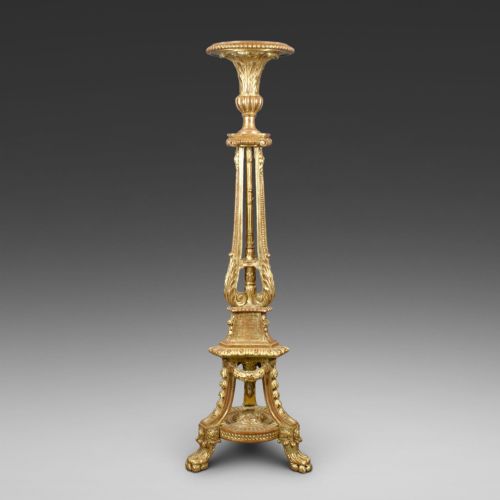


French Giltwood Column
These pieces known as french giltwood column range from torcheres and pedestals to mirrors and lamps, offering gilded architectural presence for grand interiors.
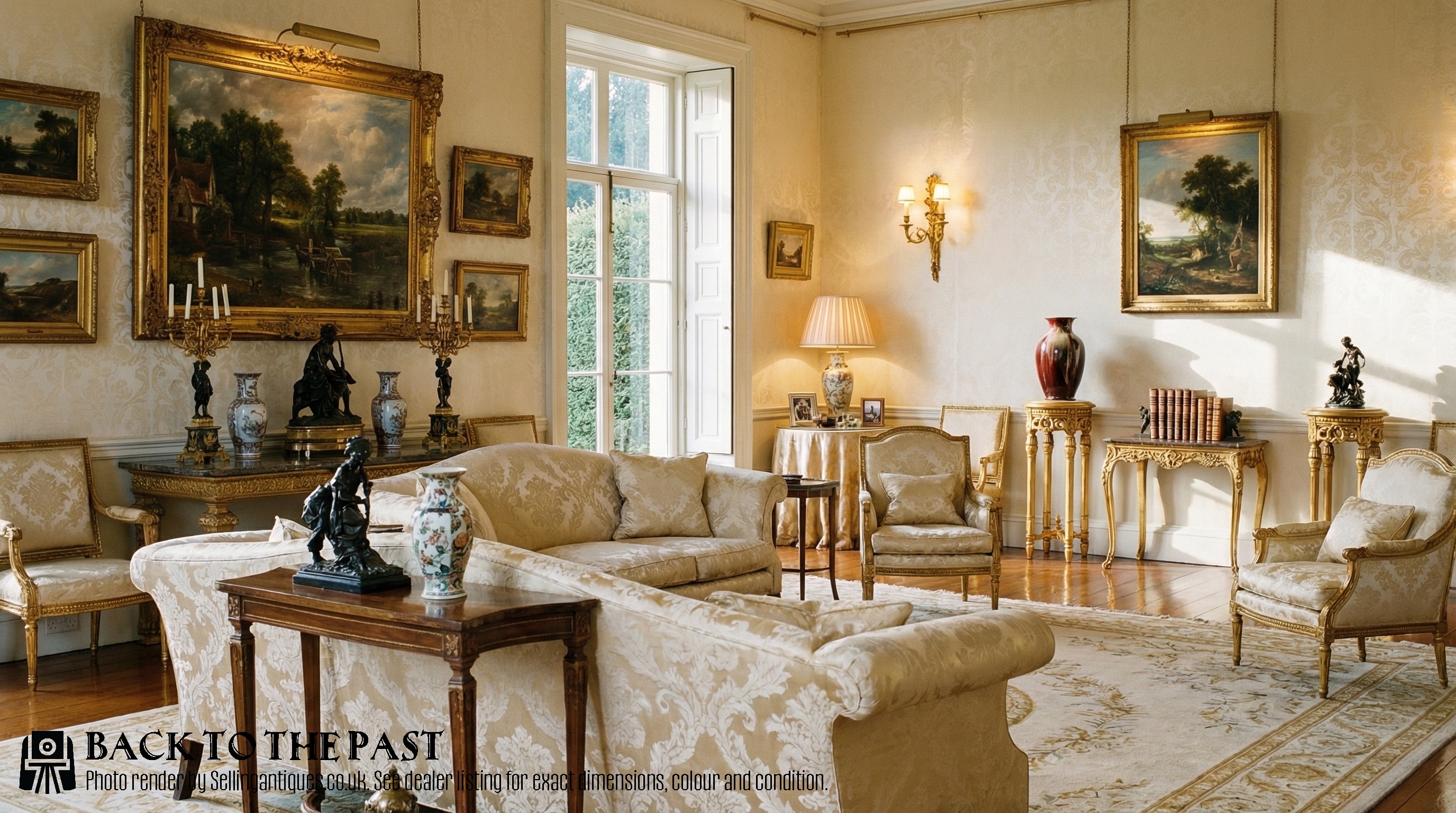
French Giltwood Column
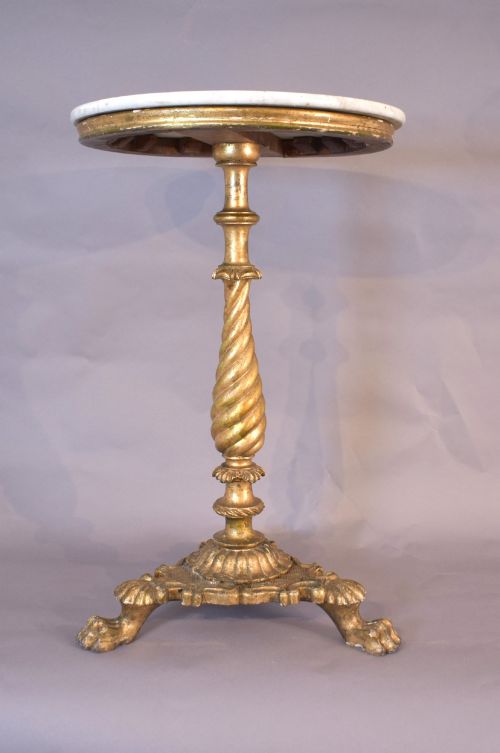
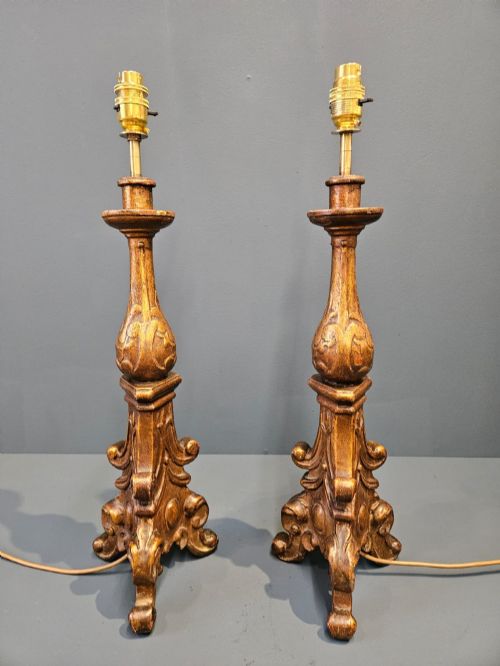
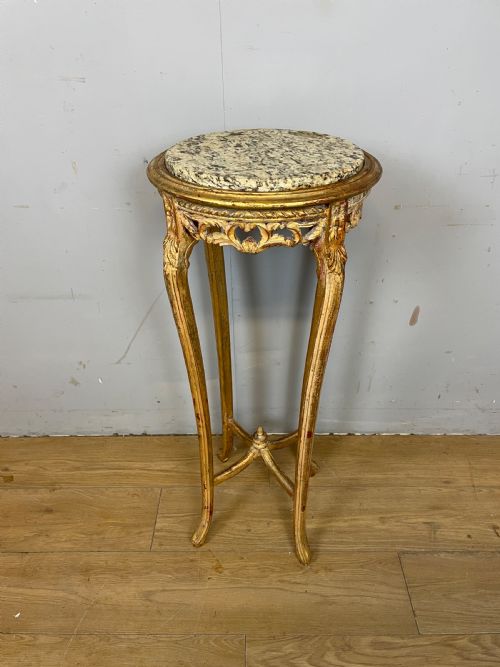
A french giltwood column brings vertical carved form and gilded surface to a room, appearing most frequently on this page as torcheres, pedestals, and standard lamps. These furnishings draw from 18th century, 19th century, and Edwardian periods, channelling Neoclassical, Empire, and Louis XVI Revival styles. Buyers seek them to elevate interior spaces with classical architectural dignity.
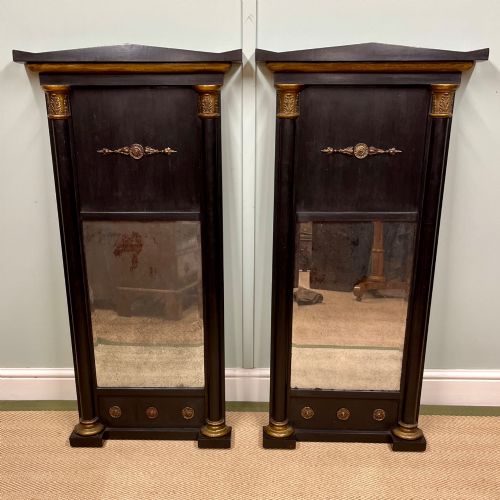
The selection encompasses round and triform shapes, often incorporating marble tops, onyx tops, or glass. Forms range from tall display pedestals and cylindrical cabinets to side tables and pier mirrors with column supports. Each variation serves to display objects or frame rooms with gilded brilliance.
Origins stretch across French Chateau aesthetics and broader European interpretations of classical design. The grouping reflects both antique craftsmanship and early twentieth century revivals. Collectors utilise these columns to anchor corners or create focal points in reception rooms.
Materials and Construction
Carved timber and wood form the structural core of these pieces, shaped into fluted columns, tripod bases, and decorative mouldings. Gesso is applied to smooth surfaces before gilding. Gold leaf and giltwood provide the luminous metallic finish characteristic of the style.
Secondary materials introduce contrasting textures, such as marble or onyx tops on pedestals and tables, alongside brass and glass elements in mirrors and lamps. Craftspeople employed traditional carving and gilding techniques to achieve the intricate relief work seen on torchere stands and mirror frames.
Neoclassical and Empire styles dominate the design vocabulary, appearing across mirrors, standard lamps, and plant stands.
Assessing Quality and Execution
The depth and crispness of the carved timber ornamentation dictate the visual strength of a piece. Finer examples display hand-carved detail in the acanthus leaves, fluting, and flower mouldings rather than shallow or cast replication. The preparation of the gesso ground beneath the gilding determines how sharply the light catches the carved relief.
The application of gold leaf or gilt surface reveals the standard of workshop execution. Superior pieces maintain an even, warm metallic tone that ages gracefully, whilst the integration of heavy stone tops like marble or onyx demonstrates structural ambition and material weight.
The French Giltwood Column Glossary
- Giltwood
- Wood that has been coated with gold leaf or a gold-coloured substance. This finish provides the characteristic metallic sheen seen across these columns and mirrors.
- Torchere
- A tall stand or candlestick designed to hold a light source or display an object. These often take the form of slender columns in the evidence.
- Gesso
- A plaster mix applied to wood surfaces to prepare them for painting or gilding. It allows craftsmen to carve intricate relief details before applying gold leaf.
- Neoclassical
- A style reviving classical Greco-Roman architectural motifs and symmetry. It heavily influences the columns, pedestals, and mirrors found in this category.
- Triform
- Having three sides or a triangular base. This configuration provides stable footing for tall torchere stands and pedestal tables.
French Giltwood Column: Frequently Asked Questions
Where should I place a torchere column?
These tall stands suit corners of reception rooms or framing doorways where vertical height adds architectural interest.
They also function effectively as display surfaces for sculptures, urns, or table lamps.
How do I identify a 19th century piece?
Nineteenth century examples often display deep hand-carved timber construction beneath traditional gesso and gold leaf layers.
Stylistic cues such as Empire motifs and heavy proportions help distinguish these from later revivals.
Can these columns support heavy lamps?
Standard lamps and candlestick lamps are engineered with sturdy timber bases and weighted structures to ensure stability.
Triform and pedestal forms distribute weight evenly across their footprint.
What is the difference between a pedestal and a torchere?
Pedestals generally feature flat tops designed for displaying decorative objects, urns, or miniature cabinets.
Torcheres historically served as light stands and typically possess slender, highly decorative column shafts.