
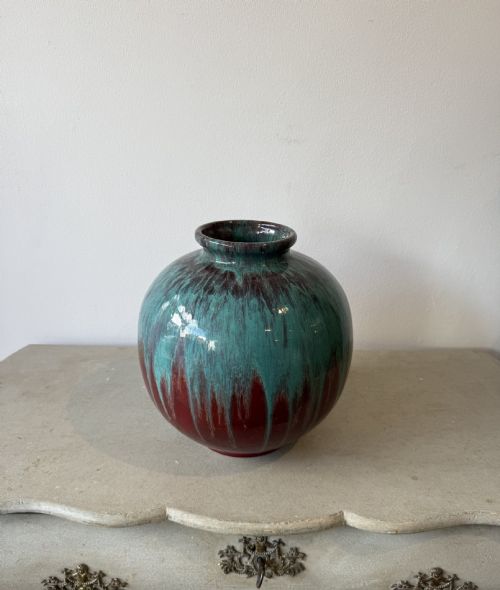
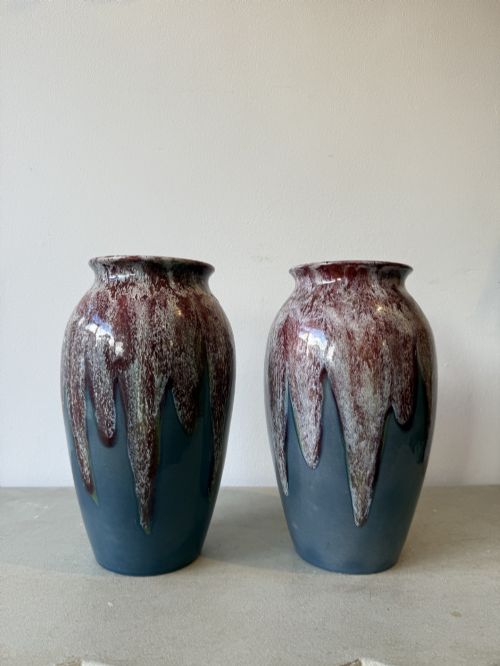
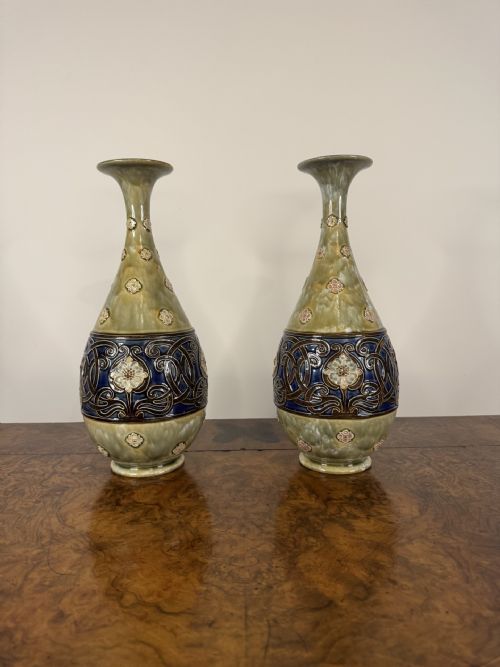


Decorative Stoneware Pottery
Decorative stoneware pottery brings together robust ceramic bodies and expressive glazes shaped by late nineteenth and early twentieth century makers.
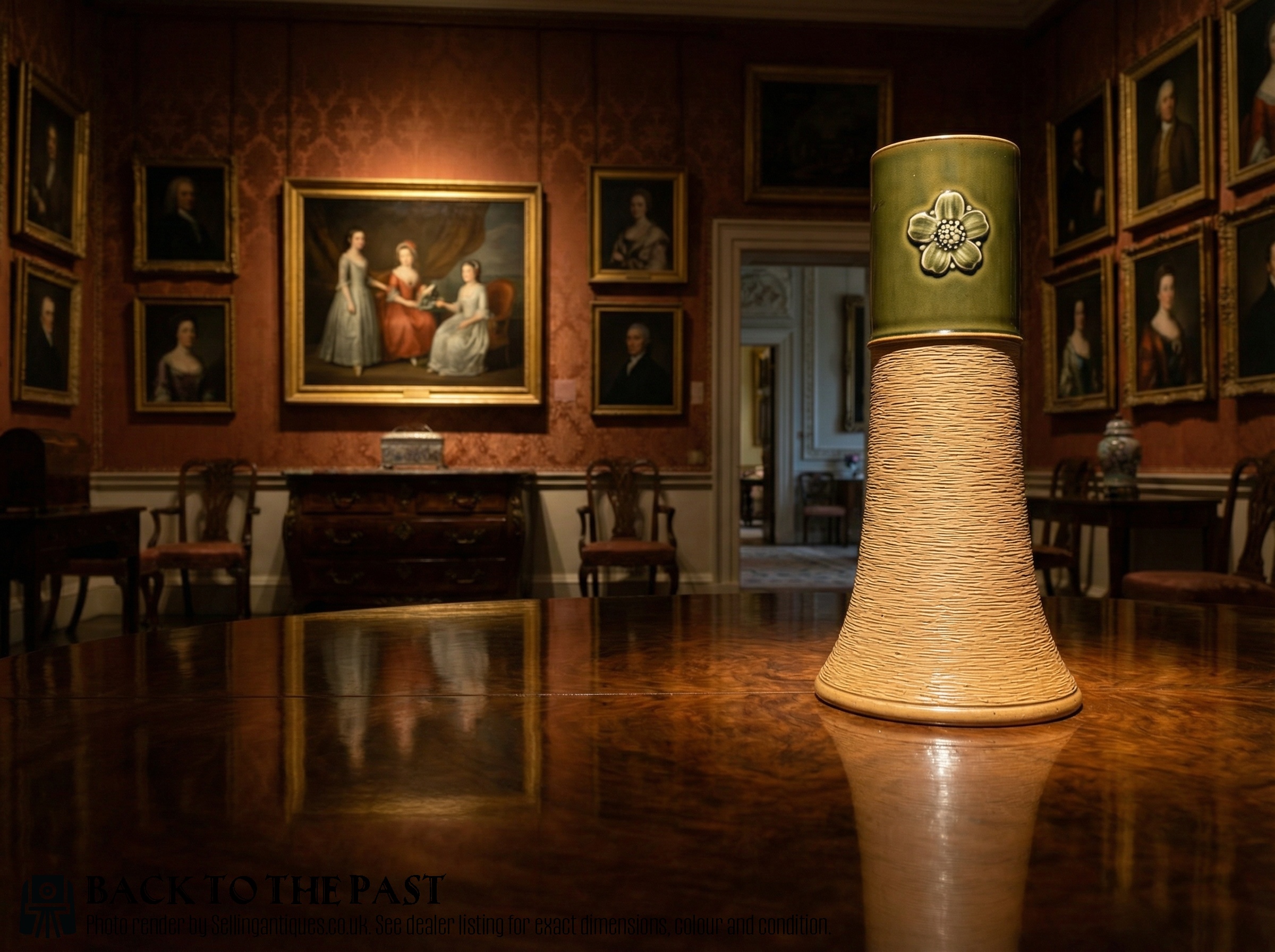
Decorative Stoneware Pottery
Decorative stoneware pottery comprises functional and ornamental vessels produced during the Victorian, Arts and Crafts, and Art Nouveau periods. These objects include vases, jugs, jardiniere planters, and ewers shaped from dense, vitrified clay.
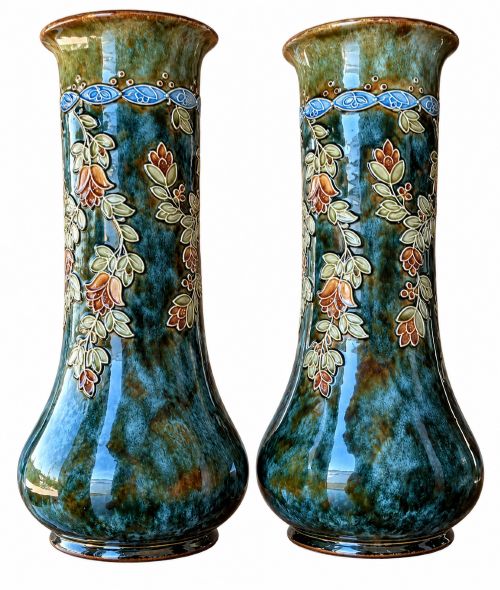
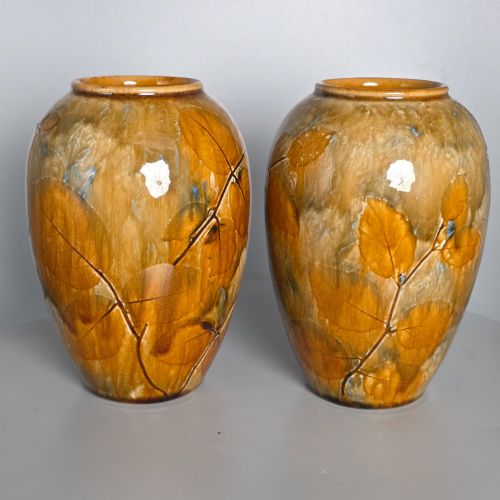
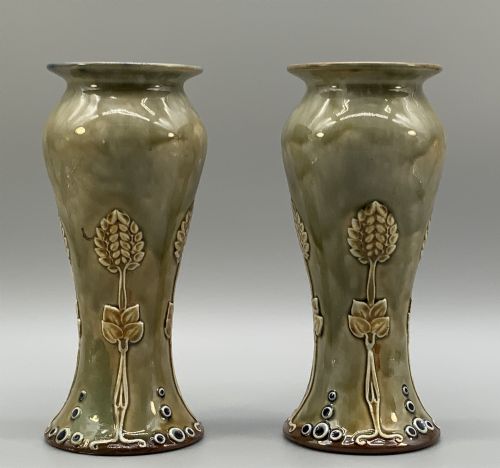
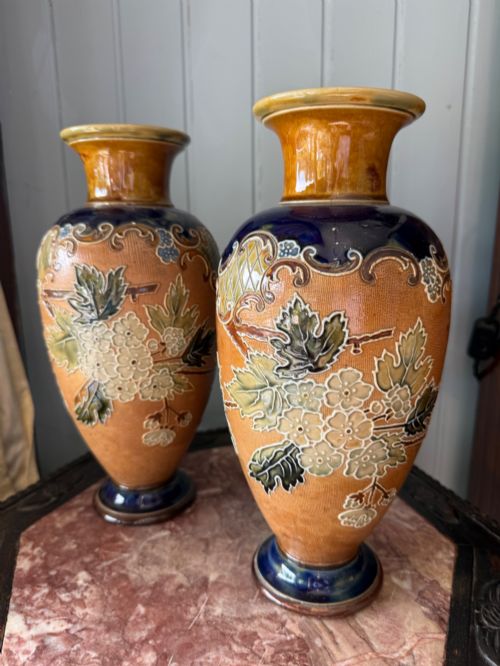
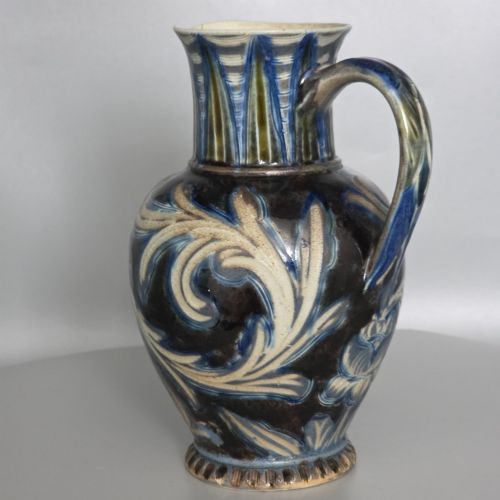
Vases and jugs dominate the selection, often appearing in matched pairs featuring incised decoration, autumnal leaf patterns, or classical relief motifs. Pieces originate predominantly from English potteries alongside continental European workshops.
The aesthetic bridges domestic utility and fine art pottery, utilising durable ceramic fabrics as canvases for rich surface treatment. Collectors encounter both modest domestic wares and substantial exhibition pieces stamped by prominent studio artists.
What varies in quality
The standard of decorative stoneware pottery depends on the crispness of the incised or moulded relief and the control demonstrated in the glaze application. Pieces decorated by named studio artists command attention for their individual artistic expression rather than standard factory output.
Balance in proportion and depth of colour separate ordinary production items from exceptional exhibition pieces. The harmony between the ceramic form and the surface pattern dictates the overall success of each vessel.
Listings feature stoneware, earthenware, and ceramic pieces utilising salt glaze, enamel, and gold leaf across multiple historic periods.
Royal Doulton·Doulton Lambeth·Mettlach Pottery·Doulton Burslem·John Ridgway·Mason's Ironstone·Minton
The Decorative Stoneware Pottery Glossary
- Stoneware
- A dense, vitrified ceramic made from clay fired at high temperatures until non-porous. It provides a robust foundation for decorative glazes and incised work.
- Jardiniere
- A large ornamental pot or stand designed to hold growing plants or floral arrangements. These vessels often feature prominent relief patterns or handles.
- Ewer
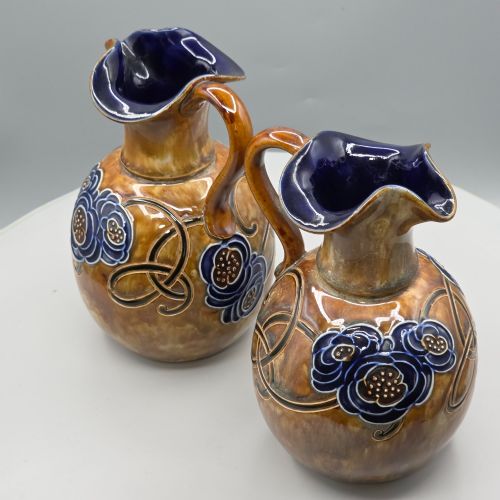
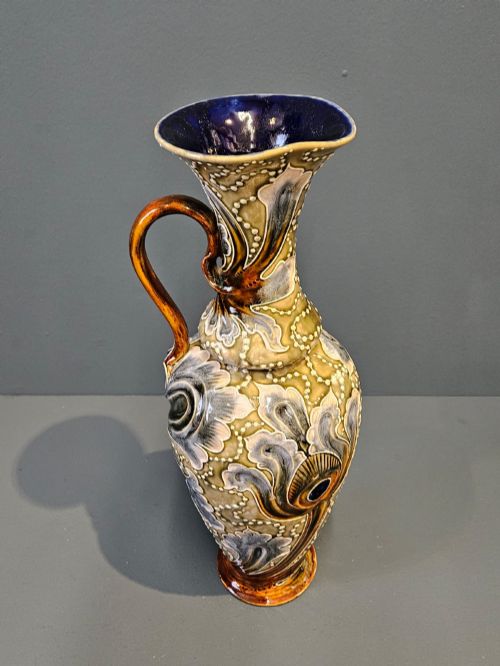
- A large jug with a flared spout and curved handle, traditionally used for holding water but valued here for ornamental display. Examples often showcase elaborate surface decoration.
- Glaze
- A glassy coating fused to the ceramic body through kiln firing. It seals the porous clay and adds colour, sheen, or texture to the piece.
- Biscuit Barrel
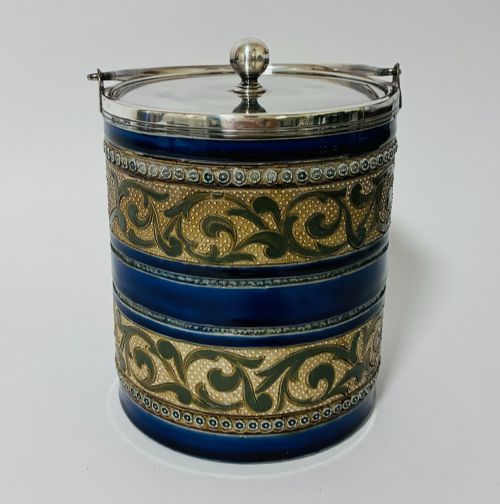
- A covered ceramic container historically used for storing dry biscuits at the table. Many surviving examples incorporate plated metal mounts and hinged lids.
Decorative Stoneware Pottery: Frequently Asked Questions
What is decorative stoneware pottery?
Decorative stoneware pottery includes ceramic vessels such as vases, jugs, and jardiniere planters made from vitrified clay. These items date primarily from the nineteenth and early twentieth centuries.
Potters decorated these vessels using incised patterns, coloured glazes, and raised motifs characteristic of the Victorian, Arts and Crafts, and Art Nouveau movements.
How were these pieces used?
Many items served practical domestic functions, including holding water, serving liquids from jugs, or storing biscuits in lidded barrels. Other forms like jardiniere planters housed indoor greenery.
Larger vases and ewers functioned principally as ornamental display pieces in Victorian and Edwardian parlours and drawing rooms.
How do I identify the period?
Dating relies on stylistic clues such as organic Art Nouveau lines, geometric Arts and Crafts motifs, or ornate Victorian relief work. Maker marks, registry numbers, and artist signatures stamped into the base provide precise chronological evidence.
Material finishes also help indicate age, with salt-glazed surfaces and specific glaze palettes pointing to particular manufacturing decades.
How do I care for stoneware?
Clean decorative stoneware gently using a soft, dry cloth to remove dust from incised lines and relief surfaces. Avoid harsh chemical cleaners that might damage delicate enamel or gold leaf details.
Keep pieces away from direct sunlight and extreme temperature changes to protect the glaze and ceramic body over time.