




Decorative Gold Hanging Mirror
A decorative gold hanging mirror brings warmth and reflective depth to a room, drawing the eye with carved gilt surfaces and period detail.
Decorative Gold Hanging Mirror
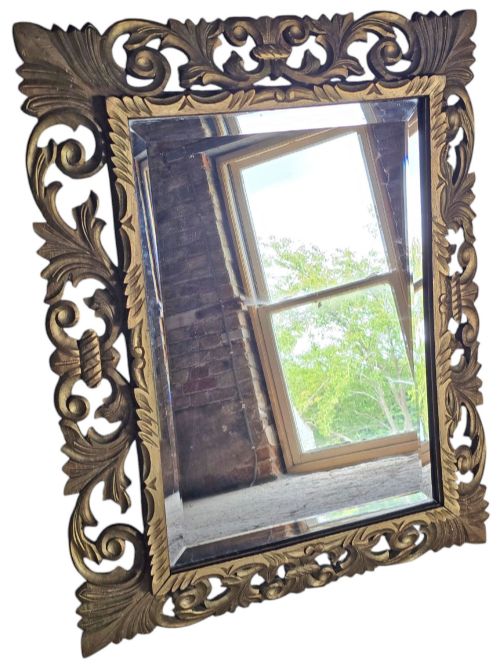
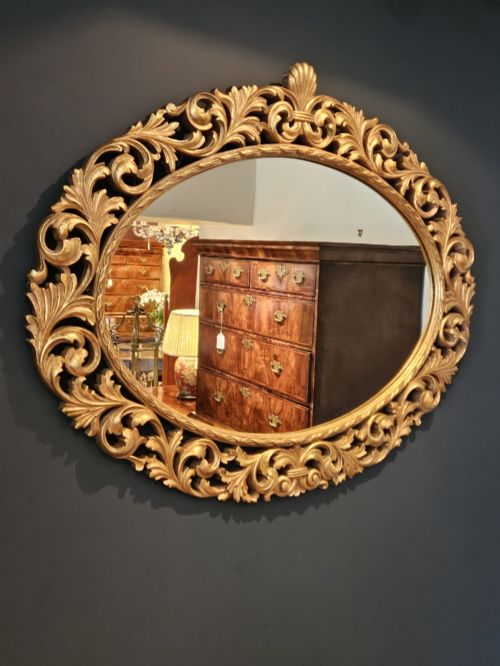
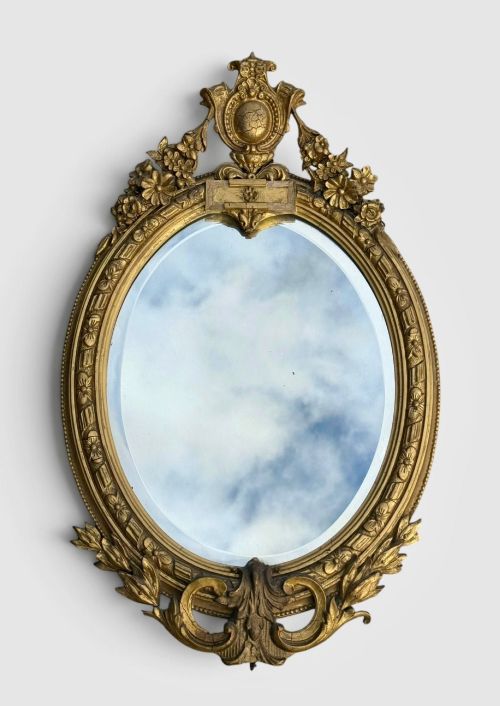
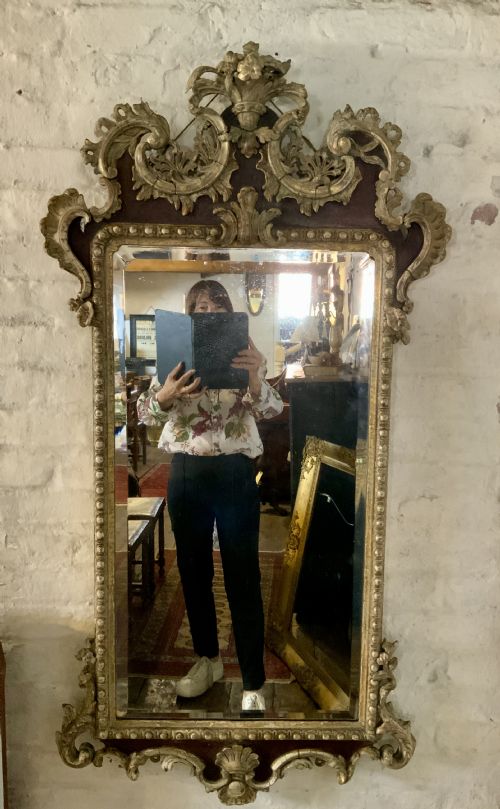
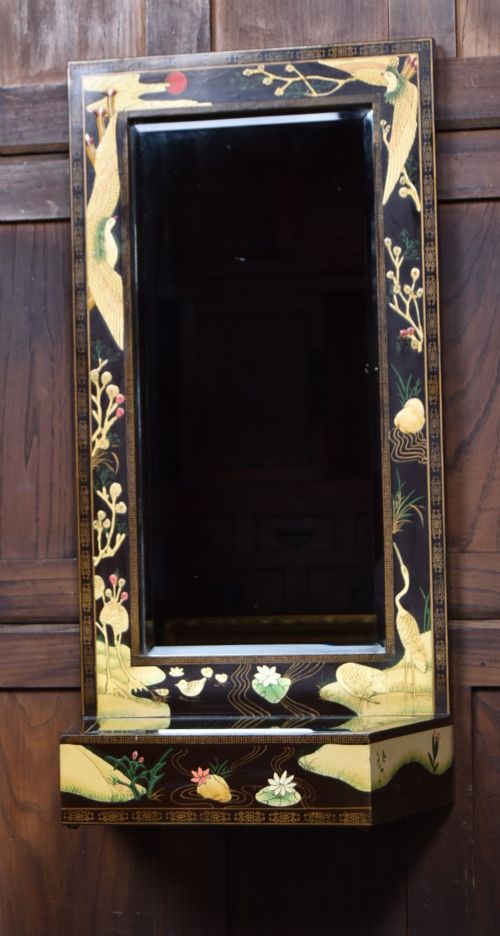
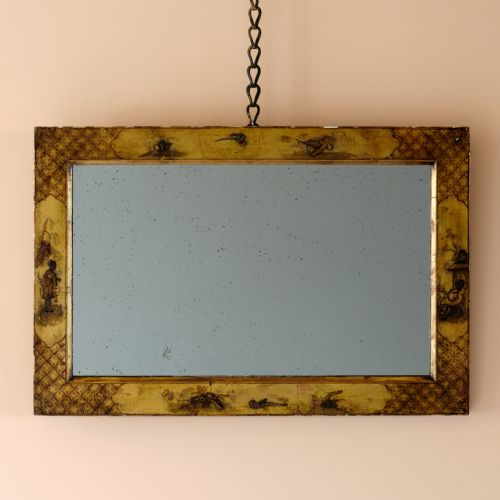
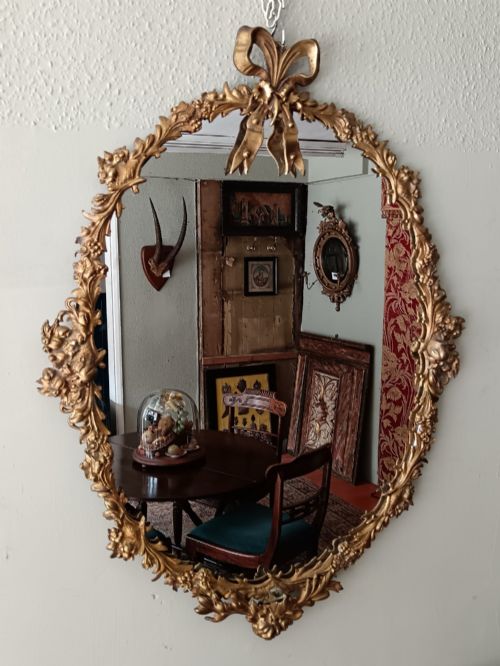
A decorative gold hanging mirror serves primarily as a wall-mounted focal point, frequently found in styles ranging from Rococo Revival and Louis XVI Revival to Chinoiserie and Adam. These pieces span the eighteenth, nineteenth, and early twentieth centuries, reflecting the shifting tastes of European and domestic workshops.
The selection here encompasses various forms, including grand overmantel mirrors, tall pier mirrors, and smaller oval or rectangular wall mirrors designed to catch and multiply candlelight or daylight. Walnut, rosewood, and timber provide the structural foundation for ornate gilded faces.
Materials and construction methods
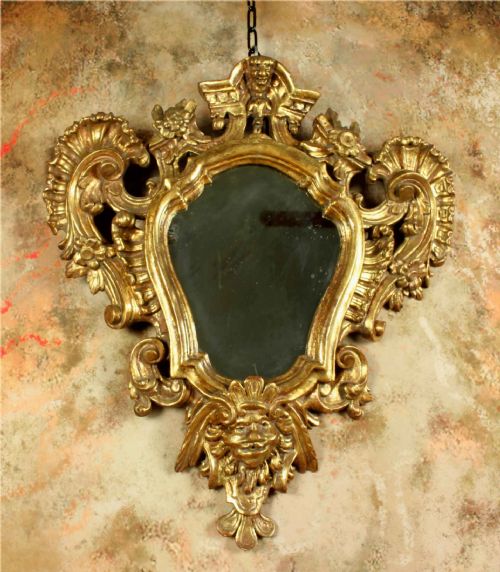
Makers built the primary carcase of timber, walnut, or rosewood, applying layers of gesso to create a smooth, pliable surface for intricate carving and moulding. Giltwood and gold leaf were then meticulously applied over the preparation layers to achieve a brilliant, metallic finish.
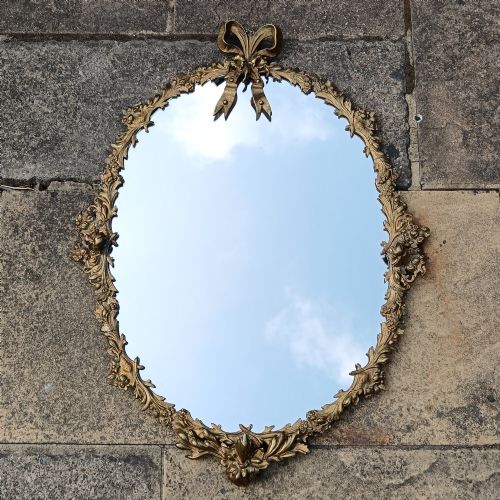
Alternative models utilise cast brass or gilt bronze for structural frames and decorative mounts, often incorporating finely chased details such as cherubs, floral motifs, or lions' heads. Glass plates, occasionally engraved or replaced over time, are secured within these elaborate surrounds.
Several mirrors gaze back with cast brass cherubs and stern lions' heads, watching over centuries of domestic life.
Judging quality and craftsmanship
The distinction between tiers rests upon the crispness of the hand-carving in the gesso and wood, alongside the depth and brilliance of the gilding. Superior examples display sharply defined scrollwork, foliage, and figural elements without the blurring or softness typical of mass-produced composition ornament.
Integration of the frame components also dictates worth, where well-joined mitres, original backboards, and authentic period glass plates elevate an object. The finesse of cast brass mounts or the intricacy of lacquerwork similarly separates ordinary utility pieces from exceptional studio work.
The Decorative Gold Hanging Mirror Glossary
- Giltwood
- Wood that has been coated with gold leaf or powder, providing a luminous and durable decorative surface. This finish defines the appearance of many traditional wall mirrors.
- Gesso
- A plaster mixture applied to wood frames as a base for gilding and deep relief carving. It allows artisans to shape elaborate floral and scroll motifs.
- Overmantel mirror
- A large horizontal mirror designed specifically to hang above a fireplace mantelpiece. These pieces often anchor the decorative scheme of a formal room.
- Pier mirror
- A tall, narrow mirror created to hang on the wall space between two windows. They maximise light reflection in darker period interiors.
- Rococo Revival
- A nineteenth-century design movement emulating the asymmetrical curves, C-scrolls, and naturalistic motifs of the eighteenth-century French style. It dominates much of the Victorian gilt mirror production.
Decorative Gold Hanging Mirror: Frequently Asked Questions
Where should I hang a heavy gilt mirror?
Secure heavy mirrors directly into wall studs or utilise appropriate masonry anchors, as giltwood and gesso frames carry substantial weight. Ensure the hanging wire or integrated brackets match the total mass of the timber and glass.
Position the piece at eye level or above focal points like mantelpieces to balance the room's proportions and optimise light reflection.
Are these mirrors fitted with original glass?
Many nineteenth-century and earlier mirrors retain their original plates, which often exhibit characteristic foxing, minor pitting, or slight surface distortion. Some pieces feature replacement glass installed during their long history to restore clarity.
Examine the silvering backing and edges to determine the age and originality of the reflective plate.
What distinguishes Rococo style mirrors?
Rococo mirrors feature flowing, asymmetrical C-scrolls, S-scrolls, and abundant naturalistic motifs such as leaves, flowers, and occasional sculptural masks. The frames avoid rigid symmetry in favour of dynamic, organic movement.
Originating in eighteenth-century France and revived extensively during the nineteenth century, this style prioritises ornate, fluid decorative elements.