




Decorative Glass Border Mirror
A decorative glass border mirror brings luminous reflection and architectural depth to a room through layered glass panels and delicate trims.
Decorative Glass Border Mirror
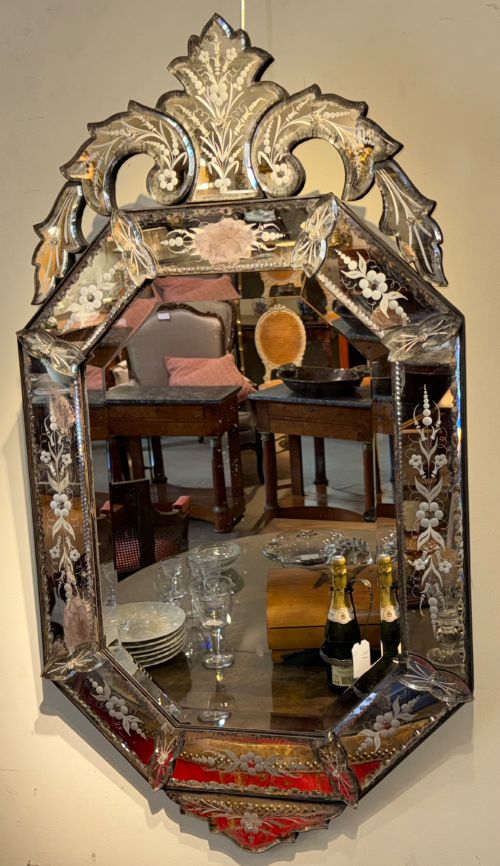
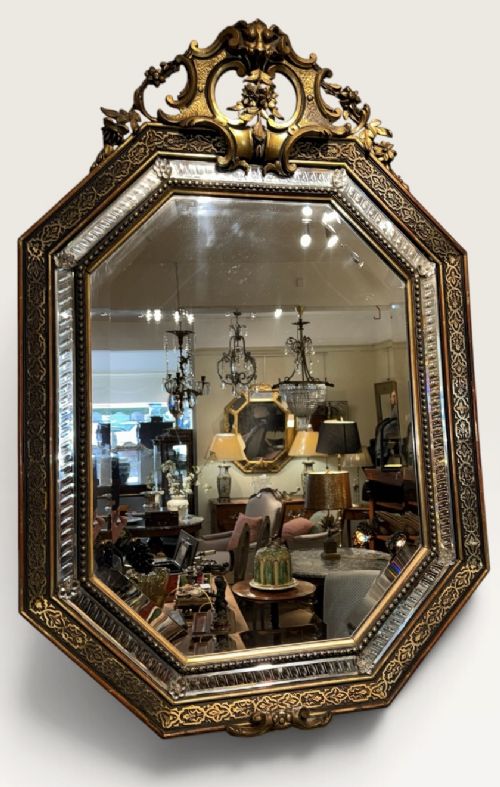
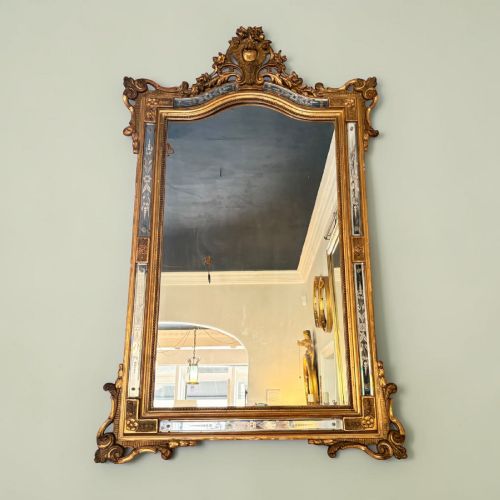
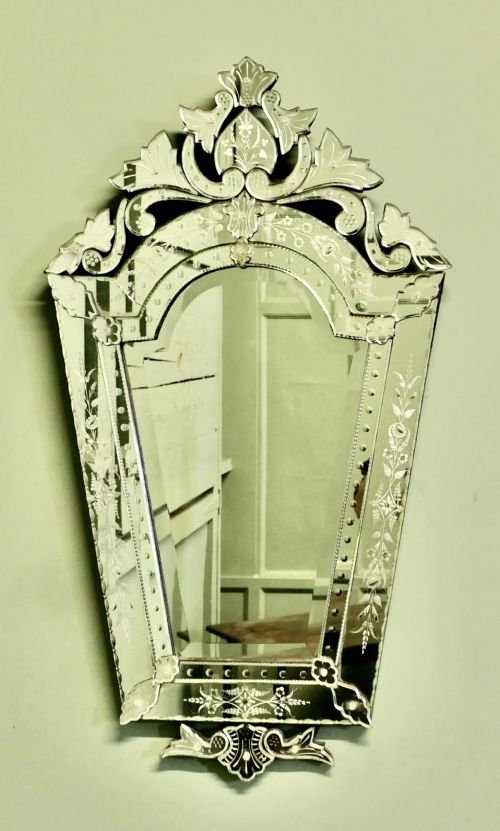
A decorative glass border mirror combines central reflective plates with surrounding glass margins, framing strips, or applied decorative elements. These pieces range from Venetian cushion forms to structured English and French wall mirrors.
The selection includes items spanning the nineteenth century through the mid-twentieth century, featuring Venetian, Art Deco, and Rococo styling influences. Wall mirrors and overmantel formats dominate the inventory alongside occasional margin mirrors and trays.
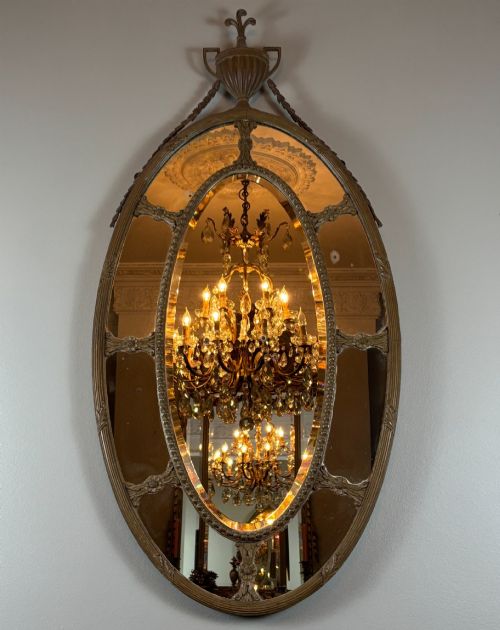
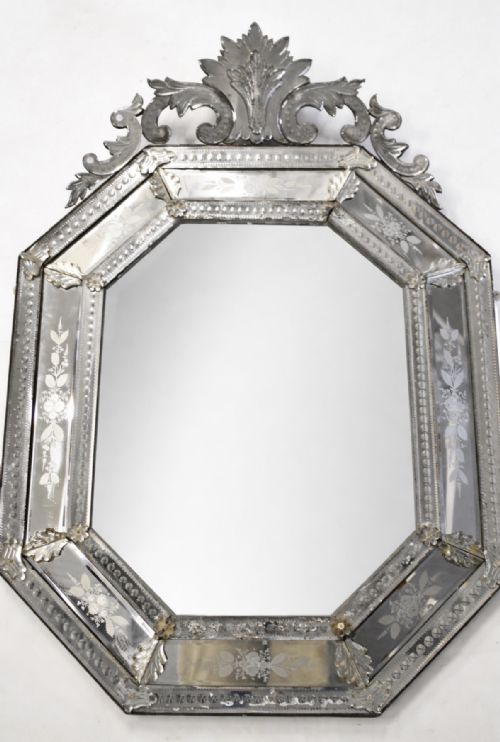
Buyers will encounter geometric octagonal shapes, large ovals adorned with urns and swags, and etched glass panels. The materials extend from clear mirrored glass to cobalt blue and peach coloured glass variants.
How they were made
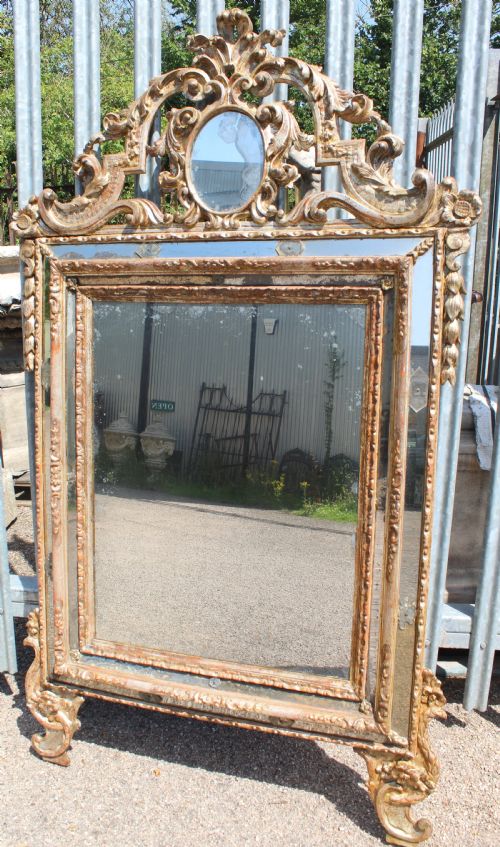
The construction relies on timber frames, gesso, and composition supporting sections of cut and silvered glass. Giltwood and gilded wood finishes frequently frame the reflective borders.
Glass panels are often etched, painted, or bevelled by hand to create intricate margin details. Individual border segments are secured to wooden backings using traditional pins and fixings.
Decorative Glass Border Mirror Retail Price Guide 2026
Typical asking prices for decorative glass border mirror among the pieces listed under this phrase on Sellingantiques today, from the lower quarter to the upper quarter. They describe what is for sale here now, not the wider market.
Listings span periods from 1800 through the 1950s, utilising wood, gesso, giltwood, and coloured glass.
What varies in quality
The sophistication of the glass cutting and edge bevelling sets exceptional examples apart from simpler utilitarian pieces. Hand-etched motifs and specialised glass tints like cobalt blue demand higher levels of artisan skill.
The complexity of the surrounding framework, whether carved giltwood or intricate gesso moulding, dictates the piece's decorative ambition. Preservation of original mirror plates and margin slips also influences the overall standard.
The Decorative Glass Border Mirror Glossary
- Margin mirror
- A mirror featuring a central glass plate surrounded by separate smaller border panes held by clips or trims.
- Cushion mirror
- A convex or sloping frame design covered with glass plates that angle outward toward the wall.
- Gesso
- A plaster-like mixture applied to wood frames to create a smooth surface for gilding or painting.
- Overmantel mirror
- A wide mirror specifically proportioned to hang above a fireplace mantelpiece.
- Sorcerer mirror
- A convex mirror designed to catch and distort ambient light across a wide interior space.
Decorative Glass Border Mirror: Frequently Asked Questions
Where should I hang a decorative glass border mirror?
These mirrors function effectively above fireplace mantels, in hallways, or as focal points on living room walls where they can capture and multiply natural light.
Their reflective borders add width and luminosity to smaller spaces while serving as primary wall art.
How do I identify a Venetian style mirror?
Venetian examples typically feature layered glass plates, etched floral details, and decorative glass trims covering the wooden structure.
They often incorporate cushion shapes and delicate applied glass leaves or crests.
Are coloured glass mirrors authentic to the nineteenth century?
Coloured glass variants, including cobalt blue and peach tones, appear across nineteenth-century and early twentieth-century production.
Art Deco examples frequently utilised tinted glass to align with modern aesthetic palettes of the period.
How should I clean a vintage glass border mirror?
Use a soft microfiber cloth and a minimal amount of mild glass cleaner applied to the cloth rather than directly to the mirror surface.
Take care around aged silvering on the reverse and delicate edge joints between margin panels.