

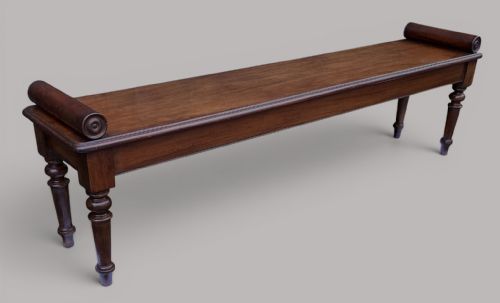

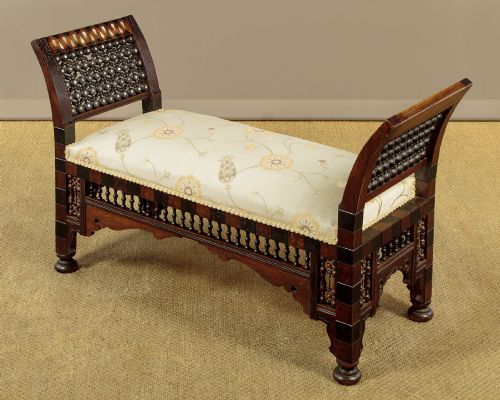


Dark Wood Window Seat
A dark wood window seat brings solid timber character and a neat perch to a bay or hallway.
What a dark wood window seat is
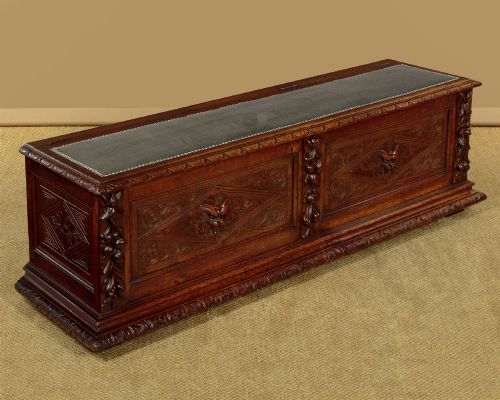
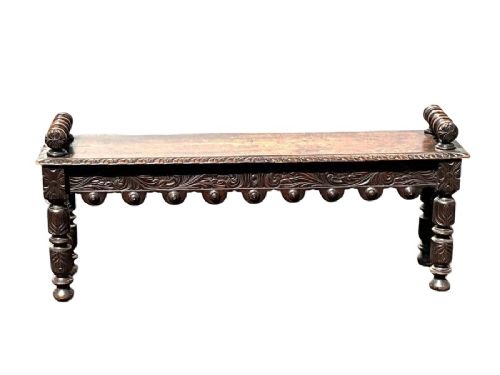
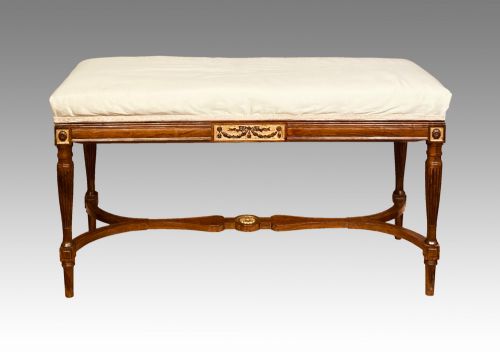
A dark wood window seat combines a sturdy timber frame with a low profile designed to fit beneath sills or fill narrow circulation spaces. The selection spans distinct eras from the nineteenth century into the twentieth century, bringing together forms described variously as benches, stools, and hall benches.
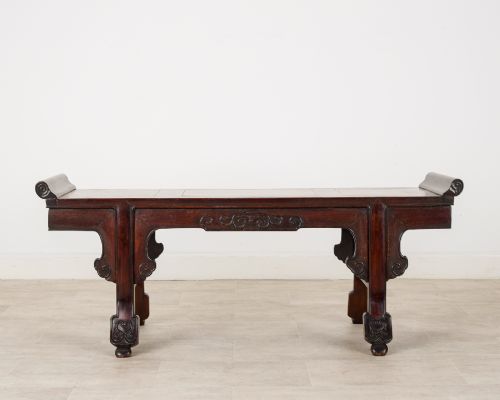
The regional origins and stylistic influences visible on this page range widely, taking in Moorish Revival detail, Chinese Qing Dynasty carving, Chippendale Revival ball and claw motifs, Regency proportions, and Art Nouveau walnut construction. Buyers encounter everything from formal upholstered mahogany twin seats to carved huali wood dressing stools adapted for modern rooms.
These pieces function as flexible seating that avoids blocking natural light while offering firm support. Their compact footprints make them equally suited to the foot of a bed or a passage, anchored visually by rich dark timbers.
How they were made
Makers utilised dense hardwoods including mahogany, walnut, and huali wood, chosen for stability and deep natural grain. Frames employ traditional joinery techniques to bear weight securely across long spans without losing rigidity.
Surface treatment relies on hand-carved ornamentation, as seen in Qing Dynasty motifs and Moorish geometric patterns, complemented by integrated fabric upholstery where padded comfort is required. Elements like ball and claw details are hand-finished directly into the solid timber.
Retail Price Guide 2026
Typical UK retail prices for dark wood window seat, calculated from the Sellingantiques database of over a million retail prices indexed since 2003. This retail price guide relies exclusively on Sellingantiques data; no external sources or auction records are used, so the figures do not describe the wider market.
The listings span furniture from the nineteenth century up to the 1920s, constructed in mahogany, walnut, and huali wood.
What varies in quality
The distinction between ordinary and exceptional pieces rests upon the crispness of the timber carving and the integrity of the underlying construction. Superior examples display deeply articulated detail, such as sharply defined claws and crisp foliage, rather than soft or mechanical profiling.
Timber selection dictates the overall presence of the piece, with dense, figured hardwoods holding a more convincing polish and resisting knocks better than softer substitutes. Original upholstery provisions and intact joinery further separate utilitarian workshop pieces from finer decorative commissions.
The Dark Wood Window Seat Glossary
- Huali wood
- A fragrant and dense Chinese hardwood prized for its rich grain and durability in traditional furniture. It takes a smooth polish without losing its characteristic figure.
- Moorish Revival
- An architectural and decorative style popular in the late nineteenth and early twentieth centuries, known for intricate geometric lattice work and inlaid patterns.
- Regency
- A British design period spanning the early nineteenth century defined by classical restraint, elegant proportions, and classical revival motifs.
- Hall bench
- A narrow seating form originally intended for entrance spaces, often featuring a solid back and sturdy timber construction to withstand heavy use.
Frequently Asked Questions
Where should I place a window seat?
These pieces fit naturally beneath low windows, along wide corridors, or at the foot of a bedroom bed. Their low profiles ensure they do not obstruct light or movement.
Measuring the height of your window sill alongside the depth of the available floor space helps determine the right scale before selection.
How do I clean dark wood timber?
Dust regularly with a dry, soft cloth to prevent particulate accumulation. Avoid silicone sprays or heavy polishes that leave a film over the grain.
Applying a traditional beeswax occasionally helps nourish older hardwood surfaces and maintains a gentle, natural sheen.
How do I identify a Qing Dynasty piece?
Qing Dynasty items typically feature dense Asian hardwoods such as huali wood paired with traditional hand-carved joinery. The decoration reflects classical Chinese motifs and iconography.
Examining the construction methods underneath reveals traditional pegged joints characteristic of workshop practices from that era.