




Dark Wood What-not
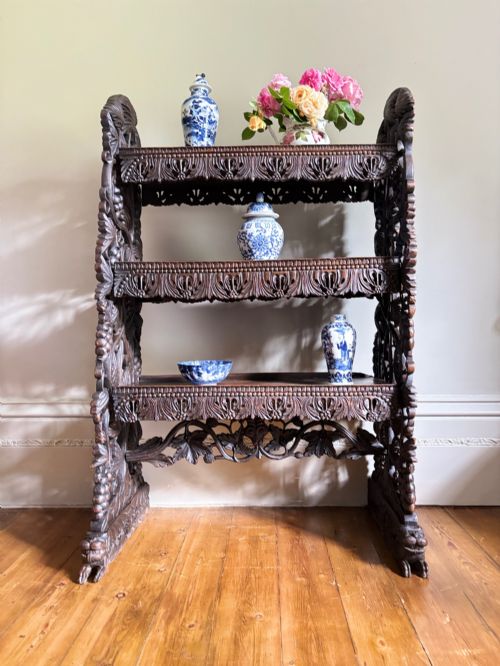
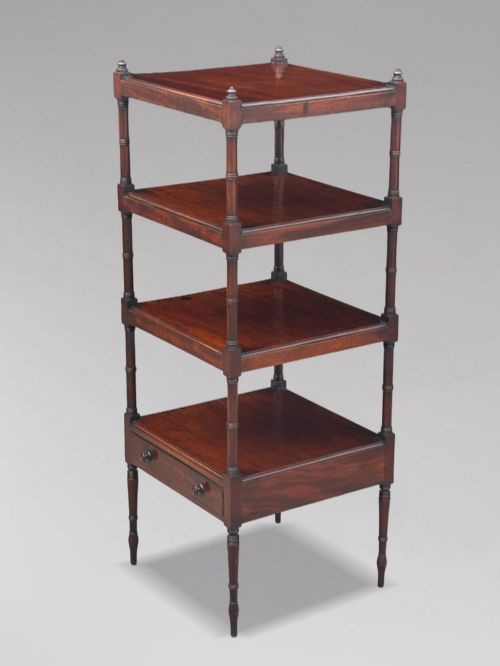
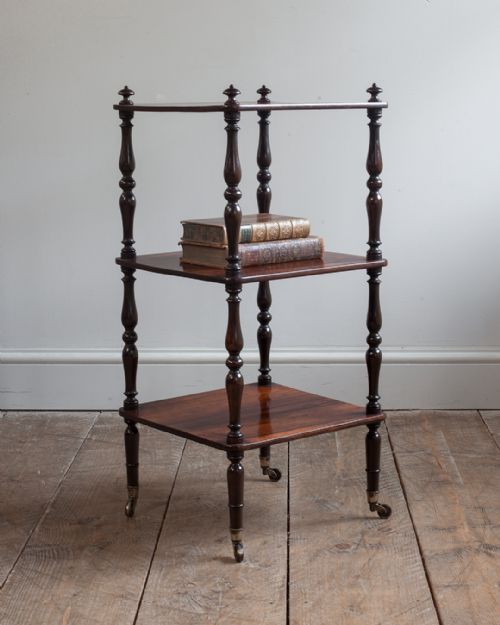
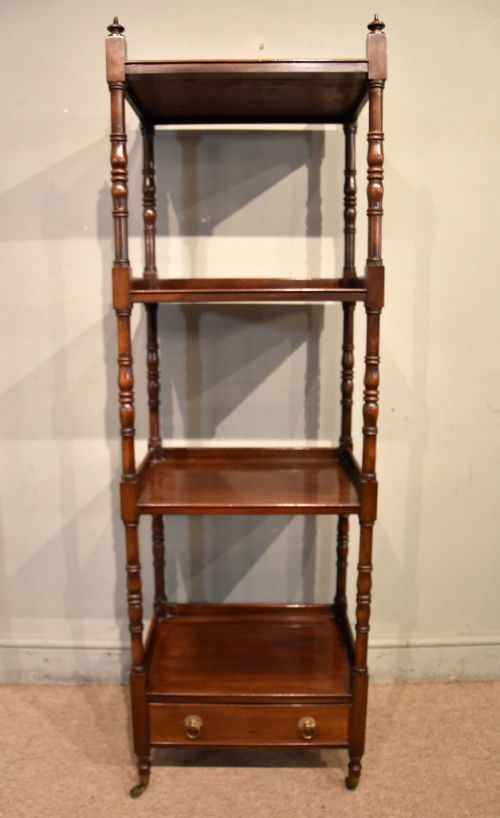
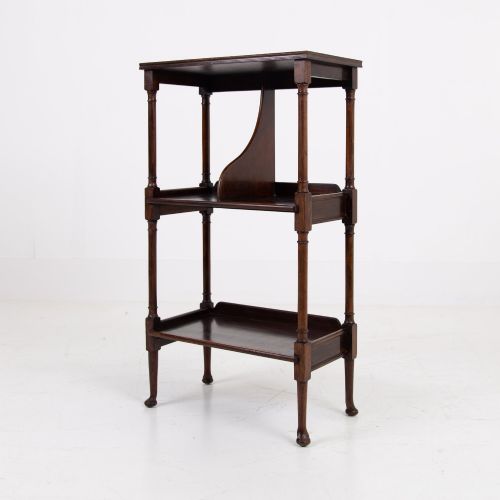
These dark wood what-not pieces are tiered display stands that hold books and ornaments, offering practical surface space with elegance.
Dark Wood What-not
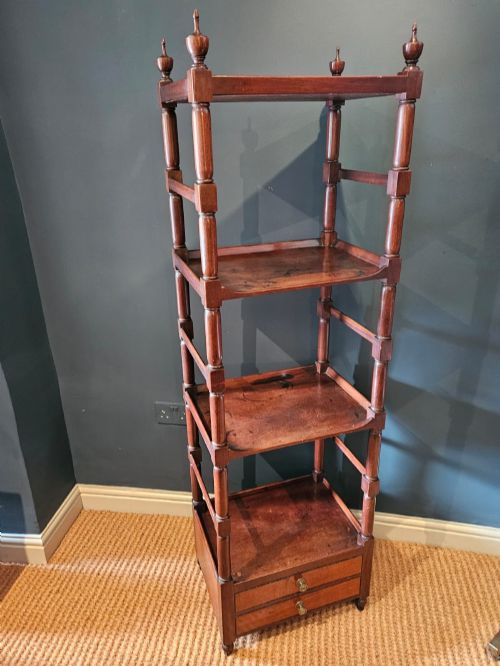
A dark wood what-not provides open shelving arranged in tiers for displaying books, ornaments and small possessions in reception rooms. These tiered stands developed during the Georgian period and remained popular through the Regency, Victorian and Edwardian eras.
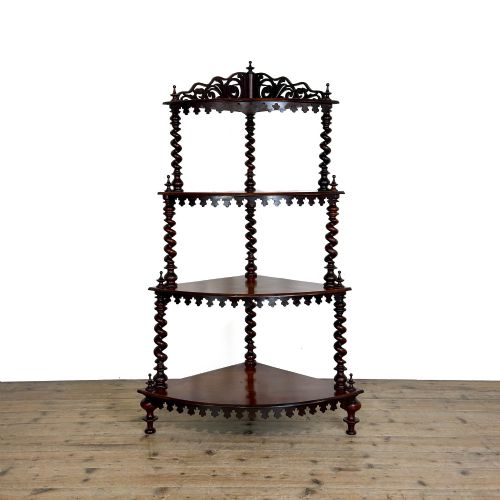
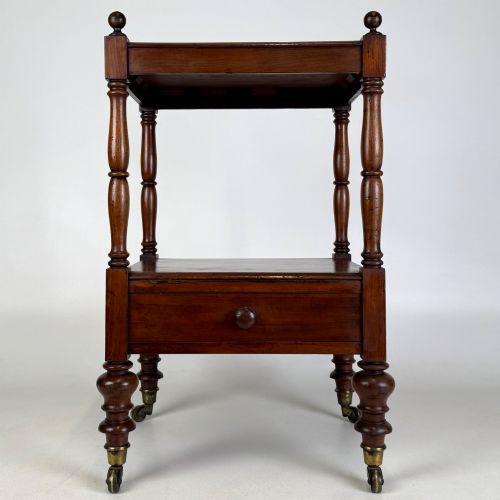
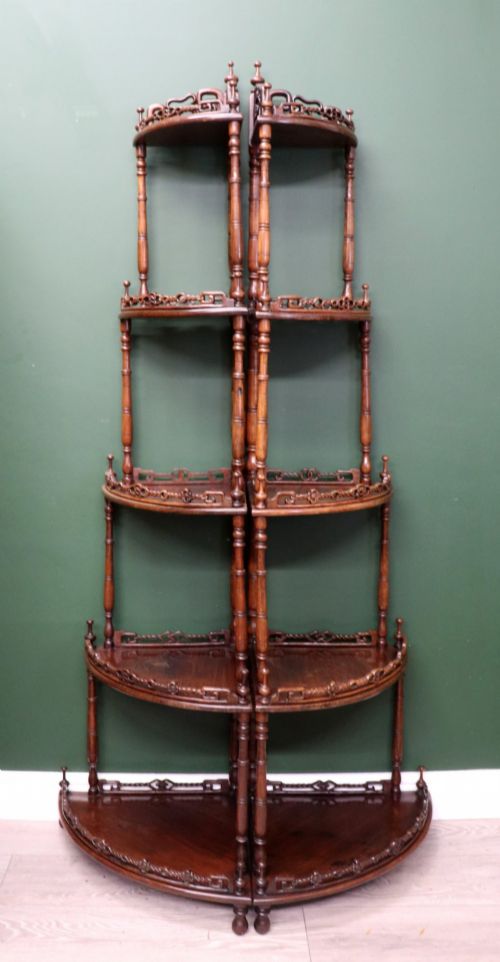
Mahogany and rosewood dominate the pieces seen here, alongside walnut, ebonised wood and softwood. Forms vary from multi-tiered upright shelving units and corner cabinets to folding dumb waiters and hanging wall shelves.
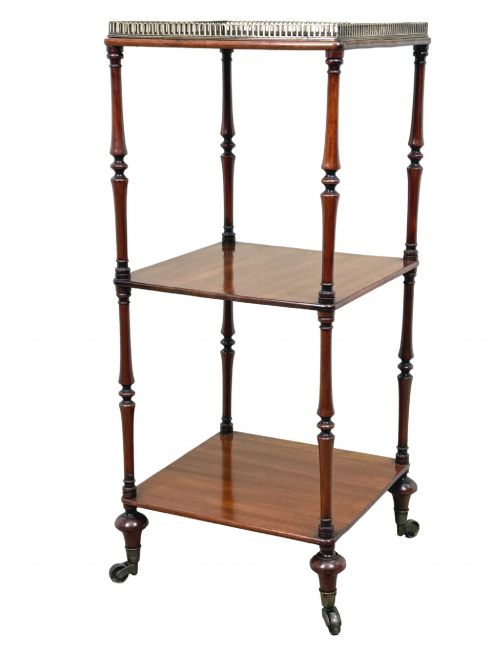
Buyers will most frequently encounter nineteenth century mahogany four-tier examples and rosewood etageres on this page. Pieces span periods from George III through to the Edwardian era and the nineteen twenties.
Materials and construction
Cabinetmakers utilised dense timbers such as mahogany and rosewood for their rich natural grain and structural strength. These hardwoods allowed workshops to build slender upright supports capable of holding multiple loaded shelves.
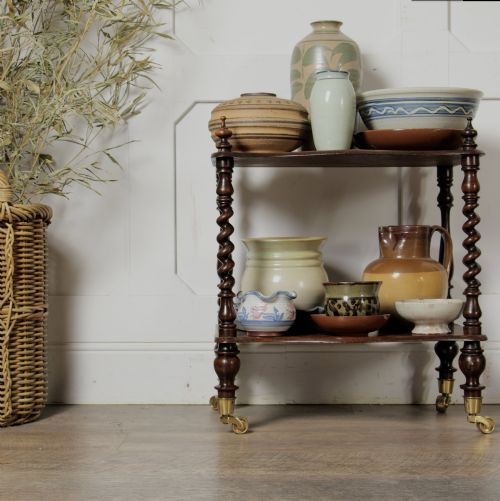
Brass fittings appear as decorative accents and structural details, particularly on etageres and corner units. Turning techniques shaped the upright columns and spindles that divide each tier of shelving.
Early nineteenth century makers created folding dumb waiters so dining rooms could transform instantly when the servants left.
Judging quality
Quality rests in the selection of timber figures and the precision of the joinery connecting the tiers and uprights. Superior examples display thoughtful grain matching across the shelves and refined turning on the structural columns.
Simpler softwood or ebonised versions contrast with richly figured rosewood and mahogany pieces that incorporate folding mechanisms or multi-functional cabinetry.
The Dark Wood What-not Glossary
- What-not
- A set of open shelves standing on legs, designed for displaying small objects and books. They typically feature three to four tiers.
- Etagere
- A piece of furniture consisting of a set of open shelves for displaying ornaments. The term often describes French-influenced or refined Victorian pieces with brass details.
- Dumb waiter
- A tiered serving table or stand used for holding dishes or books. Folding versions allow the tiers to be adjusted or stored flat.
- Regency
- An English architectural and decorative style spanning the early nineteenth century. Furniture from this period draws inspiration from classical antiquity.
- Ebonised
- Wood treated with a stain or finish to imitate ebony. This dark surface finish appears frequently on nineteenth century decorative furnishings.
Dark Wood What-not: Frequently Asked Questions
What is a what-not used for?
A what-not provides tiered open shelving for displaying ornaments, ceramics and books within a drawing room or study.
Their open construction allows decorative items to be viewed from multiple angles while keeping surfaces organised.
How do I date a dark wood what-not?
Dating relies on identifying the timber species, decorative turning styles and construction methods typical of specific periods.
Georgian and Regency pieces often show lighter mahogany figures and classical columnar supports, whereas later Victorian examples utilise rosewood, walnut or ebonised finishes.
Where should I place a corner what-not?
Corner units and corner cabinets fit neatly into unused room angles to maximise display space without obstructing walkways.
They offer the same tiered shelving benefits as freestanding models while utilising rooms efficiently.
Are folding dumb waiters sturdy?
Folding dumb waiters use hinged or pivoting shelf mechanisms designed to support plates, books and small objects securely.
When locked into position, the tiered structure remains stable for everyday display use.