


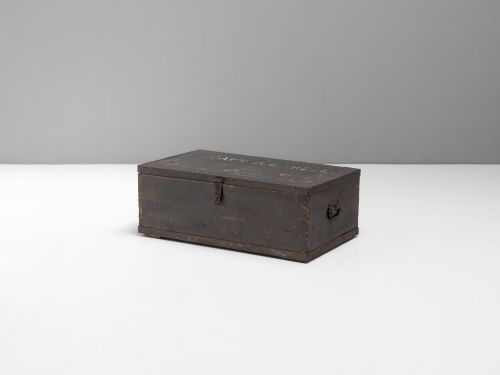
Dark Wood Storage Trunk
A dark wood storage trunk offers substantial utility and period character, holding linens or household goods while anchoring a room with deep timber tones.
Dark Wood Storage Trunk
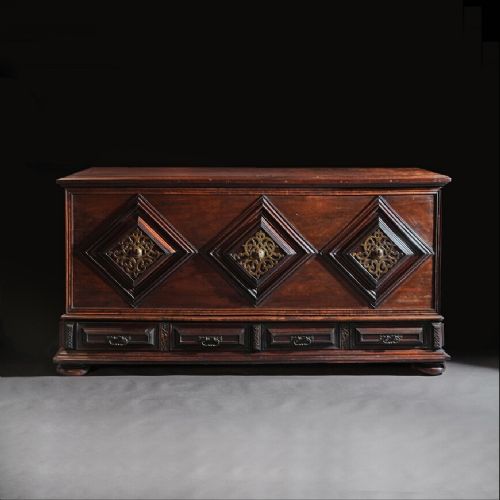
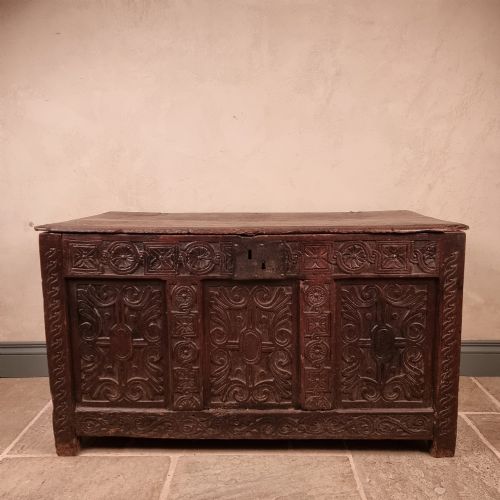
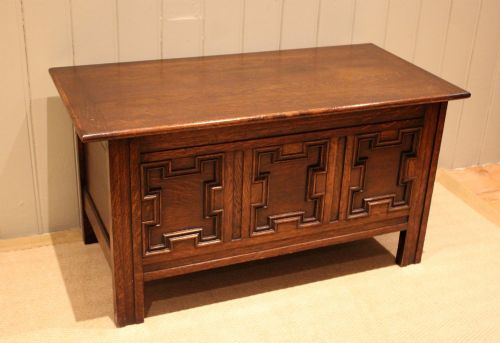
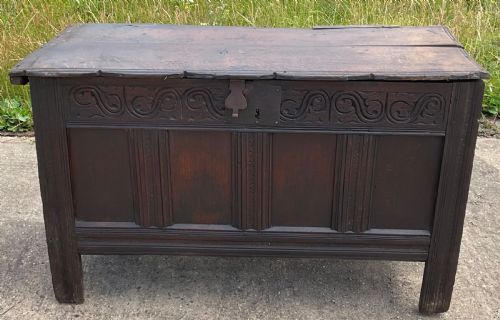
A dark wood storage trunk spans centuries of domestic and utilitarian craftsmanship, appearing primarily as heavy oak coffers and blanket chests alongside occasional exotic imports. These pieces originate across periods ranging from the seventeenth century through to the Edwardian era and the 1930s.
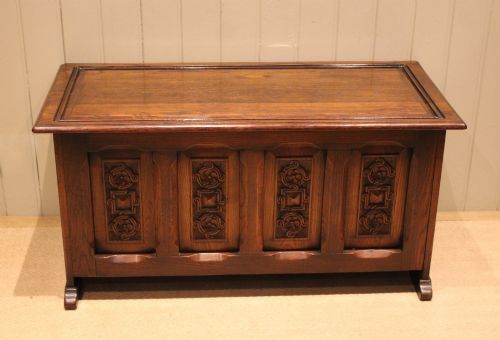
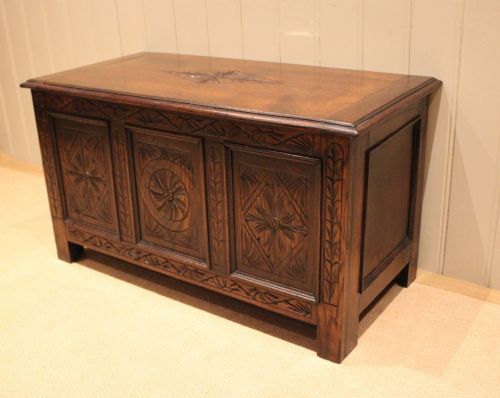
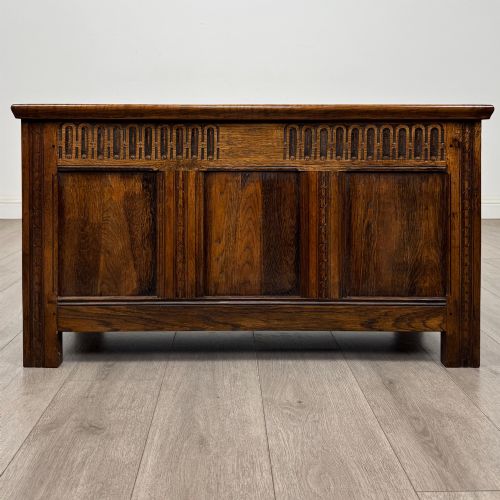
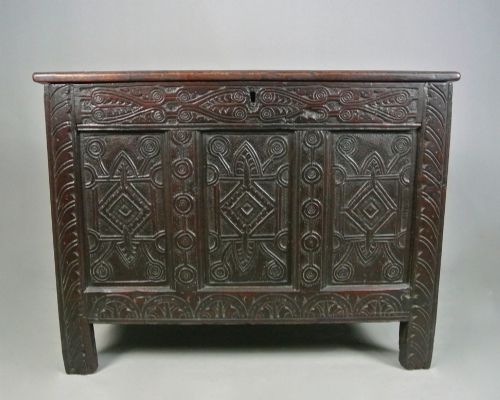
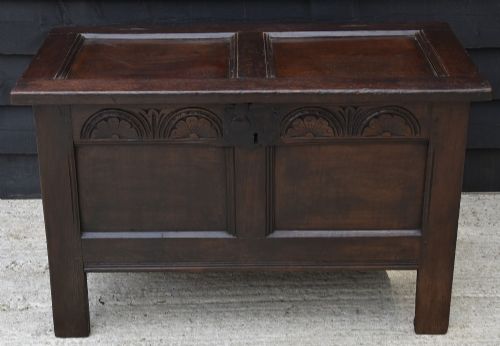
The version most frequently met on this page is the solid oak coffer or chest, often bearing carved panels and dating from the seventeenth or eighteenth centuries. Alongside these British country pieces, buyers encounter continental examples in teak, mahogany, and pine, as well as specialised forms like mule chests and campaign boxes.
Materials and Construction
Construction relies heavily on sturdy native timbers, predominantly oak and pine, joined to withstand decades of practical use. Joinery techniques in earlier pieces utilise panel-and-frame construction, allowing the timber to expand and contract naturally with seasonal humidity changes.
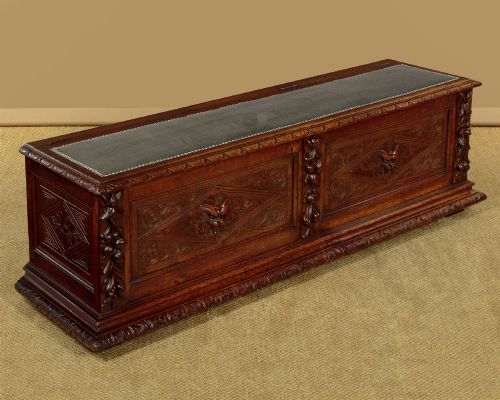
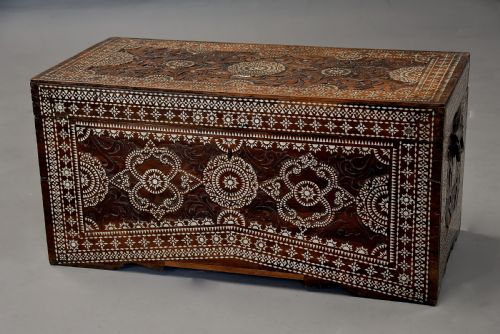
Metalwork plays a functional and decorative role, incorporating wrought iron hinges, brass bindings, and studwork to reinforce corners and lids. Inlaid elements such as mother-of-pearl or exotic woods occasionally enrich foreign chests, while simpler domestic boxes rely on plain six-plank assembly or carved surface ornamentation.
Dark Wood Storage Trunk Retail Price Guide 2026
Typical asking prices for dark wood storage trunk among the pieces listed under this phrase on Sellingantiques today, from the lower quarter to the upper quarter. They describe what is for sale here now, not the wider market.
An engine company tool box from World War One sits shoulder to shoulder with seventeenth-century Spanish cathedral chests.
Defining Quality
Quality rests in the integrity of the timber selection and the sharpness of hand-carved detailing. Superior pieces display dense, well-figured grain and original structural components rather than extensive modern timber replacements.
The sophistication of the hardware and the retention of original surface finishes distinguish finer examples from standard utilitarian boxes. Better craftsmanship is evident in tightly fitted joints, original hinges, and well-executed linen fold or geometric panels.
The Dark Wood Storage Trunk Glossary
- Coffer
- A heavy wooden box traditionally used for storing valuables or documents. These sturdy receptacles often feature hinged lids and raised feet.
- Mule chest
- A storage chest fitted with one or more drawers beneath the main compartment. This hybrid form bridges the gap between the simple coffer and the chest of drawers.
- Linen fold
- A carved panel motif popular in sixteenth and seventeenth-century woodwork that imitates folded linen cloth. This decorative technique adds texture to plain oak panels.
- Campaign chest
- A portable trunk made in sections with brass corners and recessed handles designed for military transport. Officers utilised these modular chests during nineteenth-century campaigns.
Dark Wood Storage Trunk: Frequently Asked Questions
What is a dark wood storage trunk used for?
These robust vessels served historically to store textiles, blankets, and household valuables securely away from damp conditions and pests. In modern interiors, they function effectively as coffee tables, blanket boxes, or hallway seating while concealing clutter.
Their generous internal capacity makes them practical for everyday storage needs in bedrooms and living spaces alike. The sturdy flat lids also permit their use as display surfaces for lamps or decorative objects.
How do I date a wooden coffer?
Dating relies on observing construction methods, joinery types, and decorative motifs characteristic of specific periods. Seventeenth-century examples frequently exhibit pegged mortise and tenon joints with hand-carved geometric panels.
Later Victorian and Edwardian iterations often employ machine-sawn timber components and standardised ironmongery. Examining the tool marks on the interior boards provides further clues regarding the manufacturing era.
Are these trunks suitable for daily use?
Solid timber construction ensures these pieces remain durable enough to endure regular opening and closing. The hinges and lids on antique coffers are built to support functional domestic storage.
Care should be taken to place them away from direct heat sources to prevent the wood from drying out and splitting. Applying appropriate beeswax helps maintain the condition of the timber over time.
What is the difference between a coffer and a mule chest?
A coffer consists simply of a deep storage box accessed exclusively via a top-hinged lid. This represents the older, traditional form of domestic storage furniture.
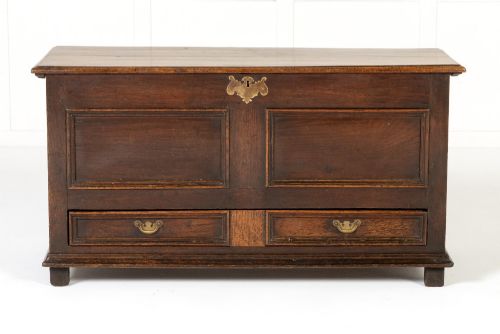
A mule chest incorporates one or more drawers beneath the main body of the box, combining chest storage with drawer accessibility. This evolution appeared during the seventeenth and eighteenth centuries to improve convenience.