






Dark Wood Reading Stand
A dark wood reading stand offers a steadfast place for books, bringing rich grain and functional joinery to any study.
Dark Wood Reading Stand
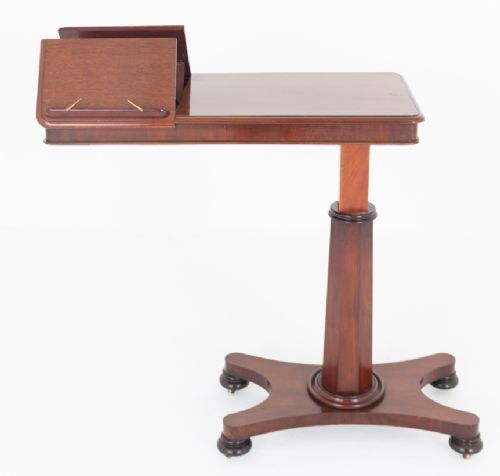
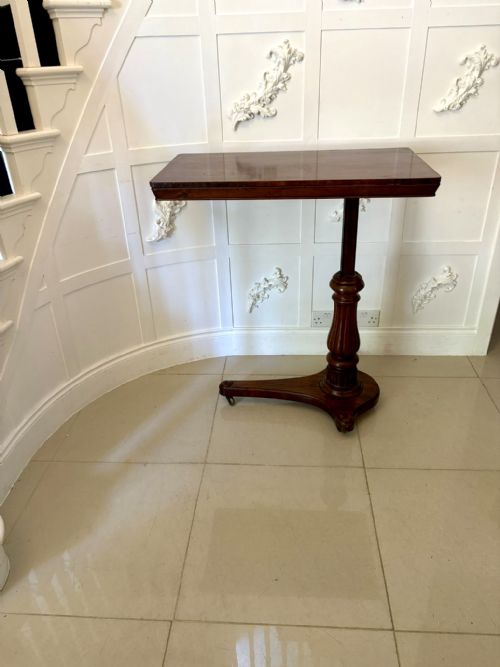
A dark wood reading stand encompasses adjustable tables, floor lecterns, and compact table-top rests designed to hold volumes at a comfortable angle. Buyers searching for a dark wood reading stand will most frequently encounter nineteenth-century examples fashioned from rich timbers.
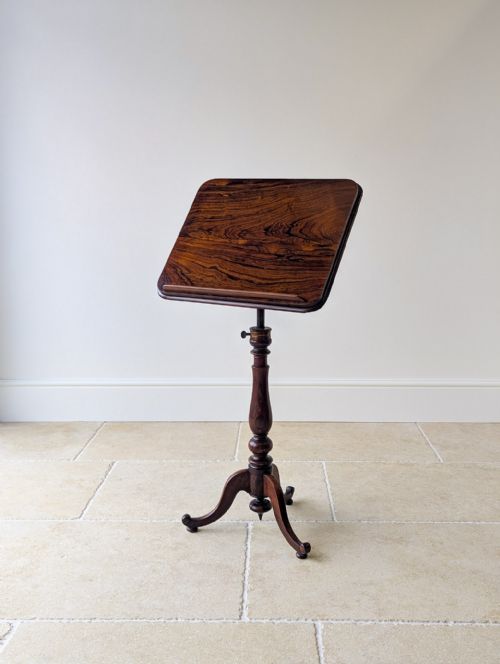
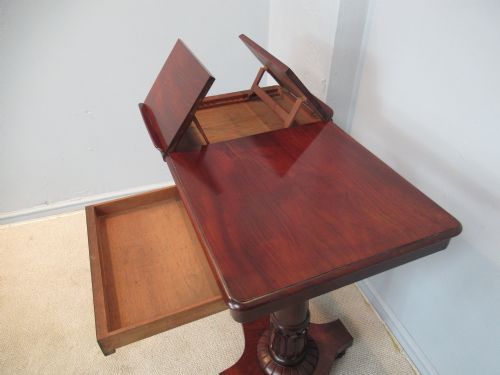
The selection spans Regency, William IV, and Victorian periods, often taking the form of library tables with pivoting mechanisms or sturdy tripod bases. Pieces range from simple oak lecterns to elaborate rosewood reading tables fitted with brass details.
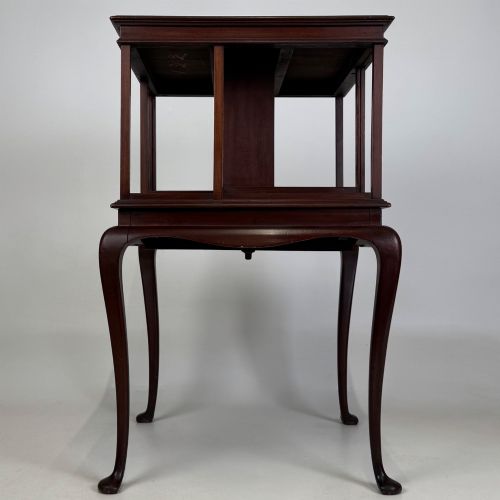
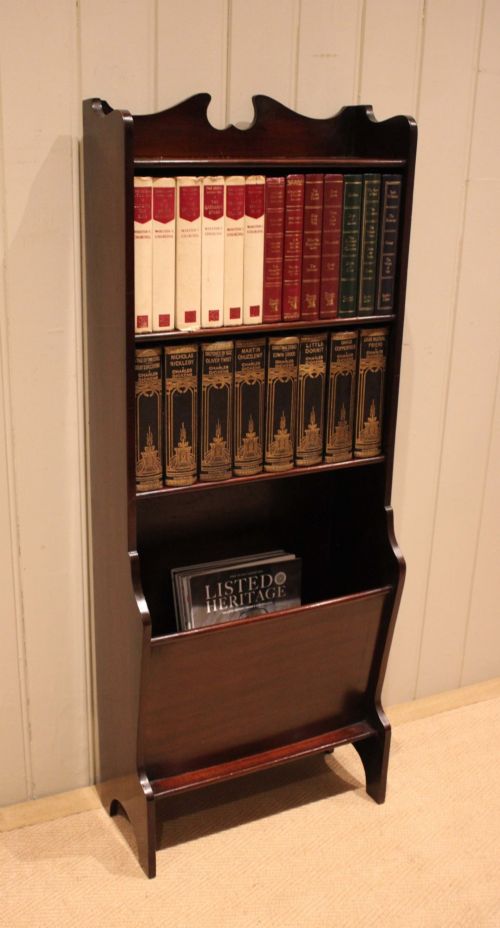
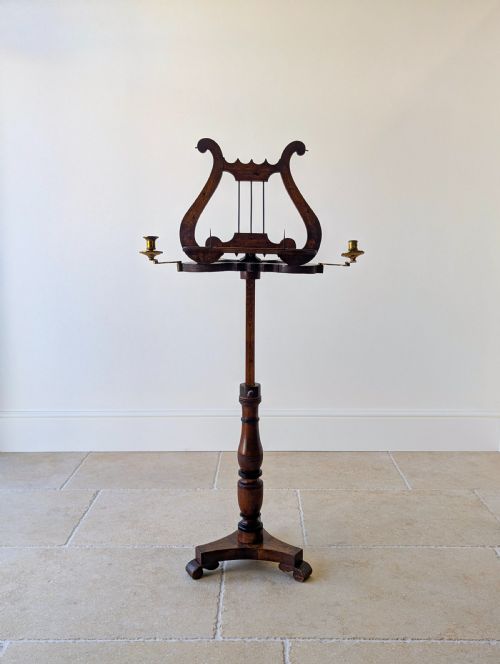
Alongside dedicated book stands, related forms such as revolving bookcases, music stands, and occasional tables appear within the inventory. These diverse objects share a common purpose of supporting texts or scores in domestic and institutional settings.
Materials and construction
Cabinetmakers utilised dense timbers such as mahogany, rosewood, oak, and walnut to build a dark wood reading stand, often selecting stock with deep natural figuring. These woods provided the structural rigidity necessary for heavy volumes and adjustable mechanisms.
Metal components, predominantly brass, were integrated into telescopic stems, ratchet supports, and hinges to allow height and angle adjustment. Secondary materials like glass, fabric, and gilt occasionally appear on associated lamps and decorative stands.
An eighteenth-century oak lectern on the page depicts an eagle with outstretched wings, ready to support a sermon.
Craftsmanship and mechanism
The distinction between standard utility items and superior examples lies in the precision of the mechanical adjustments and the quality of the timber selection. Finer pieces incorporate smooth ratchets, telescopic brass screws, and well-figured mahogany or rosewood veneers.
Joinery standards also divide the range, with better stands showing careful dovetailing, stable tripod bases, and crisply carved details rather than straightforward mechanical assembly.
Waring and Gillows·Packer Of Reading
The Dark Wood Reading Stand Glossary
- Lectern
- A tall stand with a slanted top designed to hold a book or notes for a standing speaker. These often appear in oak or pine for institutional or ecclesiastical use.
- Ratchet support
- A mechanical toothed bracket attached beneath the bookrest to hold the reading surface at various angles. This allows the user to adjust the viewing slant securely.
- Telescopic
- A vertical column design featuring inner and outer sliding tubes secured by a thumbscrew, permitting height adjustment. This mechanism is frequently found on nineteenth-century music and reading stands.
- Gonçalo Alves
- A dense, highly figured tropical hardwood sometimes utilised in Regency and William IV furniture. It offers distinctive contrasting dark brown grain patterns.
Dark Wood Reading Stand: Frequently Asked Questions
How do I adjust the reading angle?
Most adjustable stands utilise a hinged book ledge paired with a metal ratchet underneath the surface. You lift the shelf to the desired notch, and the support arm locks into place.
Heavier nineteenth-century tables may employ brass screw mechanisms or sliding side arms to maintain stability at steeper angles.
What is the difference between a reading stand and a lectern?
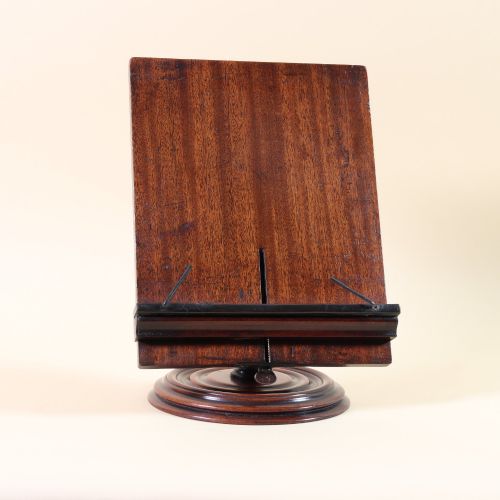
Reading stands generally refer to table-top rests or adjustable sitting-height pedestal tables designed for personal study. They often feature pivoting tops or accompanying drawer space.
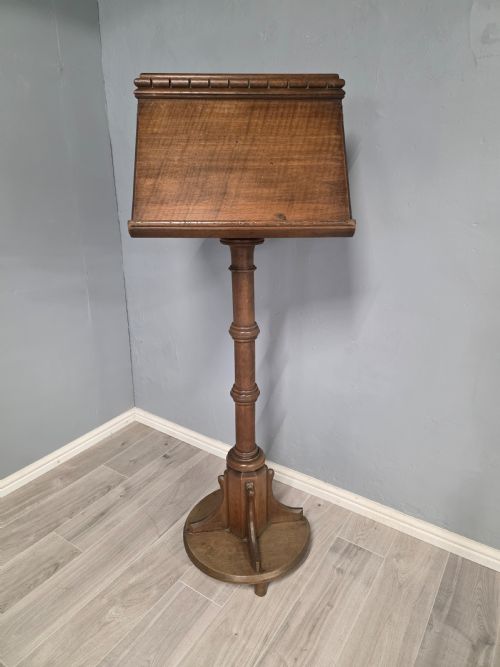
Lecterns are traditionally taller floor-standing units intended for public address, frequently constructed in heavy oak with fixed or sloping desk tops.
Can these stands support heavy modern books?
Period reading stands were built to hold substantial bound volumes, ledgers, and heavy folios. The solid mahogany, rosewood, and oak construction provides strong weight-bearing capacity.
However, users should check the condition of any wooden pegs or brass ratchets before placing exceptionally heavy modern reference books on older table-top rests.
How do I identify a Regency period stand?
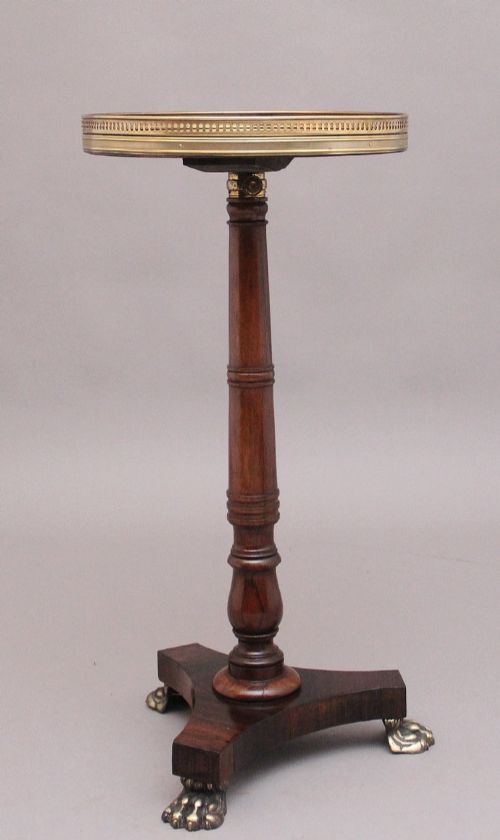
Regency stands typically display classical proportions, clean lines, and dark mahogany or rosewood surfaces. Details often include reeded columns, brass paw feet, and sturdy platform bases.
They frequently incorporate functional brass fittings and subtle architectural turns that reflect the early nineteenth-century design ethos.