

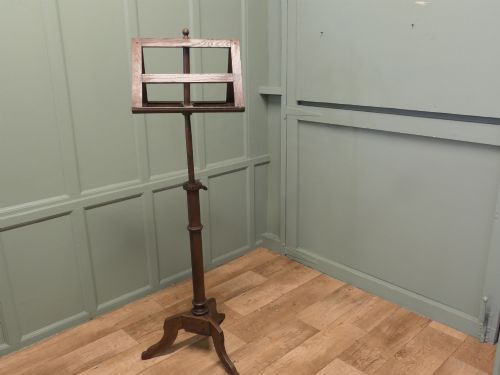
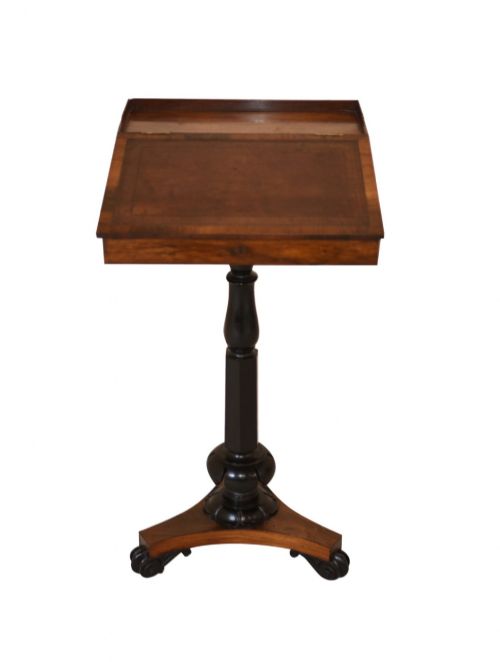
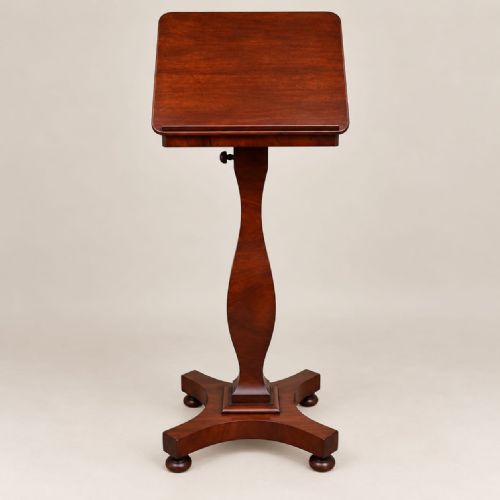
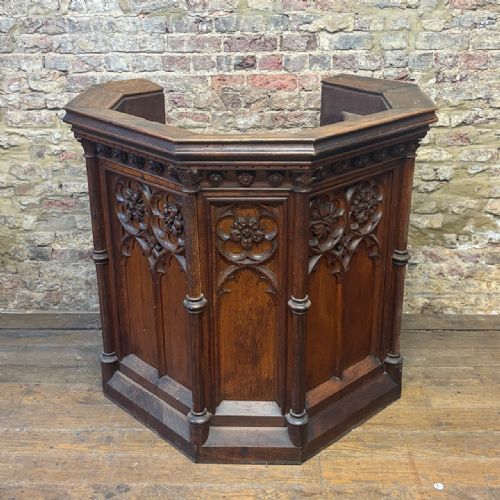


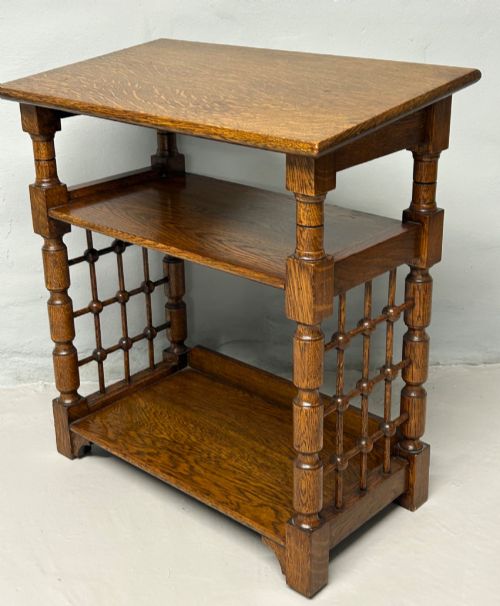
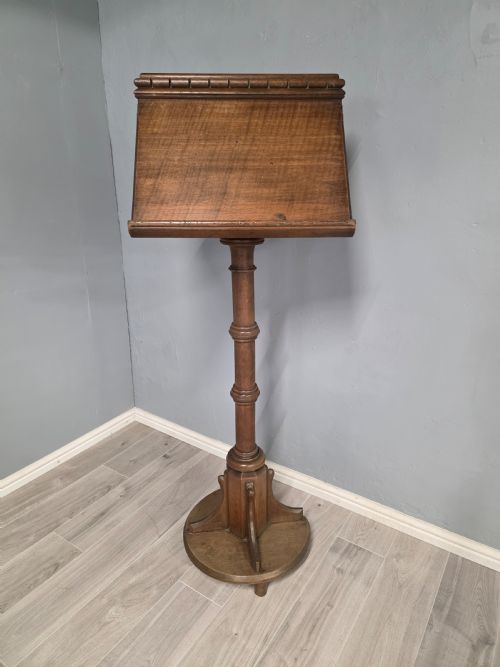


Brown Wooden Lectern
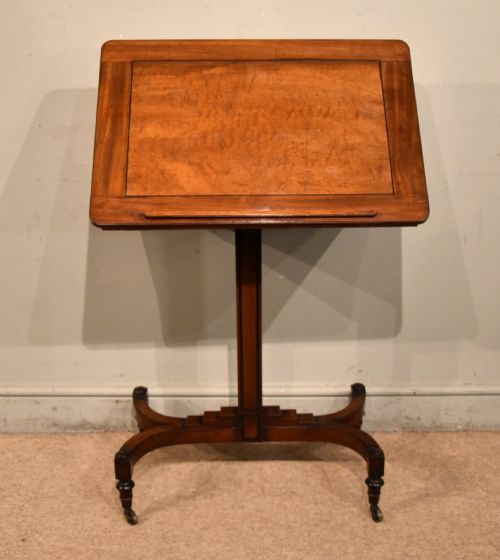
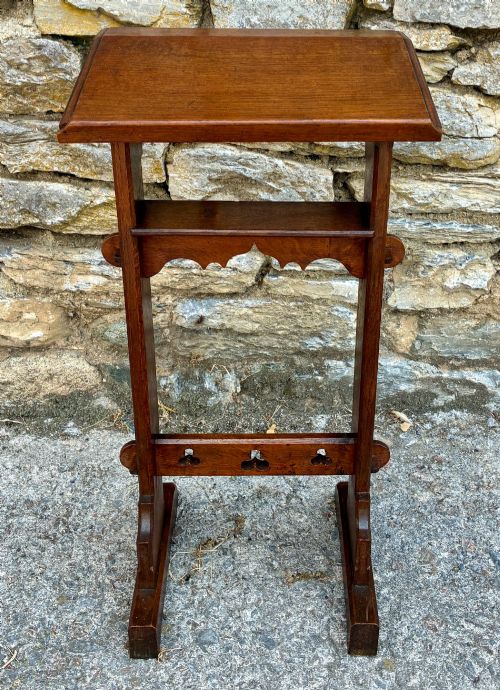
These brown wooden lectern pieces are reading stands and pulpit furniture crafted in oak, mahogany, and pine, offering steady book support for studies and churches.
Brown Wooden Lectern
A brown wooden lectern brings together reading stands, book rests, and pulpit furnishings spanning the eighteenth, nineteenth, and early twentieth centuries. Buyers seeking these items will find pieces ranging from utilitarian pine reading tables to carved oak church pulpits and adjustable music stands.
The selection on this page leans heavily toward nineteenth-century Victorian and Edwardian examples, alongside occasional Georgian and eighteenth-century forms. Makers utilised styles such as Gothic Revival, Arts and Crafts, and Regency to shape oak, mahogany, walnut, and pine into functional book holders.
What varies in quality
Quality rests primarily on the depth and execution of the carving, the selection of figured timbers such as burr walnut or figured mahogany, and the stability of mechanical adjustments. Superior pieces display crisp details on figural carvings like eagles and clean joinery on revolving book stands.
Plain pine utility pieces and straightforward school or church stands sit at one end of the scale, while elaborate French Baroque missal stands, inlaid lyre-shaped music stands, and substantial oak church pulpits represent the other.
Brown Wooden Lectern Retail Price Guide 2026
Typical asking prices for brown wooden lectern among the pieces listed under this phrase on Sellingantiques today, from the lower quarter to the upper quarter. They describe what is for sale here now, not the wider market.
Listings feature oak, mahogany, walnut, and pine across Victorian, Edwardian, Georgian, and Regency periods.
The Brown Wooden Lectern Glossary
- Lectern
- A tall stand with a sloping top to hold a book or notes for someone reading aloud. These often appear in church or library settings.
- Missal Stand
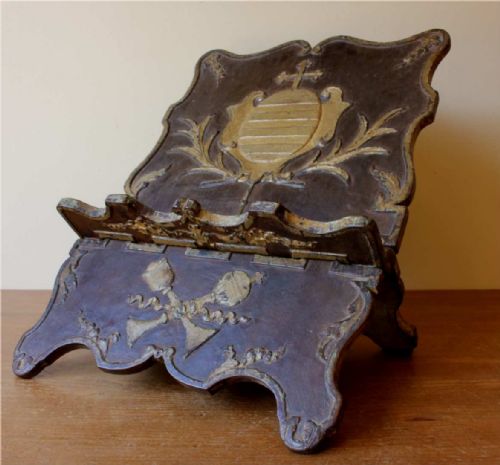
- A small, portable folding rest designed to hold liturgical books on an altar or table. Eighteenth-century French examples frequently utilise this form.
- Revolving Bookcase
- A low, rotating wooden case designed to hold volumes upright within easy reach of a chair or desk. Edwardian versions demonstrate this rotating capability.
- Gothic Revival
- An architectural and decorative style drawing on medieval pointed arches and heavy carving. Nineteenth-century church furniture frequently employs this aesthetic.
- Arts and Crafts
- A movement prioritising visible handcraftsmanship and simple structural forms over mass-produced ornamentation. Oak book stands from this period exhibit these honest construction methods.
Brown Wooden Lectern: Frequently Asked Questions
Where were these pieces used historically?
These pieces served primarily in churches, private libraries, music rooms, and studies for holding heavy Bibles, sheet music, and books. Large carved oak lecterns and pulpits stood in ecclesiastical spaces, while smaller reading tables found a place in domestic rooms.
Folding book rests and missal stands provided portable support for texts during services or private devotions. Music stands accommodated musicians practicing with scores in period parlours.
How do I identify a Gothic Revival lectern?
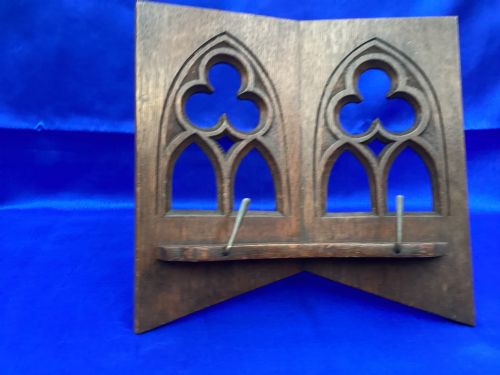
Gothic Revival lecterns display characteristic medieval architectural motifs such as pointed arches, quatrefoils, and deep linenfold or floral carving. They are almost universally constructed from heavy oak to suit their ecclesiastical origins.
These pieces often date from the nineteenth century and share design elements with church woodwork of that era, distinguishing them from simpler domestic reading tables.
Can these stands hold modern books?
Adjustable reading tables, music stands, and desk rests offer functional support for modern books, heavy volumes, and tablets. Their tilting ledges keep materials at a readable angle.
Revolving bookcases and desktop book racks provide practical storage for daily reading material in modern rooms, combining period wood with everyday utility.
What is the difference between a lectern and a music stand?
A lectern is typically a heavier, fixed pulpit piece designed to hold large volumes like church Bibles at a stationary height. Music stands are generally lighter, often featuring adjustable stems or lyre-shaped supports for sheet music.
Some nineteenth-century examples blur these lines by incorporating adjustable mechanisms into oak reading stands intended for both books and scores.