

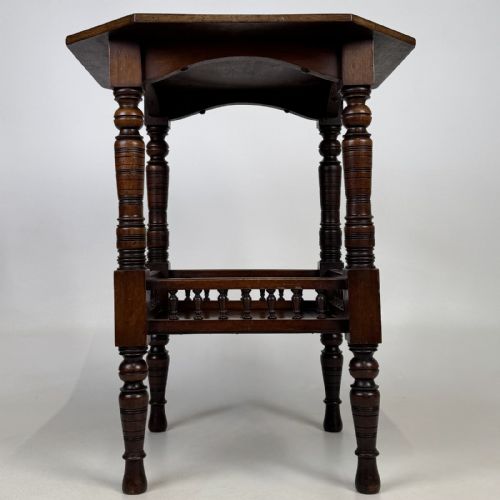
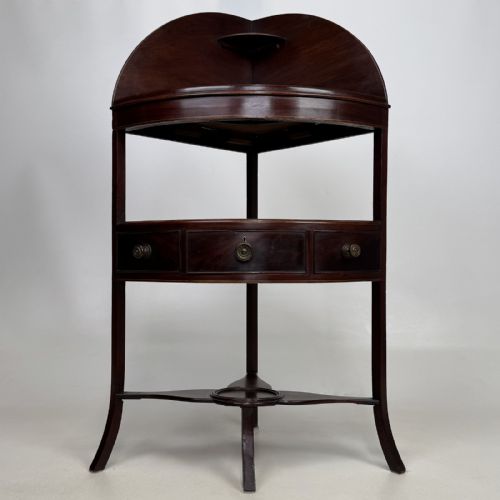
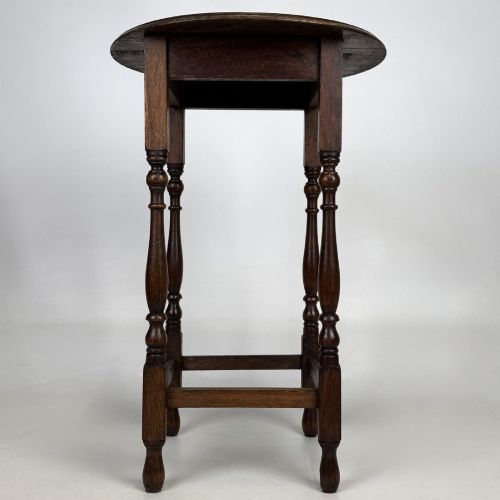
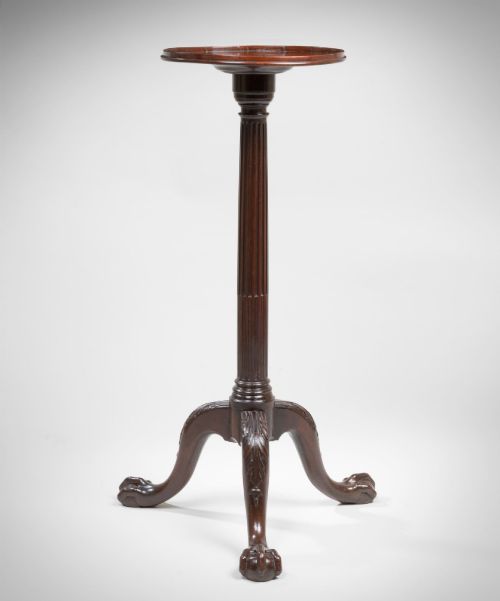



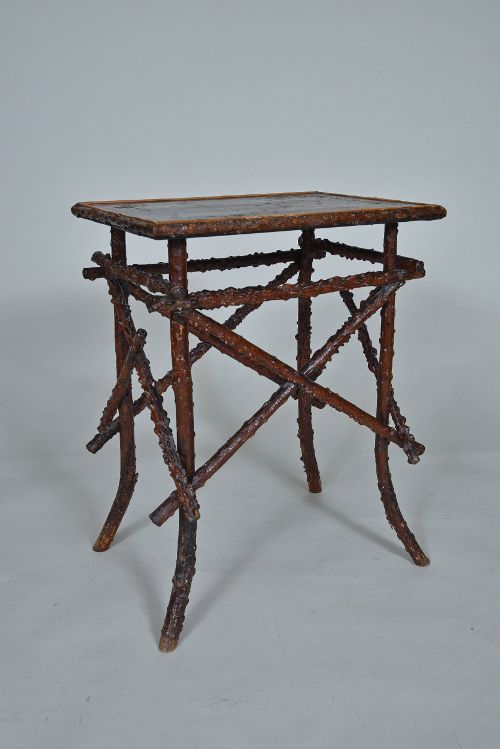
Dark Wood Plant Table
These dark wood plant tables bring sturdy timber surfaces and carved detail to corners and display spaces.
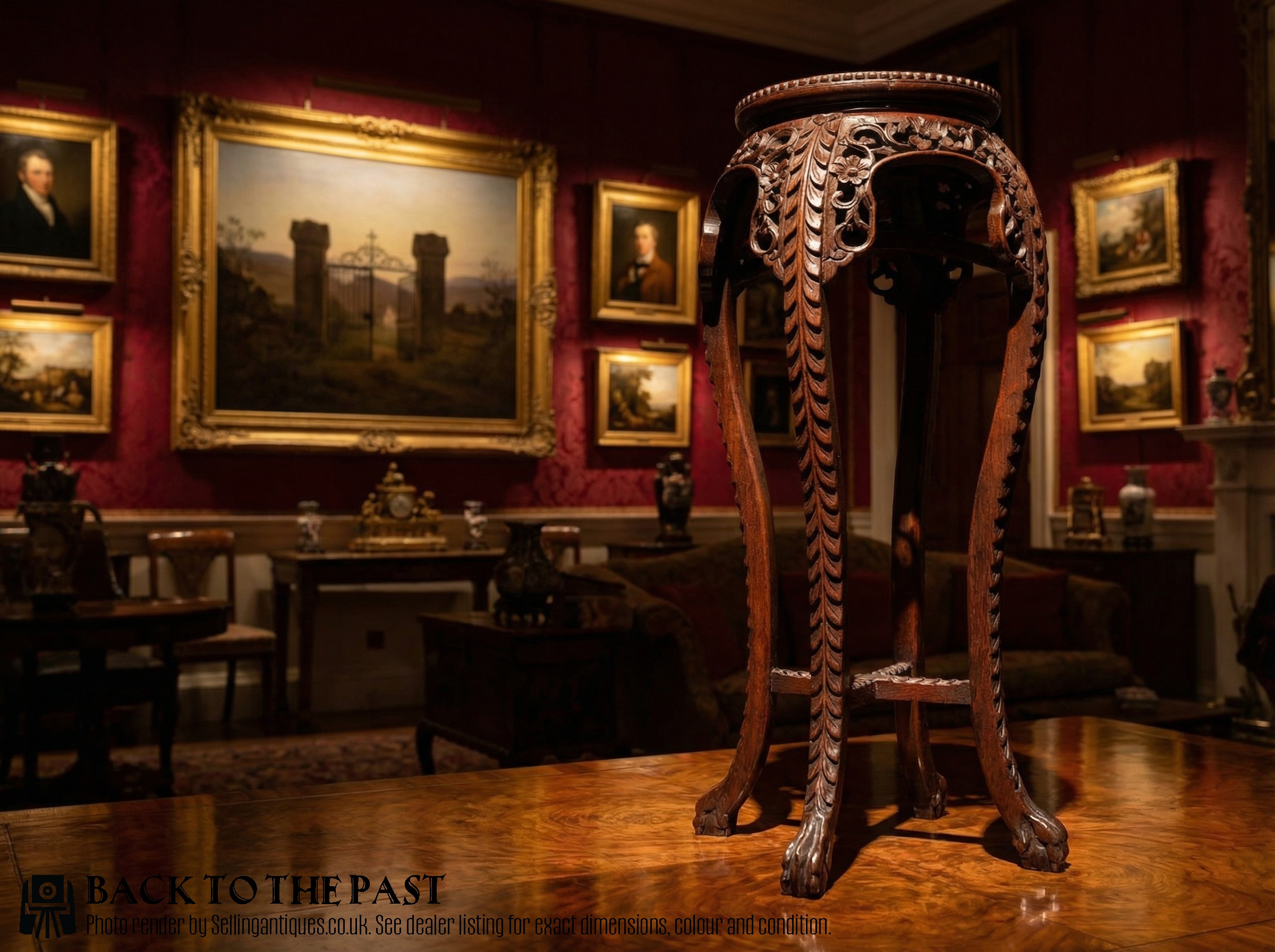
Dark Wood Plant Table
A dark wood plant table serves as an elevated platform for horticulture and decorative objects inside the home. These pieces appear in forms ranging from compact occasional tables and wine tables to low stands and pedestals.
The selection centres on specimens from the Victorian, Edwardian and early twentieth-century periods. Oak and mahogany dominate the timber choices, often accompanied by walnut, rosewood and carved hardwood.
Buyers encounter regional interpretations spanning Anglo-Indian, Chinese, Arts and Crafts and Liberty styles. Side tables and washstands frequently double as display surfaces for plants and lamps.
How they were made
Cabinet makers utilised dense hardwoods such as mahogany, oak, walnut and rosewood for structural integrity and rich surface grain. Timber was turned, carved and joined to create sturdy legs, pedestals and square or octagonal tops.
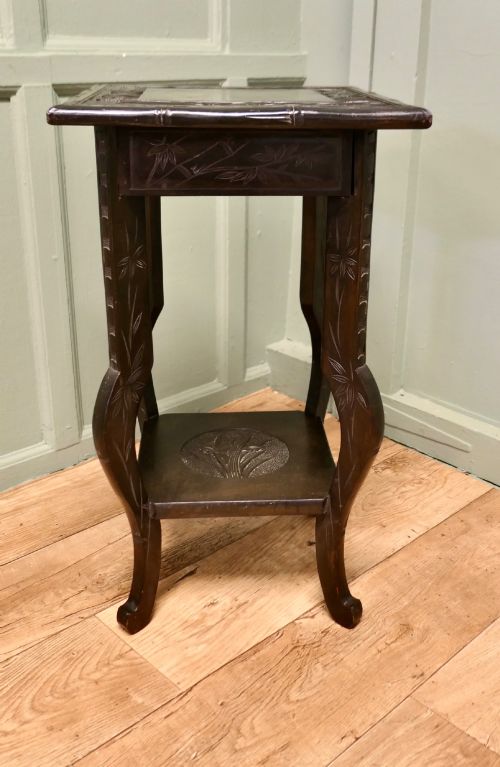
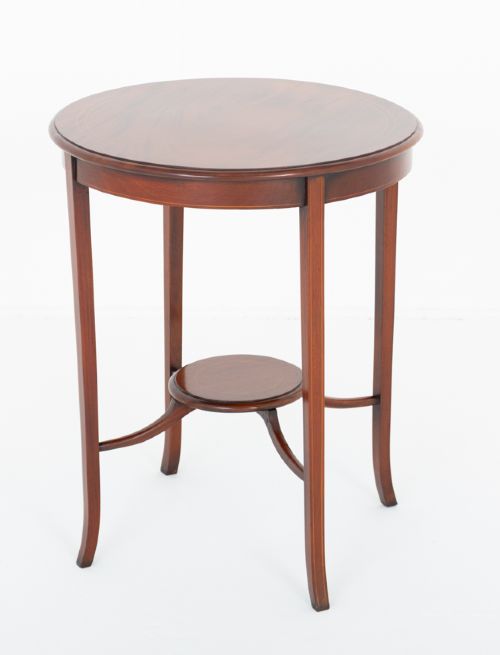
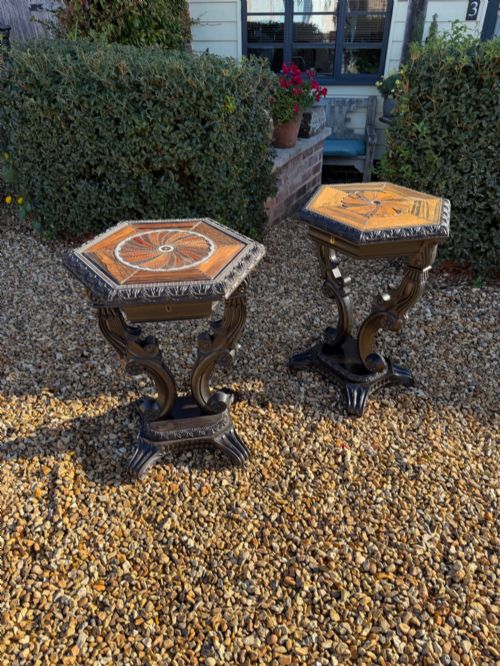
Surface decoration involved chip carving, bone inlay, and brass mountings, particularly in pieces influenced by Moorish or Anglo-Indian design. Lighter details such as inlaid stringing appeared on Edwardian specimens.
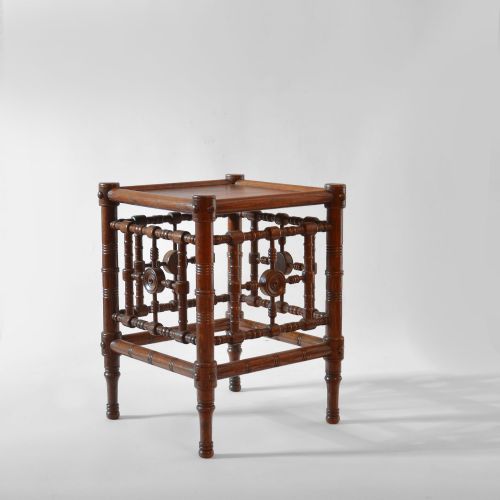
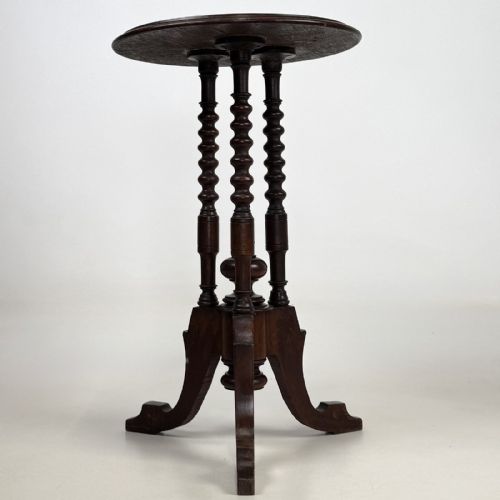
Specialised workshops produced items ranging from folk art twig assemblies to fine rosewood stands with intricate pierced aprons. Turned elements like barley twists provided structural support and visual texture.
Dark Wood Plant Table Retail Price Guide 2026
Typical asking prices for dark wood plant table among the pieces listed under this phrase on Sellingantiques today, from the lower quarter to the upper quarter. They describe what is for sale here now, not the wider market.
Elephant tables complete with painted wooden tusks wait to hold your ferns.
What varies in quality
The refinement of the carving separates standard production items from finer studio pieces. Crisp edges on chip carving and precise joinery indicate superior workshop execution.
Material selection dictates the presence of dense, figured grain in timbers like walnut and mahogany. Quality shows in the stability of the structure and the integration of decorative elements such as bone inlay or gilded brass.
Liberty & Co·William Birch·Druce & Co London
The Dark Wood Plant Table Glossary
- Barley twist
- A turned wooden column resembling a twisted rope. This technique was popular in furniture legs during the Victorian and Edwardian periods.
- Occasional table
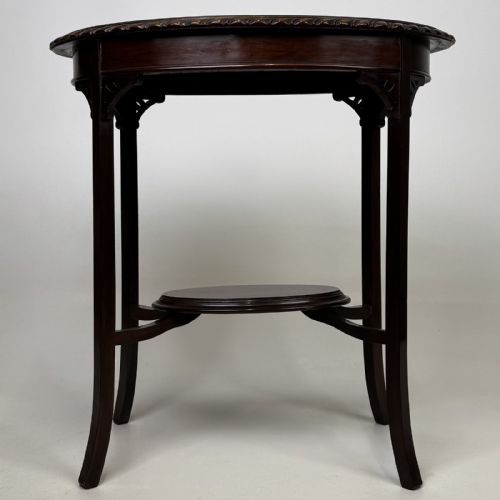
- A small, movable table designed for specific, intermittent use rather than central placement in a room. These pieces often support lamps, plants or decorative items.
- Pedestal table
- A standalone table supported by a single central pillar and a sturdy base. This form allows maximum legroom while holding items securely.
- Inlay
- A decorative technique where contrasting materials are inserted into recesses within the base wood. Common examples include bone and lighter timber stringing.
Dark Wood Plant Table: Frequently Asked Questions
What periods do these tables come from?
The pieces span the nineteenth and early twentieth centuries, with a strong representation of Victorian and Edwardian examples.
Craftsmen also produced specific regional and revival styles during the late eighteen-hundreds and nineteen-twenties.
How were these tables originally used?
They functioned as versatile surfaces for displaying ceramics, lamps and botanical specimens in domestic interiors.
Many designs served multiple purposes as wine tables, washstands or small tea tables depending on the room.
What timbers should I expect to find?
Construction relies heavily on traditional hardwoods including mahogany, oak, walnut and rosewood.
Makers occasionally incorporated secondary woods alongside decorative elements like brass and bone inlay.
How do I identify different design styles?
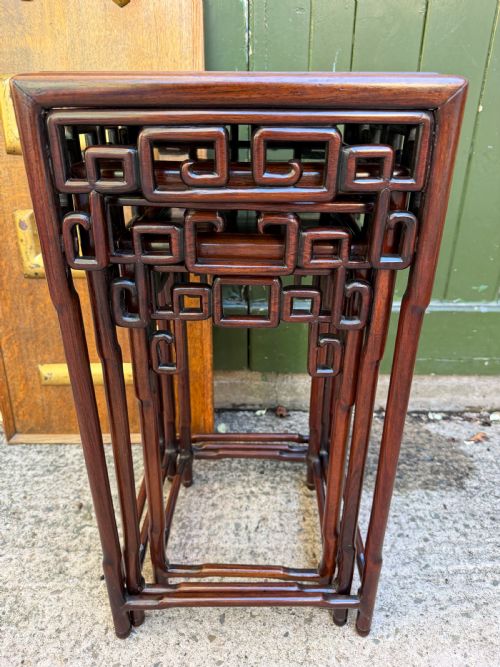
Styles range from utilitarian oak side tables to intricate Chinese rosewood stands and Anglo-Indian carved pieces.
Detailing such as chip carving, Moorish geometry and barley twist legs point towards specific regional and aesthetic movements.